
Hiring a plumber in Reading feels straightforward until something goes wrong. A surprise invoice, a no-show on an emergency call-out, or shoddy work that fails within weeks can turn a simple repair into a costly ordeal. The good news is that asking the right questions before any work begins puts you firmly in control. This article gives you a practical checklist covering credentials, pricing, emergency availability, and aftercare, so you can hire with confidence and avoid the pitfalls that catch too many homeowners off guard.
Table of Contents
- Credentials and qualifications: verifying expertise
- Questions about pricing: avoiding hidden costs
- Availability and emergency response: planning for the unexpected
- Maintenance support and aftercare: ensuring long-term reliability
- Why asking questions is your best plumbing tool
- Get expert help: trusted plumbers in Reading
- Frequently asked questions
Key Takeaways
| Point | Details |
|---|---|
| Verify credentials first | Always ask for qualifications, licensing, and insurance before hiring a plumber. |
| Demand transparent pricing | Clear quotes and fee breakdowns prevent unexpected costs and disputes. |
| Check emergency support | Ask about 24/7 response times to ensure help is available when you need it most. |
| Get aftercare assurance | Maintenance advice and warranty offer peace of mind and lasting reliability. |
Credentials and qualifications: verifying expertise
The single most important step before letting anyone near your pipework is confirming they are properly qualified. In the UK, plumbers are not legally required to hold a licence for most general plumbing work, but qualifications still matter enormously. A plumber with recognised training, such as a City and Guilds or NVQ Level 2 or 3 in plumbing and heating, has demonstrated competence in a structured environment. For gas work specifically, registration with the Gas Safe Register is a legal requirement, not optional.
Always ask to see proof of qualifications before any work begins. A professional will produce these without hesitation. Verify the plumber's qualifications before signing anything or handing over a deposit. If a plumber becomes evasive or dismissive when you ask, treat that as a red flag.
Insurance is equally critical. Public liability insurance protects your home if the plumber accidentally causes damage during the job. Without it, you could be left footing the bill for a flooded kitchen or cracked tile. Ask specifically whether their cover is current and request the policy number if you want to verify independently.
Here is a quick checklist of what to ask and look for:
- Qualifications: NVQ Level 2 or 3, City and Guilds, or equivalent
- Gas Safe registration: Mandatory for any gas-related work
- Public liability insurance: Minimum £1 million cover recommended
- Membership of a trade body: Such as the Chartered Institute of Plumbing and Heating Engineering (CIPHE)
- References or reviews: Local Reading reviews carry particular weight
Understanding plumber qualifications helps you ask smarter questions and spot the difference between a competent professional and someone who simply owns a set of spanners. Engineers like Michael Knight demonstrate how credentials and transparency go hand in hand when building genuine trust with homeowners.
Pro Tip: Search the Gas Safe Register online using a plumber's registration number. It takes under a minute and confirms their licence is valid and covers the type of work you need done.
Questions about pricing: avoiding hidden costs
With credentials verified, next comes the conversation about costs. Pricing is where many homeowners feel uncomfortable pushing back, but it is precisely where clarity matters most. A vague quote is almost always a problem waiting to happen.
Start by asking these questions before agreeing to anything:
- Is this a fixed price or an estimate?
- What is included in the call-out fee?
- Are parts and labour itemised separately?
- What happens if the job takes longer than expected?
- Are there additional charges for evenings, weekends, or bank holidays?
Transparent pricing prevents unpleasant surprises and is a hallmark of a reputable plumber. Any professional worth hiring will give you a written quote that breaks down exactly what you are paying for.
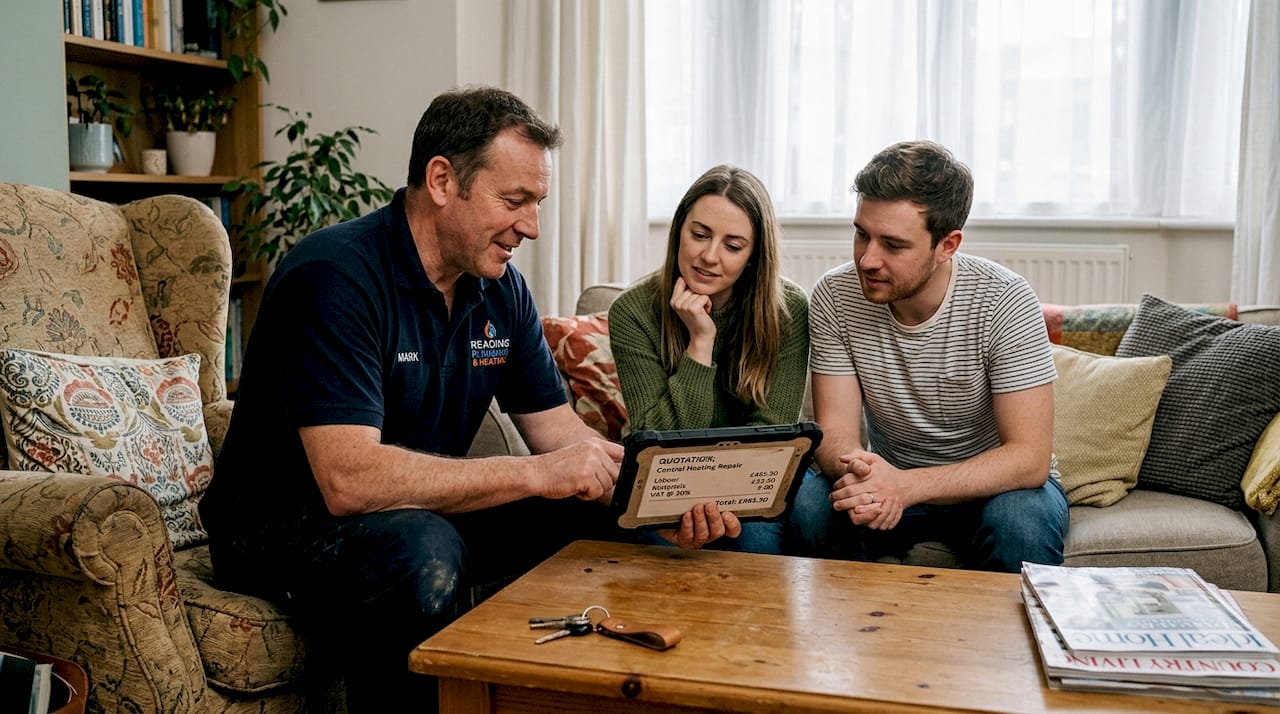
Here is a comparison of common pricing structures you will encounter in Reading:
| Pricing type | What it means | Risk level |
|---|---|---|
| Fixed price | Agreed total before work starts | Low |
| Hourly rate | Charged per hour worked | Medium |
| Day rate | Flat fee for a full day | Medium |
| Estimate only | Approximate cost, subject to change | High |
For homeowners in Reading, typical call-out fees in 2026 range from £50 to £120 depending on the time of day and urgency. Labour rates generally sit between £60 and £100 per hour for standard work. Always get at least two quotes before committing, and be wary of any plumber who cannot provide a written breakdown.
A useful rule: if a quote seems unusually low, ask why. Underpricing can signal cut corners, unlicensed work, or parts of inferior quality. Equally, an inflated quote without justification is worth querying. A confident, honest plumber will explain every line item without making you feel awkward for asking.
Availability and emergency response: planning for the unexpected
Once pricing is clear, it is wise to prepare for emergencies before they happen. A burst pipe at midnight or a boiler failure on a cold January morning in Reading is not the moment to start searching for a plumber. Knowing in advance whether your plumber offers rapid response can save considerable stress and damage.
Ask these questions specifically about emergency availability:
- Do you offer 24/7 call-out, including weekends and bank holidays?
- What is your average response time for emergencies in the Reading area?
- Is there a separate emergency call-out rate, and how much is it?
- Do you carry common parts on your van to resolve issues in a single visit?
- Who covers your jobs if you are unavailable?
As noted in guidance on emergency plumbing questions, asking about availability and rapid response options for emergencies is one of the most overlooked steps homeowners take when vetting a plumber.
"A plumber who cannot tell you their average response time for emergencies is one you cannot rely on when it matters most."
The consequences of poor emergency planning are real. Water damage from an unaddressed burst pipe can cost thousands of pounds in repairs, far exceeding the original plumbing bill. Mould, structural damage, and ruined flooring are all possible outcomes when emergency response is slow or unreliable.
For Reading homeowners, finding a 24/7 emergency plumber who covers your postcode and commits to a clear response window is worth prioritising during your initial vetting process. Do not leave this conversation until you are standing in a flooded bathroom.
Maintenance support and aftercare: ensuring long-term reliability
Finally, reliable plumbers stand by their work. Aftercare and maintenance questions ensure lasting solutions, not just a quick fix that fails again in three months.
Before the job is completed, ask:
- What warranty do you offer on parts and labour?
- Will you provide written aftercare instructions?
- What maintenance should I carry out to extend the life of this repair?
- Do you offer scheduled maintenance visits or annual checks?
- How do I contact you if the issue recurs?
Asking for maintenance tips to extend the life of repairs is something reputable plumbers actively encourage. It reflects genuine care for the customer rather than a desire for repeat call-outs.
Here is a quick reference for what reasonable aftercare looks like across common plumbing jobs:
| Job type | Expected warranty | Recommended maintenance |
|---|---|---|
| Boiler service | 12 months labour | Annual service |
| Leak repair | 6 to 12 months | Check seals every 6 months |
| New radiator installation | 12 months parts and labour | Annual bleed and balance |
| Tap replacement | 12 months parts | Descale every 6 months |
| Drain clearance | 3 to 6 months | Monthly hot water flush |
A plumber who offers no warranty at all is one to avoid. Equally, vague aftercare advice such as "just call us if it breaks again" is not good enough. You deserve specific guidance on how to look after your plumbing between visits.
Pro Tip: Ask your plumber to walk you through the completed work before they leave. A brief explanation of what was done, what to watch for, and when to book a follow-up check takes five minutes and gives you far greater peace of mind.
Why asking questions is your best plumbing tool
Most homeowners hesitate to ask probing questions because they worry about seeming difficult or mistrustful. That hesitation is understandable, but it is also one of the most common reasons plumbing jobs go wrong.
In our experience, the plumbers who welcome questions are consistently the ones who deliver the best results. Asking about credentials, pricing, and availability does not signal distrust. It signals that you are an informed client, and informed clients tend to receive better service. Poor-quality traders actively avoid scrutiny. A professional welcomes it.
We have seen homeowners avoid thousands of pounds in unnecessary costs simply by asking for a written quote breakdown or checking a Gas Safe number before work began. These are not complicated steps. They are five-minute checks that change outcomes entirely.
Think of your questions as a filter. Every answer tells you something. Evasiveness, irritation, or vague responses are data points. Clarity, confidence, and willingness to provide documentation are equally telling. When choosing a reliable plumber, the quality of the conversation before the work starts is often the clearest indicator of the quality of the work itself.
Get expert help: trusted plumbers in Reading
You now have the questions. Finding the right plumber to answer them is the next step.
At Your Local Plumber, we connect Reading homeowners with vetted, qualified engineers who are transparent about pricing, available for emergencies, and committed to aftercare. You can book plumbing services online in minutes, with no hidden fees and no pressure. Our online plumber booking system makes it simple to schedule a visit at a time that suits you. For urgent situations, our emergency heating engineer service is available around the clock, covering Reading and the surrounding areas with rapid response times.
Frequently asked questions
What paperwork should my plumber provide before starting the job?
Your plumber should show proof of qualifications, licensing, and valid insurance before beginning work. Verify qualifications upfront to protect yourself from unqualified traders.
How can I check if a plumbing quote is fair?
Ask for a full breakdown and compare it with at least two other plumbers. Transparent pricing should itemise parts, labour, and call-out fees with no vague line items.
How quickly can a plumber respond to emergencies in Reading?
Rapid response plumbers often offer 24/7 service and aim to arrive within 60 minutes for urgent issues. Confirm response time expectations before you ever need them.
What aftercare should I expect following plumbing repairs?
Reputable plumbers provide a warranty on parts and labour, written aftercare guidance, and specific maintenance advice to help repairs last as long as possible.