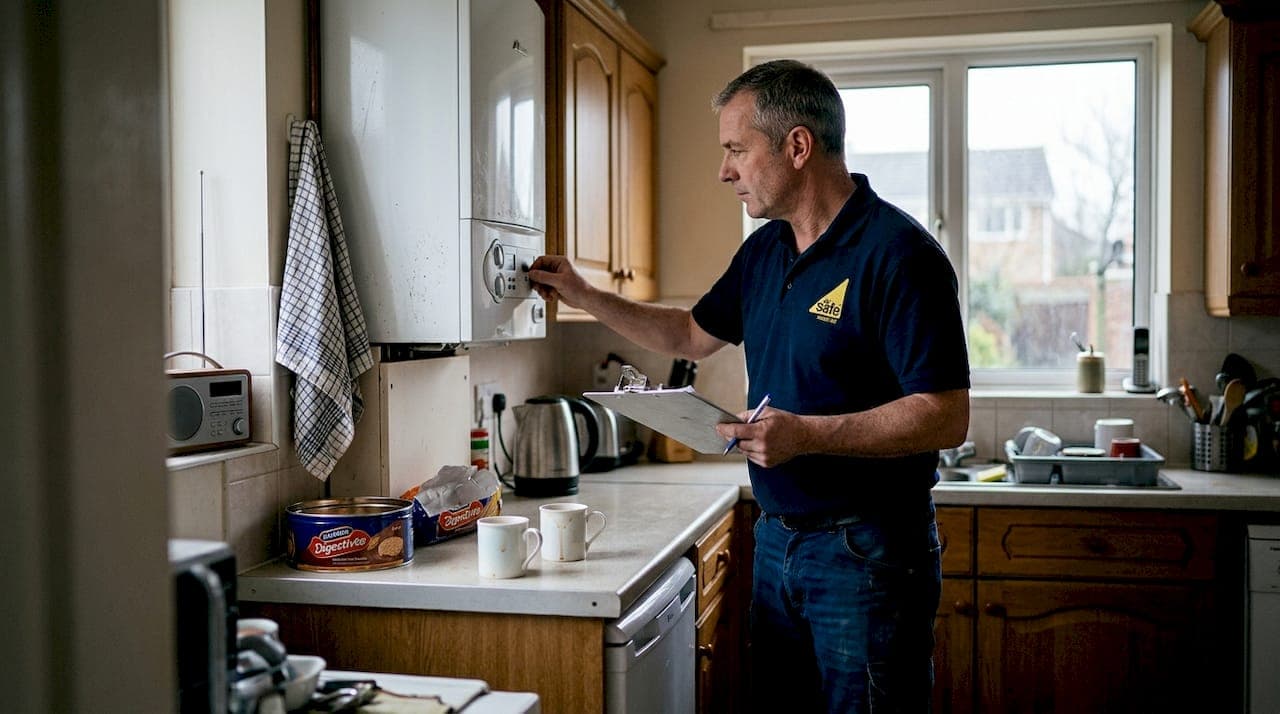
Unqualified gas work kills. That sounds blunt, but it is the reality behind a regulatory system that many UK homeowners still misunderstand. With over 21 million UK households connected to gas, the risks of illegal or poorly executed gas work are enormous, ranging from carbon monoxide poisoning to explosions and fires. Yet many people still let unregistered tradespeople work on their boilers or gas appliances, often without realising the legal and financial consequences. This guide walks you through everything you need to know about Gas Safe certification, from what it actually means to how to read your certificate and protect your home.
Table of Contents
- What is Gas Safe certification?
- Who needs Gas Safe certification and when?
- What does a Gas Safe inspection involve?
- Understanding your Gas Safety certificate (CP12))
- Avoiding illegal or unqualified gas work
- Need a Gas Safe registered engineer you can trust?
- Frequently asked questions
Key Takeaways
| Point | Details |
|---|---|
| Legal requirement | Only Gas Safe registered engineers can work on gas appliances in UK homes. |
| Annual checks | Gas safety certificates last 12 months and must be renewed yearly where required. |
| Check your engineer | Always verify an engineer’s credentials on GasSafeRegister.co.uk before allowing work. |
| Understand your certificate | Review, store, and act on your Gas Safety Record, especially if defects are listed. |
What is Gas Safe certification?
Gas Safe certification is not a qualification you earn once and carry forever. It is proof, issued after a formal inspection, that gas appliances, pipework, and flues in a property meet legal safety standards. Every piece of gas work carried out in the UK must be done by a registered engineer, and that work must be certifiable. There is no grey area here.
The Gas Safe Register is the official UK body listing all engineers and businesses legally permitted to work on gas appliances. It replaced CORGI in 2009, which is a source of confusion for many homeowners who still ask for a "CORGI-registered" engineer. CORGI no longer holds any legal authority in the UK. If someone claims CORGI credentials as their primary qualification, that is a red flag.
Ignoring Gas Safe requirements carries serious consequences:
- Fines of £6,000 or more for commissioning illegal gas work
- Criminal prosecution and potential imprisonment
- Invalid home insurance if a claim arises from uncertified work
- Voided appliance warranties from manufacturers
- Risk of carbon monoxide poisoning, gas leaks, and explosions
"Gas safety is not optional. It is a legal requirement designed to protect lives, and the consequences of ignoring it extend far beyond a fine."
For a broader view of how gas safety fits into your overall home maintenance, our plumbing safety checklist covers the key areas every homeowner should monitor regularly.
Who needs Gas Safe certification and when?
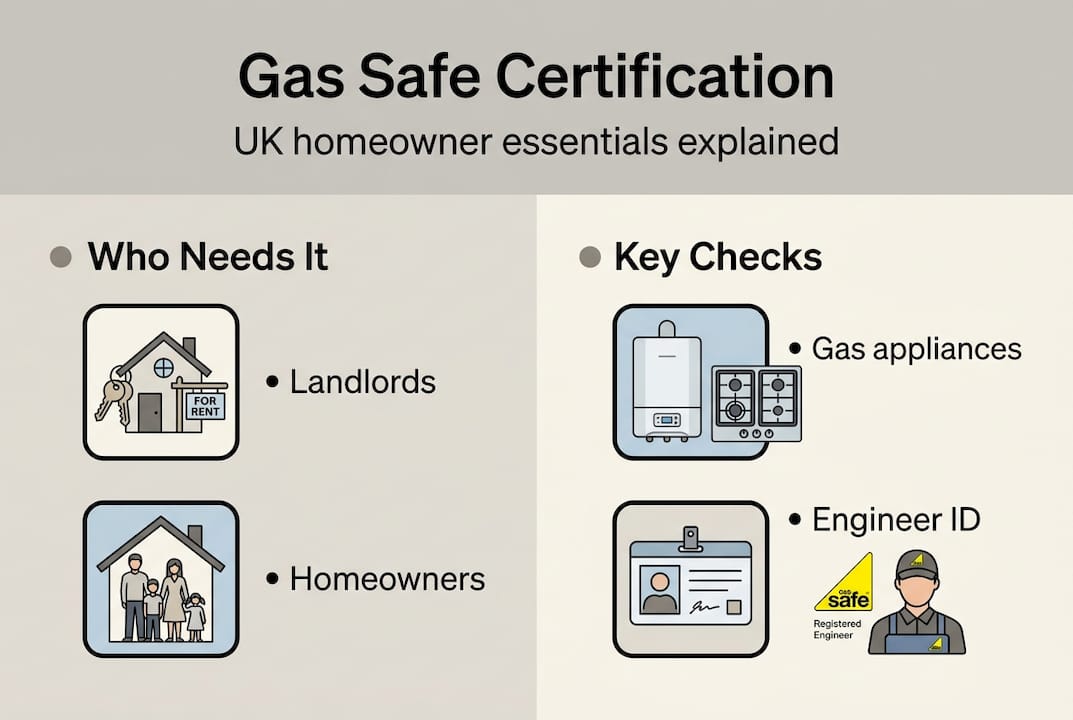
The short answer is: anyone with gas appliances in a rented property is legally required to hold a valid Gas Safety certificate. But the picture is more nuanced than that.
Landlords have the clearest legal obligation. They must arrange an annual Gas Safe inspection for every gas appliance and flue in their rental properties. The certificate must be renewed every 12 months, and tenants must receive a copy within 28 days of the inspection.
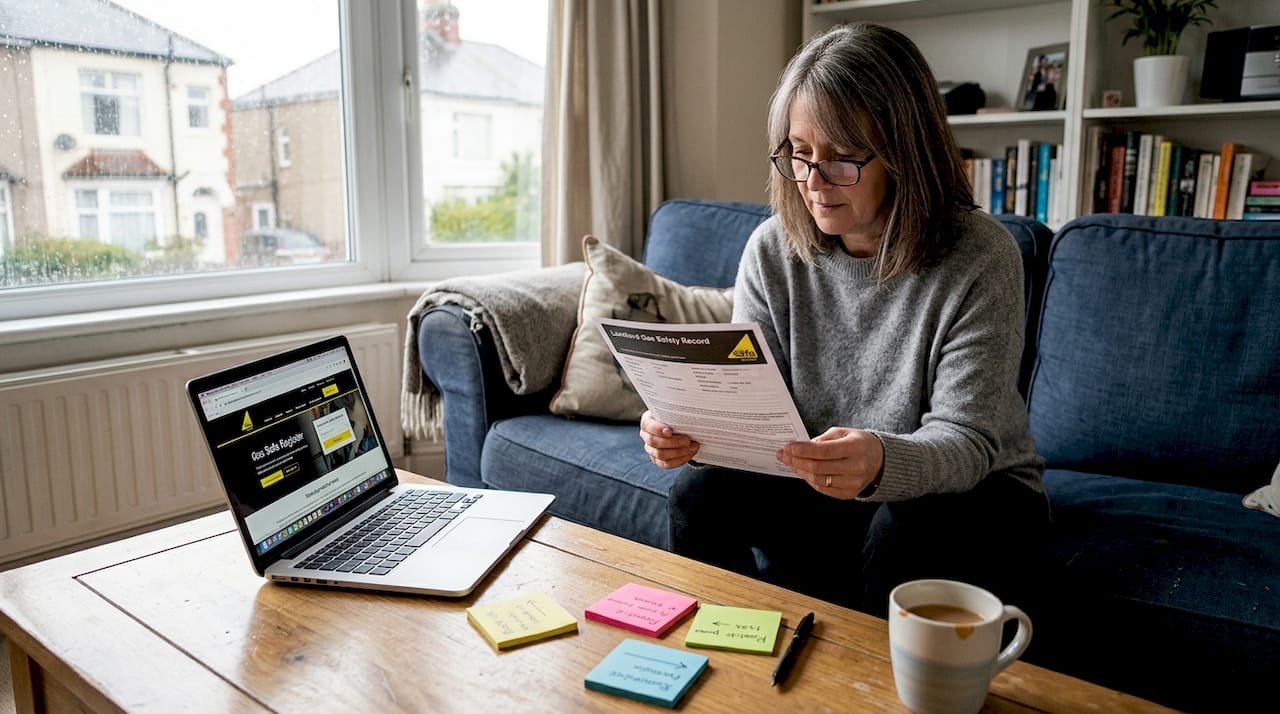
Owner-occupiers are not legally required to hold a certificate, but they are still bound by the rule that any gas work carried out must be done by a Gas Safe registered engineer. Skipping this is not a grey area; it is illegal.
With over 21 million homes in the UK connected to gas, the scale of this obligation is significant. Here is a quick breakdown of common property situations:
- Rented property with gas appliances: Annual certificate legally required
- Owner-occupied home with gas: No annual certificate required, but all work must be Gas Safe certified
- Property with no gas supply: No certificate needed
- Capped gas pipes with no active appliances: May still require a check; edge cases like these are worth confirming with a registered engineer
- Tenant-owned appliances: Not the landlord's legal responsibility to inspect, but shared flues absolutely are
If you are unsure whether your engineer is properly registered for the type of work you need, verifying your engineer before any work begins is a straightforward step that protects you legally. You can also look into checking plumber credentials as part of your due diligence.
What does a Gas Safe inspection involve?
A Gas Safe inspection is far more thorough than a quick visual once-over. Engineers follow a structured process that covers multiple systems and safety checks. Here is what a standard inspection includes:
- Visual inspection of all gas appliances, checking for obvious damage, corrosion, or unsafe installation
- Gas tightness test, which measures pressure stability at 18 to 21 mbar over a two-minute period to detect leaks
- Flue integrity check to ensure combustion gases are safely expelled and not leaking into living spaces
- Combustion analysis to verify appliances are burning gas efficiently and safely
- Safety device testing, including flame failure devices and pressure relief valves
- Pipework inspection for signs of leaks, corrosion, or improper installation
"A gas tightness test is the single most important diagnostic step. A pressure drop during those two minutes tells an engineer everything they need to know about hidden leaks."
Defects found during an inspection are classified into three categories: Immediately Dangerous (ID), meaning the appliance must be disconnected at once; At Risk, meaning it poses a potential hazard and should be repaired promptly; and Unsatisfactory, meaning it does not meet current standards but is not an immediate threat.
Pro Tip: Always ask your engineer for a written summary of findings, not just the certificate itself. Understanding which category any defect falls into helps you prioritise repairs and gives you documentation if you ever need to make an insurance claim.
For a deeper look at what happens during routine maintenance alongside a safety check, our guide on servicing procedures explains the difference clearly.
Understanding your Gas Safety certificate (CP12)
Once the inspection is complete, your engineer issues a CP12, also known as a Gas Safety Record or Landlord Gas Safety Record. A gas safety certificate confirms that all inspected appliances, flues, and pipework are safe and valid for 12 months from the inspection date.
Many homeowners confuse a CP12 with a boiler service. They are not the same thing. Here is a clear comparison:
| Gas Safety Record (CP12) | Boiler service | |
|---|---|---|
| Purpose | Safety compliance check | Maintenance and efficiency |
| What it covers | All gas appliances, flues, pipework | Boiler internals only |
| Legally required | Yes (for landlords) | No |
| Frequency | Annually | Annually recommended |
| Issues a certificate | Yes | No |
As CP12 guidance confirms, the safety record and the boiler service complement each other but serve entirely different purposes. Ideally, you arrange both at the same visit.
Your CP12 will include the engineer's Gas Safe registration number, the date of inspection, a list of appliances and flues checked, the outcome for each item, and the date the certificate expires.
If defects are found, here is what to do:
- Immediately Dangerous: Stop using the appliance immediately and arrange urgent repair
- At Risk: Book a repair as soon as possible and avoid using the appliance until fixed
- Unsatisfactory: Plan a repair within a reasonable timeframe and monitor the appliance
Pro Tip: Keep every CP12 you receive in a safe place, whether physical or digital. Insurers, mortgage lenders, and buyers during a property sale may all request proof of gas safety compliance going back several years. Our guide on the Gas Safety Record vs boiler service explains why having both on record matters.
Avoiding illegal or unqualified gas work
The temptation to save money by hiring an unregistered tradesperson is understandable, but the consequences are severe. Illegal gas work can result in fines exceeding £6,000, criminal prosecution, and insurance policies that become worthless the moment a claim is made.
Verifying an engineer takes less than five minutes. Here is how to do it properly:
- Ask to see their Gas Safe ID card before any work begins. It should include a photo, an expiry date, and a list of appliance categories they are qualified to work on.
- Check the categories match the job. An engineer qualified for domestic boilers is not automatically qualified for commercial catering equipment or LPG systems.
- Look them up on GasSafeRegister.co.uk. You can verify engineer credentials using their registration number or business name.
- Do not accept verbal assurances alone. A legitimate engineer will never object to you checking their credentials.
"No short-term saving justifies the risk of illegal gas work. A single incident can result in prosecution, a voided insurance policy, and a property that is unsellable."
If you suspect someone has carried out unregistered gas work, you can report them directly to the Gas Safe Register. This protects other homeowners and helps maintain the integrity of the system. Finding a trusted registered plumber in your area or verifying your local engineer before booking any work is always the right first step.
Need a Gas Safe registered engineer you can trust?
At Your Local Plumber, every engineer we send to your home is fully Gas Safe registered and experienced in domestic gas systems. Whether you need an annual landlord inspection, a one-off safety check, or urgent repairs following a failed certificate, we make the process straightforward and stress-free.

We cover a wide range of locations across the UK, and our transparent pricing means no surprises on the invoice. If you have received a CP12 with defects, or you simply want peace of mind before your next tenancy begins, our team is ready to help. Visit Your Local Plumber to book a Gas Safe inspection or speak to one of our engineers about your specific situation. Safety is not something to put off.
Frequently asked questions
How long does a Gas Safe certificate last?
A Gas Safe certificate is valid for 12 months from the date of inspection, after which a new inspection must be arranged.
Can homeowners do their own gas work and certify it?
No. Only Gas Safe registered engineers are legally permitted to carry out and certify gas work in the UK, regardless of the homeowner's technical ability.
What should I do if my certificate shows a defect?
Act immediately. Arrange repairs with a registered engineer and avoid using any appliance classified as ID or At Risk until the issue is resolved.
Do I need a certificate if I don't use gas?
No. If your home has no gas supply or appliances, you do not need a certificate, though capped pipes may still warrant a professional check.