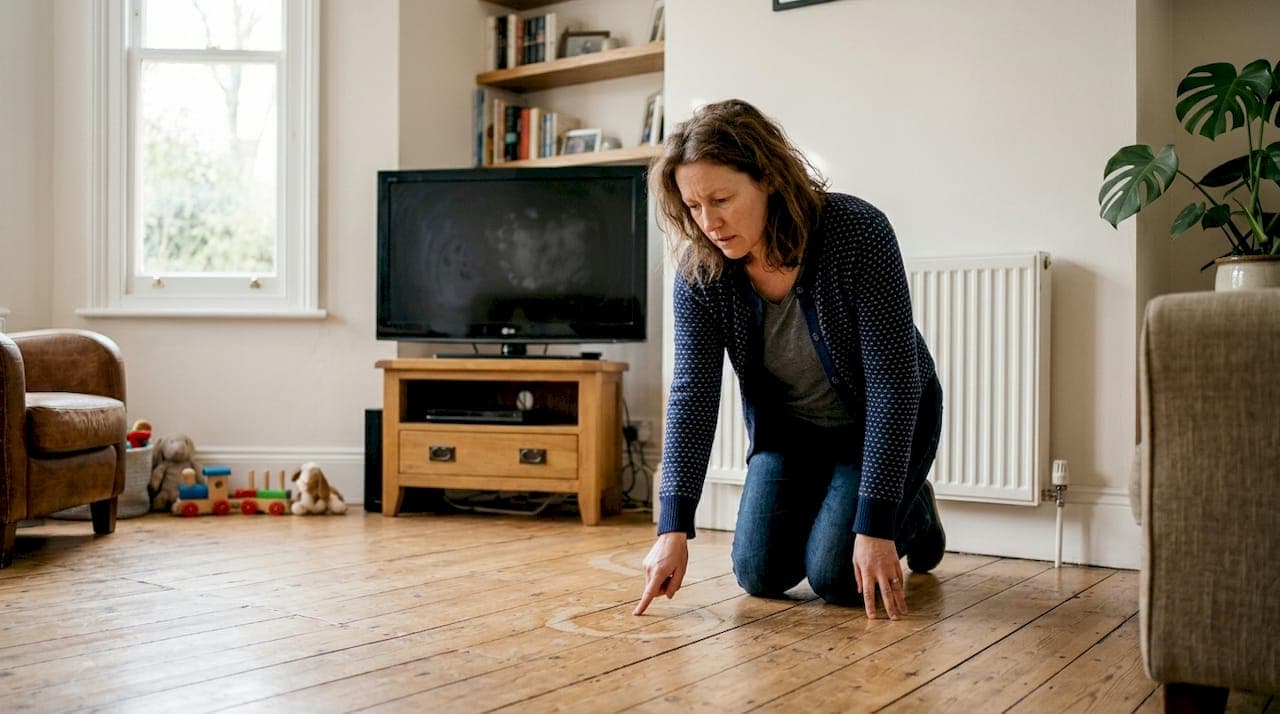
Hidden water leaks are far more destructive than most homeowners realise. A single pinhole leak can waste 150 litres per day in a UK home, quietly running up your bills and rotting your walls before you notice a single damp patch. The damage caused by undetected leaks runs into billions of pounds globally every year, yet the majority of leaks stay hidden for months. This article explains exactly how leak detection works, what you can do yourself, and when to call in a professional so you can protect your home before a small drip becomes a very expensive problem.
Table of Contents
- What is leak detection?
- Detecting leaks yourself: Signs and DIY methods
- Professional leak detection: Tools, methods, and accuracy
- Challenging leak scenarios: Slab leaks, central heating, and hard water
- Smart systems and ongoing prevention
- Get expert leak detection help in Reading
- Frequently asked questions
Key Takeaways
| Point | Details |
|---|---|
| Leak detection saves money | Quickly finding leaks prevents expensive repairs and high water bills. |
| DIY checks spot basics | Simple tests like the water meter or toilet dye check help spot common leaks. |
| Professionals use advanced tools | Expert plumbers deploy non-invasive equipment for accuracy and minimal damage. |
| Smart sensors prevent future leaks | Modern technology gives you 24/7 alerts and automatic shut-off for peace of mind. |
| Local help is available | Emergency and regular leak detection services in Reading can solve even tough cases. |
What is leak detection?
Leak detection is not simply looking for a puddle on the floor. It is identifying water leaks in home plumbing systems, often hidden behind walls, under floors, or underground, using non-invasive methods that avoid unnecessary damage to your property. The scope is broad: it covers supply pipes, waste pipes, central heating circuits, and even underground mains connections.
The reason leaks go unnoticed for so long is straightforward. Most of your pipework is completely out of sight. Water can travel along a joist or down a wall cavity for weeks before it appears as a stain on your ceiling. By that point, the structural damage and mould growth are already well underway.
Ignoring a leak, even a slow one, leads to a predictable chain of consequences: rising water bills, mould and damp that affect air quality, weakened floor joists and plasterwork, and in serious cases, subsidence. Understanding transparent plumbing pricing before you book a detection service also helps you avoid nasty surprises when the invoice arrives.
Key warning signs that a leak may already be present in your home:
- Unexplained increases in your water bill
- Damp patches on walls, ceilings, or floors
- The sound of running water when all taps are off
- Mould or mildew appearing in unusual places
- A musty smell in rooms with no obvious source
- Peeling paint or wallpaper with no moisture explanation
"Leak detection uses non-invasive technology to locate hidden water loss without tearing apart your home. The goal is precision: find the source, fix it once, and prevent further damage." — Counsil Plumbing
Detecting leaks yourself: Signs and DIY methods
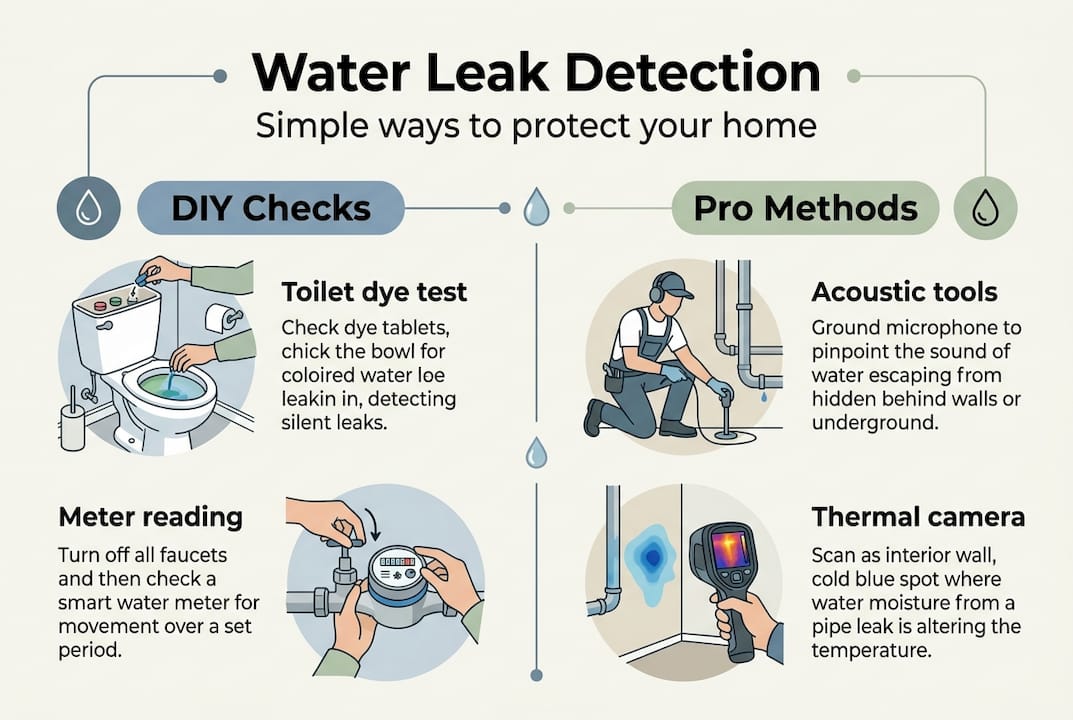
Before calling a professional, there are several practical checks you can carry out at home. DIY leak detection methods include the water meter test and the toilet dye test, alongside watching for common signs like unexplained damp, the sound of running water, or a sudden spike in your bills.
Here is how to run the water meter test step by step:
- Turn off every tap, appliance, and water-using device in your home.
- Locate your water meter, usually found near the stop tap under the kitchen sink or outside near the boundary.
- Note the current reading and take a photograph.
- Wait 30 to 60 minutes without using any water.
- Check the meter again. If the reading has changed, water is moving through your system and a leak is likely.
For the toilet dye test, add a few drops of food colouring to the cistern and wait 15 minutes without flushing. If colour appears in the bowl, your toilet flapper valve is leaking. This is one of the most common and overlooked household leaks.
Other useful self-checks include feeling along visible pipes under sinks for moisture, checking the area around your boiler for drips, and inspecting sealant around baths and showers for cracks. Keeping up with a plumbing maintenance checklist throughout the year makes these checks a habit rather than a panic response.
Pro Tip: DIY methods are excellent for confirming a leak exists, but they rarely tell you exactly where it is. A positive meter test means you need a professional to pinpoint the source, especially if no visible signs are present.
Professional leak detection: Tools, methods, and accuracy
When your own checks point to a leak but you cannot find it, professional detection is the logical next step. Professional equipment achieves 95% greater accuracy compared to visual checks alone, using a range of non-invasive technologies that locate leaks without breaking open walls or lifting floors unnecessarily.
The main methods professionals use include:
- Acoustic detection: Specialist listening devices pick up the sound of water escaping under pressure, even through concrete and soil.
- Thermal imaging: Infrared cameras reveal temperature differences caused by water movement behind walls or under floors.
- Tracer gas: A harmless gas mixture is introduced into the pipe; sensors on the surface detect where it escapes.
- Pressure testing: Sections of pipework are isolated and pressurised to identify where pressure drops occur.
- Moisture metres: Handheld devices measure moisture levels in walls and floors without drilling.
- Endoscopic cameras: Flexible cameras are fed into pipes to provide a direct visual inspection.
For more on electronic leak detection and how acoustic technology works in practice, the detail is genuinely impressive.
| Method | Accuracy | Invasive? | Best for |
|---|---|---|---|
| Visual check (DIY) | Low | No | Surface leaks only |
| Water meter test (DIY) | Confirms leak exists | No | Any hidden leak |
| Acoustic detection | Very high | No | Pressurised supply pipes |
| Thermal imaging | High | No | Underfloor, wall leaks |
| Tracer gas | Very high | Minimal | Buried or slab pipes |
| Pressure testing | High | No | Isolated pipe sections |
Knowing when to call a professional matters. If your meter test is positive but you see no visible signs, if you have already had a repair that has not resolved the issue, or if you suspect a leak under a concrete floor, do not delay. Prompt action through emergency plumbing solutions can prevent a manageable repair from becoming a structural crisis.
Challenging leak scenarios: Slab leaks, central heating, and hard water
Some leaks create special challenges, especially in Reading homes with older plumbing or specific local conditions. Three scenarios stand out as particularly tricky.
Slab leaks occur when pipes running beneath a concrete floor develop a fault. Signs include warm or cold spots on the floor surface, damp patches appearing at the edges of rooms, unexplained drops in water pressure, and the sound of water running when everything is switched off. Because the pipe is encased in concrete, tracer gas and thermal imaging are the key tools for locating these accurately without unnecessary excavation.
Central heating leaks are often subtle. A boiler that repeatedly loses pressure, radiators that need frequent bleeding, or damp patches near pipework hidden in walls are all indicators. These leaks can corrode your system from the inside and reduce efficiency significantly. If you suspect a heating leak, booking an emergency heating engineer quickly prevents further damage. In some cases, an ageing boiler is the root cause, and a new boiler quote may be the most cost-effective long-term solution.
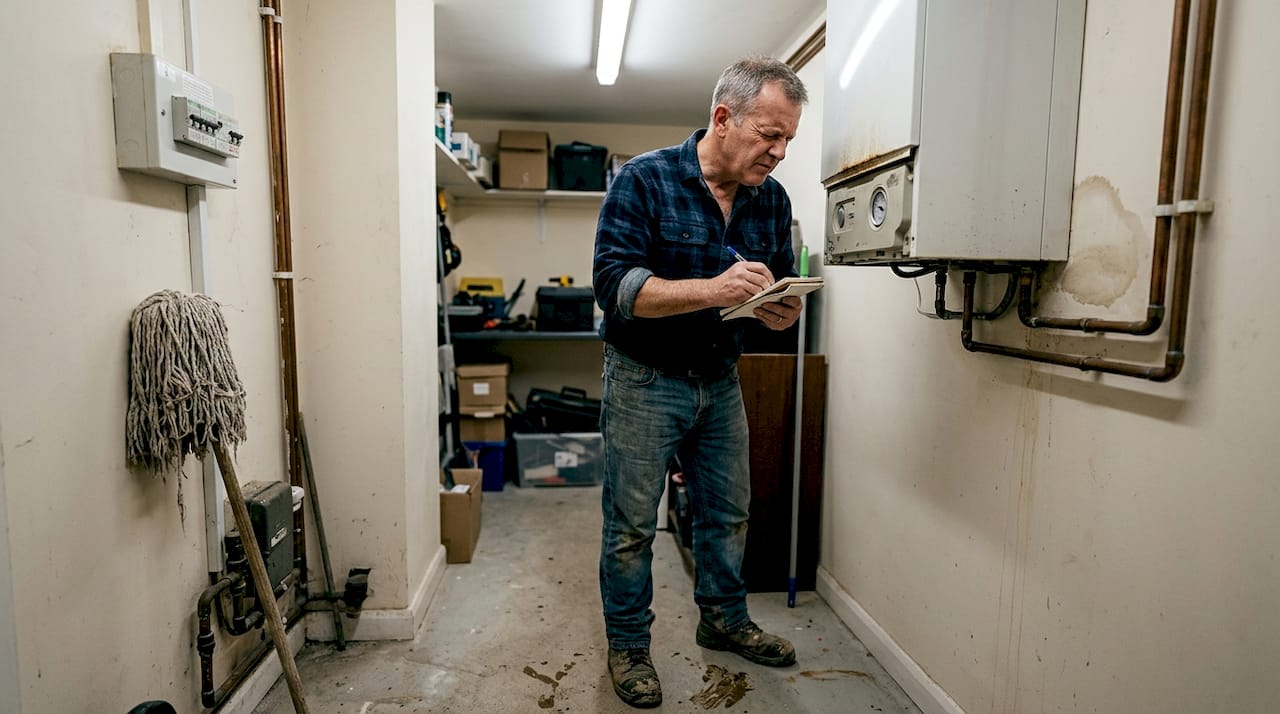
Hard water is a real factor in many parts of Berkshire. Limescale builds up inside pipes and around joints, which can both cause leaks and muffle the acoustic signals that detection equipment relies on. This makes professional diagnosis even more important in hard water areas, as DIY methods are less reliable. For a thorough overview of detecting and fixing leaks in UK conditions, local guidance is worth reading.
Pro Tip: If your boiler pressure drops more than once a week, or if you notice warm patches on a cold floor, call a professional immediately. These are not minor quirks; they are signs of active leaks that will worsen without intervention.
Smart systems and ongoing prevention
To avoid repeat problems, many homeowners now turn to smart detection technology. Smart sensors and flow monitors provide ongoing prevention through real-time alerts and automatic shut-off valves, making them an ideal complement to a one-off professional detection visit.
Here is how smart leak detection works in practice. A flow monitor is fitted to your mains supply and learns your household's normal water usage patterns. If it detects an unusual flow, such as water moving at 3am when nobody is awake, it sends an alert to your phone and can automatically close the supply valve to stop the leak spreading.
Benefits of smart leak detection systems:
- 24/7 monitoring without any effort on your part
- Instant alerts sent directly to your smartphone
- Automatic shut-off to limit damage before you even wake up
- Detailed usage data to help you spot gradual increases in consumption
- Potential reduction in home insurance premiums
| Feature | Smart system | Manual checks |
|---|---|---|
| Monitoring frequency | Continuous | Periodic |
| Response time | Immediate | Hours or days |
| Shut-off capability | Automatic | Manual only |
| Data and usage tracking | Yes | No |
| Upfront cost | Moderate | Low |
| Long-term protection | High | Limited |
Pairing a smart system with a regular plumbing maintenance checklist gives you the best of both worlds: technology watching your pipes around the clock, and a professional eye catching anything the sensors might miss.
Get expert leak detection help in Reading
If you have spotted the warning signs or your meter test has confirmed a leak, the next step is getting a professional in quickly. Every hour a hidden leak continues, the damage grows.

At Your Local Plumber, we provide fast, reliable leak detection and plumbing services across Reading and the surrounding area. Our experienced engineers use non-invasive technology to find leaks accurately, without tearing your home apart unnecessarily. Whether you need an emergency callout or a planned inspection, you can book a local plumber online in minutes. As a trusted plumber in Reading, we offer transparent pricing so you always know what to expect before work begins. Do not let a hidden leak become a costly disaster.
Frequently asked questions
How do I know if I have a hidden water leak?
Watch for unexplained damp, higher bills, sounds of running water when no taps are on, or mould appearing in unusual spots. The water meter test is the most reliable DIY confirmation method.
Are slab leaks common in Reading homes?
Slab leaks under foundations can affect older properties or homes with concrete ground floors. Signs include warm or cold patches on the floor, damp at room edges, and unexplained pressure loss in your heating system.
Can smart leak detectors really prevent major water damage?
Yes. Smart sensors and auto-shutoff valves can detect a leak the moment it starts and cut the water supply before significant damage occurs, often before you are even aware of a problem.
Does my insurance cover leak detection or repairs?
Many home insurance policies include trace and access cover for sudden leaks, which pays for the cost of finding the leak source. Always check your policy wording carefully, as terms vary between providers.
Recommended
- Essential plumbing maintenance checklist for UK homeowners
- Transparent plumbing pricing: peace of mind for UK homeowners
- How to manage emergency plumbing in Milton Keynes: 2026 guide
- Why choose a Windsor plumber: reliable, local, expert service
- Guide to brunn water checks for safe well water at home – Svenskt Vattenprov