
TL;DR:
- Recognize genuine plumbing emergencies such as burst pipes, sewage backups, and water loss.
- Keep essential tools like spanners, plungers, and repair tape for quick response.
- Turn off water supply immediately and call a professional if issues are major or unsafe.
A plumbing emergency rarely announces itself. One moment everything is fine, and the next you are standing in a flooded kitchen wondering what to do first. Most Reading homeowners are caught completely off-guard because they have never thought about what to keep handy or how to act fast. The right essentials, both tools and knowledge, can prevent thousands of pounds in water damage. This guide walks you through how to spot a genuine emergency, what to keep in your cupboard, how to act before help arrives, and when to put down the spanner and call a professional.
Table of Contents
- How to recognise a plumbing emergency in your home
- Must-have tools for tackling urgent plumbing problems
- What to do while waiting for an emergency plumber
- Deciding when to call a professional emergency plumber
- Our take: Why Reading homeowners underestimate plumbing emergencies
- Fast, reliable emergency help is just a click away
- Frequently asked questions
Key Takeaways
| Point | Details |
|---|---|
| Recognise urgent signs | Knowing when an issue is an emergency helps you respond quickly and safely. |
| Keep essential tools ready | A few basic tools can prevent further damage before the plumber arrives. |
| Act quickly to limit damage | Turning off water and taking immediate steps can save expensive repairs. |
| Call professionals when needed | Some emergencies are too risky for DIY and always need expert help. |
How to recognise a plumbing emergency in your home
Not every dripping tap is a crisis, but some plumbing problems genuinely cannot wait until Monday morning. A plumbing emergency is any situation where water, sewage, or gas poses an immediate risk to your property, your health, or your safety. Understanding the difference between urgent and non-urgent problems is the first step to responding correctly.
Common situations that qualify as genuine emergencies include:
- Burst pipes that are actively spraying or flooding a room
- Sewage backup coming up through toilets or floor drains
- Complete loss of water supply with no explanation from your water company
- Uncontrollable leaks from appliances, joints, or walls
- Frozen pipes that have cracked or are at risk of bursting
- Boiler failure during cold weather, especially with vulnerable people in the home
As confirmed by guidance on emergency scenarios, situations requiring emergency plumbing services include burst pipes, severe blockages, and uncontrollable leaks. Knowing this list means you will not waste precious minutes wondering whether to act.
One of the trickiest problems is the emergency you cannot see. Hidden leaks inside walls or under floors can cause structural damage and mould long before you notice any obvious signs. Checking your water meter when no taps are running is a reliable way to spot trouble early. If the dial is moving, water is going somewhere it should not be. Our signs of hidden leaks guide explains exactly what to look for.
For broader water emergency advice from the industry, Water UK offers practical guidance on what steps to take when your supply is affected.
Pro Tip: Check your water meter on a still evening when the house is quiet and no appliances are running. If the numbers are changing, you likely have a hidden leak that needs investigating before it becomes a full emergency.
Must-have tools for tackling urgent plumbing problems
Recognising an emergency is only half the battle. Being prepared with the right tools can mean the difference between minimal inconvenience and devastating damage. You do not need a van full of equipment. A small, organised kit kept somewhere accessible is all it takes.
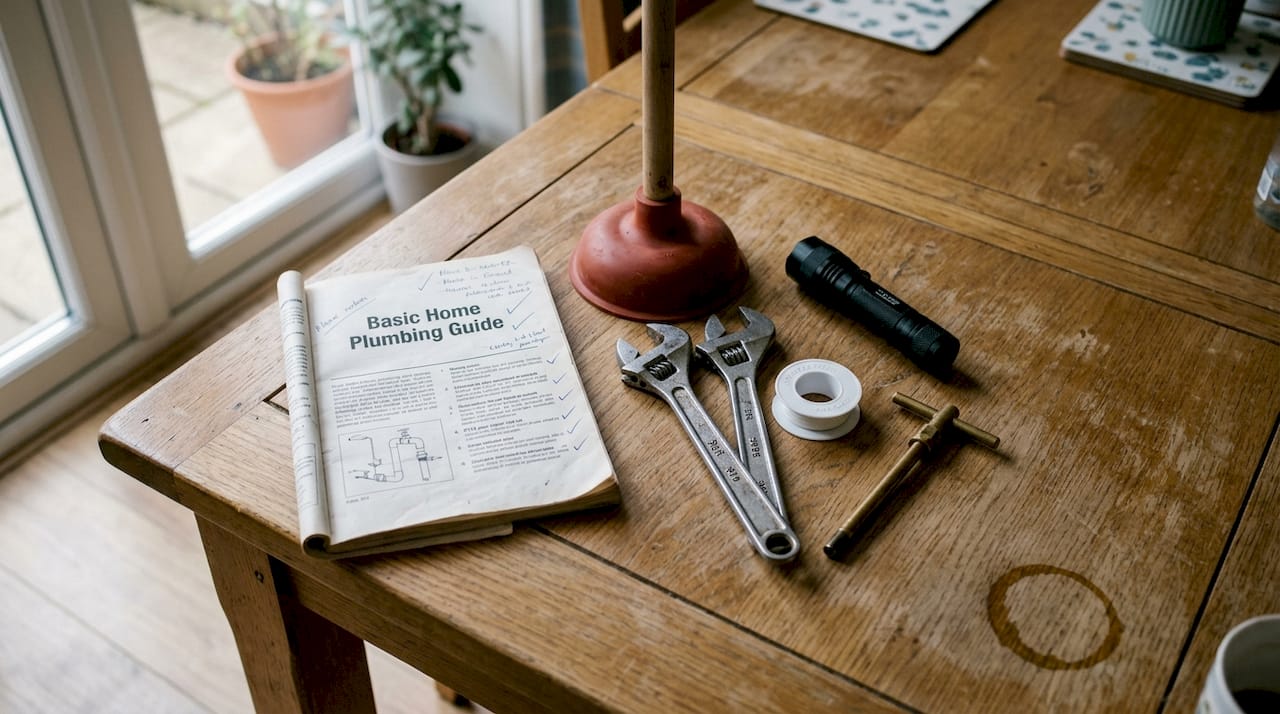
Here are the seven essentials every Reading homeowner should have:
- Adjustable spanner – Used to tighten or loosen pipe fittings and isolate valves. Versatile enough to handle most emergency tasks.
- Plunger – The first line of defence against blocked sinks, toilets, and drains. A cup plunger works on sinks; a flange plunger is better for toilets.
- Pipe repair tape (PTFE and self-amalgamating) – Wraps around leaking joints or cracked pipes to create a watertight temporary seal. Buys you time until a professional arrives.
- Bucket and old towels – Simple but vital. Catching water quickly protects flooring, electrics, and furniture from secondary damage.
- Head torch – Leaks often happen in dark, awkward spaces. A head torch keeps both hands free while you work.
- Drain snake (or drain auger) – Reaches blockages that a plunger cannot shift. Particularly useful for slow-draining baths and kitchen sinks.
- Stopcock key – Allows you to shut off the external stop valve, which is essential if your internal stopcock is seized or inaccessible.
A solid plumbing maintenance checklist confirms that a basic set of plumbing tools allows you to limit damage and wait safely for a professional. The goal is never to permanently fix the problem yourself. It is to stop things getting worse.
If you are unsure about your rights or responsibilities when water supply issues affect your home, Citizens Advice provides clear guidance on where responsibility lies between you and your water company.
Pro Tip: A stopcock key costs just a few pounds and is often overlooked. Many Reading homes have external meters with covers that require this specific tool to open. Knowing where your external stop valve is, and being able to reach it fast, can stop a burst pipe from becoming a flooded home.
What to do while waiting for an emergency plumber
Having tools is essential, but quick action is just as important. Here is what you should do before the professional arrives, in order of priority:
- Turn off the water supply at your internal stopcock, usually found under the kitchen sink or near the boiler. If that is not accessible, use the external stop valve.
- Isolate electrics in affected areas by switching off the relevant circuit breakers. Water and electricity are a dangerous combination.
- Move valuables and furniture away from the affected area to reduce secondary damage to belongings and flooring.
- Contain standing water using buckets, towels, and mops. Do not let water sit on wooden floors or near skirting boards.
- Open drains where safe to encourage water to disperse rather than pool.
- Ventilate the area by opening windows, which helps prevent mould forming in wet conditions.
- Save your emergency plumber's number in your phone now, not during the crisis.
Acting quickly makes a measurable difference. As noted in our leak detection guide, prompt actions such as shutting off the water and moving valuables can significantly reduce damage and the overall cost of repairs.
Thames Water also offers clear leak or burst pipe advice on what to do if the issue involves the supply pipe to your property, including when it is their responsibility to fix.
The biggest mistake homeowners make is hesitating. Every minute that water runs freely is another minute of damage accumulating. Turning off the supply costs nothing and can save you thousands.
Deciding when to call a professional emergency plumber
Even with all the right essentials, some plumbing disasters need more than just quick thinking. Knowing when to hand over to the experts is vital, both for safety and for protecting your home's value.
Here is a straightforward comparison to help you decide:
| Situation | DIY appropriate? | Call a professional? |
|---|---|---|
| Minor dripping tap | Yes, temporarily | If it persists |
| Blocked sink or toilet | Yes, with plunger | If unresolved after attempts |
| Small joint leak (contained) | Yes, with repair tape | Always follow up |
| Burst pipe with flooding | No | Immediately |
| Water heater failure | No | Immediately |
| Sewage backup | No | Immediately |
| Gas smell near appliances | No | Call Gas Safe and 999 |
| Loss of water supply | Check meter first | If cause is unclear |
The role of professional plumbers goes well beyond fixing what is broken. Some emergencies carry legal, health, and safety risks that make DIY attempts genuinely dangerous. Gas-related issues, for example, must only be handled by Gas Safe registered engineers. Sewage backups involve health hazards that require proper protective equipment and disposal procedures.
Warranty implications are also worth considering. Many boiler and appliance warranties are voided if an unqualified person carries out repairs. A professional fix, even an emergency one, protects your investment.
For guidance on costs and what to expect, Checkatrade's resource on when to call an emergency plumber gives a useful overview of typical pricing and scenarios.
Our take: Why Reading homeowners underestimate plumbing emergencies
After working with homeowners across Reading, we have noticed a consistent pattern. Most people do not underestimate plumbing emergencies because they are careless. They underestimate them because nothing serious has happened yet.
The first time a pipe bursts at 11pm on a Sunday, the reality hits hard. The cost is not just the repair. It is the damaged flooring, the ruined belongings, the insurance excess, and the stress of managing it all without preparation. We have seen minor leaks ignored for weeks turn into major structural problems that cost ten times more to fix.
The uncomfortable truth is that small delays are far more expensive than people expect. A slow drip under a sink can saturate a cabinet, rot the floor beneath it, and create a mould problem in the wall behind it, all within a few months. Our guidance on transparent plumbing pricing exists precisely because we want homeowners to understand costs before panic sets in, not during it.
The best time to review your home's plumbing readiness is before something goes wrong. Check your stopcock works. Build your emergency kit. Save a reliable number in your phone. These five minutes of preparation are worth more than any emergency response.
Fast, reliable emergency help is just a click away
If a plumbing emergency strikes your Reading home, the last thing you want is to be searching for a trustworthy plumber while water is spreading across your floor.
At Your Local Plumber, we offer a 60-minute response time across the Reading area, with 24/7 availability so you are never left waiting when it matters most. Our experienced engineers handle everything from burst pipes and blockages to full emergency repairs, with clear, upfront pricing so there are no surprises on the bill. You can book emergency plumber online in minutes, or browse our full range of plumbing services to find the right solution for your situation. Local, reliable, and ready when you need us.
Frequently asked questions
What is the first thing I should do during a plumbing emergency?
The first priority is to turn off your home's main water supply to prevent further flooding and damage. As Water UK advises, shutting off the main supply immediately limits the scale of the problem.
Can I fix a burst pipe myself?
Temporary repairs with self-amalgamating tape or a pipe clamp can contain the leak short-term, but a professional should repair or replace the pipe as soon as possible. As noted in the plumbing maintenance checklist, DIY fixes provide short-term relief only.
What tools should every homeowner keep for plumbing emergencies?
Keep an adjustable spanner, plunger, pipe repair tape, bucket, and torch handy to tackle most common household plumbing issues. These tools help homeowners respond fast and reduce damage before a professional arrives.
When should I call an emergency plumber instead of fixing it myself?
Call a professional for major leaks, sewage backups, gas smells, or when you are unsure how to stop the problem safely. As highlighted by guidance on the essential role of plumbers, some situations require professional intervention to avoid legal, health, and safety risks.