TL;DR:
- A leaking boiler with gas smell, electrical water intrusion, or rapid pressure loss is an immediate emergency needing urgent professional attention.
- Even slow leaks with stable pressure require timely inspection to prevent system damage, corrosion, or safety hazards.
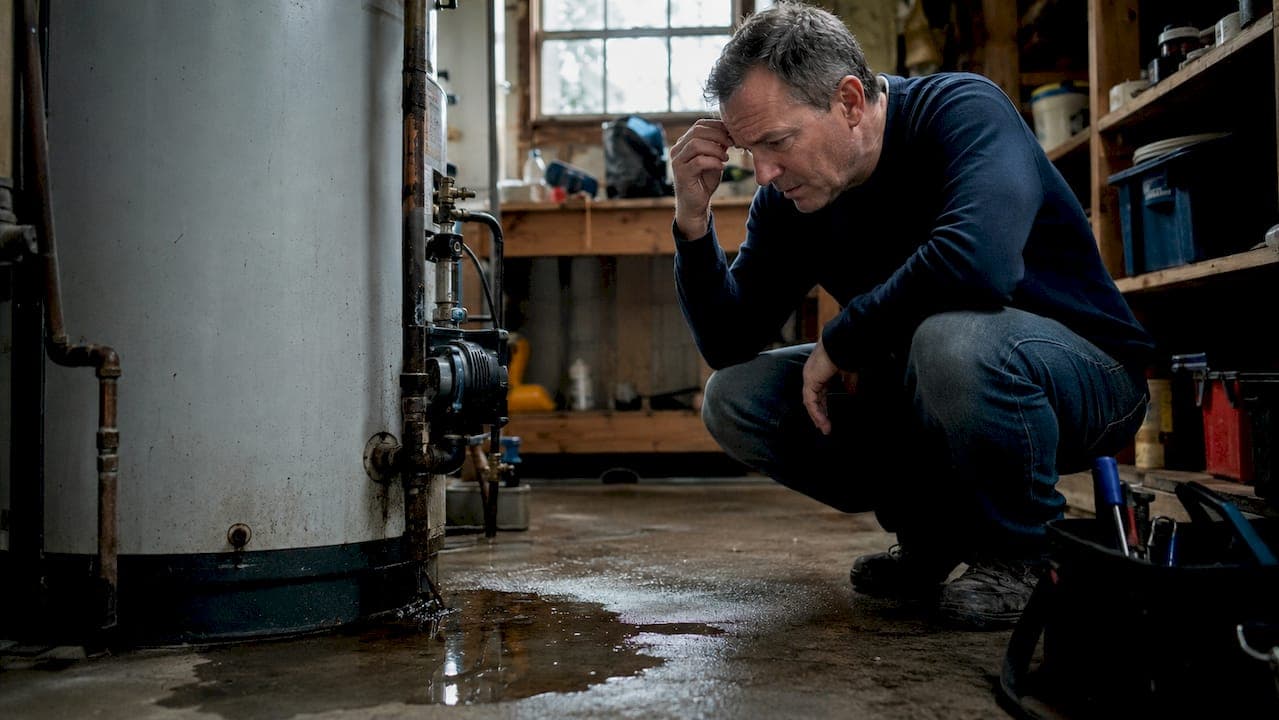
A leaking boiler is an emergency when it poses an immediate threat to your safety, your heating system, or your home. Specifically, any boiler leak accompanied by a gas smell, water near electrical components, a rapid pressure drop, or a complete loss of heating and hot water requires urgent action. The correct term used by Gas Safe engineers for this situation is a "boiler make-safe," which involves isolating the system before professional repair. Not every drip demands a 999 call, but knowing which symptoms cross the line into genuine danger is what this guide is for.
Is a leaking boiler an emergency? The signs that matter
The short answer is yes, under specific conditions. Emergency status depends not on the size of the leak but on the hazards it creates. A slow drip from a pipe fitting is a different situation entirely from water pooling near your fuse box or a boiler that has lost pressure within minutes.
The following symptoms indicate a genuine boiler leak emergency requiring immediate professional attention:
- Gas smell near the boiler. Any sulphurous or rotten-egg odour means you should stop reading and act immediately. This is a gas leak, not a water leak, and the response is completely different.
- Water near electrical components. If water is dripping onto wiring, the fuse box, or any electrical fitting, you face a serious electrocution and fire risk.
- Rapid pressure gauge drop. A pressure gauge falling quickly indicates a significant internal failure, not a minor drip. This points to a failing pressure relief valve, a cracked heat exchanger, or a burst pipe within the system.
- Complete loss of heating or hot water. When a leak causes the boiler to shut down entirely, your home loses its primary heat source. In winter, this becomes a welfare issue as well as a mechanical one.
- Visible water damage spreading. Water tracking along joists, soaking insulation, or reaching flooring below the boiler signals a leak that has already progressed beyond a minor fault.
Pro Tip: Check your boiler's pressure gauge before calling an engineer. A reading below 0.5 bar or above 3 bar alongside a visible leak confirms an urgent fault and gives the engineer critical diagnostic information before they arrive.
If you notice any combination of these symptoms, treat it as a boiler leak emergency and do not wait to see if it resolves on its own. It will not.
Emergency vs non-emergency: how to tell the difference
Not every boiler leak demands a same-day call-out. Understanding the distinction saves you money and helps you prioritise correctly.
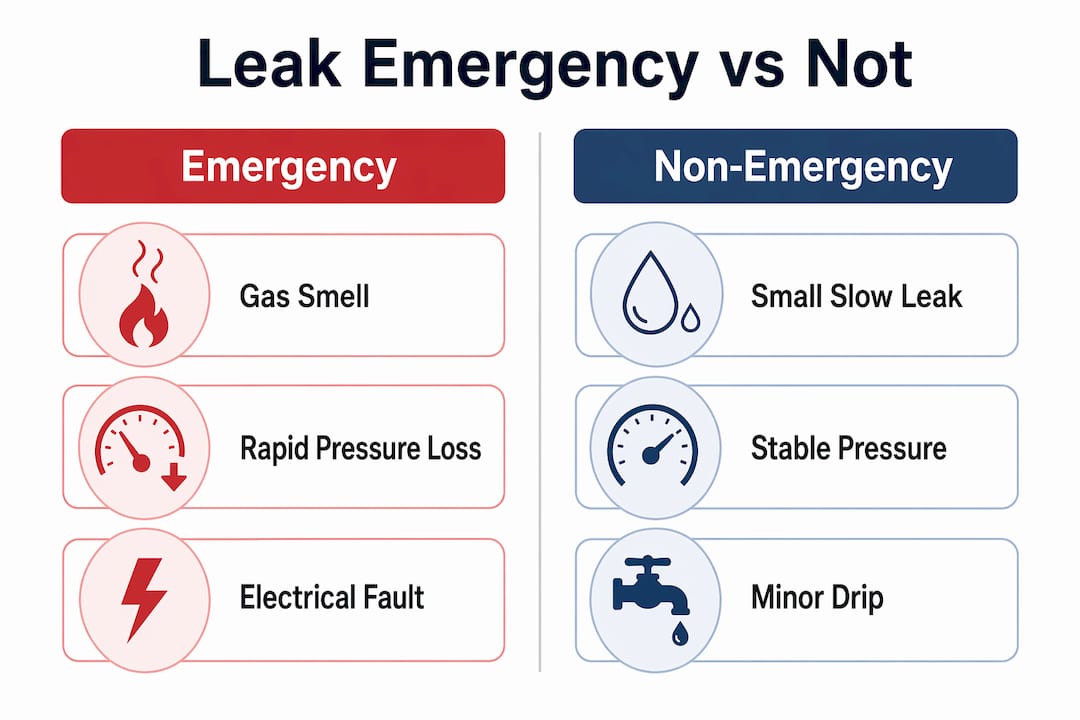
The table below sets out the key differences between an emergency and a non-emergency boiler leak, along with the appropriate response for each.
| Situation | Emergency? | What to do |
|---|---|---|
| Gas smell near boiler | Yes, always | Evacuate, call National Gas Emergency Service on 0800 111 999 |
| Water dripping onto electrics or wiring | Yes | Isolate power at fused spur, call engineer immediately |
| Rapid pressure loss (gauge dropping fast) | Yes | Shut down boiler, call Gas Safe engineer same day |
| Complete loss of heating or hot water | Yes (especially in winter) | Contact emergency plumbing service promptly |
| Slow drip from a pipe joint, stable pressure | No | Monitor, place a container, book a repair within days |
| Minor weep from pressure relief valve, no other symptoms | No | Book a scheduled inspection, do not ignore long term |
The critical rule to remember: any suspected gas leak is always an emergency, regardless of how minor it appears. Gas leaks require ventilation, immediate evacuation, and a call to the National Gas Emergency Service before you contact any plumber or engineer.
Small, slow leaks with stable pressure are lower urgency, but they are not something to ignore indefinitely. Untreated boiler leaks cause corrosion, pressure issues, and eventual system failure. A drip that costs £80 to fix today can become a full boiler replacement if left for months. The key signs of a plumbing problem are often subtle at first, which is why early attention pays off.
What to do immediately if your boiler is leaking
Follow these steps in order. Do not skip ahead or attempt to diagnose the fault yourself before making the system safe.
-
Check for a gas smell first. If you smell gas, do not touch any switches or electrical fittings. Leave the property immediately, leave the door open behind you, and call the National Gas Emergency Service on 0800 111 999. Do not re-enter until the service has cleared the property.
-
Turn off the boiler at the isolator switch. If there is no gas smell and it is safe to do so, turn off power at the fused spur or isolator switch near the boiler. Do not touch the boiler or any wet surfaces if water is near electrical components.
-
Turn off the water supply. Locate your stopcock (usually under the kitchen sink or where the mains enters the property) and turn it off to stop water feeding the leak. This limits further water damage while you wait for help.
-
Mop up standing water carefully. Use towels or a mop to remove standing water from the floor, keeping clear of any electrical fittings. Standing water near electrics is the primary cause of secondary damage after a boiler leak.
-
Place a container under the drip if safe. A bucket under a slow drip is a reasonable temporary measure, but buckets do not replace a professional inspection. They simply buy you time.
-
Call a Gas Safe registered engineer. Contact a qualified professional as soon as the immediate area is safe. Describe the symptoms clearly, including any pressure gauge readings, the location of the leak, and whether you smelled gas.
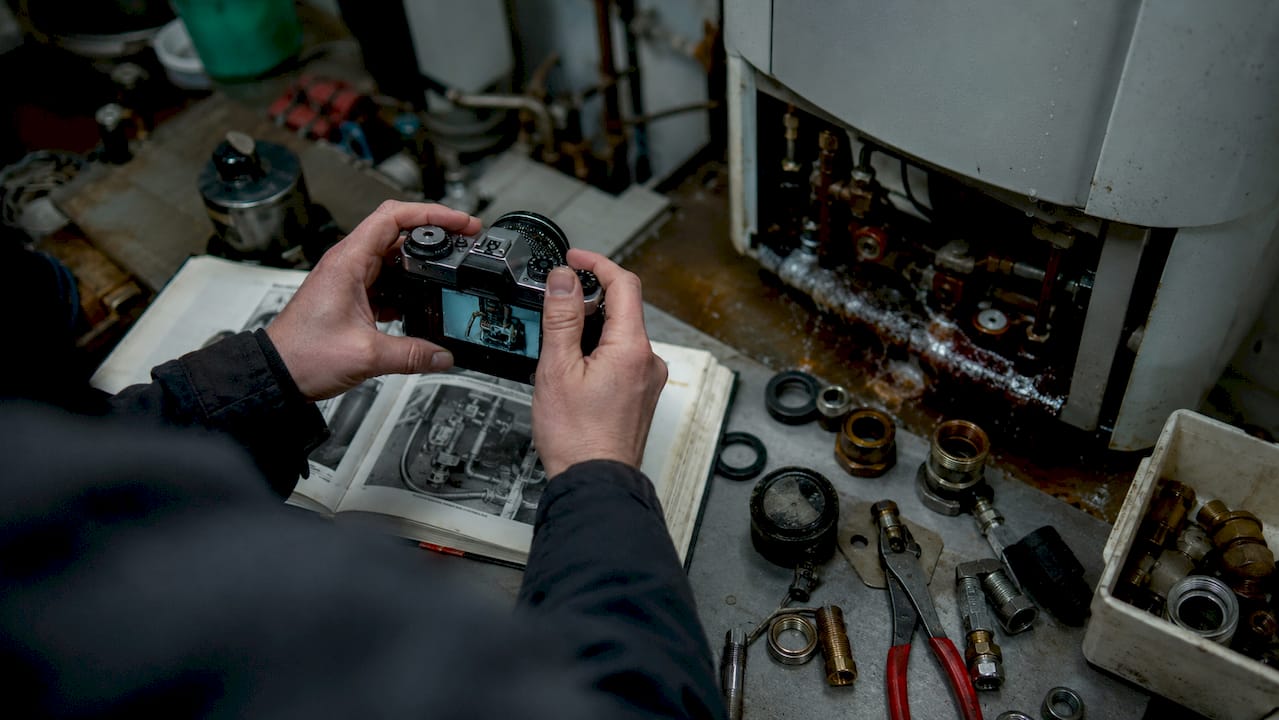
Pro Tip: Photograph the leak, the pressure gauge, and any water damage before the engineer arrives. This speeds up diagnosis and gives you a record for insurance purposes if the damage is significant.
Do not attempt complex repairs yourself. DIY troubleshooting on boilers carries serious risks and, in the case of gas-related components, is illegal without Gas Safe registration. Your job is to make the situation safe, not to fix it.
Why professional inspection is non-negotiable for a leaking boiler
A leaking boiler is not a straightforward repair in the way a dripping tap is. The source of the leak is often hidden inside the unit, and identifying it correctly requires specialist diagnostic equipment and training.
The risks of ignoring a boiler leak or attempting self-repair include:
- Corrosion and system damage. Water escaping from pressurised systems accelerates corrosion on metal components. Untreated leaks cause electrical shorts, mould growth, and structural water damage over time.
- Boiler failure. A leak from a cracked heat exchanger or failed pump seal will worsen with continued use. Running a leaking boiler shortens its lifespan significantly and can result in a complete breakdown at the worst possible time.
- Carbon monoxide risk. A compromised heat exchanger can allow combustion gases, including carbon monoxide, to enter the property. Carbon monoxide is odourless and can be fatal. This is why a Gas Safe engineer, not a general plumber, must assess any internal boiler fault.
- Voided warranty and insurance. Most boiler manufacturers and home insurance policies require repairs to be carried out by a Gas Safe registered engineer. Unauthorised repairs void both.
Gas Safe registration is the legal minimum for anyone working on gas appliances in the UK. You can verify an engineer's registration on the Gas Safe Register website before they arrive. For urgent situations, emergency plumbing services with Gas Safe qualified engineers can respond same-day, which matters when heating loss affects vulnerable household members.
Understanding how plumbers protect your home during an emergency also helps you know what to expect when the engineer arrives, from isolation procedures to temporary make-safe measures.
Key takeaways
A leaking boiler becomes a genuine emergency the moment it involves gas, electrics, rapid pressure loss, or loss of heating, and the correct response is always to isolate the system and call a Gas Safe registered engineer immediately.
| Point | Details |
|---|---|
| Gas smell means evacuate first | Call the National Gas Emergency Service on 0800 111 999 before contacting any engineer. |
| Isolate power before anything else | Turn off the boiler at the fused spur to prevent electrical hazards from wet components. |
| Pressure gauge is your early warning | A rapidly falling gauge reading confirms a serious fault requiring same-day professional attention. |
| Small leaks still need booking | A slow drip with stable pressure is not urgent, but ignoring it leads to corrosion and system failure. |
| Only Gas Safe engineers should repair boilers | DIY repairs on gas appliances are illegal and dangerous; always verify registration before work begins. |
What I have learnt from years of boiler emergencies
The most common mistake I see homeowners make is focusing entirely on collecting the water. They find a bucket, position it carefully, and feel like the situation is under control. It is not. The bucket addresses the symptom. The boiler is still powered, the pressure may still be dropping, and the source of the leak is still unknown. Leaving the boiler running while it is actively leaking worsens every aspect of the problem.
The second mistake is waiting. Homeowners tell themselves the leak is small, that it can wait until Monday, that it is probably nothing. Sometimes that is true. But the cases that turn into serious property damage or safety incidents almost always started with someone deciding to wait and see. The pressure relief valve that weeps today can fail completely by the weekend.
My honest advice is this: build a relationship with a local Gas Safe engineer before you need one urgently. Know their number. Have it saved. When something goes wrong at 10pm on a Friday, you do not want to be searching cold for someone you have never spoken to. A trusted local engineer who knows your system is worth more than any home cover policy.
The other thing worth saying plainly is that boiler emergencies are not always dramatic. No explosion, no flood, just a small drip and a pressure gauge that looks slightly off. Those quiet emergencies are the ones that catch people out. If something looks wrong, act on it.
— Michael
Need urgent help with a leaking boiler?
If your boiler is leaking and you are not sure whether it is an emergency, do not wait. Your-local-plumber provides 24/7 emergency plumbing and boiler repair services across the UK, carried out by experienced, Gas Safe registered engineers. Response times are fast, pricing is transparent, and you will know exactly what you are dealing with before any work begins.

Whether you need a same-day emergency call-out or want to book a scheduled inspection for a minor leak, Your-local-plumber has the expertise to handle it safely and efficiently. Visit your-local-plumber.co.uk to get in touch or book a call-out now. Do not leave a leaking boiler unattended. The cost of acting today is always lower than the cost of waiting.
FAQ
Is a leaking boiler always an emergency?
No, but it depends on the symptoms present. A slow drip with stable pressure is lower urgency, while gas smells, water near electrics, or rapid pressure loss make any boiler leak an immediate emergency requiring professional attention.
What should I do first if my boiler is leaking?
Check for a gas smell first. If you smell gas, evacuate immediately and call the National Gas Emergency Service on 0800 111 999. If there is no gas smell, isolate the boiler at the fused spur and turn off the water supply before calling a Gas Safe engineer.
Can I use my boiler if it is leaking?
No. Running a leaking boiler worsens the fault, increases the risk of electrical damage, and can accelerate system failure. Switch it off at the isolator until a qualified engineer has assessed and repaired it.
How do I know if my boiler leak is gas or water?
A gas leak produces a sulphurous or rotten-egg smell and requires immediate evacuation. A water leak is visible as dripping or pooling water with no odour. If you are unsure, treat it as a gas leak and evacuate.
Who is qualified to repair a leaking boiler in the UK?
Only a Gas Safe registered engineer is legally qualified to work on gas boilers in the UK. You can verify any engineer's credentials on the Gas Safe Register website before allowing them to carry out repairs.