
TL;DR:
- Reliable plumbing and heating services should be verified through recognized trade directories like WaterSafe, CIPHE, and APHC. It is essential to confirm Gas Safe registration and obtain legal compliance certificates for work on water mains to ensure safety and standards. Combining national emergency cover with local trusted plumbers offers the best long-term protection and responsiveness for homeowners.
If you need a reliable plumbing, heating, or drainage repair service and mjharrisrepairs.co.uk is not the right fit, the most trustworthy alternatives are professionals registered with recognised bodies such as WaterSafe, the Chartered Institute of Plumbing and Heating Engineering (CIPHE), and the Association of Plumbing and Heating Contractors (APHC). These directories list vetted tradespeople who meet strict national standards for qualifications, insurance, and workmanship. For gas work specifically, any engineer you hire must appear on the Gas Safe Register. Here is a quick summary of the top routes to finding qualified help:
- WaterSafe — a free, industry-backed directory of approved plumbers trained to comply with Water Fittings Regulations, covering everything from leak detection to full system installations
- CIPHE — the professional body for the industry, whose members voluntarily follow a Code of Professional Standards and cover specialisms including drain jetting, heat pumps, and emergency call-outs
- APHC — a membership organisation for England and Wales whose licensed members pass strict quality assurance criteria and hold appropriate insurance and qualifications
- Which? Trusted Traders — an endorsement scheme where every listed trader has passed assessment by trading standards professionals and carries verified customer reviews
- Your-local-plumber — a locally focused UK plumbing service offering fast, transparent-priced repairs and installations carried out by experienced engineers
How do you find and verify a qualified local plumber or heating engineer?
Start with the official directories rather than a generic web search. WaterSafe-approved plumbers are trained in Water Fittings Regulations and can carry out some work without prior notification to water suppliers, which saves time on straightforward jobs. CIPHE's search tool lets you filter by specialism, so you can pinpoint someone qualified for drain surveys, unvented hot water systems, or heat pump installation rather than settling for a generalist. APHC members in England and Wales can self-certify compliance with Building Regulations under the Competent Persons Scheme, removing the need for a separate building control notification.
For any gas work, verify Gas Safe registration directly on the Gas Safe website before booking. The physical or digital ID card the engineer carries is equally important: the back of the card lists the exact appliance types they are legally authorised to work on, which often differs from what a company's marketing suggests. Never take a firm's word for it.
After any plumbing work on the mains water supply, request a Certificate of Compliance. This document confirms the work meets UK legal standards and protects you from liability if problems arise later. An unqualified plumber cannot issue one, so its absence is a clear warning sign.
When comparing providers, get at least three quotes and make sure they cover the same scope of work. Ask each firm how long they have been trading, whether the work carries a guarantee, and whether that guarantee is insurance-backed. Check that their public liability insurance covers your property specifically.
Pro Tip: Ask a prospective plumber to visit before quoting on anything beyond a minor repair. How they communicate on that first visit, whether they explain options clearly and arrive on time, tells you more about their reliability than any online profile.
- Verify Gas Safe registration online and inspect the engineer's ID card
- Use WaterSafe, CIPHE, or APHC directories to locate approved tradespeople
- Request a Certificate of Compliance after any mains water supply work
- Obtain at least three like-for-like quotes before committing
- Confirm insurance cover, guarantees, and whether guarantees are insurance-backed
- Watch for red flags: vague estimates, no trade body membership, reluctance to provide written quotes
Which national home emergency cover providers are worth considering?
For homeowners who want ongoing cover rather than one-off repairs, three national providers stand out as the main alternatives to large incumbents: Hometree, PlusHeat, and British Gas. Each takes a different approach to pricing and plan structure, so the right choice depends on how much flexibility you want versus how much certainty you need.
Hometree carries a reputation as the most trustworthy option among the major providers, built on consistent engineer quality and clear policy terms. It suits homeowners who prioritise reliability over the cheapest monthly premium.
PlusHeat offers the most flexible plans of the three, letting you build a more personalised level of cover. It holds a 4.6-star Trustpilot rating and appeals to homeowners who want control over exactly what is included rather than paying for coverage they will never use.
British Gas is the most comprehensive option in terms of product range, including entry-level plans from £2.50 per month, though its Trustpilot rating of 4.2 stars sits below the other two. Its Dyno-Rod drainage service has a strong track record, and 24-hour booking is a genuine practical advantage for landlords managing multiple properties.
The trade-off with all three is well documented among long-term users. Appointment cancellations and rescheduling are a recurring complaint with large national providers, particularly since 2020. Some homeowners find that building a direct relationship with a local independent plumber delivers faster response times for routine issues, though finding reliable 24-hour local cover in major cities can be genuinely difficult. Home emergency cover and a trusted local contact are not mutually exclusive: many homeowners use both.
For home repair services that sit outside standard plumbing cover, a vetted local handyman service can fill gaps that emergency policies do not reach.
What should you look for when choosing a repair service?
Credentials come first. A plumber or heating engineer should hold at minimum an NVQ Level 2 in Mechanical Engineering Services (Plumbing) or an equivalent qualification, alongside a recognised Water Fittings Regulations certificate. For gas work, Gas Safe registration is a legal requirement, not a bonus. APHC and CIPHE membership adds a further layer of accountability because both bodies operate complaint and mediation processes if work falls short.
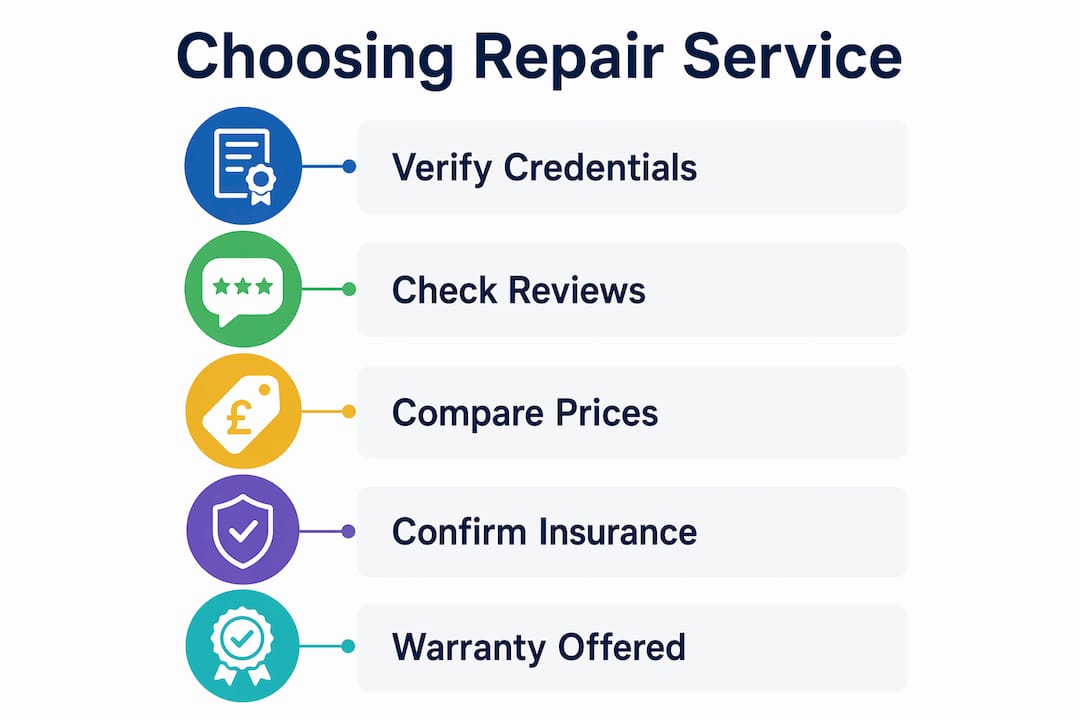
Communication is just as telling as qualifications. Which? Trusted Traders research consistently shows that technical skill alone does not make a good tradesperson: clear explanations, written quotes, and prompt responses to queries are equally important markers of a professional who will see a job through properly.
Pricing transparency matters too. Reputable providers give itemised quotes rather than vague estimates, and they flag potential additional costs upfront, such as parking, waste disposal, or parts sourcing. For a broader view of the types of plumbing services you might need, understanding the scope of work before you call helps you ask the right questions and compare quotes accurately.
- Check qualifications: NVQ Level 2 minimum, plus Water Fittings Regulations certification
- Confirm Gas Safe registration for any heating or boiler work
- Assess communication: written quotes, clear timelines, and prompt replies
- Review pricing: itemised estimates with additional costs declared upfront
- Ask about emergency availability and typical response times
- Weigh national cover plans against local independents based on your location and usage patterns
Why Your-local-plumber is worth a call

Your-local-plumber offers fast, transparent-priced plumbing and heating repairs for homeowners across the UK. Whether you need an emergency fix or a planned installation, experienced engineers are on hand with clear pricing from the start. Visit Your-local-plumber to book or get a quote today.
Key takeaways
Finding the best mjharrisrepairs.co.uk alternatives means prioritising verified credentials, clear pricing, and proven communication over price alone.
| Point | Details |
|---|---|
| Use official directories | WaterSafe, CIPHE, and APHC list vetted plumbers who meet strict national standards. |
| Always verify Gas Safe status | Check the engineer's ID card directly; the back lists the exact work they are authorised to do. |
| Request a Certificate of Compliance | This document protects you legally after any mains water supply or fitting work. |
| Get three comparable quotes | Compare like-for-like scope, guarantees, and insurance before committing to any provider. |
| Balance national cover with local contacts | Large emergency cover plans offer 24-hour booking but can suffer appointment delays; a trusted local engineer fills the gap. |