TL;DR:
- A plumbing warranty is a written commitment from your plumber or manufacturer to repair faults free of charge within a specified period. Homeowners should understand warranty coverage, exclusions, and claim procedures upfront to protect their home and budget effectively. Verifying written warranties and avoiding DIY repairs are essential steps to ensure valid claims and lasting protection.
A plumbing warranty is a formal, written commitment from your plumber or a product manufacturer to repair or replace specific faults within a defined period, at no additional cost to you. Most homeowners sign off on plumbing work without ever asking what the warranty actually covers, which leaves them exposed when something goes wrong six months later. Understanding plumbing warranties before work begins is the single most effective way to protect your home and your budget. This guide covers the types of warranties available, what they include and exclude, how to make a valid claim, and how to choose a plumber whose warranty terms genuinely hold up.
What types of plumbing warranties exist?
Plumbing warranty coverage falls into three distinct categories, and confusing them is one of the most common and costly mistakes homeowners make.
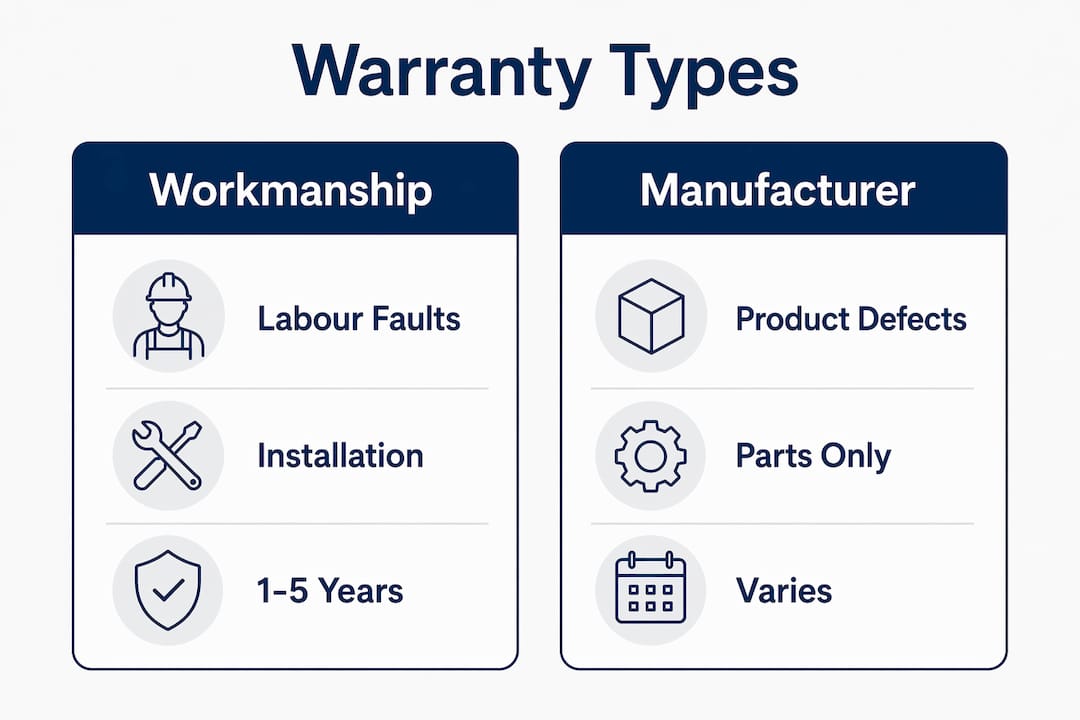
Workmanship warranties cover the quality of the plumber's labour and installation. If a joint fails because it was fitted incorrectly, or a pipe leaks due to poor soldering, the workmanship warranty obligates the plumber to return and fix it at no charge. Industry standard workmanship warranties provide a minimum of one year's coverage, though some contractors offer longer terms on larger projects such as full bathroom installations or boiler fits.
Manufacturer warranties cover product defects only. They apply to the fixture or component itself, not the labour used to install it. Manufacturer warranties for water heaters typically run from 6 to 12 years on the tank, while faucets often carry only a one-year limited warranty. This means a faulty valve may be replaced free of charge under the manufacturer's terms, but you could still face a call-out fee for the engineer's time.
Extended warranties and service plans are optional agreements, sometimes called a plumbing service contract, that extend coverage beyond the standard period. These are sold by manufacturers, retailers, or independent service providers and vary considerably in what they include.
| Warranty type | What it covers | Typical duration |
|---|---|---|
| Workmanship warranty | Labour and installation defects | 1 year minimum |
| Manufacturer warranty | Product defects only | 1 to 12 years depending on product |
| Extended warranty / service plan | Agreed parts and labour beyond standard terms | Varies by contract |
A key distinction worth knowing: a warranty differs from a satisfaction guarantee in that a guarantee is often marketing language with no defined coverage for future repairs, while a warranty is a legal or contractual obligation. Always ask for the warranty in writing, not a verbal assurance.
Pro Tip: Ask your plumber whether their workmanship warranty starts on the completion date of the work, not the product purchase date. Workmanship warranties begin on completion of the plumbing job, so the clock starts the day the engineer leaves your property.
What do plumbing warranties cover and exclude?
Understanding plumbing warranty coverage means knowing both what is included and, just as critically, what is not.
What is typically covered
A workmanship warranty covers failures that result directly from how the work was carried out. If a newly installed radiator valve leaks because the fitting was not tightened correctly, the plumber is responsible. Combining workmanship and manufacturer warranties offers the most thorough protection by addressing both labour faults and product defects simultaneously. This dual coverage is why it matters to ask about both types before any job begins.
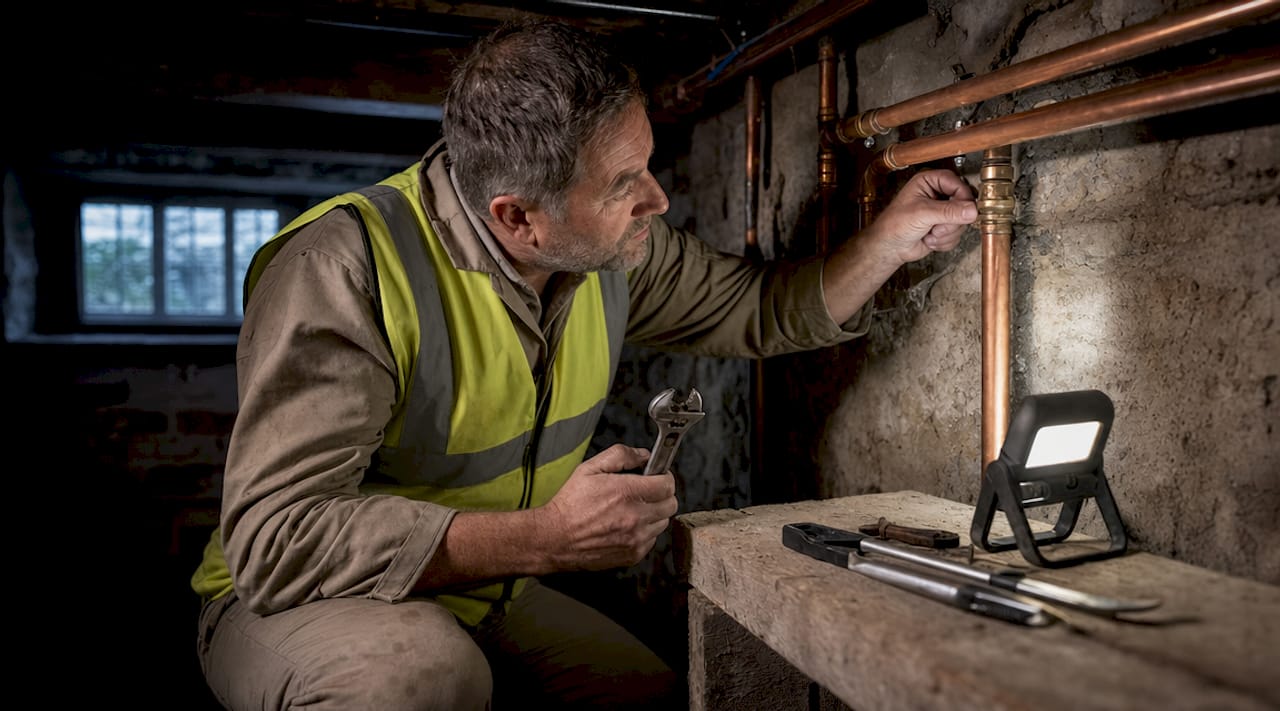
Warranties also act as a financial safeguard. Labour and parts failures can cost hundreds to thousands of pounds, and warranty coverage locks in predictable repair costs rather than leaving you facing an unexpected bill.
Common exclusions to watch for
Most warranties carry exclusions that homeowners overlook until they need to make a claim. The most frequent are:
- Pre-existing conditions. Warranty coverage generally excludes damage from pre-existing conditions such as systemic pipe corrosion or age-related deterioration present before the work was carried out.
- Wear and tear. Gradual degradation of parts over time is not a defect and falls outside warranty scope.
- Misuse or neglect. Damage caused by incorrect use, blocked drains from foreign objects, or failure to maintain the system is excluded.
- Consequential damage. Warranties rarely cover property damage resulting from leaks unless this is explicitly written into the contract. Water damage to flooring or ceilings is almost never included.
- Labour under manufacturer warranties. Manufacturer warranties rarely cover labour costs for diagnosis or replacement, even when the faulty part itself is replaced free of charge.
Pro Tip: Read the exclusions section of any warranty document before signing off on the job. The coverage headline sounds reassuring; the exclusions list is where the real terms live.
How to make a plumbing warranty claim
Making a successful warranty claim depends on preparation that starts before the plumber even leaves your home.
- Secure written warranty documents before final payment. Written warranty documentation must clearly define coverage scope, duration, and the process for raising a claim. If a plumber cannot provide this in writing, treat it as a warning sign.
- Register the product if required. Many manufacturer warranties require product registration by the homeowner or installer shortly after installation to activate coverage. Failure to register often voids the warranty entirely, even if the product is clearly defective.
- Document the fault as soon as it appears. Take photographs, note the date, and write down what you observed. Prompt, documented communication with the installer improves claim success rates and speeds resolution.
- Contact the correct party. For installation faults, contact the plumber who carried out the work. For product defects, contact the manufacturer directly or through the plumber, depending on the warranty terms.
- Keep all invoices and service records. A folder containing your original invoice, warranty documents, product registration confirmation, and any subsequent service records is your strongest asset if a claim is disputed.
Common reasons warranty claims are denied
DIY repairs or use of non-approved parts are among the most frequent reasons manufacturers and contractors deny claims. Attempting to fix a fault yourself before contacting the warranty provider almost always voids your right to a covered repair. The same applies if a second, unqualified tradesperson works on the system. Some warranties also require documented professional maintenance, such as annual flushing or anode rod checks on water heaters, to remain valid. Missing a scheduled service can be treated as neglect and used to reject a claim. For more on how DIY work can create costly problems, see this guide on common DIY plumbing mistakes UK homeowners make.
Pro Tip: Create a dedicated warranty folder, physical or digital, the day any plumbing work is completed. Store the invoice, warranty certificate, product registration email, and the plumber's contact details together. You will not remember where you filed these when you need them urgently.
How to evaluate warranty terms before choosing a plumber
Not all warranty offers are equal, and vague promises made during a quote can leave you with no recourse when a fault appears.
Ask every plumber you consider the following questions before agreeing to any work:
- How long does your workmanship warranty last, and what does it specifically cover? A one-year minimum is standard, but reputable contractors on larger jobs often offer two years or more.
- Is the warranty provided in writing as part of the job documentation? Verbal assurances carry no legal weight. Clear, written warranty terms including coverage limits, claim procedures, and exclusions are the only form that protects you.
- Does the warranty cover both labour and parts, or parts only? A warranty covering only parts leaves you paying call-out and labour fees even for a fault that is clearly the plumber's responsibility.
- What is the claims process, and what is the expected response time? A contractor who cannot answer this clearly has likely not thought through their warranty obligations.
- Which manufacturer warranties apply to the fixtures being installed, and will you handle registration? Confirm whether the plumber registers products on your behalf or whether this is your responsibility.
When comparing quotes, transparent plumbing pricing and clear warranty terms together are the strongest indicators of a contractor who will stand behind their work. A lower quote with a vague or verbal warranty often costs more in the long run. For homeowners looking to manage costs without compromising on protection, this overview of ways to cut plumbing costs explains where savings are safe and where they are not.
Key takeaways
Understanding plumbing warranties requires knowing the difference between workmanship and manufacturer coverage, securing written documentation before payment, and never carrying out DIY repairs on a warranted system.
| Point | Details |
|---|---|
| Two distinct warranty types | Workmanship covers labour faults; manufacturer covers product defects only. |
| Written documentation is non-negotiable | Secure warranty terms in writing before final payment to protect your claim rights. |
| DIY repairs void coverage | Unauthorised work or non-approved parts are the most common reason claims are denied. |
| Product registration activates manufacturer cover | Many manufacturer warranties require registration soon after installation to be valid. |
| Exclusions matter as much as coverage | Pre-existing conditions, wear and tear, and consequential damage are almost always excluded. |
Why homeowners underestimate warranty terms until it is too late
Most homeowners I speak with treat a warranty as a formality, something to acknowledge and file away. That is a mistake I have seen cost people real money. The gap between what a homeowner assumes a warranty covers and what it actually covers is where disputes happen, and those disputes are almost always avoidable.
The most common error is assuming the manufacturer's warranty covers everything. It does not. A water heater with a ten-year tank warranty still leaves you paying for the engineer's time if the unit fails in year three. The warranty covers the part. You cover the labour. That distinction is rarely explained at the point of sale, and it catches people off guard.
I have also seen homeowners void perfectly good workmanship warranties by attempting a small fix themselves before calling the original plumber. A dripping joint gets tightened with a spanner, the thread is damaged in the process, and suddenly the plumber has grounds to argue the fault was caused by interference. The rule is simple: if it is under warranty, do not touch it. Call the contractor first.
The other thing worth saying plainly is that a warranty is not the same as durability. A one-year workmanship warranty does not mean the installation will fail after twelve months. It means the contractor is legally obligated to fix their own errors within that window. Good plumbing, done properly with quality materials, should last decades. The warranty is a backstop for defects, not a lifespan guarantee.
Choose plumbers who explain their warranty terms without being asked. That willingness to be transparent before the job starts tells you a great deal about how they will behave if something goes wrong afterwards.
— Michael
Get warranty-backed plumbing from Your-local-plumber

Your-local-plumber provides professional plumbing services across the UK, with every job backed by a written workmanship warranty so you know exactly what is covered from the moment the engineer leaves. Pricing is transparent, documentation is provided as standard, and the team handles product registration for installed fixtures where applicable. Whether you need a routine installation or an urgent repair, you can book a plumber online and receive clear warranty terms before any work begins. For urgent situations, the emergency plumbing service operates with a 60-minute response target, so warranty-backed help is never far away.
FAQ
What does a plumbing workmanship warranty cover?
A workmanship warranty covers faults caused by the plumber's installation or labour, such as leaking joints or incorrectly fitted components. It does not cover product defects, which fall under the manufacturer's separate warranty.
How long do plumbing warranties typically last?
Industry standard workmanship warranties last a minimum of one year, while manufacturer warranties on products like water heater tanks can run from 6 to 12 years depending on the brand and model.
Can DIY repairs void a plumbing warranty?
Yes. Carrying out DIY repairs or using non-approved parts on a warranted system gives contractors and manufacturers grounds to deny any subsequent claim. Always contact the warranty provider before attempting any fix.
Does a manufacturer warranty cover the cost of labour?
Manufacturer warranties rarely include labour costs. They typically cover the replacement part only, meaning you may still pay call-out and installation fees even when the faulty component is replaced at no charge.
What should I do if my plumbing warranty claim is rejected?
Request the rejection in writing, citing the specific exclusion or clause used. If you believe the denial is unjustified, you can escalate through Citizens Advice or, for Gas Safe registered engineers, through the Gas Safe Register's complaints process.