TL;DR:
- Plumbing installation involves multiple stages including design, compliance, and testing for long-term performance.
- Homeowners must adhere to UK Water and Building Regulations through qualified installers to ensure safety and legality.
- Choosing appropriate materials and coordinating with licensed professionals minimizes risks and costly repairs.
Most homeowners assume plumbing installation is simply a matter of connecting a few pipes and turning on the water. In reality, it is a structured, multi-stage process that touches on design, compliance, materials, and long-term performance. Get it wrong and you face leaks, failed inspections, or costly remedial work months down the line. This guide walks you through every stage of the plumbing installation process, from initial planning to final sign-off. You will learn which regulations apply, how to choose the right materials, and what to expect when working with a qualified plumber on a renovation or new build.
Table of Contents
- Understanding the plumbing installation process: An overview
- Step-by-step: Key stages of plumbing installation in UK homes
- Navigating UK plumbing regulations and approvals
- Choosing materials and fixtures: What homeowners need to know
- Expert perspective: What most guides miss about plumbing installation
- Ready to transform your home? Next steps with a trusted plumber
- Frequently asked questions
Key Takeaways
| Point | Details |
|---|---|
| Plumbing needs careful planning | Effective installation starts with thorough assessment and design, not just pipework. |
| Regulations protect your home | Understanding and complying with UK rules avoids costly fixes and enhances safety. |
| Material choices matter | Picking the right pipes and fixtures impacts long-term performance and maintenance. |
| Communication is key | Discussing expectations openly with your plumber prevents unwanted surprises and delays. |
Understanding the plumbing installation process: An overview
Plumbing installation is not a single task. It is a sequence of decisions, preparations, and technical steps that must follow a logical order. Rushing any stage creates problems that ripple through the entire project. Understanding this upfront saves you time, money, and a great deal of frustration.
At its core, the process covers three broad areas: the supply of clean water into the property, the distribution of that water to fixtures and appliances, and the safe removal of waste water. Each area has its own design requirements, regulatory standards, and material considerations. They must all work together seamlessly.
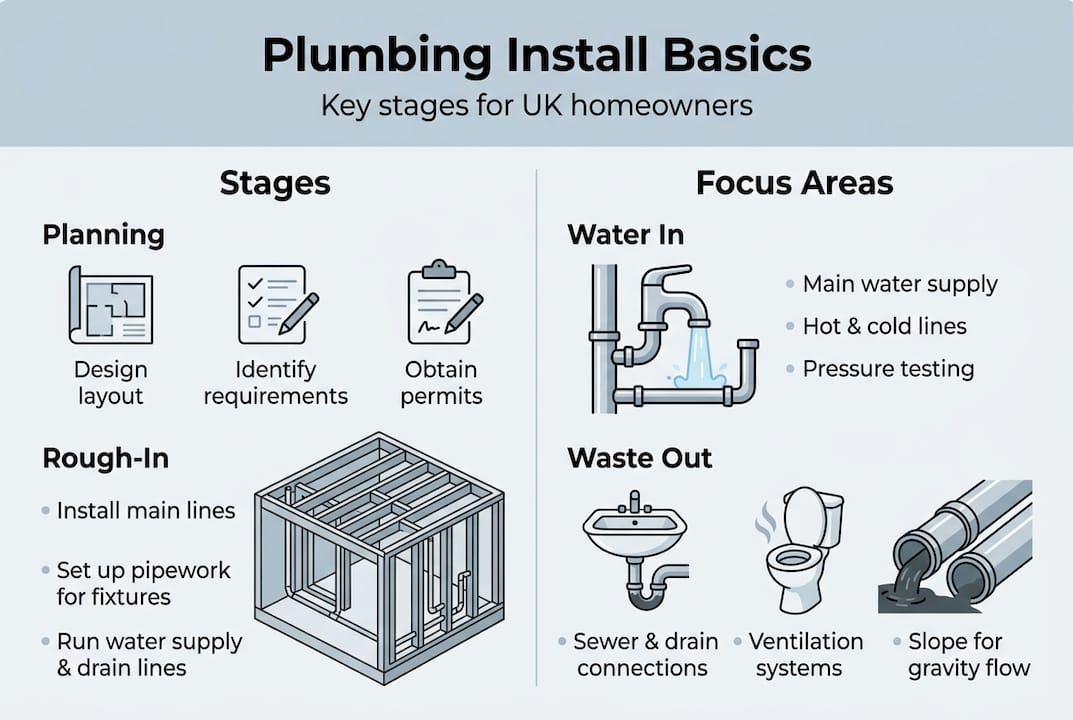
As what a plumbing engineer does confirms, plumbing installation involves careful assessment and planning well before a single pipe is laid. This is often the part homeowners underestimate most. A good plumber will spend considerable time reviewing your property layout, water pressure, existing infrastructure, and your intended use before any physical work begins.
Where does plumbing fit into a broader renovation or build timeline? Generally, it sits in the middle. Structural work comes first, then plumbing and electrical rough-in, then insulation and plastering, and finally fixtures and finishes. If plumbing is scheduled too late, you end up chasing walls that have already been closed up, which is expensive and disruptive.
Here is a simplified overview of the main phases:
- Initial survey and design — assess the property, map out supply and waste routes
- Regulatory planning — identify required permits and notify relevant authorities
- Rough-in work — install pipework before walls and floors are finished
- Fixture and appliance installation — connect taps, toilets, boilers, and showers
- Testing and sign-off — pressure tests, leak checks, and compliance inspections
Familiarising yourself with plumbing terminology basics before speaking to a contractor means you can ask sharper questions and understand the answers you receive.
Pro Tip: Before any work begins, ask your plumber to walk you through the design plan. A reliable installer will be happy to explain each stage, flag potential complications, and give you a realistic timeline.
Step-by-step: Key stages of plumbing installation in UK homes
With a foundation of what the process involves, let us break down the step-by-step journey from survey to sign-off.
A typical installation involves site assessment, system layout, rough-in, fixture installation, and testing. Each step builds on the last, so skipping ahead creates compounding problems.
- Site assessment — Your plumber inspects the property, checks water pressure, reviews existing pipework, and identifies any obstacles such as load-bearing walls or existing drainage routes.
- System design — Supply and waste routes are mapped out. This includes deciding where water enters, how it reaches each outlet, and how waste exits the building safely.
- Rough-in plumbing — Pipes are run through walls, floors, and ceilings before surfaces are closed. This is the most labour-intensive phase and the one with the least room for error.
- Fixture and appliance installation — Once surfaces are finished, taps, toilets, showers, boilers, and other appliances are connected to the rough-in pipework.
- Testing — The system is pressure-tested to identify leaks. Flow rates are checked, and waste drainage is verified before the installation is signed off.
It is worth understanding how this sequence differs between a new build and a renovation, as the constraints are quite different.
| Stage | New build | Renovation |
|---|---|---|
| Site assessment | Clean slate, straightforward | Must account for existing pipework |
| System design | Designed from scratch | Works around current layout |
| Rough-in | Done before walls are built | May require opening finished walls |
| Fixture installation | Timed with build completion | Can often proceed independently |
| Testing and sign-off | Integrated with overall build inspection | Separate inspection may be needed |
Renovations carry more hidden risk because legacy pipework can be corroded, non-compliant, or simply in the wrong place. Always budget for contingencies.
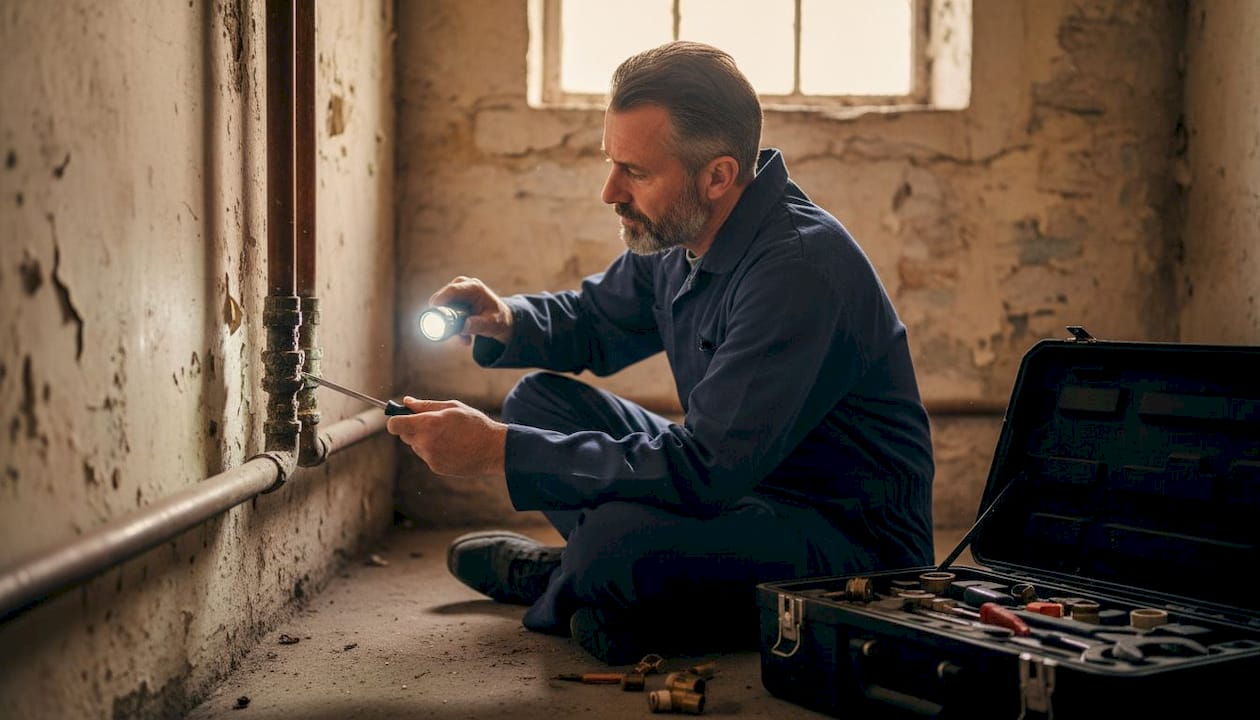
Understanding plumbing regulations before work starts means you will not be caught off guard by inspection requirements mid-project. It also helps to know the right questions to ask your plumber before signing any contract.
Pro Tip: During rough-in, take photographs of all pipework before walls are closed. These images are invaluable for future maintenance, repairs, or extensions.
Navigating UK plumbing regulations and approvals
Understanding the process is crucial, but compliance with the law is just as vital. Unapproved plumbing work can invalidate your home insurance, complicate a property sale, and in serious cases, create genuine safety hazards.
UK homeowners must comply with Water Regulations and Building Regulations for all major plumbing work. These two frameworks govern different aspects of the installation.
Water Regulations cover the quality and safety of the water supply. They prevent contamination, backflow, and waste. Any work that connects to the mains supply must comply, and your water supplier has the right to inspect.
Building Regulations (specifically Part G and Part H) cover sanitation, hot water safety, and drainage. Notifiable work must be reported to your local Building Control authority, either through a qualified installer registered with a competent persons scheme or via a formal application.
Key regulatory checkpoints to be aware of:
- Notify your local Building Control before starting notifiable work
- Use a WaterSafe-approved plumber where mains connections are involved
- Ensure all materials carry the relevant British Standard or WRAS approval
- Obtain a completion certificate once work is signed off
- Keep all documentation for future property transactions
"Unapproved plumbing work is one of the most common issues flagged during property surveys. It can delay sales and result in expensive remedial work being required before exchange."
Common pitfalls include using non-approved materials to cut costs, failing to notify authorities because the work seems minor, and hiring unregistered tradespeople. None of these shortcuts are worth the risk. A qualified installer will handle all notifications and approvals as part of the job, so you do not have to navigate the paperwork alone.
Choosing materials and fixtures: What homeowners need to know
Beyond regulations, your material and fixture choices play a big role in the outcome. The right choices improve longevity, reduce maintenance, and keep running costs down. The wrong ones create problems within years, sometimes months.
Modern UK installations increasingly use PEX and UPVC in addition to copper, each with trade-offs in cost and durability. Here is a practical comparison:
| Material | Cost | Durability | Best use |
|---|---|---|---|
| Copper | Higher upfront | Excellent, 50+ years | Hot and cold supply, traditional homes |
| PEX | Lower upfront | Very good, flexible | Underfloor heating, tight spaces |
| UPVC | Lowest | Good for cold water | Waste and drainage pipes |
Copper remains the gold standard for supply pipework. It is durable, resistant to bacteria, and widely understood by every plumber in the country. PEX is increasingly popular for its flexibility and ease of installation in awkward spaces. UPVC is the standard choice for waste and drainage due to its corrosion resistance and low cost.
For fixtures, water efficiency is now a practical and regulatory consideration. Look for:
- Taps with a flow rate below 8 litres per minute for washbasins
- Dual-flush toilets using 4 and 6 litres per flush
- Thermostatic shower valves that comply with Part G of Building Regulations
- Boilers and cylinders carrying the relevant energy efficiency ratings
In older homes, compatibility is a genuine concern. Victorian and Edwardian properties often have lead pipework, imperial-sized fittings, or gravity-fed systems that require careful adaptation. Attempting to graft modern fixtures onto ageing infrastructure without proper assessment is a recipe for leaks and pressure problems.
Pro Tip: Always check maintenance considerations for any material or fixture before committing. Some options are cheaper upfront but require more frequent servicing.
Expert perspective: What most guides miss about plumbing installation
Most guides focus on the technical sequence and leave out the human side of the process. In our experience, the projects that go smoothly are not necessarily the ones with the simplest layouts. They are the ones where the homeowner and plumber communicate clearly from the start.
Legacy pipework is one of the most underestimated risks in UK renovations. Many properties built before the 1970s contain lead pipes, corroded joints, or non-standard fittings that only become apparent once walls are opened. A good installer will flag these immediately and give you honest options rather than papering over the problem.
The other issue we see repeatedly is homeowners choosing the lowest quote without understanding what it includes. A price that excludes materials, inspections, or contingency work will almost always end up costing more than a transparent quote that covers everything. We always recommend reviewing transparent pricing advice before accepting any estimate.
Investing in quality at the installation stage pays dividends for decades. Cheap fittings, rushed rough-in, and skipped inspections all have a habit of surfacing at the worst possible moment.
Ready to transform your home? Next steps with a trusted plumber
Armed with knowledge and practical tips, you are ready to take the next step towards a compliant, well-installed plumbing system.

At Your Local Plumber, our experienced engineers handle everything from initial design through to final sign-off, with transparent pricing and no hidden surprises. Whether you are planning a full renovation or a targeted upgrade, we bring the expertise to get it done correctly the first time. Browse our recent plumbing installations to see the standard of work we deliver, then get in touch to discuss your project. We cover all regulatory requirements, liaise with Building Control on your behalf, and ensure every installation meets current UK standards.
Frequently asked questions
How long does plumbing installation typically take in a UK home?
Most home plumbing installations take from a few days up to two weeks, depending on project size. Project duration is also affected by the timing of regulatory inspections, which can add days to the overall schedule.
Do I need building control approval for new plumbing work?
Yes, most significant plumbing installations require notification or approval from your local Building Control authority or Water Authority. UK homeowners must comply with both Water Regulations and Building Regulations for all notifiable work.
Which pipe materials are best for UK homes?
Copper, PEX, and UPVC are all widely used, and each suits different applications. Modern UK installations use all three depending on whether the pipe is carrying hot supply, cold supply, or waste water.
What common mistakes should I avoid during a plumbing installation?
The most frequent errors are skipping permits, using non-approved materials, and hiring unregistered tradespeople. Qualified installers and full regulatory compliance are the two most reliable ways to avoid costly remedial work later.