TL;DR:
- Draining a boiler system involves safely removing water for maintenance, requiring proper tools and precautions.
- Opening bleed valves from the top down and monitoring pressure during refilling ensures efficient drainage and heating performance.
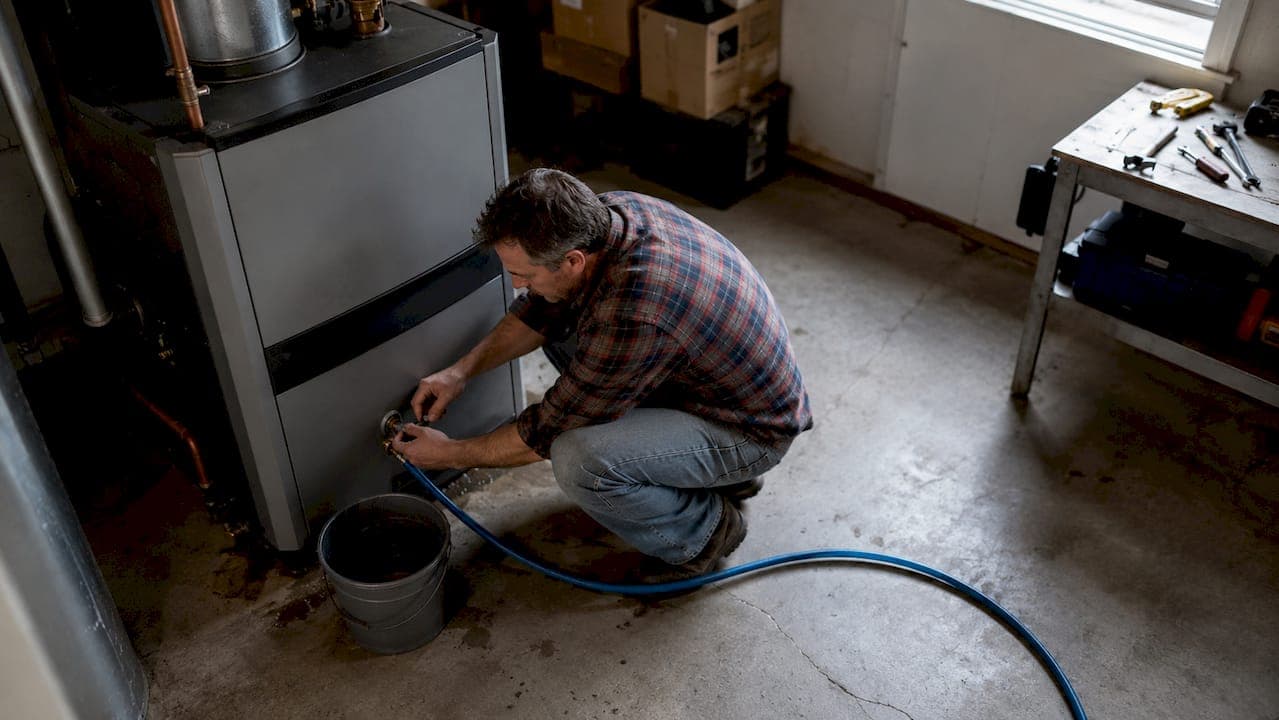
Draining a boiler system is the process of removing water from your central heating circuit to carry out maintenance, repairs, or sludge flushing. Knowing how to drain a boiler system correctly protects you from burns, prevents damage to your heat exchanger, and makes tasks like radiator replacement far simpler. The process requires a garden hose, a radiator key, an adjustable spanner, and a bucket. Done properly, it takes a few hours and saves you the cost of a callout for straightforward maintenance work.
What tools and safety precautions do you need before draining?
Preparation is the difference between a clean job and a flooded utility room. Before you touch a single valve, gather every tool you need and work through the safety checklist below.
Tools required:
- Garden hose (long enough to reach a drain or outside)
- Radiator bleed key
- Adjustable spanner or wrench
- Two or three old towels
- A bucket for residual drips
- Rubber gloves
These tools support connecting drain valves and bleeding radiators efficiently while managing water spills. Having everything within reach before you start prevents mid-job scrambling that leads to mistakes.
Safety steps to complete first:
- Switch off the boiler at the programmer or thermostat and cut electrical power at the fuse spur.
- Turn off the gas supply at the isolation valve if your boiler is gas-fired.
- Allow the system to cool for a minimum of one hour, ideally two.
Shutting off power and cooling the system avoids burns and prevents damage from rapid temperature changes. Draining a hot or pressurised system risks scalding and can crack the heat exchanger. Cooling is not optional, regardless of how urgent the repair feels.
Pro Tip: Lay old towels around the base of the boiler and along the route your hose will travel. Even a well-connected drain valve drips, and towels absorb spills before they reach skirting boards or flooring.
If you are dealing with a leaking boiler before you even begin draining, cut power first and read up on whether the situation requires immediate professional attention.
How do you drain a boiler system step by step?
The boiler drainage process follows a specific sequence. Skipping steps, particularly the bleed valve stage, is the single most common reason homeowners end up with slow drainage or trapped water pockets.
Step 1: Shut off the water supply
Locate the mains cold water feed to the boiler or the header tank in the loft and close it. This stops fresh water entering the system while you drain.
Step 2: Connect your garden hose to the drain valve
The drain valve sits at the lowest point of the system, usually near the boiler or on a ground-floor radiator. Attach your garden hose securely using a jubilee clip or by hand-tightening the hose connector. Run the other end to an outside drain, a large bucket, or a utility sink.
Step 3: Open the drain valve
Turn the drain valve anticlockwise with your adjustable spanner. Water will begin to flow. Do not expect a fast rush at this stage. The flow will be slow until you open the bleed valves.
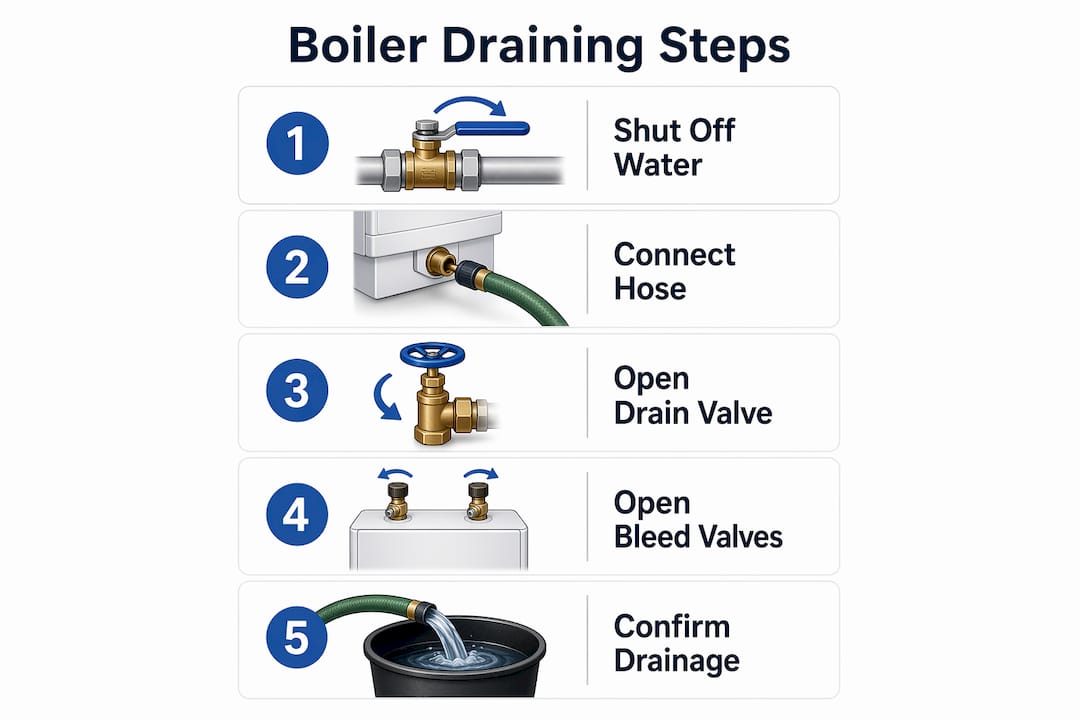
Step 4: Open bleed valves from the top down
This step is where most homeowners go wrong. Draining speed depends on air ingress through bleed valves rather than the size of the drain valve. Without air entering the system, a vacuum forms and water barely moves.
Start at the highest radiator in the house and insert your bleed key into the bleed valve. Turn it a quarter turn anticlockwise. You will hear a hiss as air enters. Work your way down through every radiator, floor by floor, until you reach the ground level. The flow at your hose end will noticeably increase after each valve is opened.
Step 5: Confirm complete drainage
Drainage is complete when water flow along the hose ceases and bleed valves emit only air. Professional installers check both conditions before disconnecting anything. Many homeowners stop at the first sign of slow flow and assume the job is done, leaving residual water that causes problems during refilling.
Step 6: Partial draining for a single radiator
If you only need to replace or service one radiator, a full system drain is unnecessary. Close off the relevant section by shutting the lockshield and thermostatic valves on that radiator, then drain only the minimum required. This saves time and reduces the risk of introducing airlocks across the whole system.
| Stage | What to do | Sign it is complete |
|---|---|---|
| Drain valve open | Turn anticlockwise with spanner | Water flows into hose |
| Bleed valves open | Start at highest radiator, work down | Flow increases noticeably |
| Full drainage confirmed | Check hose and bleed valves | Hose dry, valves emit air only |
| Partial drain (single radiator) | Close lockshield and TRV valves | Only that radiator drains |
Pro Tip: If the flow slows dramatically before you have opened all bleed valves, check whether the hose end is submerged in water. A submerged hose end creates back pressure. Keep it above the water level in any bucket.
For broader central heating problems that surface during or after draining, the troubleshooting steps there cover airlocks and circulation faults in detail.
How do you refill and bleed your boiler system after draining?
Refilling correctly is just as important as draining correctly. Rushing this stage causes airlocks that leave radiators cold at the top and reduce heating efficiency across the whole house.
-
Close all bleed valves. Work from the bottom of the house upwards, closing every bleed valve you opened during draining. Leave them finger-tight rather than over-tightened.
-
Close the drain valve. Turn it clockwise until it is hand-tight, then give it a quarter turn with the spanner. Do not over-tighten or you risk damaging the valve seat.
-
Open the water feed valve slowly. Locate the filling loop or mains feed valve and open it gradually. Watch the pressure gauge on the boiler as water enters the system.
-
Monitor pressure carefully. Refill slowly, monitoring pressure between 12 and 15 PSI to avoid triggering the pressure relief valve. Overfilling causes the relief valve to activate, which creates leaks and system failures. Most domestic boilers show a green zone on the pressure gauge between 1 and 1.5 bar, which corresponds to roughly 14 to 22 PSI.
-
Bleed radiators starting closest to the boiler. Bleeding radiators after refilling removes trapped air and restores efficient heating. Start at the radiator nearest the boiler and work outwards and upwards. Hold a cloth under the bleed valve as you open it. When water sputters and then flows steadily, close the valve. That radiator is fully bled.
-
Check pressure again after bleeding. Bleeding releases water along with air, which drops system pressure slightly. Top up via the filling loop if the gauge falls below 1 bar.
-
Restart the boiler and check for leaks. Switch power back on, set the thermostat to call for heat, and walk around every radiator and valve connection looking for drips.
Pro Tip: Run the heating on its highest setting for 20 minutes after refilling, then bleed every radiator a second time. Air that was not visible during the first bleed often migrates to radiator tops once the system heats up.
What are common mistakes when draining a boiler system?
Even careful homeowners make predictable errors during the boiler drainage process. Knowing them in advance keeps the job clean and safe.
-
Draining before the system has cooled. The water inside a recently fired boiler can exceed 70°C. Opening a drain valve on a hot system causes scalding steam and water to escape under pressure.
-
Skipping bleed valves entirely. Without opening bleed valves, a vacuum locks water in the pipework. The drain valve will trickle rather than flow, and large pockets of water will remain in upper-floor radiators.
-
Failing to close valves fully before refilling. A drain valve left even slightly open floods the area around the boiler the moment you restore the water supply. Check every valve by hand before opening the feed.
-
Ignoring the pressure gauge during refill. Filling too fast and overshooting 1.5 bar forces the pressure relief valve to discharge. This is not dangerous, but it creates a mess and requires you to bleed pressure back down before restarting.
-
Assuming slow drainage means a blocked valve. Slow drainage almost always means a bleed valve has been missed or is not open far enough. Check all bleed valves before concluding there is a blockage.
If drainage remains extremely slow after all bleed valves are open, there may be a significant sludge build-up in the pipework. This is a sign the system needs a powerflush rather than a simple drain. Contact a qualified engineer before proceeding.
Key takeaways
Draining a boiler system safely requires cooling the system fully, opening bleed valves from the top down, and refilling slowly while monitoring pressure between 1 and 1.5 bar.
| Point | Details |
|---|---|
| Cool before you start | Always allow at least one to two hours of cooling before opening any valve. |
| Bleed valves control drain speed | Open bleed valves from the highest radiator downwards to prevent vacuum formation. |
| Confirm full drainage | Stop only when the hose runs dry and bleed valves emit air, not water. |
| Refill at controlled pressure | Keep pressure between 1 and 1.5 bar to avoid triggering the relief valve. |
| Bleed radiators twice | Bleed once during refill and again after the system has heated up to clear migrated air. |
What I have learned from watching homeowners drain their own systems
Most boiler drainage jobs go wrong in the first five minutes, not the last. The homeowner turns off the boiler, waits twenty minutes, decides that is long enough, and opens the drain valve on a system that is still at 50°C. The result is a jet of scalding water and a very fast lesson in patience.
The second most common mistake is treating the drain valve as the only control in the process. I have watched people stand over a barely trickling hose for forty minutes, convinced the valve is faulty, when the real issue is that every bleed valve in the house is still closed. Once you understand that air ingress through bleed valves is what drives drainage speed, the whole process makes sense.
My honest advice: do not rush the cooling stage, do not skip the bleed valves, and do not assume the job is done until both the hose and the bleed valves confirm it. If you find heavy black sludge in the water coming out of the drain valve, that system needs a powerflush, not just a drain. Carrying on regardless will redistribute the sludge rather than remove it. Know when to call a professional. It is not an admission of defeat. It is the right call.
— Michael
Need help draining or servicing your boiler?
If you have worked through this guide and still feel uncertain, or if the system is showing signs of heavy sludge, persistent leaks, or pressure problems, professional help is the right next step.

Your-local-plumber provides boiler maintenance and drainage services carried out by experienced, insured engineers across local areas. Whether you need a full system drain, a powerflush, or a pressure fault diagnosed, the team handles it safely and at transparent prices. No guesswork, no unnecessary callouts. Contact Your-local-plumber today to book a visit or get a fast quote.
FAQ
How long does it take to drain a boiler system?
A full system drain typically takes between one and three hours, depending on system size and how many radiators are present. Cooling time beforehand adds at least one to two hours on top of that.
Can I drain just one radiator without emptying the whole system?
Yes. Close the lockshield and thermostatic radiator valves on the individual radiator before opening its bleed valve and drain point. Partial draining isolates that section and avoids disturbing the rest of the circuit.
What pressure should my boiler be at after refilling?
Most domestic boilers should sit between 1 and 1.5 bar when cold after refilling. Pressure above 1.5 bar risks activating the pressure relief valve, so fill slowly and check the gauge frequently.
Why is my system draining very slowly?
Slow drainage almost always means one or more bleed valves are closed, creating a vacuum that holds water in the pipework. Open every bleed valve from the highest radiator downwards and the flow will increase. If it remains slow, sludge build-up may be restricting the drain valve.
Do I need to bleed radiators after refilling the system?
Yes. Trapped air collects at the top of radiators during refilling and prevents them from heating fully. Bleeding radiators starting closest to the boiler and working outwards removes these air pockets and restores full heating performance.