TL;DR:
- Many heating failures are caused by simple issues like low pressure, incorrect controls, or faulty components, which homeowners can often check themselves.
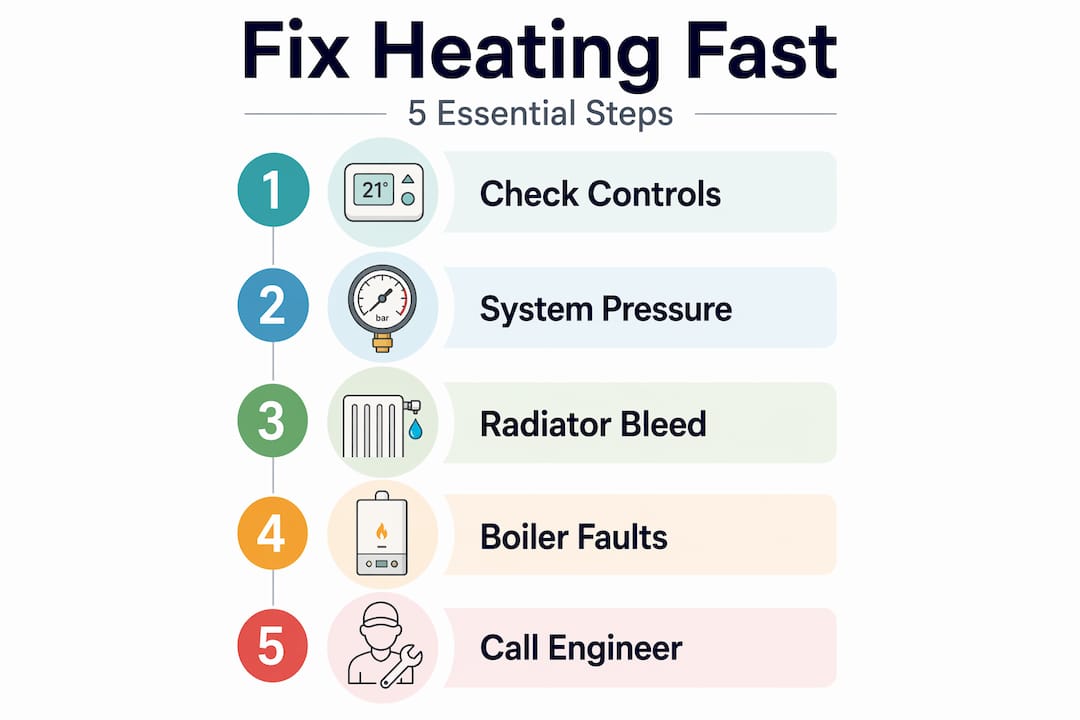
- Troubleshooting control settings, system pressure, and bleed radiators first can quickly identify or resolve common problems before calling a professional.
When your central heating does not work, the urge to panic is understandable. It is cold, it might be evening, and the boiler is doing nothing helpful. The good news is that a surprising number of heating failures come down to settings, pressure, or small component issues you can actually check yourself before reaching for the phone. This guide walks you through logical, safe troubleshooting steps, from thermostat checks to boiler fault codes, so you can either fix the problem yourself or give an engineer the exact information they need to sort it quickly.
Table of Contents
- Key takeaways
- When central heating does not work: check controls first
- Pressure, airlocks, and leaks: what to check
- Boiler faults vs control or component issues
- Communal and district heating: a different approach
- My honest take on heating troubleshooting
- Need a heating engineer you can rely on?
- FAQ
Key takeaways
| Point | Details |
|---|---|
| Start with the basics | Check thermostat settings, timer programmes, and boiler controls before assuming a fault. |
| Pressure matters more than people think | Boiler pressure below 1.0 bar frequently causes heating failure and can be corrected at home. |
| Hot water without heating points to one thing | Working hot water alongside no heating usually indicates a diverter valve or controls fault. |
| Fault codes are your first clue | Note any error code displayed on the boiler before attempting resets or calling an engineer. |
| Communal systems follow different rules | Flats with heat interface units require a different set of checks and often need the managing agent involved. |
When central heating does not work: check controls first
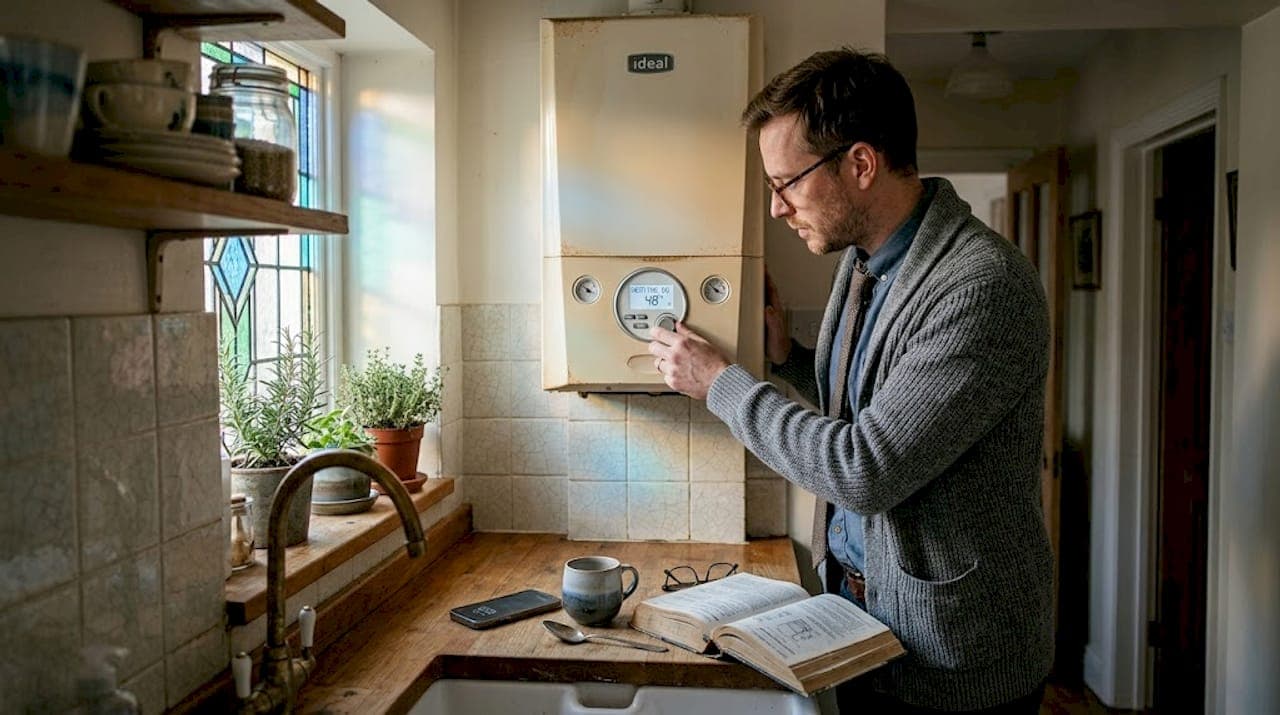
Before assuming your boiler has broken down, spend five minutes on the controls. You would be surprised how often a central heating not functioning problem traces back to a thermostat that is set too low, a programmer that has lost its schedule after a power cut, or a dial on the boiler that has been nudged accidentally.
Start here:
- Thermostat temperature: Setting it to 21°C and waiting a few minutes is the quickest test. If the thermostat is set below the room temperature, the boiler will never fire.
- Programmer or timer: Check that the schedule is set to "heating on" for the current time of day. After a power outage, many programmers reset to a default or go blank entirely.
- Boiler controls: Look at the temperature dials on the boiler itself. Both the central heating output dial and any hot water dial should be set to a mid-to-high position.
- Frost protection or holiday mode: Some thermostats and programmers have a frost setting that keeps the system in minimal mode. If yours has been switched into this mode by accident, heating will stay off regardless of the temperature.
One issue that often gets overlooked is smart thermostat apps. If you use a smart thermostat, check the app settings as well as the physical unit. They can sometimes fall out of sync, especially after updates.
Pro Tip: After any power cut, go straight to your programmer and thermostat. Power interruptions are the single most common trigger for invisible settings changes that leave homeowners puzzled for days.
Pressure, airlocks, and leaks: what to check
If the controls look correct, the next place to look is system pressure. This is where a lot of heating system troubleshooting actually resolves the issue, because low pressure below 0.5 bar is one of the most frequently overlooked causes of boiler lockout.
Reading your pressure gauge
Most combi and system boilers have a pressure gauge on the front, either a dial or a digital readout. The normal operating range is 1.0 to 1.5 bar when the system is cold. If yours reads below 1.0 bar, that is almost certainly why your heating has stopped.
How to repressurise safely
- Turn off the boiler and let the system cool for at least 30 minutes.
- Locate the filling loop. It is usually a braided silver hose under the boiler, with one or two valves.
- Open the valves slowly until the pressure gauge reads around 1.2 bar.
- Close the valves fully and turn the boiler back on.
- Check the pressure again after the system heats up. It should rise slightly, typically to around 1.5 to 2.0 bar, which is normal.
If pressure keeps dropping within a few days, you have a leak somewhere in the system. Look for damp patches around radiators, the boiler itself, pipework under floors, or behind walls. A slow drip from a radiator valve is a common culprit and worth checking before assuming a more serious fault. For more detail on tracing water pressure problems, the guide on fixing low water pressure covers this thoroughly.
Airlocks and cold radiators
Air pockets inside the heating system block water circulation and cause cold spots in radiators or, in worse cases, a complete shutdown. If your upstairs radiators are cold at the top but warm at the bottom, you almost certainly have an airlock.
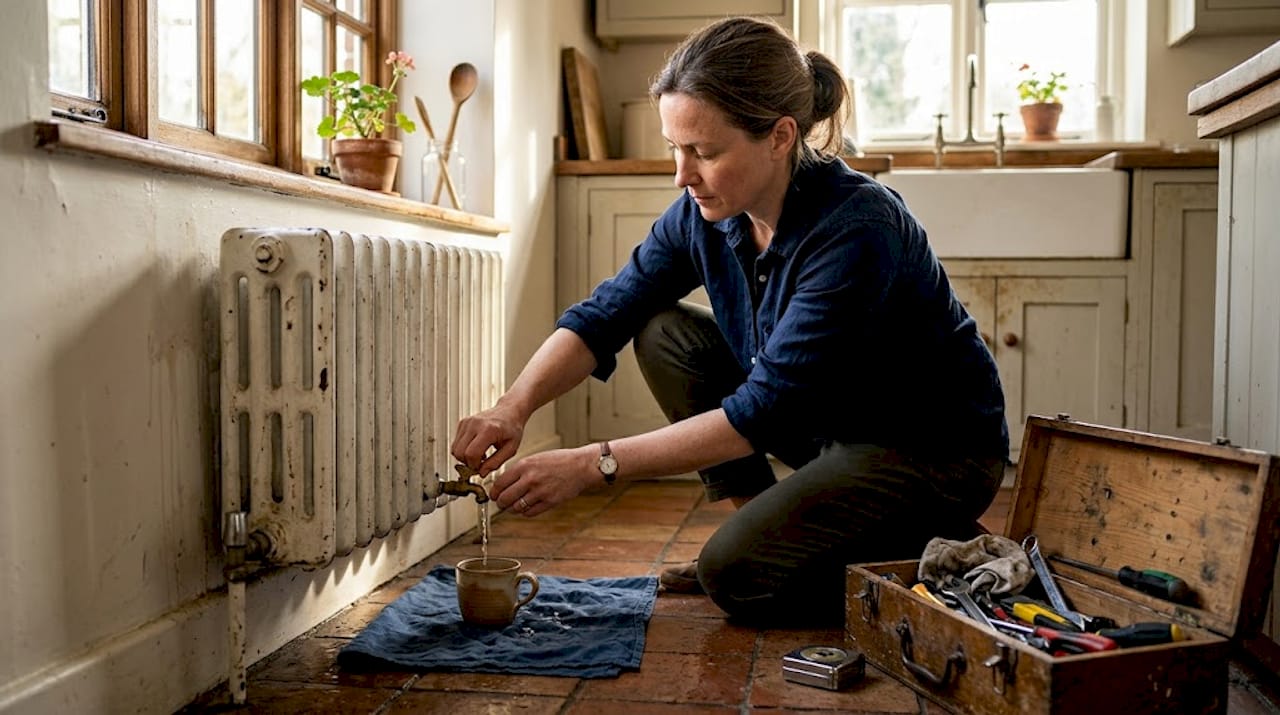
Bleed those radiators using a radiator bleed key. Place a cloth under the bleed valve, turn it slowly anticlockwise until you hear air hiss out, then close it the moment water appears. Work from the highest radiators downward.
One thing most people do not know: repressurising a system can actually introduce new air. So after you repressurise, always bleed the radiators again and then recheck the pressure. It may drop slightly after bleeding and need a small top-up.
Pro Tip: Bleeding radiators and checking pressure twice a year, ideally at the start of the heating season, prevents most of the common issues that leave people without heating in autumn.
Boiler faults vs control or component issues
Not all no-heat problems originate in the boiler itself. Understanding the distinction saves both time and money.
| Symptom | Likely cause | DIY action |
|---|---|---|
| Hot water works, no heating | Diverter valve or heating circuit controls | Check thermostat; call engineer for valve |
| Boiler fires then locks out | Low pressure, condensate blockage, ignition fault | Check pressure; inspect condensate pipe |
| No hot water and no heating | Full boiler failure or power/gas supply issue | Check gas supply; check fuse spur |
| Fault code on display | Specific component failure | Note code; consult manual; call engineer |
| Boiler fires but radiators stay cold | Pump failure or airlock | Bleed radiators; check pump operation |
The diverter valve: a common culprit
If your hot water is working fine but there is no heating, the boiler is almost certainly operational. The diverter valve fault is the usual suspect here. This valve directs hot water from the boiler to either the radiators or the hot water cylinder depending on demand. When it sticks or fails, it often defaults to the hot water circuit, leaving radiators cold. Replacing it requires a Gas Safe registered engineer.
Reading boiler fault codes
Most modern boilers display fault codes when something is wrong. Codes like F.28, E119, or EA point to ignition failures, low pressure, or condensate pipe blockages respectively, though the exact meaning varies by manufacturer. Always note the code before resetting the boiler. If it reappears after a reset, do not keep pressing the reset button. Repeated resets on an underlying fault can cause further damage.
Annual boiler servicing remains the most reliable way to prevent these faults from appearing in the first place. A qualified engineer checks pressure systems, ignition components, and condensate drainage during a service, catching wear before it becomes a breakdown.
Communal and district heating: a different approach
If you live in a flat, your heating may not come from a boiler inside your property at all. Many flats, particularly newer builds and housing association properties, use communal heating delivered via a heat interface unit (HIU). This replaces the boiler entirely and connects to a building-wide heat network.
When an HIU is the source of your heating system not turning on, the troubleshooting path looks quite different. The checks you can safely do yourself include:
- Verifying that your room thermostat and programmer are set correctly (same as with a standard boiler).
- Checking that thermostatic radiator valves are open and not turned fully off.
- Looking at the HIU display for any fault lights or error codes.
- Confirming with neighbours whether they also have no heating. Building-side issues affect multiple flats simultaneously.
Common HIU faults include actuator failures that prevent the valve from opening, blocked strainers that restrict flow, and heat exchanger scaling that reduces output. None of these are homeowner repairs. If your checks point to the HIU itself, contact your managing agent or building facilities team. They are responsible for the unit in most tenancy and leasehold arrangements.
Before making that call, gather useful information. Noting symptoms accurately, such as whether hot water is also affected, what codes appear on the unit, and when the problem started, allows engineers to diagnose the fault far more quickly and at lower cost. Accurate fault information about specific HIU components like plate heat exchangers and valve actuators cuts diagnostic time significantly.
For anyone wanting a broader understanding of how different home heating systems operate, knowing the system type you have is genuinely useful before any fault-finding begins.
My honest take on heating troubleshooting
I have attended more call-outs than I can count where the fix took two minutes because nobody had checked the programmer after a power cut. That is not a criticism of homeowners. It is genuinely not obvious that a flashing light on a timer means "I have lost my settings, please reprogramme me." Manufacturers have a lot to answer for there.
What I have learnt over the years is that the central heating broken signs people fear most, the boiler clicking and failing to fire, fault codes flashing, radiators stone cold, often have mundane causes. Pressure below 1.0 bar. A timer in holiday mode. A thermostat battery that died overnight. The hierarchy of checks in this article mirrors the order I work through on any call-out: controls first, then pressure, then components.
Where I would urge caution is with fault codes. I see homeowners pressing the reset button five or six times on a genuine ignition fault, thinking persistence will help. It will not. And on the gas side of things, anything involving the gas valve, the heat exchanger, or the flue is for a Gas Safe engineer. Full stop. There is no DIY shortcut worth the risk.
My advice: work through the logical steps, document what you find, and call a professional when the checks point to a component failure or anything involving gas. You will save time, money, and a great deal of unnecessary stress.
— Michael
Need a heating engineer you can rely on?
When your heating troubleshooting points to a fault you cannot resolve yourself, you need someone qualified, fast, and transparent about pricing. Your-local-plumber provides professional heating engineer visits for diagnosis, repairs, and maintenance across boiler faults, pressure issues, diverter valves, and more. All engineers are Gas Safe registered, so you can trust that any gas-related work is handled safely and to code.

If your heating has gone down completely and you need urgent help, the emergency heating engineer service offers a 60-minute response time. Book online or call directly. Transparent pricing, no surprises.
FAQ
Why has my central heating stopped working suddenly?
The most common causes are incorrect thermostat or programmer settings, low boiler pressure, or a boiler lockout triggered by a fault code. Check controls and pressure before calling an engineer.
What does it mean when hot water works but heating does not?
Hot water working without heating typically points to a faulty motorised diverter valve or a heating circuit controls issue. The boiler itself is likely functioning normally.
How do I fix low pressure on my central heating system?
Use the filling loop beneath the boiler to slowly top up pressure to around 1.2 bar with the boiler off and cool. If pressure drops again within days, there is likely a leak that needs professional attention.
What should I check if I live in a flat with communal heating?
Check your room thermostat, programmer, and radiator valves first. Then look for fault codes on the HIU display and check whether neighbours are also affected. If the fault appears to be in the HIU itself, contact your managing agent.
When should I stop troubleshooting and call a Gas Safe engineer?
Call a qualified engineer if fault codes return after a reset, if you suspect a gas supply problem, if hot water and heating are both completely absent, or if any work involves the gas valve, flue, or heat exchanger.