TL;DR:
- Plumbing insulation acts as a thermal and acoustic barrier for pipes, reducing heat transfer, freezing risk, condensation, and noise. Proper material selection, correct fitting, and the inclusion of vapour barriers are essential for maximizing benefits and preventing moisture damage. Insulation delays freezing and saves energy but must be combined with other measures in prolonged cold conditions.
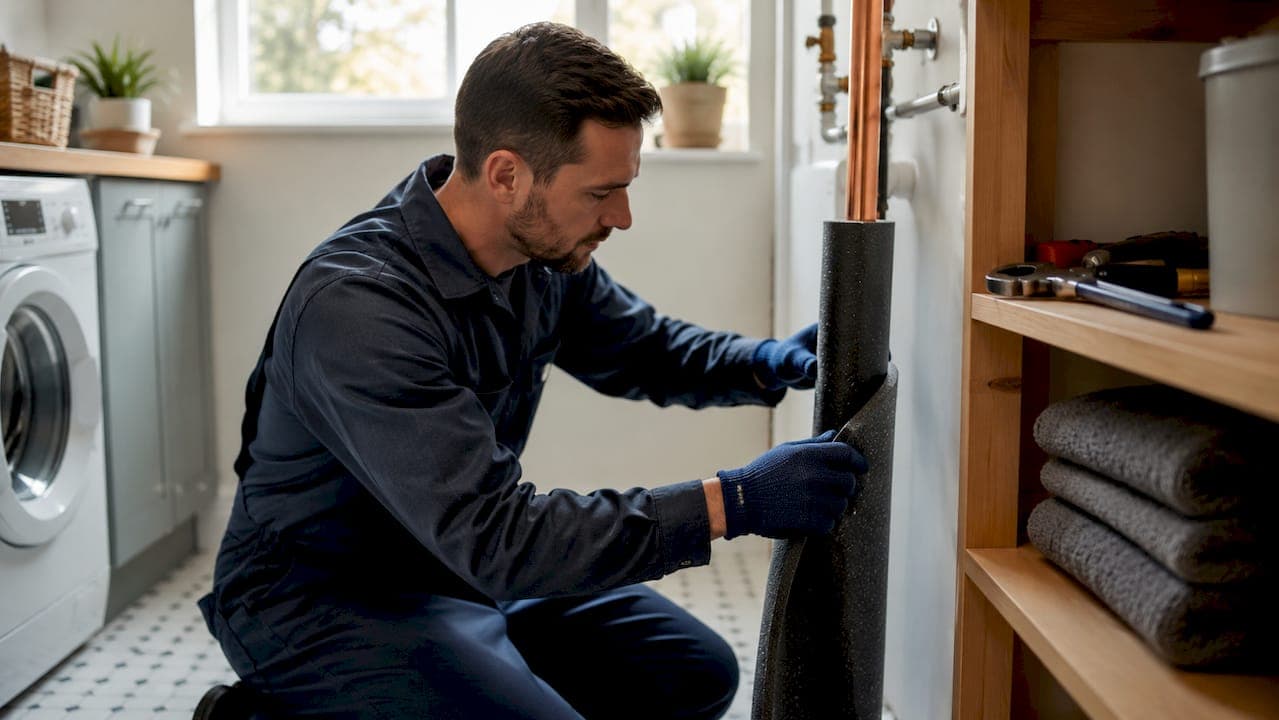
Plumbing insulation is a thermal and acoustic barrier applied directly to pipes that reduces heat transfer, prevents freezing, controls condensation, and dampens noise throughout your home. The role of plumbing insulation goes well beyond keeping water warm. It protects your property from moisture damage, cuts your energy bills, and makes your home quieter. Materials like fiberglass, elastomeric foam, and polyethylene each serve specific functions depending on whether you are insulating hot or cold water lines. Understanding pipe insulation properly means knowing which material to use, where to fit it, and what it can and cannot do.
How does plumbing insulation improve energy efficiency?
Pipe insulation works by adding thermal resistance around the pipe wall, which slows the rate at which heat escapes into the surrounding air. This thermal resistance is measured as an R-value. The higher the R-value, the slower the heat loss.
The U.S. Department of Energy estimates that insulating accessible hot water pipes can raise tap water temperature by 2°F–4°F and reduce annual water heating energy costs by 3%–4%. That saving is meaningful because it also means you can lower your boiler's thermostat slightly without losing comfort at the tap.
The biggest gains come from a specific location. Prioritising the first 3–6 feet of hot and cold water pipes connected to your water heater maximises standby energy savings. Standby loss occurs when heat bleeds out of pipes sitting idle between uses. Insulating those first few feet stops that bleed at the source.
Here are the practical steps to get the most from pipe insulation for energy savings:
- Wrap all accessible hot water pipes, starting from the boiler or water heater outward
- Cover the first 3–6 feet of cold water inlet pipes at the heater as well
- Use foam pipe lagging with a wall thickness of at least 13mm for standard domestic pipes
- Seal all joints and gaps with foil tape to prevent thermal bridging
Pro Tip: If your hot water takes more than 30 seconds to arrive at the tap, uninsulated pipes are almost certainly the cause. Insulating them is one of the cheapest fixes available.
For a deeper look at how insulation connects to broader energy efficiency gains, the Your-local-plumber blog covers the full picture for UK homeowners.
What materials are used for pipe insulation?
Choosing the right insulation material depends on whether you are wrapping hot water pipes, cold water pipes, or pipes in specific locations like airing cupboards or unheated lofts.
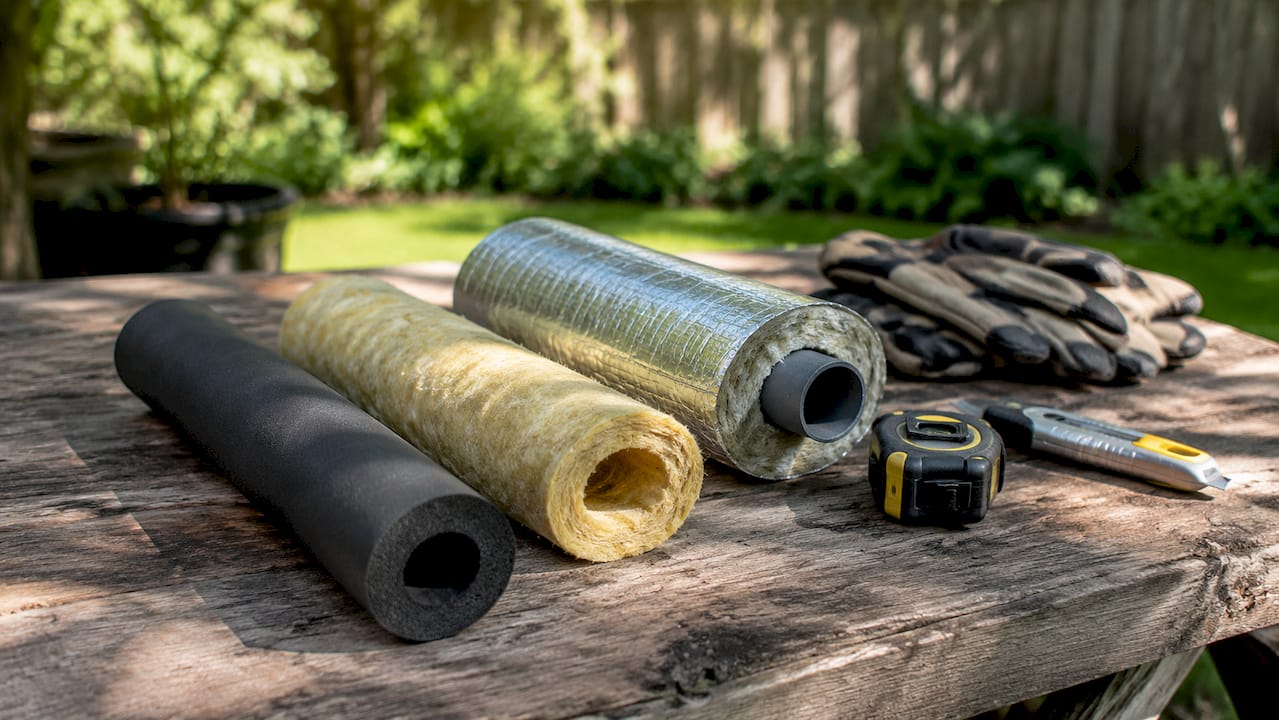
Fiberglass provides superior heat resistance for hot water pipes, while closed-cell elastomeric foam is the preferred choice for cold water pipes because its structure resists vapour diffusion. That distinction matters more than most homeowners realise. Using the wrong material on a cold pipe can trap moisture inside the insulation itself, making the problem worse rather than better.
The table below compares the four most common insulation materials used in residential plumbing:
| Material | Best Use | Key Benefit | Limitation |
|---|---|---|---|
| Fiberglass | Hot water pipes | High heat resistance | Requires vapour barrier on cold pipes |
| Elastomeric foam | Cold water pipes | Closed-cell vapour resistance | Less effective at very high temperatures |
| Polyethylene foam | General domestic use | Lightweight, easy to fit | Lower R-value than fiberglass |
| Mineral wool | High-temperature applications | Fire resistant | Heavier, harder to cut neatly |
There is a clear material trade-off at play. Fiberglass handles heat well, but elastomeric foam's closed-cell structure is what makes it vital for cold pipes where moisture is the primary threat. Polyethylene foam lagging, sold in most UK DIY stores, is a practical middle ground for standard domestic hot and cold pipes where extreme temperatures are not a concern.
Pro Tip: Always check the pipe diameter before buying foam lagging. A sleeve that is too loose will leave air gaps and reduce the insulation's effectiveness significantly.
Vapour barriers deserve special attention here. Cold water pipe insulation must include a vapour barrier to prevent condensation that causes mould and corrosion. Without one, moisture from the surrounding air migrates through porous insulation and sits against the pipe surface, creating exactly the damage you were trying to avoid.
How does pipe insulation protect against freezing and moisture?
Pipe insulation does not prevent freezing outright. Insulation acts as a time-delay buffer that slows the rate at which cold penetrates the pipe wall. During a brief overnight frost, that delay is often enough to protect your pipes. During a prolonged deep freeze with no water flowing, insulation alone will not save an exposed pipe in an unheated space.
This is one of the most common misconceptions homeowners hold about pipe lagging. Understanding pipe insulation's limits helps you plan properly for winter. In unheated lofts, garages, or outbuildings, insulation should be combined with trace heating tape or a trickle of running water during extreme cold snaps. For more practical guidance, the Your-local-plumber guide to winter pipe protection covers supplemental measures in detail.
The condensation side of the equation is equally serious. Pipe insulation raises the surface temperature of the covering above the dew point, which prevents condensation from forming on the outer surface. This only works reliably when a vapour barrier is present. Without it, moisture from humid air can still penetrate porous insulation and reach the pipe.
The risks of getting this wrong include:
- Mould growth inside wall cavities and under floors
- Corrosion on copper and steel pipe fittings
- Structural timber damage from persistent damp
- Reduced insulation performance as wet material loses its R-value
Insulation also protects unconditioned spaces from condensation-driven structural damage, a benefit that is frequently overlooked by homeowners. Cold water pipes running through a warm kitchen or bathroom will sweat without insulation, dripping onto joists and subfloors over months and years.
In what ways does pipe insulation reduce noise?
Pipe noise in homes falls into two categories: water-flow noise caused by turbulence inside the pipe, and vibration noise transmitted through the pipe wall into surrounding structure. Insulation addresses both.
Mechanical insulation reduces noise by decoupling pipes from walls and floors, dampening vibration and water-flow sound. Decoupling means the pipe no longer makes direct contact with the structural element, so vibration cannot travel through the building fabric. The insulation layer acts as a buffer between the two surfaces.
Here is how the noise reduction process works in practice:
- Water flowing at speed creates turbulence that vibrates the pipe wall
- Without insulation, that vibration transfers directly into joists, studs, or concrete
- Insulation absorbs the vibration energy before it reaches the structural surface
- The result is a measurable reduction in the ticking, banging, and rushing sounds common in older homes
Material choice affects acoustic performance. Elastomeric foam and mineral wool both offer sound dampening properties that polyethylene foam cannot match at the same thickness. For pipes running through bedroom walls or under ground-floor rooms, the extra cost of a denser material is worth it.
Water hammer, the loud bang that occurs when a tap is closed quickly, is a separate issue caused by pressure surges. Insulation reduces the transmission of that bang through the structure, even if it does not eliminate the pressure event itself. Homeowners who have fitted foam lagging to noisy pipes often report a noticeable improvement within days.
Key takeaways
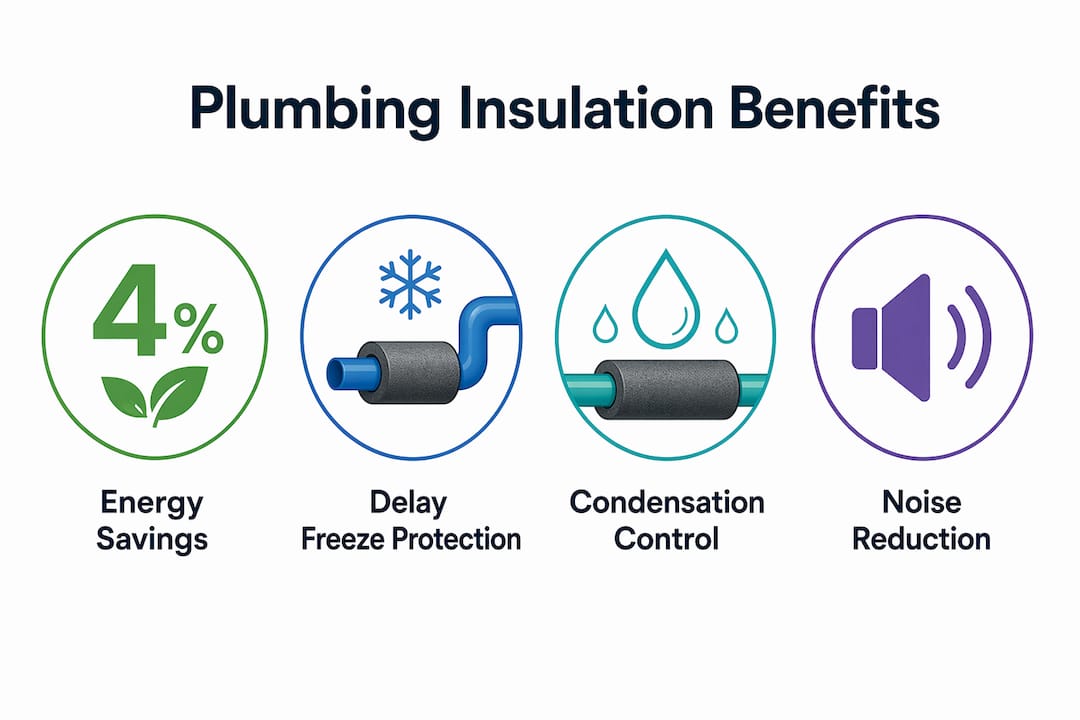
Pipe insulation delivers four distinct benefits: energy savings, freeze protection, condensation control, and noise reduction. Each benefit depends on choosing the right material and fitting it correctly.
| Point | Details |
|---|---|
| Energy savings are measurable | Insulating hot water pipes can cut water heating costs by 3%–4% annually. |
| Start at the water heater | Insulate the first 3–6 feet of pipe from your boiler for the greatest standby savings. |
| Match material to pipe type | Use fiberglass for hot pipes and closed-cell elastomeric foam for cold pipes. |
| Vapour barriers are non-negotiable | Cold pipe insulation without a vapour barrier risks mould, corrosion, and structural damp. |
| Insulation delays, not prevents, freezing | Combine lagging with trace heating in unheated spaces during prolonged cold weather. |
What i have learned after years of seeing pipe insulation done wrong
Most homeowners who call about burst pipes in January have insulation fitted. That is the uncomfortable truth. The insulation is usually the wrong type, poorly joined, or missing entirely from the one stretch of pipe that matters most.
The single most common mistake I see is polyethylene foam lagging on cold water pipes in loft spaces, fitted without any vapour barrier and with gaps at every joint. It looks like the job is done. In reality, moisture is collecting inside the sleeve and sitting against the copper. By the time the homeowner notices a problem, the corrosion is already advanced.
The second mistake is ignoring the safety guidance around gas appliances. The Department of Energy is clear that insulation must be kept at least 6 inches from gas water heater flues, and that fiberglass wrap should be used near flues rather than foam sleeves. I have seen foam lagging fitted right up to a flue. That is a fire risk, not an insulation upgrade.
My honest advice: treat pipe insulation as a system, not a product. The material, the vapour barrier, the joints, and the clearances all work together. Get one element wrong and the whole system underperforms. If you are unsure about any part of the installation, a qualified plumber can survey your pipework and identify the gaps in under an hour. The cost of that visit is a fraction of what a burst pipe or mould remediation will set you back.
— Michael
Get your pipes properly insulated with Your-local-plumber
If this article has made you think about the state of your own pipework, you are not alone. Many homeowners discover gaps in their insulation only after a problem appears. Your-local-plumber provides professional insulation surveys and installations carried out by experienced engineers who know exactly which materials suit which pipes.

Browse the project gallery to see the standard of work Your-local-plumber delivers on insulation and plumbing upgrades across the UK. Whether you need a full loft pipe survey or a targeted fix before winter, the team is ready to help. Get in touch today for transparent pricing and fast local service.
FAQ
What is the main role of plumbing insulation?
The role of plumbing insulation is to reduce heat transfer, slow pipe freezing, prevent condensation, and dampen noise. It acts as a thermal and acoustic barrier around the pipe wall.
How much energy can pipe insulation save?
Insulating accessible hot water pipes can reduce water heating costs by 3%–4% annually and raise water temperature at the tap by 2°F–4°F, according to the Department of Energy.
Does pipe insulation stop pipes from freezing?
Pipe insulation delays freezing rather than preventing it entirely. During a prolonged deep freeze, supplemental measures such as trace heating tape are needed in unheated spaces.
What is the best insulation material for cold water pipes?
Closed-cell elastomeric foam is the best choice for cold water pipes because its structure resists vapour diffusion. It must be fitted with a vapour barrier to prevent condensation and corrosion.
Can pipe insulation reduce noise in my home?
Yes. Mechanical insulation decouples pipes from walls and floors, which dampens vibration and water-flow noise. Denser materials like elastomeric foam and mineral wool offer better acoustic performance than standard polyethylene foam.