TL;DR:
- Proper pipe insulation reduces heat loss, prevents freezing, and controls condensation in UK homes throughout the year. It involves selecting suitable materials, ensuring full coverage without gaps, and following regulations for effective performance and compliance. Investing in correct installation significantly lowers energy bills, extends pipe lifespan, and minimizes costly repairs.
Most homeowners think about pipe insulation once a year — usually when a cold snap hits and they're worried about frozen pipes. But that's only a fraction of the story. Pipe insulation reduces unwanted heat transfer and protects pipes from cold-related problems such as freezing, and from condensation-related issues too. Whether it's keeping your hot water warmer for longer, stopping summer condensation on cold supply pipes, or simply trimming your energy bills month by month, good pipe insulation works hard all year round. This guide will clear up the confusion and give you practical steps you can actually use.
Table of Contents
- What is pipe insulation and why does it matter?
- Types of pipe insulation and how they work
- How proper pipe insulation helps: Real-world impacts for UK homes
- Installation tips, pitfalls, and compliance essentials
- The expert's view: Why full-coverage matters more than material
- Need help with pipe insulation in your home?
- Frequently asked questions
Key Takeaways
| Point | Details |
|---|---|
| Prevents freezing and condensation | Pipe insulation defends against winter pipe bursts and damp from condensation issues. |
| Improves energy efficiency | Well-insulated pipework helps keep water hotter and cuts household heating costs. |
| Installation quality is crucial | Continuous, well-fitted insulation—especially over joints and valves—ensures you benefit fully. |
| Follow UK regulations | Use the right thickness and install according to British Standards and manufacturer advice to stay compliant. |
What is pipe insulation and why does it matter?
Pipe insulation, often called pipe lagging, is exactly what it sounds like: an insulating jacket or sleeve fitted around pipework to control heat movement. According to Energy Saving Trust guidance, pipe lagging is "an insulating jacket/sleeve applied around pipework to reduce unwanted heat transfer and protect pipes from cold-related problems such as freezing, and from condensation-related issues."
In practical terms, that means it works in two directions. It keeps heat in your hot water pipes so less energy is wasted before the water reaches your tap or radiator. It also keeps external cold out of your pipework so that cold mains supply pipes don't sweat with condensation or freeze in winter. These are very different problems, but the same product addresses both.
For UK homeowners, pipe leak prevention starts long before a pipe actually bursts. Insulation is one of the simplest barriers between your plumbing and costly water damage. Without it, heat loss from a single unlagged 22mm hot water pipe in a cold loft can quietly add pounds to your heating bills every month, year after year.
Here's a quick summary of the main benefits for UK homes:
- Reduced heat loss from hot water and heating pipes, particularly in unheated areas
- Freeze protection for cold supply pipes in lofts, garages, and outbuildings during winter
- Condensation control on cold pipes during warmer months, reducing damp and mould risk
- Quieter pipework by dampening noise from water movement and thermal expansion
- Extended system lifespan by shielding pipes from temperature extremes
- Lower heating and water bills through improved system efficiency
"Insulating tanks and pipes helps to reduce heat loss and lower bills." — Energy Saving Trust
These aren't minor side effects. They're the core reasons cutting plumbing costs starts with what's wrapped around your pipes, not just what's inside your boiler.
Types of pipe insulation and how they work
Not all pipe insulation is created equal. The material you choose should match the pipe type, location, and specific problem you're trying to solve. Here's a straightforward breakdown of the most common options found in UK homes.
Foam (polyethylene or nitrile rubber) This is the most widely used type for domestic plumbing. It comes in pre-split tubes that slip over pipes easily, making it popular for DIY installation. Standard polyethylene foam is lightweight and inexpensive, ideal for hot and cold water pipes in most indoor locations. Nitrile rubber foam is denser and handles higher temperatures and UV exposure better, so it's well suited for external pipework or pipes serving heat pump systems.
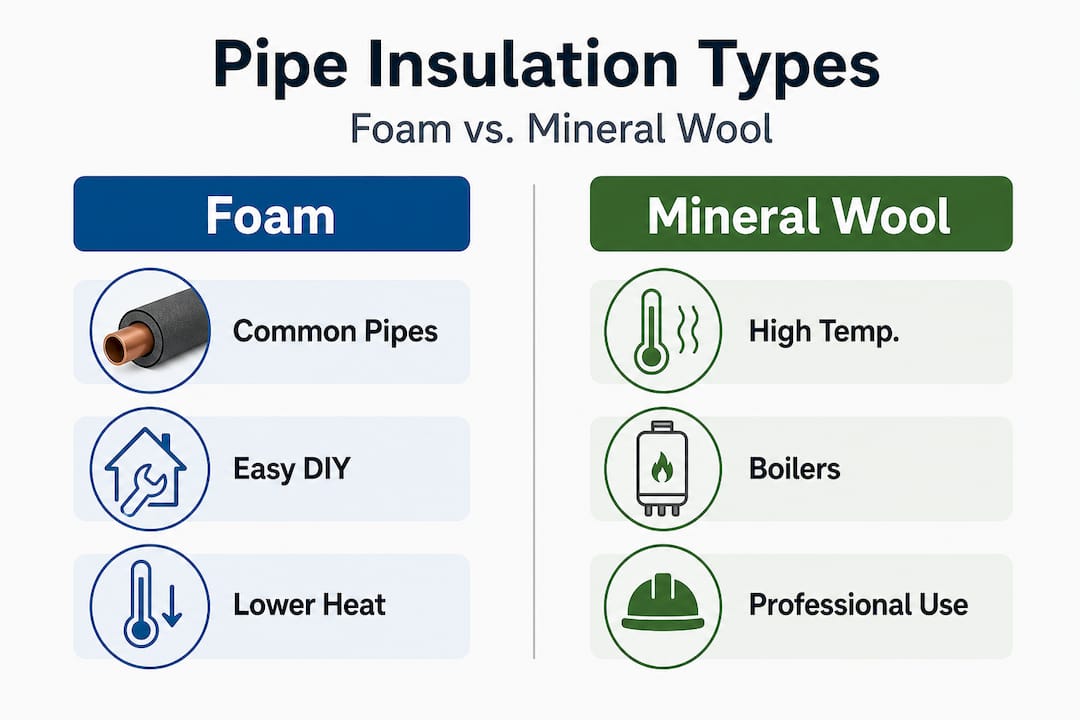
Mineral wool (glass or rock wool) This material handles very high temperatures, which makes it the go-to choice for boiler flue pipes, heating flow and return pipes, and other high-temperature applications where foam would degrade. It's usually secured with foil facing or a metal jacket. It's heavier and less forgiving to work with than foam, so many homeowners leave this type to professionals.
Flexible rubber (EPDM or similar elastomeric foam) Excellent flexibility means it wraps neatly around bends, awkward joints, and fittings. It's also a strong performer in condensation control because its closed-cell structure resists moisture absorption. This makes it popular for chilled water systems and cold pipework where condensation is a persistent concern.
Here's a comparison of the main options:
| Material | Best for | Temperature range | DIY friendly? |
|---|---|---|---|
| Polyethylene foam | General hot/cold pipes | Up to ~80°C | Yes |
| Nitrile rubber foam | External pipes, heat pumps | Up to ~105°C | Yes |
| Mineral wool | High-temp, boiler flue | Up to ~300°C+ | Often no |
| Elastomeric foam | Cold pipes, bends, fittings | Wide range | Moderate |
Thickness matters just as much as material. Thicker insulation means less heat loss or less cold ingress, but it also costs more and takes up more space. In the UK, insulation thickness selection is commonly tied to British Standard BS 5422, and for building projects it must also be coordinated with manufacturer instructions and, where applicable, Building Regulations requirements. This means there's no universal answer — the right thickness depends on your pipe diameter, the ambient temperature around it, and the fluid temperature inside.
You'll also want to check UK plumbing regulations before making decisions on larger projects or anything touching your heating system. Compliance isn't just a box-ticking exercise. It protects you legally and ensures the insulation actually performs as expected.
Pro Tip: Don't just match insulation to pipe diameter. Factor in the room conditions too. A pipe running through a cold, damp garage needs denser, moisture-resistant insulation compared to the same pipe running through a warm airing cupboard.
How proper pipe insulation helps: Real-world impacts for UK homes
Let's put this into concrete terms. Abstract energy-saving claims are easy to ignore, but real-life scenarios bring the value of pipe lagging into sharp focus.
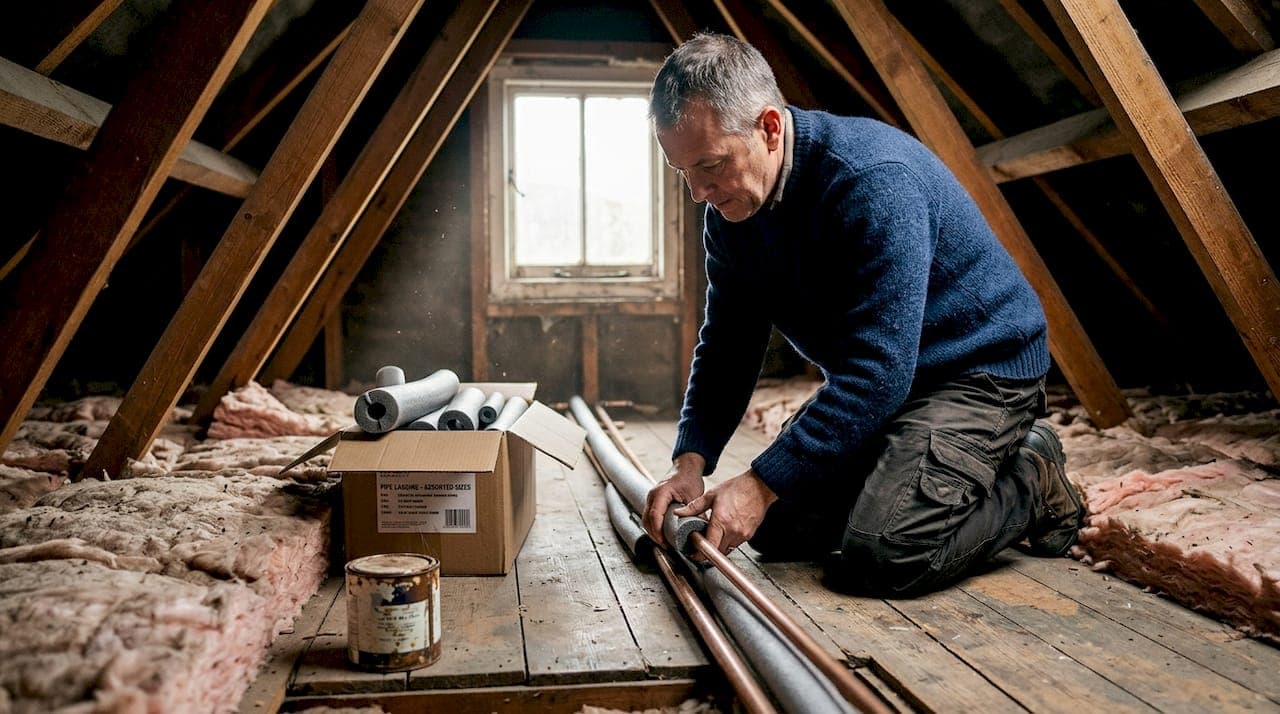
Scenario one: The uninsulated loft A detached house has its hot water cylinder in the airing cupboard, but the feed pipe runs 4 metres across an unheated loft before connecting to the bathroom taps. Every time you run a hot tap, that stretch of unlagged pipe loses heat to the cold air above. You end up running the tap longer to get hot water, wasting both water and energy. Adding foam lagging to that one pipe run can noticeably reduce your wait time, cut water waste, and lower your hot water heating costs. It costs very little and takes under an hour.
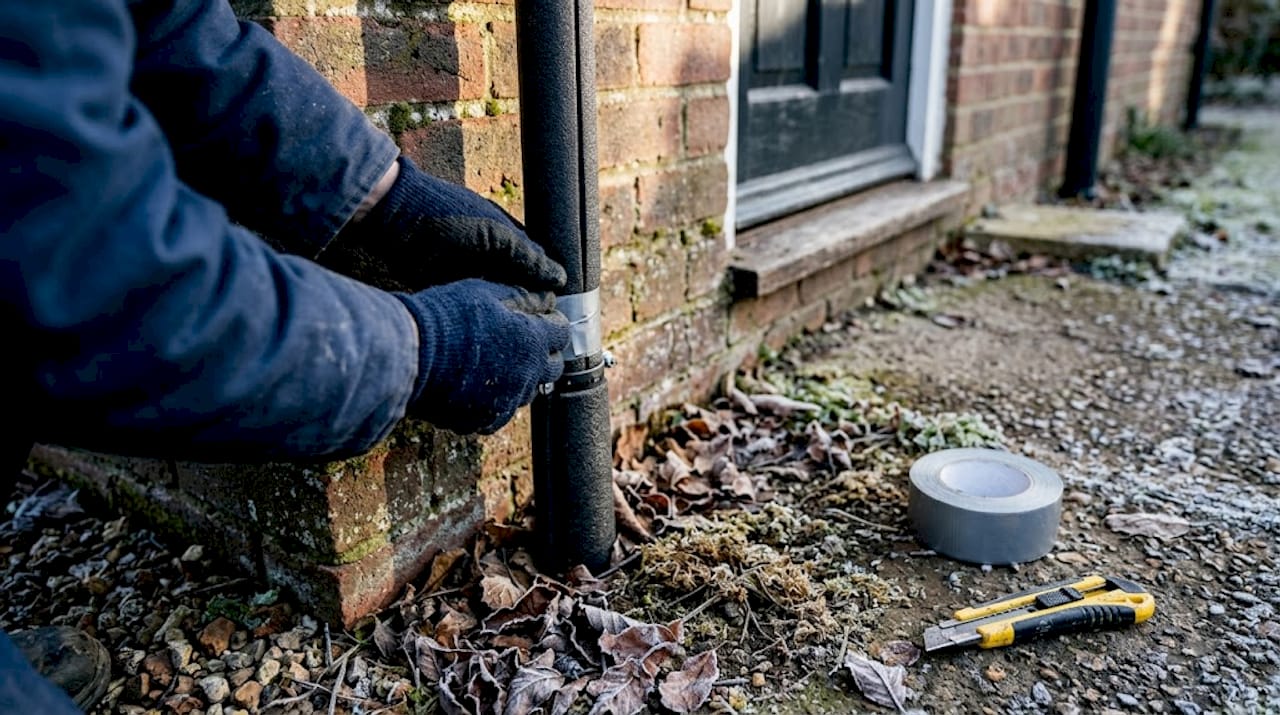
Scenario two: The exposed exterior pipe An outside tap or condensate pipe from a boiler is particularly vulnerable to freezing. A hard frost can freeze an unlagged condensate pipe within hours, causing the boiler to shut down entirely. Wrapping that pipe in foam lagging with a proper waterproof outer layer can prevent the whole system from grinding to a halt on the coldest morning of the year.
For energy efficiency, insulating hot water pipe runs that pass through cold spaces can reduce heat loss and improve system efficiency. Combined with good plumbing sustainability habits, the cumulative saving across a full year can be meaningful.
Here's how the impacts stack up:
| Area of impact | Without insulation | With insulation |
|---|---|---|
| Heat loss (hot pipe, cold zone) | High — continuous | Low — dramatically reduced |
| Freeze risk (cold pipe in loft) | Significant in winter | Greatly reduced with proper lagging |
| Condensation on cold pipes | Common in summer | Largely prevented |
| System wear and longevity | Higher stress on components | Reduced stress, longer lifespan |
The three most common improvements homeowners notice after insulating:
- Lower heating bills as hot water pipes retain heat better and the boiler doesn't have to work as hard
- Fewer emergency call-outs because pipes are better protected against temperature extremes, reducing pipe burst risks
- Reduced damp issues in kitchens, bathrooms, and under-sink cupboards where cold pipes used to create condensation
If you're also weighing up whether old pipework needs replacing, understanding the relationship between insulation and pipe replacement decisions can save you from spending money in the wrong place. Sometimes lagging an ageing pipe buys you the time to plan a proper replacement properly, rather than reacting in an emergency.
You should also consider what's above your pipes. Good loft insulation advice is worth reviewing alongside pipe lagging, since the two work together to create a properly protected cold space.
Installation tips, pitfalls, and compliance essentials
Choosing the right material is only half the job. Plenty of homeowners buy decent insulation and still see poor results because the installation itself has gaps or weak points. Here's where things commonly go wrong — and how to get it right.
The single biggest issue in practice is continuity. Insulation continuity and dealing with gaps at seams, and insulating around fittings and valves where they're part of the heat-loss or cold-bridging pathway, are critical details that are frequently overlooked. A gap of even a few centimetres at a joint or fitting can undo much of the benefit you'd otherwise gain.
Here's a practical checklist for getting installation right:
- Measure pipe diameter accurately before buying — foam tubes come in specific sizes and a loose fit performs poorly
- Cut foam cleanly and butt joints tightly — use insulation tape or adhesive foam tape to seal seams
- Insulate around bends, tees, and valves using pre-formed fittings or flexible sections; don't leave any fittings bare
- Use waterproof outer wrap or UV-resistant casing on any external runs exposed to weather
- Check Building Regulations if the work is part of a larger renovation or heating system upgrade
- Follow BS 5422 thickness guidance for your pipe diameter and application — don't guess
- Secure insulation firmly so it doesn't slip or sag over time, particularly on vertical pipe runs
There are also compliance considerations that go beyond DIY instinct. For any work connected to gas systems, heating circuits, or new build/renovation projects, plumbing compliance requirements may apply, and failing to follow them can create problems when selling your home or making insurance claims.
"Insulation continuity is essential — gaps at joints, valves and fittings are the most common reason pipe insulation underperforms in real-world installations."
If you're unsure whether to tackle a run yourself, especially in hard-to-reach spaces or near complex fittings, it's worth reading up on common plumbing DIY mistakes before starting. Getting it almost right still leaves a gap for problems to creep in. And if you've already got a pipe under stress, emergency pipe repair guidance can help you manage the situation before a professional arrives.
Pro Tip: After installing lagging, run your hand slowly along the full pipe run on a cold day. Any spot that feels noticeably colder than the rest is telling you there's a gap or a thin point. Fix it before winter arrives.
The expert's view: Why full-coverage matters more than material
Here's something that most guides won't tell you plainly: the material you choose matters far less than how well you install it. In our experience working on homes across the UK, the majority of real-world pipe insulation failures trace back not to cheap foam or the wrong product, but to gaps. A 3mm gap at a valve body. A split that wasn't sealed. An elbow left bare because a pre-formed fitting wasn't available and the installer didn't improvise.
It's a contrarian point, but it's important. Homeowners often agonise over which brand of lagging to buy, or whether to upgrade from standard polyethylene foam to something more specialist, when the real leverage is making sure what they have is installed with no weak points.
Think about it this way. A chain of pipe insulation is only as strong as its weakest link. If you have a perfectly insulated 5-metre run with a bare 10cm section at a stopcock, that stopcock will lose heat, develop condensation, or potentially freeze depending on conditions. The performance of the whole run is compromised.
The Energy Saving Trust puts it well: treat pipe insulation as a system, match it to pipe size and application, ensure full-length coverage especially in unheated or external zones, and prevent gaps at joints and valves so the thermal and condensation risk reductions actually happen.
We'd add one more thing from the field: pay particular attention to corners. Corners and right-angle bends are where amateur installations almost always fall short. Use valve cover caps and bend sections rather than forcing a straight tube around a tight angle. It takes a few extra minutes and a little more money, but it's the difference between insulation that performs and insulation that just looks the part.
Need help with pipe insulation in your home?
If reading through this has made you realise there are unlagged pipes in your loft, a condensate pipe that's been getting away with it for years, or a heating system run that's never been properly insulated, you're not alone — it's one of the most commonly neglected areas of home maintenance.

At Your Local Plumber, our engineers assess pipework properly and advise on the most effective approach for your specific home layout, pipe types, and compliance requirements. We work transparently, explain your options clearly, and get the job done without unnecessary call-outs or vague estimates. You can see local plumbing work and get a clearer picture of the standard we bring to every job. Whether you need a full assessment or just advice on a tricky pipe run, we're ready to help.
Frequently asked questions
Do all pipes in my home need insulating?
Not always. Focus on pipes in unheated areas such as lofts, garages, or external runs, and those carrying hot water — insulating hot water pipe runs that pass through cold spaces can meaningfully reduce heat loss and improve system efficiency.
How do I know which thickness of insulation to use?
Check the pipe diameter, follow the insulation manufacturer's recommendations, and ensure the specification meets BS 5422. Insulation thickness selection is commonly tied to British Standard BS 5422, with additional Building Regulations requirements for certain projects.
Will pipe insulation stop pipes freezing during a cold snap?
It greatly reduces the risk, particularly when applied with no gaps and proper outer protection on external runs. However, extreme cold conditions may still require additional measures such as trace heating or maintaining a minimum background temperature indoors.
Does insulation make a difference to energy bills?
Yes. By keeping hot water pipes warmer along their full run, insulation reduces the heat your boiler must continually replace. Insulating tanks and pipes helps reduce heat loss and lower bills across the heating season.
Can I install pipe insulation myself?
Many homeowners can handle accessible indoor pipes using standard foam lagging with a little care and the right materials. However, complex runs, high-temperature applications near boilers, or any work that needs to meet Building Regulations compliance may be better handled by an experienced plumber.