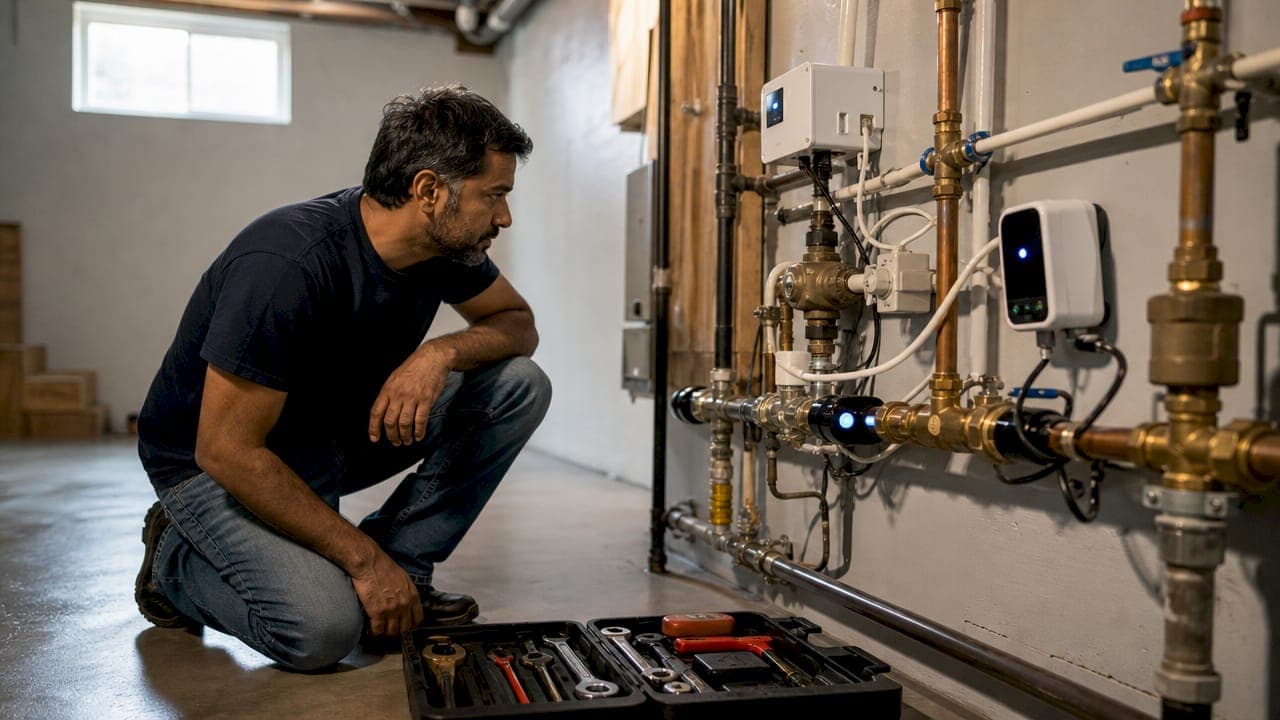
TL;DR:
- Smart plumbing is a connected water management system that uses IoT sensors and automatic valves to monitor and protect homes in real time. It offers benefits such as water waste reduction, early leak detection, insurance discounts, and damage prevention, with investment payback typically within three to five years. The technology seamlessly integrates with home automation platforms, enhancing safety, convenience, and sustainability for homeowners.
Smart plumbing is defined as a digitally connected water management system that uses IoT sensors, automatic shutoff valves, and smartphone integration to monitor, control, and protect your home's water supply in real time. The advantages of smart plumbing go well beyond convenience. They include measurable reductions in water bills, early detection of hidden leaks, lower insurance premiums, and a shift from reactive repairs to planned maintenance. If you have ever returned home to a flooded kitchen or received an unexpectedly high water bill, this technology addresses exactly those problems before they escalate.
1. How smart plumbing improves water efficiency
Smart plumbing makes hidden water consumption visible, and visibility drives change. Usage data on mobile apps prompts homeowners to adopt water-saving habits immediately, reducing consumption without any additional effort. Flow metres and continuous sensors track every litre passing through your pipes, flagging unusual patterns that suggest a running toilet, a dripping tap, or a slow leak behind a wall.
Automatic shutoff valves take efficiency one step further by cutting the water supply the moment abnormal flow is detected. This prevents waste from continuing for hours or days unnoticed. Some systems also integrate with rainwater harvesting units or garden irrigation controllers, directing water where it is needed and stopping flow when it is not. For UK homeowners on a water metre, these features translate directly into lower quarterly bills.
- Continuous flow monitoring detects waste in real time
- Automatic shutoff prevents prolonged leaks from running undetected
- Mobile app dashboards show daily, weekly, and monthly consumption
- Integration with irrigation systems prevents garden overwatering
- Sustainable water practices become easier to maintain with data-driven feedback
Pro Tip: Set a daily water budget in your smart plumbing app. Most systems allow threshold alerts, so you receive a notification the moment your household exceeds its target, giving you time to investigate before the bill arrives.
2. Advanced leak detection and home safety

Silent leaks are found in approximately 60% of homes during smart plumbing installation. That figure is striking because most of those homeowners had no idea there was a problem. Leaks behind walls, beneath floors, or inside ceiling voids cause structural damage, mould growth, and rot over months or years before they become visible.
Smart sensors placed at high-risk points, such as under the kitchen sink, behind the washing machine, and near the boiler, detect moisture the moment it appears. The system sends a real-time alert to your smartphone, allowing you to act within minutes rather than discovering the damage days later. Paired with an automatic shutoff valve on the mains supply, the system can isolate the water source without you needing to be at home.
Key safety features to look for include:
- Real-time smartphone alerts with location-specific notifications
- Mains shutoff valves that activate automatically on leak detection
- Temperature sensors that warn of pipe freeze risk in winter
- 85-decibel audible alarms for immediate on-site warning
- Battery-backed sensors that continue working during power cuts
For a deeper understanding of how leak detection technology works in practice, the guide on leak detection for homes covers the core methods used by professional engineers.
3. Financial benefits of smart plumbing systems
The return on investment for smart plumbing is best measured by damage prevention, not just utility savings. Smart water systems reduce insurance claim frequency by up to 96% and average claim costs by up to 72%. A single avoided flood claim can cover the entire cost of a smart plumbing system several times over.
The financial case breaks down across four areas:
- Lower water bills. Eliminating hidden leaks and reducing waste cuts consumption, which directly reduces metered water charges.
- Insurance discounts. Monitored systems attract premium reductions of 5 to 10% from many UK insurers who recognise the reduced risk.
- Avoided repair costs. Catching a slow leak early costs far less than replacing water-damaged flooring, plasterboard, or joists.
- Payback period. The typical payback period combining utility savings and damage prevention sits at three to five years for most homes.
"The real value of smart plumbing is not what it saves on your water bill each month. It is the five-figure repair bill it prevents you from ever receiving."
Property value also benefits. Buyers increasingly look for smart home features, and a monitored plumbing system signals a well-maintained property. For practical guidance on reducing ongoing plumbing costs, the article on cutting plumbing costs offers additional strategies that complement smart system ownership.
4. Convenience and remote control
Smart plumbing integrates with home automation platforms including Amazon Alexa and Google Home, allowing voice commands and app-based control from anywhere in the world. Integration with automation platforms means your plumbing becomes part of a broader connected home system rather than an isolated appliance. You can check your water usage from a hotel room, shut off the mains before a storm, or receive a maintenance reminder without needing to remember to check anything manually.
Vacation mode is one of the most practical features for UK homeowners. Activating it reduces water pressure, monitors for any movement in the pipes, and sends an alert if anything unexpected occurs while the property is empty. Temperature monitoring adds another layer of protection during cold snaps, warning you when pipe temperatures approach freezing point so you can act before a burst occurs.
Pro Tip: Before leaving for a holiday, activate vacation mode and set a freeze alert threshold of 3°C. This gives you enough warning to contact a neighbour or a local plumber before any pipe damage occurs.
Maintenance alerts remove the guesswork from servicing. Rather than waiting for a boiler to fail or a pressure valve to give out, IoT sensors and AI analytics identify trending pipe conditions before failure, allowing you to schedule repairs at a convenient time rather than dealing with an emergency.
5. Comparing smart plumbing setups: which suits your home?
Not every home needs a full whole-house monitoring system from day one. Smart plumbing solutions range from simple standalone sensors to AI-driven predictive maintenance platforms, and the right choice depends on your budget, home size, and comfort with technology.
| Setup level | Best for | Key features | Approximate cost | Installation |
|---|---|---|---|---|
| Basic (standalone sensors) | Flats, small homes, first-time buyers | Moisture detection, audible alarm, app alert | £30 to £150 per sensor | DIY, no plumbing changes |
| Mid-level (shutoff + flow monitoring) | Family homes, metered properties | Mains shutoff, flow data, smartphone control | £300 to £800 | Professional recommended |
| Advanced (whole-house AI monitoring) | Large homes, landlords, tech-savvy owners | Predictive maintenance, full usage analytics, platform integration | £1,000 to £3,000+ | Professional required |
The basic tier is the lowest-risk entry point. Standalone IoT sensors can be placed under sinks, behind appliances, and near the boiler without any modification to your pipework. They provide strong initial protection at minimal cost and no disruption. The mid-level tier adds a shutoff valve on the mains supply, which is the feature that prevents a slow overnight leak from becoming a flood. The advanced tier suits landlords managing multiple properties or homeowners who want full visibility and predictive alerts before any component fails.
Smart plumbing in commercial buildings reduces water consumption by over 20% and maintenance costs by up to 40%, and while residential systems operate at a smaller scale, the proportional benefits are comparable. Starting with a basic setup and scaling up as confidence grows is the approach most engineers at Your-local-plumber recommend for homeowners new to the technology.
6. Environmental impact and sustainability
Smart plumbing reduces household water waste at a time when water scarcity is a growing concern across parts of the UK, particularly in the south and east of England. Continuous monitoring catches the slow drips and running fixtures that collectively account for a significant share of residential water waste. The EPA estimates that household leaks waste nearly 1 trillion gallons annually in the US alone, and UK figures follow a similar pattern proportionally. Fixing those leaks through smart detection is one of the most direct contributions a homeowner can make to reducing water demand.
Beyond leak prevention, smart systems support greener habits by making consumption data tangible. When you can see exactly how much water your household uses each day, the abstract idea of conservation becomes a concrete number you can act on. Pairing a smart plumbing system with low-flow fixtures, a water butt, or a grey water recycling unit creates a genuinely sustainable home water setup. The guide on plumbing sustainability for UK homeowners covers complementary steps worth considering alongside smart system installation.
Key takeaways
Smart plumbing systems deliver the greatest value through leak prevention and damage avoidance, not just reduced water bills.
| Point | Details |
|---|---|
| Leak detection is the core benefit | Silent leaks are found in 60% of homes during installation, making early detection the primary financial safeguard. |
| Financial payback is 3 to 5 years | Combining utility savings, insurance discounts of 5 to 10%, and avoided repair costs makes the investment recoverable. |
| Entry-level systems require no plumbing work | Standalone IoT sensors provide meaningful protection at low cost and can be installed without a plumber. |
| Remote control adds practical safety | Vacation mode and freeze alerts protect empty properties, reducing risk during the periods of highest vulnerability. |
| Efficiency gains scale with system complexity | Advanced AI monitoring reduces maintenance costs by up to 40% in larger properties with more complex pipework. |
Why I think smart plumbing is the most underrated home upgrade
Most homeowners I speak with assume smart plumbing is a luxury add-on for tech enthusiasts. In practice, it is closer to a smoke alarm for your water supply. You do not install a smoke alarm because you expect a fire. You install it because the cost of not having one is catastrophic.
What surprises people most is how often installation reveals problems they had no idea existed. Finding a slow leak behind a bathroom wall or a dripping joint under the kitchen floor is not unusual. It is the norm. The shift from reactive to predictive plumbing maintenance is the real change in mindset, and once homeowners experience it, they rarely want to go back to waiting for something to go wrong.
My honest recommendation is to start simple. A few well-placed sensors under your highest-risk appliances costs very little and teaches you a great deal about how your home uses water. From there, adding a mains shutoff valve is a natural next step. The full AI-driven setup is worth considering if you own a larger property or rent it out, but it is not where most people need to begin.
Smart plumbing also integrates more naturally into daily life than most people expect. The apps are straightforward, the alerts are clear, and the peace of mind from knowing your home is being monitored while you are away is genuinely valuable. That is not a sales pitch. It is what homeowners consistently report after the first few months of use.
— Michael
Ready to explore smart plumbing for your home?
Choosing the right smart plumbing setup is easier with professional guidance. The range of sensors, shutoff valves, and monitoring systems available in 2026 varies considerably in quality and compatibility, and a poorly chosen system can create more confusion than it resolves.

Your-local-plumber provides expert consultations to help you identify the right level of smart plumbing protection for your property, whether that is a simple sensor installation or a full whole-house monitoring system. Our engineers carry out professional installations that meet insurer requirements and give you confidence the system will perform when it matters. Visit Your Local Plumber to book a consultation or request a home inspection, and find out exactly what your plumbing is doing behind your walls.
FAQ
What is smart plumbing?
Smart plumbing is a water management system that uses IoT sensors, flow metres, and automatic shutoff valves connected to a smartphone app to monitor and control your home's water supply in real time.
How does smart plumbing save money?
Smart plumbing saves money by detecting leaks early, reducing water waste, attracting insurance discounts of 5 to 10%, and preventing costly water damage repairs. The typical payback period is three to five years.
Is smart plumbing worth it for a small home or flat?
Standalone IoT sensors can be installed in a flat without any plumbing modifications for as little as £30 to £150 per unit, making entry-level smart plumbing protection accessible and cost-effective for smaller properties.
Can smart plumbing detect leaks behind walls?
Smart plumbing sensors detect moisture at the point of installation, such as under sinks or behind appliances. Flow monitoring can also flag unusual water movement that suggests a hidden leak elsewhere in the system.
Does smart plumbing work with Alexa or Google Home?
Most mid-level and advanced smart plumbing systems integrate with Amazon Alexa and Google Home, allowing voice commands and app-based control as part of a broader connected home setup.