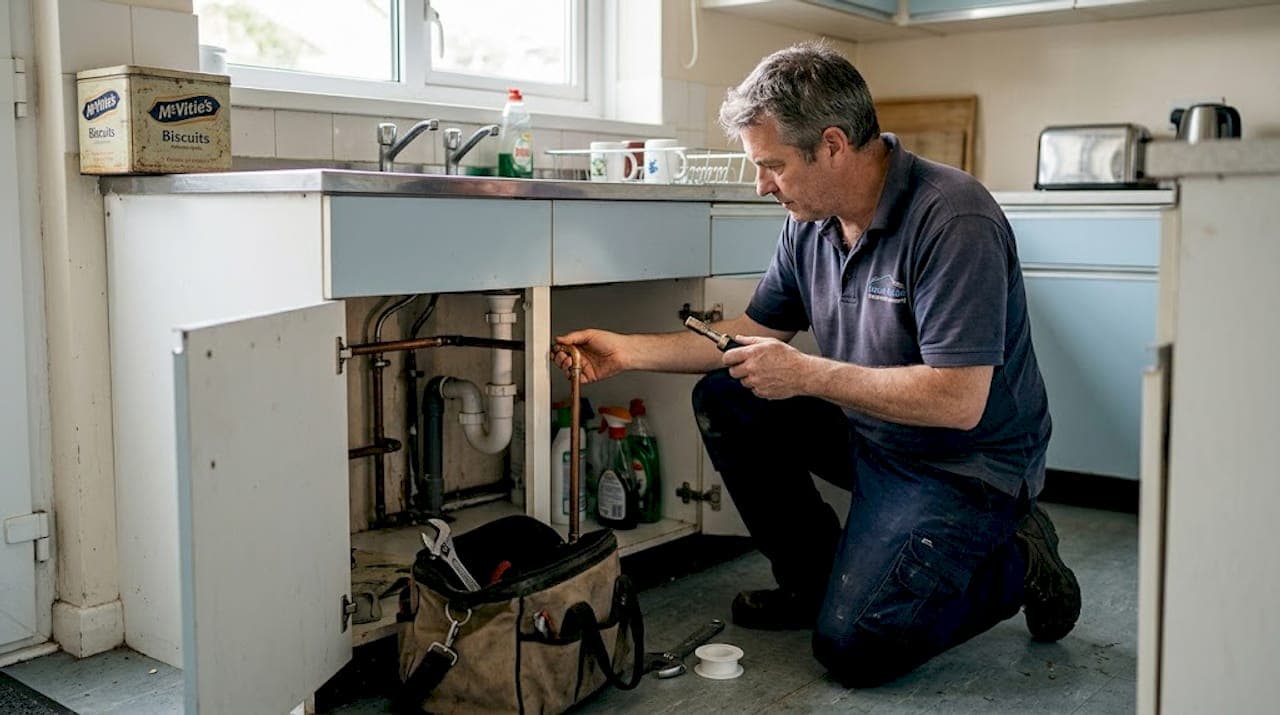
TL;DR:
- Most UK homeowners reduce water and energy costs by fixing leaks first.
- Upgrading to water-saving fixtures and adjusting daily habits significantly cut consumption.
- Using rainwater for outdoor tasks offers additional savings, especially in drought-prone areas.
Rising water bills and growing pressure to cut carbon emissions mean most UK homeowners can no longer afford to ignore how their plumbing performs. The good news is that you don't need a full renovation to make a real difference. Small, well-chosen changes, tackled in the right order, can cut water waste by hundreds of litres a week and noticeably reduce energy costs. This guide gives you the practical, evidence-backed steps that actually work in British homes, without the jargon or overwhelming lists that make it all feel impossible.
Table of Contents
- Start with leak detection and prevention
- Upgrade to water-saving fixtures and fittings
- Tweak daily habits for ongoing water and energy savings
- Collect and reuse rainwater where practical
- What most homeowners get wrong about plumbing sustainability
- Get support for your plumbing sustainability goals
- Frequently asked questions
Key Takeaways
| Point | Details |
|---|---|
| Fix leaks first | Detecting and repairing leaks stops the biggest source of wasted water straight away. |
| Use efficient fixtures | Install water-saving taps, showers, and dual-flush toilets for long-term reductions without loss of comfort. |
| Change daily habits | Simple actions like shorter showers and turning off taps add up to major savings over a year. |
| Consider rainwater reuse | Collecting rainwater for outdoor tasks reduces demand on mains supply and supports sustainability. |
| Balance savings and performance | Make sure efficiency upgrades do not compromise your plumbing system’s function or reliability. |
Start with leak detection and prevention
Before buying a single gadget or switching any fixture, find out whether your home is quietly losing water through leaks. Leakage remains significant across the UK water network, and household leaks contribute meaningfully to that total. The frustrating part is that most leaks are invisible until they cause damage.
The most common culprits in UK homes are dripping taps, leaky toilet cisterns (often called "leaky loos"), and loose under-sink connections. A dripping tap can waste more than 5,000 litres per year. A faulty toilet cistern can be far worse. Yet both are often ignored because they don't look dramatic.
Here is a simple process for checking your home:
- Visually inspect every tap, showerhead, and visible pipe joint for moisture or mineral build-up.
- Listen for a running or hissing sound from your toilet when nobody has flushed recently.
- Turn off all water-using appliances, then watch your water meter for 30 minutes. Movement on the dial signals a hidden leak.
- Drop a few drops of food colouring into your toilet cistern. If colour appears in the bowl without flushing, the cistern flap is failing.
- Check under kitchen and bathroom sinks for dampness, soft flooring, or a musty smell.
For more complex situations, particularly in older properties, detecting hidden leaks early can prevent structural damage and a far larger bill later.
"A leaking toilet can waste up to 400 litres of water a day without the homeowner noticing." This is precisely why checking for leaks is the first priority, not the last.
Pro Tip: Schedule a full leak check every six months, and always run one after a freeze-thaw event in winter, since pipes that have been under frost stress are far more likely to develop hairline cracks.
Use a maintenance checklist to keep records of what you've checked and when. If you find a persistent drip or suspect a leak behind a wall, call a professional. Diagnosing common leaks yourself is valuable, but there are limits to what visual checks can catch.
Once you've addressed the most common cause of wasted water, it's time to look at your everyday usage.
Upgrade to water-saving fixtures and fittings
With leaks fixed, you can drive further savings by updating key plumbing features. The three highest-impact upgrades for UK homes are aerated taps, low-flow showerheads, and dual-flush toilets.
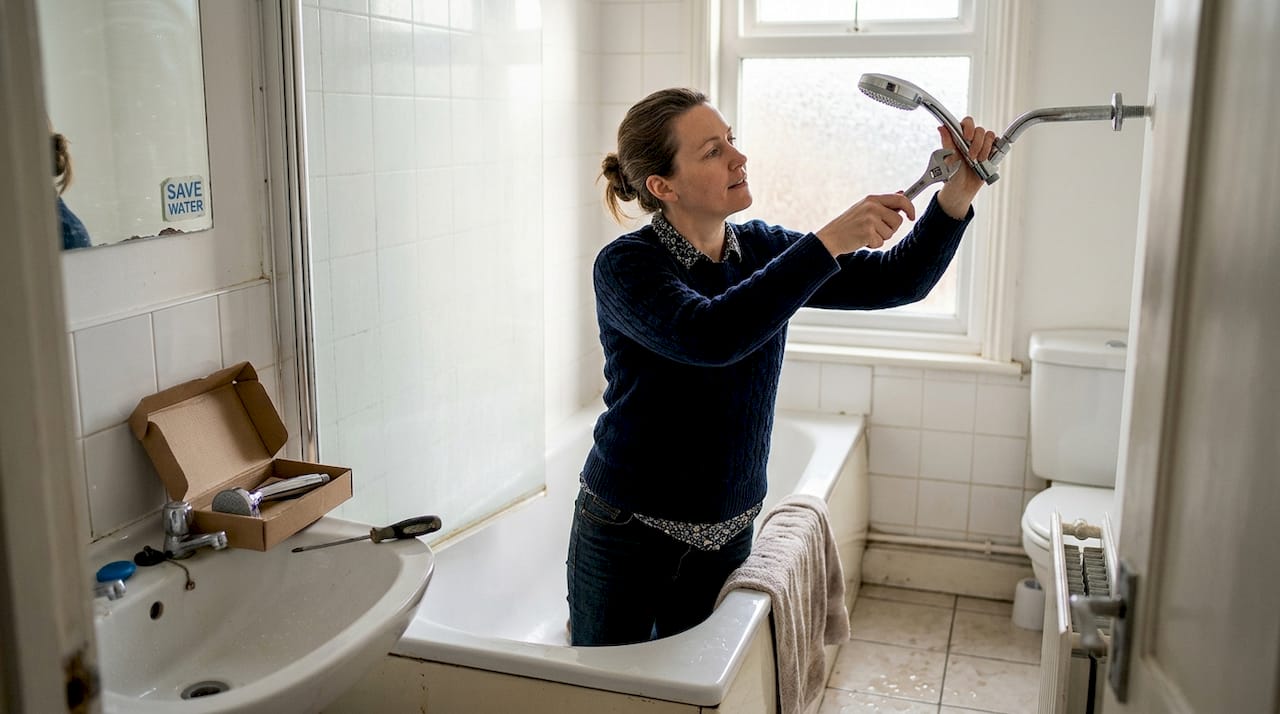
Aerated taps mix air into the water stream, which makes it feel just as strong while using significantly less water. Low-flow showerheads work on a similar principle. Dual-flush toilets give you a half-flush option for liquid waste, cutting per-flush use considerably.
| Fixture | Old standard (litres per use) | New standard (litres per use) | Typical upgrade cost |
|---|---|---|---|
| Standard tap | 12 litres/min | 6 litres/min (aerated) | £15 to £40 |
| Showerhead | 12 to 15 litres/min | 6 to 8 litres/min | £20 to £80 |
| Single-flush toilet | 9 to 13 litres/flush | 4 to 6 litres (dual-flush) | £150 to £400 |
| Toilet cistern insert | 9 litres/flush | 6 to 8 litres (with insert) | £2 to £10 |
Fitting water-saving devices in toilet cisterns can save roughly 1 to 3 litres per flush depending on the cistern. However, it is important that you do not compromise performance, particularly toilet flush volume, to a point where the fixture no longer works properly.
Signs that an upgrade makes sense for your home:
- Your taps are more than ten years old and show limescale build-up
- Your shower feels weak but still uses a lot of water
- Your toilet uses a single full flush regardless of need
- Your water bill has crept up without any obvious explanation
- You are renovating and can factor upgrades into the project cost
Pro Tip: Always test every new fitting for a week before assuming the job is done. Comfort and hygiene should never be sacrificed for the sake of saving a few litres.
If your property is a new build or has been recently extended, check that any new fixtures meet UK plumbing regulations and align with government water-saving standards before purchasing.
Tweak daily habits for ongoing water and energy savings
Upgrading fixtures magnifies results, but your habits shape daily savings. Even with the best fittings installed, careless water use can undo much of the benefit.
Here are four straightforward changes that collectively make a substantial difference:
- Shorten your shower. A five-minute shower uses approximately 40 litres of water. Cutting it to four minutes saves around 8 litres, every single time. Across a household of four, that adds up fast.
- Turn taps off while brushing your teeth. Leaving a tap running uses roughly 6 litres per minute. Turning off taps while brushing is one of the simplest, most evidence-backed water-saving actions available.
- Run dishwashers and washing machines only when full. Half loads use nearly the same energy and water as full ones. Waiting for a full load is a small inconvenience with a meaningful payoff.
- Collect cold water while waiting for the hot supply to arrive. Keep a jug or bucket near the shower or basin and use that water for plants or cleaning.
A running hosepipe can use up to 1,000 litres per hour. That figure tends to surprise people. For context, a family of four uses roughly 500 litres of water on an average day in total. Putting the hosepipe down and using a watering can for the garden is not a minor tweak. It is one of the biggest single habit changes you can make.
Introducing these habits as a household rather than as a solo effort is more effective. Children who understand why they're turning off taps are more likely to carry those habits forward. Pair habit changes with your everyday maintenance tips for the best long-term results.
Collect and reuse rainwater where practical
For those seeking next-level savings, outdoor water use is often overlooked. The UK receives an average of around 885mm of rainfall per year, which means most homes have a viable source of free water sitting on the roof.
A water butt is a simple storage tank, typically 100 to 200 litres, connected to a downpipe from your guttering. Rainwater collects in the butt and can be drawn off via a tap at the bottom. Installation is straightforward and costs very little.
| Water source | Typical use (litres per hour) | Best suited for |
|---|---|---|
| Watering can (from butt) | 5 to 10 litres total | Flower beds, pots, vegetables |
| Garden hosepipe | 500 to 1,000 litres | Large lawns (when no ban applies) |
| Garden sprinkler | 500 to 1,000 litres | Lawns (very high waste) |
Using water butts and watering cans for garden use is significantly more efficient than hosepipes or sprinklers, which can drain hundreds of litres in a single session.
Ideal uses for collected rainwater include:
- Watering garden beds, pots, and vegetables
- Washing the car or garden furniture
- Rinsing outdoor tools and pathways
One critical precaution: never connect a rainwater butt to your drinking water supply. Rainwater collected from roofs is not potable. Keep it strictly for outdoor, non-drinking uses. If you live in a water-stressed area of England, a water butt pays back its cost quickly, particularly in summers when hosepipe bans become more frequent.
What most homeowners get wrong about plumbing sustainability
Most people who want to be more sustainable with their plumbing start in the wrong place. They reach for the newest smart gadget or a trendy water-saving product without first checking whether their existing plumbing is working properly. It's a bit like putting a fresh coat of paint on a leaking roof.
In our experience, the correct order of action is:
- Fix all leaks first
- Adjust household habits
- Upgrade fixtures where the return justifies the cost
- Only then consider advanced options like grey water systems
Skipping leak checks is the most common and costly mistake. A silent toilet leak can erase every litre saved by a new low-flow showerhead. It also never "feels" like a win because fixing a leak just stops a loss. There's no satisfying novelty to it.
One thing we also see overlooked: tracking your water bill monthly is the simplest diagnostic tool available. A sudden increase often signals a leak well before any visible damage appears. Cross-reference your bill with your maintenance list to spot patterns.
Pro Tip: Take a photo of your water meter reading on the first of each month. Over six months, you'll have a clear picture of your usage trends and any unexpected spikes.
Sustainability in plumbing is not about sacrifice. It's about getting more from every litre without losing comfort or performance.
Get support for your plumbing sustainability goals
Ready to take the next step on your plumbing sustainability journey? Knowing what to do is one thing; getting it done properly, first time, is another.

At Your Local Plumber, our experienced engineers help UK homeowners put these sustainability tips into practice, from thorough leak assessments to water-saving fixture installations that meet current regulations. We work with all property types and can identify where your system is losing water or energy before it becomes a costly problem. Browse our completed projects to see the real-life results we've achieved for homeowners across the UK, and book an assessment to start making your home more efficient today.
Frequently asked questions
Which plumbing upgrade saves the most water in UK homes?
Upgrading to dual-flush toilets and fixing toilet cistern leaks offers the greatest savings for most households, since older toilets use up to 13 litres per flush compared to 4 to 6 litres for modern dual-flush models.
How can I check for hidden plumbing leaks?
Add food colouring to your toilet cistern and wait ten minutes without flushing. If colour appears in the bowl, your cistern flap is leaking and needs replacing. This simple dye test is recommended by water conservation experts.
Are rainwater butts worth installing for everyone?
They are most valuable for homes with gardens or regular outdoor cleaning needs. In areas prone to hosepipe bans, a water butt pays for itself quickly, as water butts conserve mains water that would otherwise be used for outdoor tasks.
Will water-saving gadgets make my shower or toilet worse?
Well-chosen fittings maintain comfort and performance. However, as experts note, you should never compromise flush volumes or flow rates to the point where hygiene or function is affected.
What are typical water savings from habit changes?
Simple changes such as turning off taps while brushing and taking shorter showers can save tens of litres each day, which translates to a meaningful reduction in annual water bills without any capital outlay.