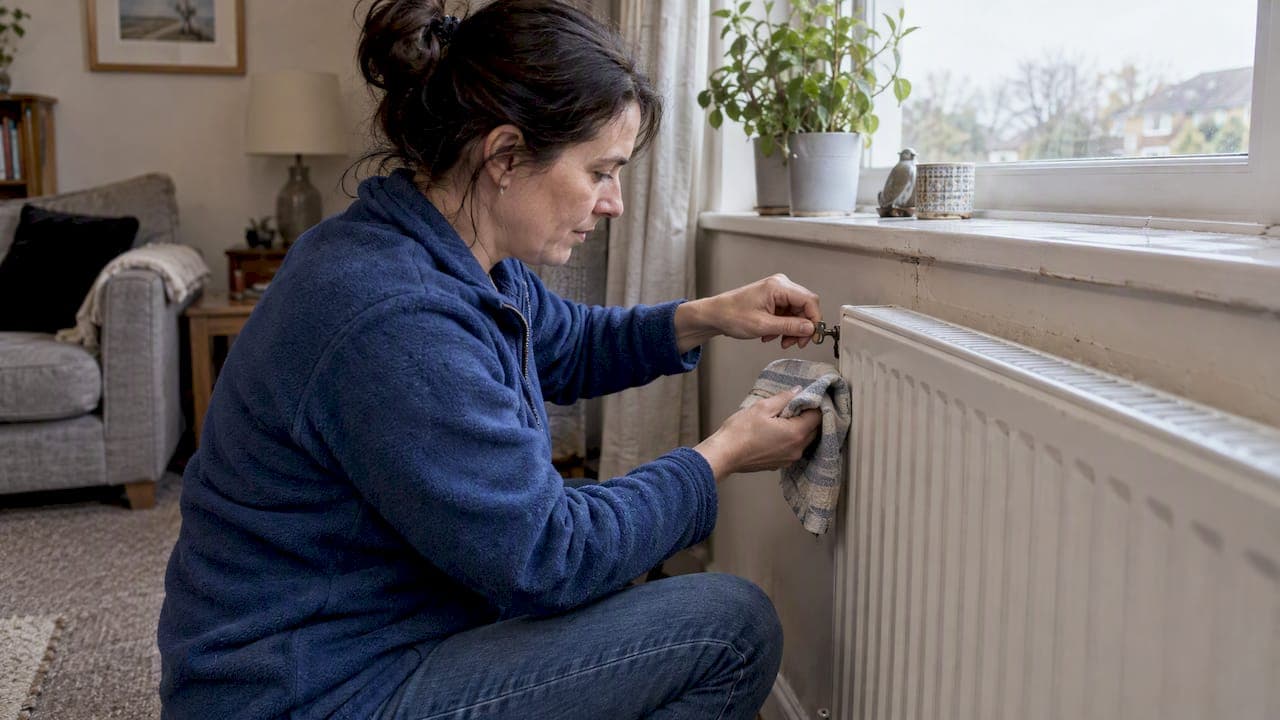
If a radiator has a cold top or makes gurgling noises, trapped air is the likely cause, so bleed the radiator now. Turn the heating off first, then work through the steps below. If the problem keeps coming back or several radiators are affected, you may be dealing with a system-wide airlock, low pressure, or sludge, and that's when it's worth getting a professional opinion.
TL;DR:
- Bleeding a radiator is effective only if the cold spot is at the top; sludge buildup causes cold bottoms and requires powerflushing instead.
- Re-pressurize the system after bleeding by slowly closing the valves once the pressure gauge reaches the recommended level, typically 1 to 2 bar.
- Multiple radiators affected simultaneously, noisy pumps, or recurring pressure drops indicate a system-wide airlock or underlying fault needing professional diagnosis.
- Bleeding should start with radiators furthest from the boiler, and running the heating between bleeding rounds helps shift trapped air.
- Repeated pressure loss or persistent cold radiators despite bleeding suggest sludge, valve issues, or pump failures that require expert intervention.
Table of Contents
- How to tell if air is trapped in the system
- Step-by-step: how to bleed a radiator safely
- Clearing an airlock or system-wide trapped air
- Boiler pressure: how bleeding affects it and how to re-pressurise safely
- Why bleeding won't fix every cold radiator: sludge, valves and pump faults
- A short primer on system balancing and why it matters after removing air
- Safety checklist and when to call an engineer
- Practical tips and author notes from Michael at Your Local Plumber
- Publisher perspective on regular checks vs emergency repair
- How Your Local Plumber can help with heating problems
- FAQ
- Sources
- Authoritative sources and further reading
How to tell if air is trapped in the system
Air collects at the highest point of a radiator, so the classic sign is a radiator that's cold at the top but warm at the bottom. Gurgling, knocking or bubbling noises from the pipework often mean air is moving through the system as the pump pushes water around it. A radiator that's completely cold while its neighbours heat up normally points to something else, often a closed valve or a blocked pipe rather than air.
A simple touch test tells you most of what you need to know.
- Run your hand across the radiator from top to bottom while the heating is on.
- Listen near the radiator and the pipework for gurgling or bubbling sounds.
- Check whether the problem is isolated to one radiator or spread across several, since that affects which fix applies.
If the cold patch is at the bottom rather than the top, air isn't the cause, and bleeding won't help. That pattern usually means sludge has settled inside the radiator, which we cover further down.
Step-by-step: how to bleed a radiator safely
Bleeding a radiator takes ten minutes and needs almost no tools: a radiator key, an old towel, and a small container to catch drips.
Turn off your heating and let the radiators cool slightly before you start, since bleeding a hot radiator risks a scald from the escaping water or steam. Work through radiators in order, starting with the one furthest from the boiler and finishing closest to it, which helps push trapped air through the system as you go.
- Hold the container under the bleed valve and place the towel beneath it.
- Insert the radiator key into the valve and turn it slowly anticlockwise, about a quarter turn.
- Listen for a hissing sound, which is the trapped air escaping.
- Keep the key in place until the hissing stops and water begins to dribble out steadily.
- Close the valve promptly by turning it clockwise.
- Wipe away any spilled water and move to the next radiator.
Once you've bled every radiator, check for drips around the valve and look at the boiler's pressure gauge, since bleeding typically lowers system pressure slightly and you may need to top it up. Our radiator bleeding guide covers a few extra checks worth running if a radiator still isn't heating evenly afterwards.
Pro Tip: Keep the radiator key with your fuse box or stopcock so you're not hunting for it next time a radiator starts gurgling.
Clearing an airlock or system-wide trapped air
An airlock forms when a pocket of air gets stuck somewhere in the pipework rather than rising to a single radiator's bleed valve. Signs include several radiators affected at once, a noisy or vibrating pump, or heating that seems to work intermittently rather than consistently.
- Bleed the radiator furthest from the boiler first, then work towards the boiler, repeating the single-radiator process above on each one.
- Run the heating for 20 to 30 minutes between rounds of bleeding, since circulation helps shift trapped air towards the next bleed point.
- Repeat the full sequence a second time if gurgling or cold spots persist, as a stubborn airlock sometimes needs two or three passes.
- If a particular loop (such as an upstairs circuit) stays cold despite repeated bleeding, isolating and draining just that section may be necessary.
Draining part or all of a pressurised system is a bigger job than bleeding a radiator, and getting it wrong risks introducing more air or disturbing the boiler's safety components. Our guide on draining a boiler system safely walks through the process if you want to attempt it yourself, though a sealed, pressurised system is generally safer left to an engineer.
Heat pump systems aren't immune either. Trapped air and occasional airlocks can affect heat pump circuits too, and the Energy Saving Trust notes that routine maintenance and water treatment help cut down on recurring air problems.
Boiler pressure: how bleeding affects it and how to re-pressurise safely
Bleeding a radiator releases a small amount of water along with the trapped air, which lowers your system's pressure. Most combi boilers run at around 1 to 2 bar, sitting at the lower end when idle and rising slightly when the heating is active. Check the gauge on your boiler after bleeding: if it's dropped below the manufacturer's recommended minimum, usually around 1 bar, you'll need to top it up.
- Locate the filling loop, usually a braided hose connecting the cold mains to the heating system under the boiler.
- Open the valves slowly until the gauge climbs to the correct level, then close them again.
- Stop as soon as you reach the target pressure, since overfilling can trigger a pressure relief valve to discharge.
If pressure keeps dropping within days of topping up, that's not normal wear, and it usually points to a failed expansion vessel or a hidden leak that needs a professional look.
Why bleeding won't fix every cold radiator: sludge, valves and pump faults
A cold top with a warm bottom means air. A cold bottom with a warm top means something different entirely: sludge, which is a mix of rust and mineral debris that settles at the lowest point of a radiator and no amount of bleeding will shift it, since sludge sits below the bleed valve, not above it.
- A radiator that's uniformly lukewarm, rather than cold at one end, often points to a stuck or partially closed valve.
- Banging or vibrating noises from the pump, rather than gentle gurgling, can indicate a failing circulator pump.
- If one or two radiators are consistently cold despite correct valve settings, sludge build-up is the most likely explanation.
Pro Tip: If a radiator feels cold at the bottom, don't keep bleeding it. Check our guide to cold-at-the-bottom radiators before assuming the fix is the same as for trapped air.
Sludge usually calls for a powerflush or a chemical inhibitor treatment, and a pump or valve that's genuinely failed will need replacing rather than coaxing back to life.
A short primer on system balancing and why it matters after removing air
Even after you've cleared every trace of trapped air, some radiators may still heat unevenly, and that's usually down to balancing rather than a fault. Hydraulic balancing means adjusting the lockshield valve on each radiator so that water flows through the whole system at the right rate, rather than rushing through the radiators nearest the boiler and leaving the furthest ones starved. The HHIC's consumer guide to balancing explains that an unbalanced system can leave some radiators hot and others lukewarm even with no air or sludge present at all.
Balancing is typically done once air has been removed, since trapped air throws off the flow and return temperature readings engineers rely on.
- Feel whether radiators furthest from the boiler take noticeably longer to warm up than those nearest it.
- Compare how hot the flow pipe feels against the return pipe on the same radiator.
- Book a professional balancing visit if the imbalance persists after bleeding, since proper balancing uses clip-on thermometers or dedicated apps rather than guesswork.
Safety checklist and when to call an engineer
Most trapped air issues are safe to sort out yourself, but a few signs mean it's time to stop and call someone qualified.
- A smell of gas or visible steam around the boiler is an emergency: turn off the gas supply and call for help immediately.
- Pressure that keeps dropping within days of topping up suggests a leak or failed expansion vessel.
- Banging pipework, visible leaks, or needing to bleed the same radiator repeatedly are all signs of an underlying fault rather than simple air.
An engineer visiting for these symptoms will typically check the expansion vessel and pump, inspect for leaks, and recommend a powerflush if sludge is suspected. Before a call-out, note which radiators are affected, when the noises happen, and take a photo of the pressure gauge, since that speeds up diagnosis considerably.
Practical tips and author notes from Michael at Your Local Plumber
The most common mistake we see is homeowners bleeding a radiator that's cold at the bottom, which never fixes sludge and just wastes a wasted afternoon. Always check top versus bottom before reaching for the radiator key.
Starting with the radiator furthest from the boiler and working inwards saves repeat visits, since it pushes air in the right direction through the pipework. A clip-on thermometer, if you have one, makes it much easier to tell whether a radiator is genuinely balanced or just warm enough to feel fine by hand.

Publisher perspective on regular checks vs emergency repair
A five-minute bleed every autumn, paired with a glance at the pressure gauge, heads off most of the cold-radiator calls we get each winter. That said, repeated pressure loss, sludge, or a failing pump aren't jobs to chase with a radiator key: they need a proper diagnosis.
— Michael
How Your Local Plumber can help with heating problems
When bleeding, re-pressurising and basic checks haven't solved it, we're here for the jobs that go beyond DIY. We handle diagnostics, powerflushes, pump and valve replacements, and full boiler servicing, with fixed, transparent pricing agreed before any work starts.

- Emergency heating callouts with a 60-minute response target, any time, including holidays.
- No call-out fee and a fix-no-fee guarantee on every visit.
- A warranty on completed repairs, with payment only once the job's done.
If your system keeps losing pressure or a radiator won't warm up no matter what you try, book an emergency heating engineer and we'll get someone out to take a proper look.
FAQ
How do you get rid of air in a central heating system?
Bleed each radiator in turn, starting with the one furthest from the boiler, using a radiator key to release trapped air until water dribbles out steadily. If several radiators need repeat bleeding, run the heating between rounds to help shift any remaining airlock before trying again.
How do I clear an airlock in my central heating system?
Work through all radiators from furthest to nearest the boiler, bleeding each one and running the heating for 20 to 30 minutes between passes. A stubborn airlock may need two or three repeats, and if one circuit stays cold despite this, it may need isolating and draining separately.
What are the symptoms of trapped air in a heating system?
The clearest sign is a radiator that's cold at the top but warm at the bottom, often paired with gurgling or knocking noises from the pipework. If the cold patch is at the bottom instead, that usually points to sludge rather than air.
How do I know if I have an airlock in my heating system?
An airlock typically affects multiple radiators at once rather than just one, and you may notice a noisy or vibrating pump alongside inconsistent heating. If bleeding a single radiator doesn't fully solve the problem, the air is likely trapped elsewhere in the pipework.
Sources
- Consumer Guide: Balancing the central heating system
- Which? — What should your boiler pressure be?
- Energy Saving Trust — How to ensure a heat pump runs efficiently
Authoritative sources and further reading
See the list below for the guidance referenced throughout this article.