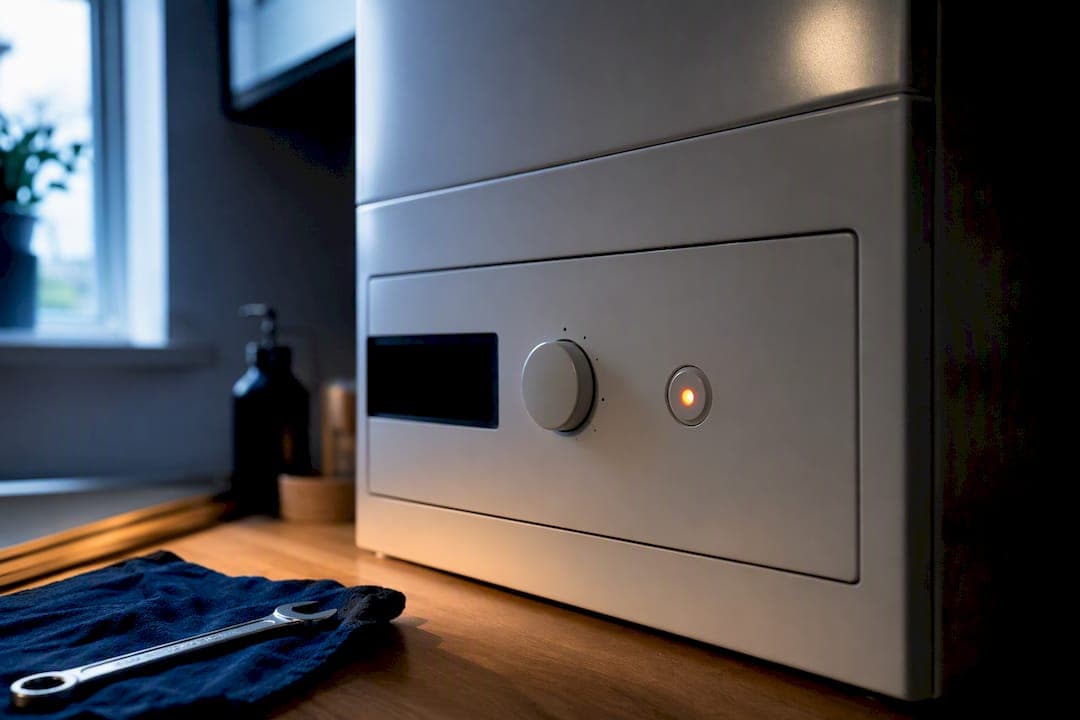
A boiler not igniting is usually down to one of five things: the thermostat or timer settings, low system pressure, a frozen condensate pipe, an ignition fault, or no gas reaching the appliance at all. If you smell gas anywhere in the property, leave immediately, do not touch any light switches, and call the National Gas Emergency line on 0800 111 999 from outside. If there's no smell of gas, work through the checklist below before booking an engineer.
TL;DR:
- Most ignition failures occur because the boiler lacks gas supply, has low system pressure, or the condensate pipe is frozen.
- Homeowners can repressurize the system and thaw a frozen condensate pipe, but internal components like electrodes require a Gas Safe engineer.
- Repeated fault codes or the boiler locking out after resets indicate an internal fault needing professional diagnosis and repair.
- Gas smells, soot, or unusual internal noises should prompt immediate evacuation and a call to the emergency line rather than DIY troubleshooting.
- Always record fault codes and recent issues before calling a Gas Safe engineer to speed up diagnosis and ensure safe, proper repairs.
Table of Contents
- Quick checklist: safe checks to run now
- Why isn't my boiler igniting? The main causes explained
- How do I fix my boiler not igniting myself?
- What to do if you smell gas or suspect carbon monoxide
- When should you call a Gas Safe registered engineer?
- A practitioner's view on boiler ignition faults
- Book a fast, fixed-price boiler repair
- Sources
- FAQ
Quick checklist: safe checks to run now
Before assuming the worst, run through these checks in order. Most ignition failures trace back to something simple, and manufacturers say the single most common reason a boiler won't fire up is that the room has simply reached its set temperature, so the thermostat and timer settings are always worth checking first.
- Test another gas appliance (a hob or gas fire) to confirm gas is actually reaching the property.
- Sniff for gas. If you catch even a faint smell, stop everything and call 0800 111 999 from outside.
- Check the thermostat, programmer and any smart heating app for the current room temperature against the target setting.
- Read the boiler's display and write down any fault code before doing anything else.
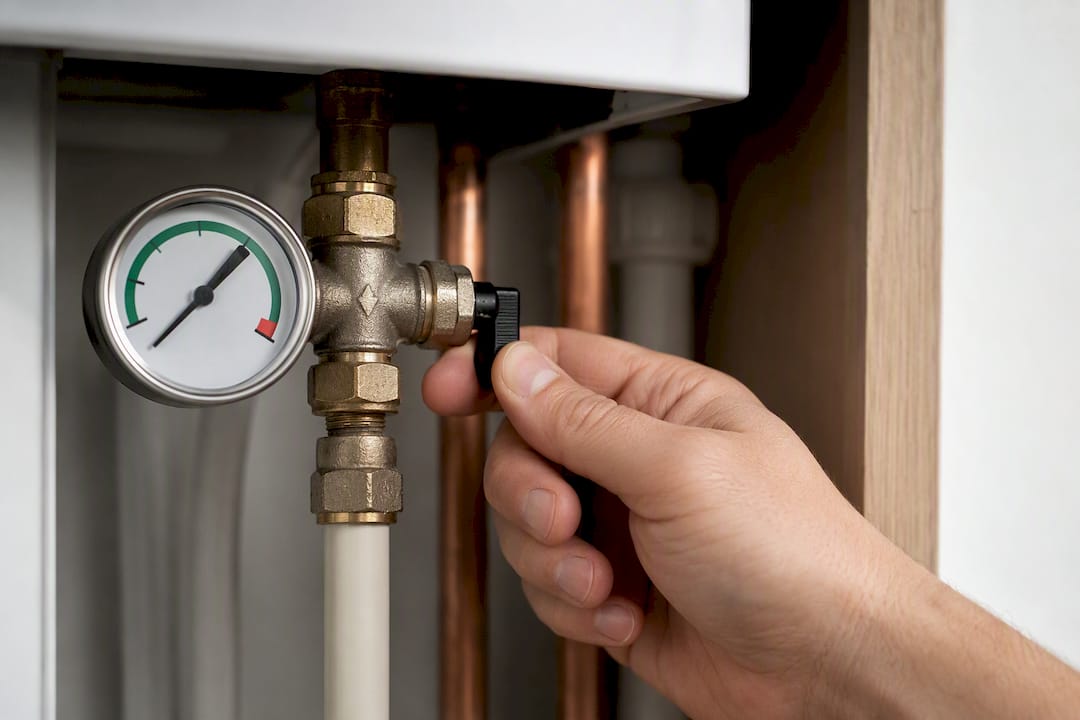
- Look at the pressure gauge. Anything below 1 bar usually needs topping up.
- Check your prepayment meter, if you have one, for lost credit or a lapsed top-up.
- Inspect the external condensate pipe for ice, especially after a hard frost.
- Try one reset, following the manufacturer's exact button sequence, and no more than once.
Pro Tip: Keep a note of the exact fault code and the time it appeared. If the same code returns within minutes of a reset, stop resetting. That pattern almost always points to an internal fault rather than a one-off glitch.
Why isn't my boiler igniting? The main causes explained
Once the obvious checks are done and the boiler still won't light, it helps to understand what's actually happening inside the appliance, even if fixing it isn't a DIY job. Here's the order in which these faults tend to show up in practice.
-
No gas supply or an empty prepayment meter. If your hob or gas fire also won't light, and your prepayment balance is fine, the problem may sit with the network supply rather than the boiler itself.
-
Low system pressure. Most combi boilers need sufficient pressure within the normal operating range to fire safely. Below that, the boiler's internal sensor blocks ignition as a safety measure rather than risk running dry.
-
Ignition or pilot light and electrode failure. A boiler that clicks repeatedly but never produces a flame usually has a worn or dirty ignition electrode, or a spark that isn't reaching the burner properly. This is one of several common ignition failures that also include blocked burners, faulty valves and airflow problems, and it sits firmly inside the boiler casing.
-
Faulty fan or blocked airflow. Listen for the fan spinning up before ignition. Silence, or a fan that struggles and stalls, will trigger a safety lockout every time, because the boiler won't ignite without confirmed airflow.
-
Blocked burner or sooting. A yellow or orange flame, or black soot marks around the front panel, means incomplete combustion. This is a stop sign, not a fix-it-yourself problem, because it can point to carbon monoxide risk.
-
Frozen condensate pipe. In cold spells, the plastic pipe that carries away condensation can freeze solid outside the house, triggering a lockout. It's one of the easiest faults for a homeowner to fix themselves.
-
Electrical faults. A tripped fuse on the consumer unit, a loose fused spur, or a recent power cut can leave the boiler with no power at all, even though everything looks normal on the gas side.
-
Thermostat or programmer faults. Wrong time settings, a dead thermostat battery, or a programmer stuck on a schedule that's already been satisfied will all stop the boiler firing without any internal fault existing at all.
Fault codes like F28, F1 or F4 appear on several major makes and typically point to ignition or condensate-related problems, though the exact meaning varies by manufacturer, so check the code against your specific model before assuming the worst.
How do I fix my boiler not igniting myself?
- Check the prepayment meter and confirm gas is present by testing another appliance before assuming the boiler itself has failed.
- Repressurise using the filling loop, following your manual's exact sequence, and stop the moment the gauge reaches the green zone. Never leave the loop attached or open it further than instructed.
- Reset the boiler once, using the correct external button or sequence for your model. If the same fault code reappears immediately, stop resetting; repeated resets can mask an intermittent fault that needs proper diagnosis.
- Bleed the radiators if some rooms feel cold while others are warm. Trapped air can sometimes affect circulation enough to trip a lockout.
- Thaw a frozen condensate pipe with warm water poured gently over the affected section outside. Never use boiling water, which can crack the pipe, then reset once the ice has cleared.
Pro Tip: If freezing keeps happening every winter, mention it to your engineer. Recurring condensate freezes usually mean the pipe was routed or insulated badly during installation, not that you're doing anything wrong.
Stop immediately if you see a persistent fault code, hear grinding or rattling from inside the case, or the boiler won't hold pressure after refilling. Those point to a mechanical fault, not a setting.
What to do if you smell gas or suspect carbon monoxide
Safety comes before troubleshooting every time. If you smell gas, leave the property straight away, avoid touching any light switches or electrics on your way out, and call the National Gas Emergency line on 0800 111 999 once you're outside.
- A yellow or flickering flame, soot around the boiler, or a burning smell can signal carbon monoxide risk.
- Headaches, dizziness or nausea that ease when you leave the house are classic CO warning signs.
- Stop using the appliance immediately if you notice any of the above and call a Gas Safe engineer.
- Never open the casing yourself; only Gas Safe registered engineers are legally permitted to work inside a gas appliance.
When should you call a Gas Safe registered engineer?
Once you've worked through the checks above, certain signs mean it's time to stop and call for help rather than keep experimenting.
- The same fault code returns straight after a reset.
- The boiler starts, then locks out again within minutes.
- You smell gas or notice sooting, a yellow flame, or a burning odour.
- Pressure won't hold even after correctly repressurising.
- You hear unusual internal noises: rattling, grinding or a fan that won't spin.
Before calling, have the boiler's make and model, the exact fault code, and a note of any recent power cuts ready. Recording these details in advance speeds up diagnosis considerably.
| Situation | What it usually means | Action |
|---|---|---|
| Fault code returns after one reset | Intermittent internal fault | Call a Gas Safe engineer |
| Pressure won't hold | Possible leak in the system | Call a Gas Safe engineer |
| Gas smell or sooting | Combustion or leak risk | Evacuate, call 0800 111 999 |
| Frozen pipe, no other symptoms | External condensate freeze | Thaw and reset yourself |
Using a Gas Safe registered engineer isn't just a safety formality. Work carried out by anyone else can invalidate your boiler's warranty and cause problems with home insurance if something goes wrong later.
A practitioner's view on boiler ignition faults
Most call-outs for a boiler not igniting turn out to be something a five-minute check would have caught: a dead thermostat battery, a lapsed meter top-up, low pressure. Run the checklist first. Escalate the moment a fault code repeats or you hear something odd from inside the case. Our engineers arrive fully Gas Safe registered, price the job upfront, and won't leave until the boiler passes a proper post-repair test.
— Michael
Book a fast, fixed-price boiler repair
A locally focused plumbing service offers a direct route to a same-day fix when a checklist and a single reset haven't sorted things, cutting out the guesswork of ringing round for quotes with fixed pricing agreed before any work starts. Every engineer on the job is Gas Safe registered, so the diagnosis, the repair, and any part replacement are all handled legally and safely, right down to the boiler casing.

When you call, have your boiler's make and model, any fault code showing on the display, and details of easy access to the property ready. That alone can shave real time off the visit. Our engineers carry common parts for most major makes, so many faults get fixed in a single call-out rather than requiring a second visit. Once the repair's done, you'll get a full post-visit test and paperwork confirming the boiler is safe to run. If your boiler's showing a fault code right now, book a call-out with Your-local-plumber and get a fixed price before anyone sets foot on site.
Sources
- Boiler not igniting? Common issues and how to fix them | Vaillant
- National Gas Emergency contacts
- Boiler Not Firing Up? 11 reasons why | Checkatrade
FAQ
What would cause a boiler not to ignite?
The most frequent causes are a satisfied thermostat setting, low system pressure, a frozen condensate pipe, an ignition or electrode fault, or no gas reaching the appliance. Checking the thermostat and timer first resolves more cases than people expect.
How do I get my boiler to ignite?
Run through the safe checks: confirm gas supply, check pressure and thermostat settings, look for a frozen condensate pipe, and try a single manufacturer-approved reset. If the fault code returns immediately, stop and call a Gas Safe engineer rather than resetting again.
How do I fix my boiler not firing up?
You can legally repressurise via the filling loop, bleed radiators, thaw a frozen condensate pipe with warm water, and perform one external reset. Anything involving the burner, ignition electrode or gas valve must be left to a Gas Safe registered engineer.
Why does my boiler click but not ignite?
Repeated clicking without a flame usually means the ignition electrode isn't sparking properly, or the spark isn't reaching the gas at the burner. This falls inside the casing, so it needs a Gas Safe engineer's diagnosis rather than a DIY fix.