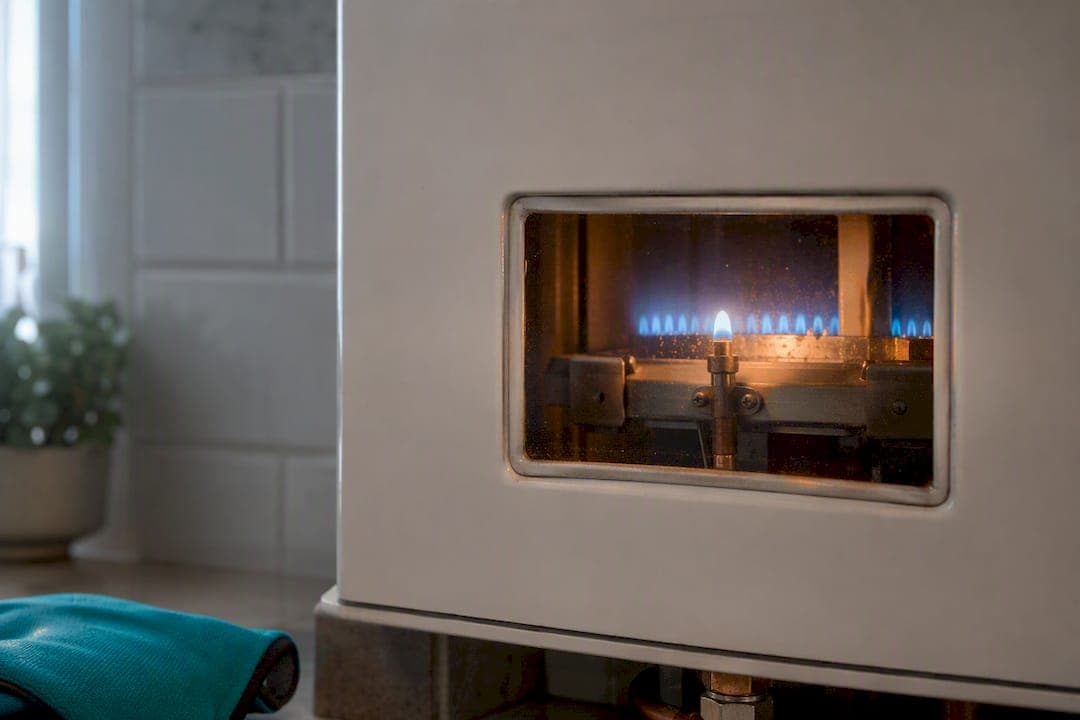
Most repeat pilot-light outages come down to a failing thermocouple, a blocked pilot jet, or a draught reaching the flame. If you smell gas or see a yellow or orange flame, treat it as an emergency: ventilate, leave the property, and call the National Gas Emergency Service on 0800 111 999. If there is no smell of gas, work through the safe checks below before touching anything else. A pilot that goes out repeatedly rather than once always warrants a Gas Safe registered engineer.
TL;DR:
- A failing thermocouple, blocked pilot jet, or draught are the most common mechanical causes of pilot light outages.
- If you smell gas, do not attempt to relight the pilot; ventilate, leave the property, and call the emergency service immediately.
- Homeowners can safely check for gas smell, ventilation issues, and flame color but must contact a Gas Safe engineer for repairs or persistent outages.
- Relighting a manual pilot involves ventilating, turning the gas control to pilot, and igniting while holding the control for the recommended time; automatic pilots should not be relit manually.
- Repeated outages or uncertain causes require a professional inspection, including thermocouple testing and gas pressure checks, with costs usually ranging from £60 to over £120.
Table of Contents
- What can you check safely when your pilot light won't stay lit?
- Common mechanical and environmental causes
- How do you relight a pilot light safely?
- When should you call a Gas Safe registered engineer?
- What warning signs mean you should stop and act immediately?
- How do you stop a pilot light going out again?
- A note from Michael
- Book a Gas Safe engineer with Your-local-plumber
- Where to get official help and guidance
- Sources
What can you check safely when your pilot light won't stay lit?
Before you assume the worst, there's a short list of checks you can do yourself without touching any gas components.
- Smell test first. If there's any smell of gas, stop everything: open windows, don't flick light switches, and call 0800 111 999 from outside the house.
- Check your other gas appliances. If the hob or gas fire is also misbehaving, this points to a supply issue rather than a fault isolated to your boiler.
- Look at ventilation around the boiler. A permanent vent that's been blocked by furniture, or a door that slams a gust of air across the appliance, can snuff a pilot flame in seconds.
- Note the flame colour. A steady blue flame is healthy. Yellow, orange, or flickering with soot means stop using the appliance and call an engineer.
- Find your boiler manual. Check whether your pilot is manual (you light it with a match or piezo igniter) or automatic (it ignites electronically with no visible standing flame).
This last point matters more than most homeowners realise, because it changes what you're allowed to do next.
Pro Tip: Take a photo of the boiler's data plate and the flame through the inspection window before calling anyone. Engineers can often narrow down the fault over the phone when they can see the model number and flame colour in advance.
Common mechanical and environmental causes
A pilot that dies once is often just a gust of wind. A pilot that dies every day is telling you something specific about the appliance.
- Thermocouple failure or misalignment. This is the single most common reason a pilot won't stay lit. The thermocouple generates a tiny millivolt signal when the pilot flame heats it, and that signal keeps the gas valve open. Soot build up, age, or the tip sitting slightly out of the flame all weaken that signal enough for the valve to shut the gas off, even though the flame itself looks fine at first glance.
- Blocked or dirty pilot jet. Dust, spider webs, and general grime narrow the tiny opening that feeds the pilot flame, starving it of gas until it flickers and dies.
- Faulty gas valve or regulator. A valve that's failing internally, or low mains pressure, can starve the pilot even when the jet and thermocouple are fine.
- Draughts and poor ventilation. Cold air pulled in from an ill fitting flue seal, an open loft hatch near the boiler, or a badly sited extractor fan can physically blow the flame out.
- Ignition or control-board faults. On newer combi boilers with electronic ignition, a fault on the control board can mimic the exact same symptoms as a dying pilot, even though there's no physical pilot to relight.
Working out which of these applies usually needs eyes on the flame and a multimeter on the thermocouple, which is where a professional visit earns its keep.
How do you relight a pilot light safely?
Whether you're allowed to relight your own pilot depends entirely on whether the boiler uses a manual or automatic system. Resuming the gas supply after an interruption can count as regulated 'work' in some circumstances, so always follow the exact steps in your boiler's manual rather than general instructions found online.
For a manual pilot, the typical sequence is:
- Ventilate the room and confirm there's no smell of gas.
- Turn the gas control knob to "pilot" or "off" as instructed and wait the full time stated in the manual, usually a few minutes, to clear any residual gas.
- Turn to pilot, press and hold the ignition button while lighting the pilot with the built in igniter or a long match.
- Hold the knob down for the time stated in the manual (often 20 to 30 seconds) before releasing, to let the thermocouple heat up properly.
Automatic pilots ignite electronically and have no accessible flame to light by hand. Attempting to force one is not something homeowners should try. If a manual relight fails twice, stop. A third attempt rarely succeeds and only risks a build up of unburnt gas.
When should you call a Gas Safe registered engineer?
The moment a pilot goes out more than once in a short period, or you can't identify a simple cause like a draught, it's time to book a Gas Safe registered engineer. UK law is unambiguous here: only engineers on the Gas Safe Register are legally permitted to carry out gas appliance work, and this isn't a box-ticking formality. It's the difference between a fault being fixed and a fault being hidden.
On a typical visit, an engineer will run through:
- A thermocouple test with a multimeter to check the millivolt output
- Pilot jet inspection and cleaning if it's blocked or sooted
- A gas pressure check at the meter and appliance
- Gas valve and control board inspection
- A flue check to rule out venting problems
Costs vary by fault, but as a guide, a failing thermocouple typically costs £60 to £120 to replace, pilot-jet cleaning and gas-valve repairs typically vary but can be moderately to significantly costly depending on the repair. Have your boiler's model number, last service date, and a rough timeline of when the fault started ready before the engineer arrives. It genuinely speeds up diagnosis.
What warning signs mean you should stop and act immediately?
Some symptoms aren't troubleshooting territory. They're emergency territory.
If you smell gas at any point, ventilate the room, don't touch electrical switches, leave the property, and call the National Gas Emergency Service on 0800 111 999. A yellow or orange pilot flame, or soot around the appliance, signals incomplete combustion and a carbon monoxide risk; switch the boiler off and call an engineer rather than trying to clean or adjust it yourself.
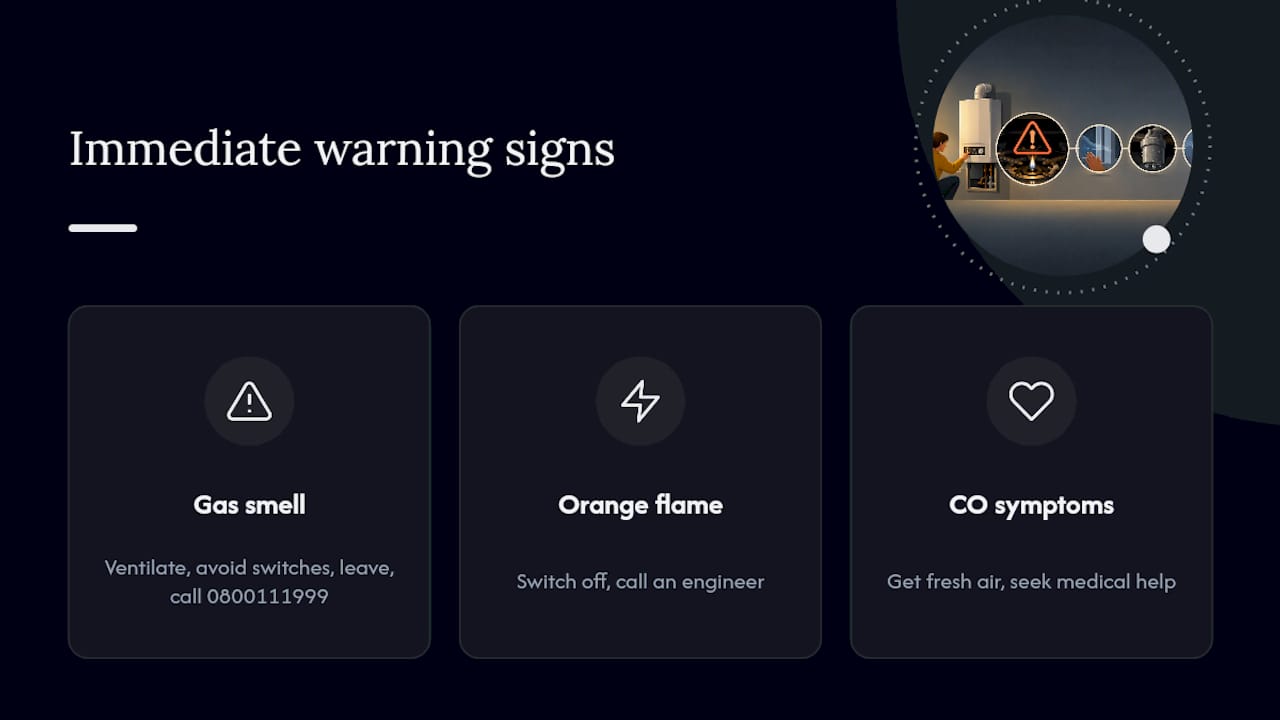
Pro Tip: Headache, nausea, or dizziness that eases when you leave the house and returns indoors can be carbon monoxide poisoning, not a coincidence. Get fresh air immediately and seek medical attention.
How do you stop a pilot light going out again?
Prevention is mostly about maintenance you can schedule rather than problems you have to react to.
- Book an annual service in line with manufacturer guidance and keep the paperwork, since a documented history speeds up any future warranty or insurance claim.
- Keep permanent vents and airbricks near the boiler completely clear, even if it means moving furniture that's crept in front of them.
- Deal with draughts by sealing gaps elsewhere in the room rather than blocking safety ventilation, which must stay open at all times.
- If your boiler is older and keeps needing thermocouple or jet repairs, weigh up replacement. Modern boilers with electronic ignition don't have a standing pilot at all, which removes this entire category of fault.
- If you're a landlord, an annual gas safety check by a competent, Gas Safe registered person is a legal duty, and records must be kept and given to tenants.
A note from Michael
Most pilot call outs I see turn out to be a thermocouple or a dirty jet, both quick fixes. Before booking, jot down your boiler's model number, last service date, and when the fault started. It saves everyone time.
— Michael
Book a Gas Safe engineer with Your-local-plumber
A Gas Safe registered engineer diagnoses the actual cause, quotes you a fixed price before starting, and carries out thermocouple replacement, pilot-jet cleaning, or full boiler diagnostics on the same visit where possible.

Whether it's an emergency call-out because you've smelled gas, or a boiler that's been quietly cutting out for weeks, our engineers work to transparent pricing with no vague estimates. If the fault turns out to be something else entirely, such as a boiler repeatedly switching itself off, the same visit covers that diagnosis too. Book a boiler diagnostic visit through Your Local Plumber and get a Gas Safe engineer out to look at it properly.
Where to get official help and guidance
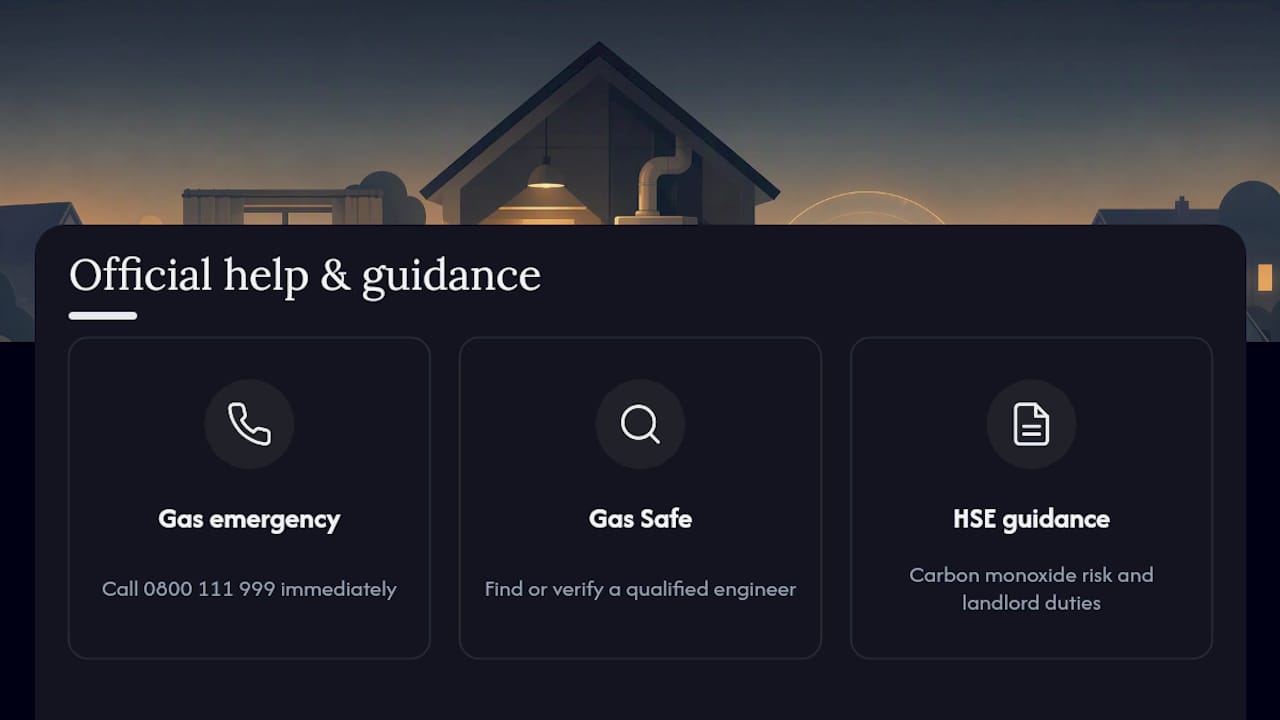
For a gas emergency, call the National Gas Emergency Service on 0800 111 999. To find or verify a qualified engineer, use the Gas Safe Register. For official guidance on carbon monoxide risk and landlord duties, see the HSE.
Sources
- National Gas Emergency Service — emergency contacts
- Gas Safety (Installation and Use) Regulations 1998 — legislation
- Axiom Eco Homes — boiler pilot light keeps going out (May 2026)