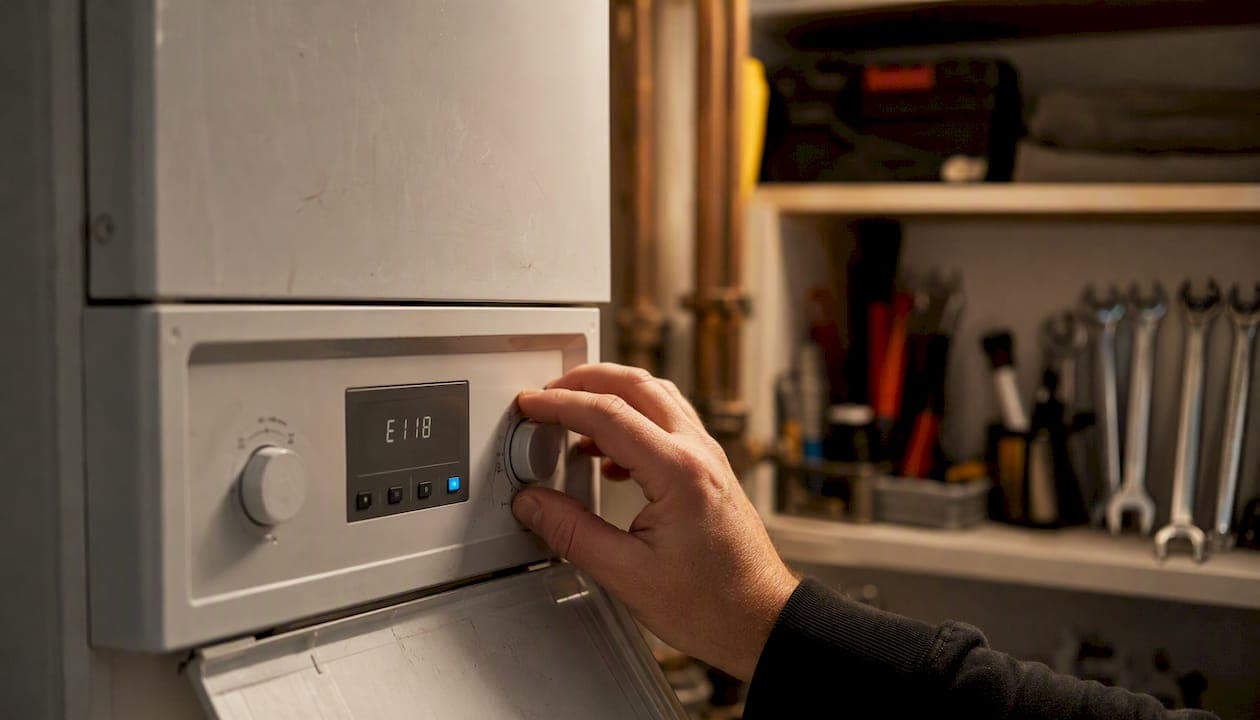
Most boiler breakdowns come down to five things: low pressure, a frozen condensate pipe, an ignition or flame fault, a fan problem, or faulty sensors. Low pressure and a frozen pipe are usually fixable in minutes; repressurise the system to between 1 and 1.5 bar, or thaw the condensate pipe with a warm cloth if it's frozen. Ignition, flame, fan, and sensor faults are a different story. Those codes mean stop, reset once if the manual allows it, and call a Gas Safe registered engineer if the fault returns.
Here's the fast version, before we get into the detail:
- Low water pressure (gauge below 1 bar): top up via the filling loop to a safe operating range.
- Ignition or flame loss (repeated lockouts, burner won't stay lit): try one reset; if it fails twice, stop and call an engineer.
- Frozen condensate pipe (boiler cuts out in cold weather, gurgling sounds): thaw the external pipe with warm water; do not use boiling water or a naked flame.
- Fan or airflow fault: this is not a DIY job; a blocked flue or failing fan needs an engineer.
- Sensor faults (temperature, flow, or flame sensor errors): reset once; if the code repeats, it needs diagnostic equipment you don't have at home.
If you smell gas at any point, none of the above applies. Turn off the boiler at the isolation valve, open windows, don't touch electrical switches, and call the National Gas Emergency line on 0800 111 999 immediately.
Key Takeaways
Most common boiler fault codes fall into five categories, low pressure, frozen condensate, ignition/flame loss, fan faults, and sensor errors, and only the first two are genuinely safe for homeowners to fix themselves.
| Point | Details |
|---|---|
| Capture the code first | Photograph the display and note your boiler's model and serial number before touching anything. |
| Know your two safe fixes | Repressurising to 1 to 1.5 bar and thawing a frozen condensate pipe are the main DIY-safe actions. |
| Never touch gas components | Ignition parts, the gas valve, PCB, and sealed covers are strictly engineer-only work. |
| Reset once, not repeatedly | If a fault returns after one reset, stop and call a Gas Safe registered engineer. |
| Book with Your-local-plumber | Get a Gas Safe registered engineer out for diagnostics, repairs, or annual servicing with fixed, transparent pricing. |
Table of Contents
- What do common boiler fault codes actually mean?
- When should you stop troubleshooting a boiler fault?
- How do you fix simple boiler faults yourself?
- What are the common fault codes for each boiler brand?
- When should you call a Gas Safe engineer?
- What do engineers wish homeowners knew about boiler faults?
- How can Your-local-plumber help with a boiler fault?
- Where can you check official boiler fault code lists?
- Frequently asked questions about boiler fault codes
- Sources
What do common boiler fault codes actually mean?
A fault code is your boiler's way of telling you which internal check has failed. It appears on the digital display most modern combi and system boilers have, though older or more basic models sometimes show a flashing light or a symbol instead of letters and numbers.
The structure usually follows a pattern: a letter or short prefix followed by a number. Vaillant, for example, uses an F prefix for fault codes, so F.22 means low water pressure and F.28 means the boiler failed to detect a flame during ignition. Worcester Bosch mixes letter pairs like EA or A1 with a three-digit number, and Baxi and Ideal each run their own numbering systems. None of these prefixes are universal across brands, which is exactly why matching the code to your specific boiler's manual matters more than memorising a generic list.
Not every symbol on the display is a fault at all. Worcester Bosch boilers show non-fault operating modes such as siphon fill or air purge, which typically clear on their own within about 15 minutes and don't need any intervention. If a symbol like that is still showing after half an hour, treat it as worth investigating rather than a genuine fault.
Pro Tip: Photograph the fault code and your boiler's model and serial number (usually on a sticker inside the front panel or on the data plate) before you do anything else. It costs you thirty seconds and can save an engineer twenty minutes of diagnostic time on-site, which sometimes shows up as a shorter call-out charge.
If you're planning any work near the boiler itself, it helps to already know how to service a gas boiler safely so you understand where the line sits between homeowner tasks and engineer-only work.
When should you stop troubleshooting a boiler fault?
Some situations mean you stop immediately, full stop, no further attempts at DIY.
- Smell of gas anywhere near the boiler or in the property.
- Your carbon monoxide alarm has gone off.
- The boiler has attempted ignition repeatedly and keeps locking out.
- You can see scorching, soot marks, or physical damage to the casing.
- You hear sparking, popping, or unusual burning smells from the unit.
If any of these apply, turn the boiler off at the isolation valve, don't attempt a reset, and get everyone out of enclosed rooms with the windows open. Gas emergencies go to the National Gas Emergency number, not a general plumber.
Heating engineers describe it as a simple golden rule: know when to stop. Topping up pressure, bleeding a radiator, or trying a single reset are normal homeowner tasks. Anything involving the gas valve, ignition sequence, internal sensors, the printed circuit board, or opening a sealed cover is engineer-only territory, no exceptions.
The distinction matters because a botched attempt at a gas-component fix isn't just risky, it can also void your boiler's warranty and complicate any insurance claim if something goes wrong later. If you're ever unsure whether a leak counts as an emergency, this guide on leaking boilers sets out the practical thresholds.
How do you fix simple boiler faults yourself?
A good chunk of call-outs are for problems a homeowner can genuinely sort out in ten minutes, provided you follow the steps in order and stop the moment something feels wrong.
- Read and photograph the code. Note exactly what's displayed, including any flashing pattern, before you touch anything.
- Check the pressure gauge. Anything below 1 bar usually needs topping up. Locate the filling loop (a braided flexible hose, often under the boiler), open both valves slowly until the gauge reads within the normal pressure range, then close them fully. Never leave the filling loop connected.
- Try one reset following manufacturer instructions. Most boilers have a reset button or a menu option. Press it once and wait a few minutes. If the same fault reappears immediately, don't keep pressing it. Vaillant's own manual notes that the fault memory stores your last ten fault codes, so repeated resets don't erase the underlying problem, they just add to the record an engineer will eventually read.
- Thaw a frozen condensate pipe. This white plastic pipe usually runs outside the property to a drain. In freezing weather it can ice up and trip the boiler. Pour warm (not boiling) water over the frozen section, or use a hot water bottle wrapped around it. Never use a naked flame or kettle-boiling water directly on the pipe.
- Bleed radiators with cold spots. Cold at the top of a radiator when the rest is warm usually means trapped air. Use a radiator key, hold a cloth underneath, and open the valve slightly until water (not just air) starts to escape, then close it.
- Check the external condensate trap during cold snaps. If your boiler is prone to freezing up, ask an engineer about pipe insulation or a trap upgrade before winter, not during it.
Avoid these regardless of how confident you feel:
- Opening any sealed panel marked with a warning symbol.
- Touching the gas valve, burner, or ignition electrode.
- Working on internal wiring or the PCB while the unit is powered.
- Repeating a reset more than twice in a row.
Pro Tip: Keep a short note of what you tried and when, pressure reading, reset attempts, whether the fault came back immediately or after a few hours. Handing this to the engineer on arrival often shortens the visit and avoids paying for diagnostic time you've already done yourself.
If your central heating has stopped working entirely rather than showing a specific fault, this troubleshooting guide walks through the wider checks before you call anyone out.
What are the common fault codes for each boiler brand?
Each manufacturer uses its own coding system, so recognising the pattern for your specific brand saves time hunting through a generic list.
Vaillant boilers use an F-prefix system. The most frequently seen codes include:
- F.22 – low water pressure. Repressurise via the filling loop.
- F.28 – no flame detected during ignition. Try one reset following manufacturer instructions; call an engineer if it repeats.
- F.29 – flame lost after ignition. Same approach as F.28.
- F.32 – fan fault. Engineer required.
- F.54 – gas pressure fault, often paired with F.28 or F.29. Engineer required.
- F.75 – circulation or pump fault. Check for airlocks first, then call an engineer if it persists.
Vaillant's fault code page recommends calling a qualified engineer for most F-series codes, particularly anything involving flame or combustion sensors.
Worcester Bosch boilers show a letter pair and three-digit number:
- A1 281 – pump stuck or airlock. Repressurise and bleed radiators appropriately.
- EA 227 – frozen condensate pipe. Thaw and reset.
- EA 229 – ignition failure. One reset only, then engineer.
- EA 234 – gas valve error. Engineer only, no exceptions.
- CE 226 – flame loss during operation. Engineer required if it repeats.
- Siphon fill/air purge symbols – not faults, should clear within 15 minutes.
Practical guides that catalogue these codes note that low pressure, frozen condensate, and airlocks are the ones most homeowners fix themselves, while anything touching the gas valve or PCB goes straight to an engineer.
Baxi boilers display numeric error codes covering electrical, ignition, and sensor faults. Baxi's technical error-code reference is aimed primarily at installers, which tells you something useful in itself: if a code isn't obviously about pressure, it's very likely engineer territory. Common examples homeowners report include low-pressure lockouts (safe to repressurise) and ignition lockouts (reset once, then call).
Ideal boilers typically show fault codes such as L2 (ignition lockout), F1 (low pressure), and F2 (overheat/high limit thermostat trip). F1 is safe to address by repressurising. L2 and F2 need professional attention, particularly F2, since it relates to a safety cut-out.
| Fault code | What it means | Simple DIY action | When to call an engineer |
|---|---|---|---|
| Low pressure (F.22, F1) | System water pressure too low | Repressurise via filling loop to restore system pressure | If pressure drops again within days, suggesting a leak |
| Ignition/flame loss (F.28, F.29, L2, EA 229, CE 226) | Boiler can't light or sustain the flame | Try one reset following manufacturer instructions | If it locks out again after reset |
| Frozen condensate (EA 227) | External pipe iced up in cold weather | Thaw with warm water | If thawing doesn't clear the fault |
| Fan fault (F.32) | Fan not reaching required speed | None, this is not DIY | Immediately, don't attempt reset repeatedly |
| Sensor fault (F.54, F2, high limit trips) | Temperature, gas, or safety sensor issue | One reset only | If it recurs, this needs diagnostic testing |
When should you call a Gas Safe engineer?
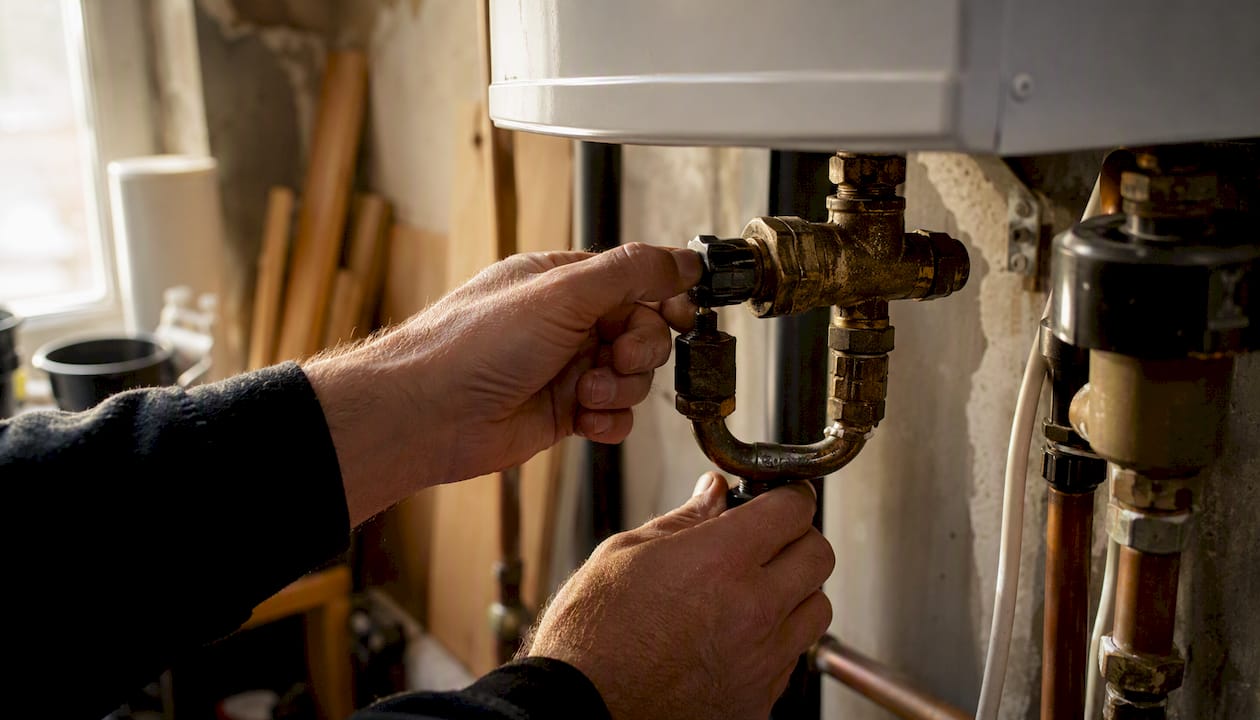
Call one straight away if you notice any of the following:
- A persistent gas smell, however faint.
- Repeated lockouts after one reset attempt.
- Any visible water leak from the boiler or pipework.
- Sparking, tripped electrics, or a burning smell.
- Flame loss that keeps recurring even after the condensate has been checked.
Once the engineer arrives, expect a fairly consistent sequence:
- They'll check the fault memory, which stores the boiler's recent fault history rather than relying on your description alone.
- They'll inspect the condensate pipe and trap for blockages or freezing.
- They'll test the ignition sequence and flame detection under controlled conditions.
- They'll measure system pressure and check for signs of a slow leak.
- They'll inspect the gas valve and relevant sensors, which is not something available to check without proper equipment.
- They'll advise on repair versus part replacement, and give you a written quote before proceeding with anything chargeable.
Keep your own notes on hand, pressure readings, reset attempts (as you record), timings, since this protects you if there's ever a dispute over what caused a fault. Don't sign off on work you don't understand, and always ask for a written quote before parts are ordered. Checking that your engineer is Gas Safe registered isn't optional, it's the legal minimum for anyone working on a gas appliance in the UK, and registries such as Trustmark can help you verify a local tradesperson's credentials.
If you're dealing with hot water problems specifically rather than heating faults, this guide to fixing tepid hot water covers the checks worth trying before booking a visit.
What do engineers wish homeowners knew about boiler faults?
Most of the call-outs I hear about follow the same pattern: someone waits until the pressure has dropped so low the boiler's fully locked out, or the condensate pipe has been frozen for three days before anyone thinks to check it. Low pressure and frozen condensate are the two most avoidable faults on any engineer's books, and both usually trace back to the same root cause: nobody looked at the boiler between annual services.
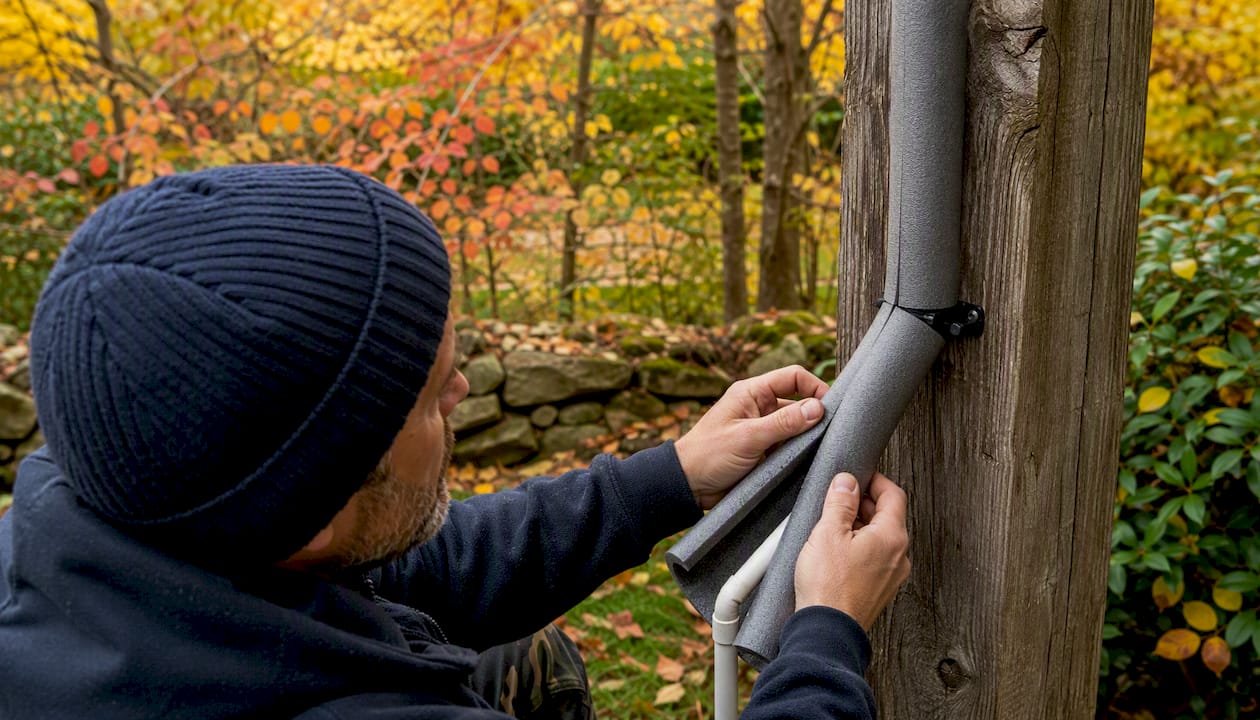
An annual service catches slow pressure leaks and worn components before they become a 6am no-heat call in January. Insulating the external condensate pipe with purpose-made lagging before winter starts is a five-minute job that prevents a genuinely common breakdown. And checking your pressure gauge once a month, the way you'd check tyre pressure, means you catch a slow leak while it's still a top-up job rather than a full diagnostic visit.
Pro Tip: Book your annual service in early autumn, not midwinter. Engineers are far less rushed, and you'll catch small issues before the cold weather turns them into lockouts.
How can Your-local-plumber help with a boiler fault?
If you've worked through the checks above and the fault's still there, or it's one of the engineer-only codes from the start, Your-local-plumber gets a Gas Safe registered engineer to your door with fixed, transparent pricing agreed before any work begins, so there's no surprise invoice waiting at the end.

Our engineers handle the full range of boiler problems: ignition and flame faults, frozen or blocked condensate lines, pressure loss caused by hidden leaks, sensor and PCB diagnostics, and full annual servicing to catch problems before they trip your boiler out. We also cover emergency call-outs around the clock, so a gas smell or sudden lockout doesn't have to wait until Monday morning. Regular servicing also protects your boiler's efficiency and reduces the odds of the same fault reappearing next winter, and pairing that with routine checks like preventive home maintenance keeps small issues from turning into breakdowns.
Book a diagnostic visit or request a free quote through Your-local-plumber and one of our Gas Safe registered engineers will talk you through next steps before anyone sets foot in your home.
Where can you check official boiler fault code lists?
- Vaillant's fault code page lists every F-series code with brief explanations, useful for matching your exact display to a known fault before calling anyone.
- Vaillant's installation and maintenance manual goes further, covering fault memory, check programmes, and manufacturer-recommended clearance steps for engineers and confident homeowners alike.
- Worcester Bosch's symbols page explains which displayed icons are normal operating modes rather than genuine faults, which prevents unnecessary call-outs.
- Baxi's technical error-code reference covers electrical, ignition, and sensor faults, aimed at installers but useful for confirming whether your code needs professional attention.
Frequently asked questions about boiler fault codes
What's the most common boiler fault code overall? Low water pressure faults are among the most frequently seen across every brand, usually shown as F.22 (Vaillant), F1 (Ideal), or a low-pressure symbol on Worcester Bosch and Baxi models. It's also the easiest to fix yourself by repressurising the system.
Can I reset my boiler myself? Yes, a single reset is a normal homeowner action on nearly every boiler. If the fault returns straight away or after a short period, stop resetting and call a Gas Safe registered engineer instead.
Why does my boiler fault code keep coming back after I fix it? A recurring code, especially for pressure or ignition, usually points to an underlying issue such as a slow leak or a failing component rather than a one-off glitch. Repeated resets won't fix the root cause and can mask a problem worth diagnosing properly.
Is it safe to open my boiler casing to check for faults? No. Anything behind a sealed panel, including the gas valve, ignition electrode, and PCB, is engineer-only work under UK gas safety regulations. Attempting it yourself risks injury and can void your warranty.
Does calling an engineer for a common fault cost a lot? Costs vary by the job, but simple faults like a frozen condensate pipe or a stuck airlock are usually quicker and cheaper to resolve than ignition or sensor faults that need diagnostic testing. Getting a written quote upfront avoids surprises either way.
Sources
- Vaillant — boiler fault codes
- Worcester Bosch — What do the error symbols mean on my boiler?
- Baxi — Error codes
- Vaillant — installation and maintenance manual (professional)