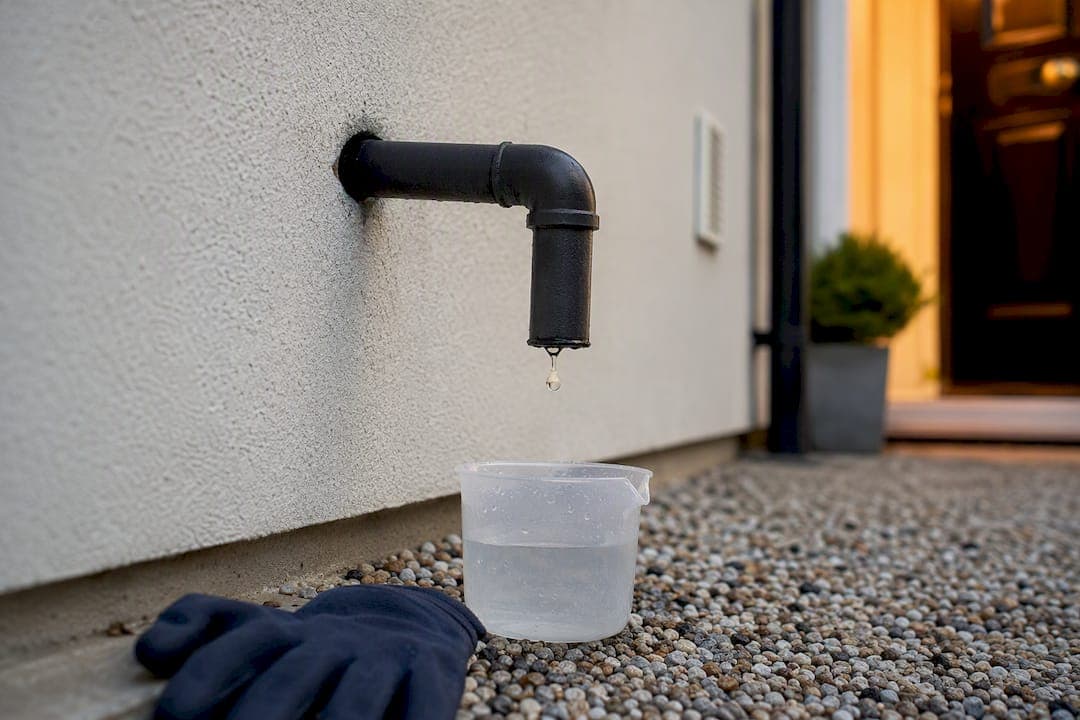
A dripping overflow pipe almost always means your boiler's pressure relief valve is doing its job and releasing excess pressure, not that the boiler itself has sprung a hidden leak. Switch the boiler off and let it cool, check the pressure gauge, and if you smell gas at any point, get out and call the National Gas Emergency Service on 0800 111 999. Everything else can wait for a proper look.
TL;DR:
- Most overflowing pipes are the pressure relief valve releasing excess pressure, which is a safety measure rather than a sign of a leak or failure.
- Checking the pressure gauge when the system is cold and ensuring the filling loop valves are fully closed can identify common causes like overpressurisation or a stuck fill valve.
- Replacing the pressure relief valve alone is often unnecessary if the expansion vessel is waterlogged, as this is a frequent underlying issue that requires diagnosis.
- Urgent cases such as pooling water, persistent drips, or smell of gas demand immediate professional attention from a Gas Safe engineer.
- Regular system maintenance plus annual inspections help prevent pressure-related leaks and extend boiler lifespan.
Table of Contents
- Why the overflow pipe drips in the first place
- What can you check safely right now?
- What's actually causing it, and does it need a professional?
- When should you call a Gas Safe engineer?
- What will the repair actually cost?
- How do you stop it happening again?
- What most people get wrong about a dripping overflow pipe
- Getting a professional to sort it, fast
- Sources
- FAQ
Why the overflow pipe drips in the first place
The pipe you're watching drip is usually the pressure relief pipe, sometimes called the overflow or discharge pipe, and it runs from the pressure relief valve (PRV) inside the boiler to an outside wall, usually low down and easy to spot. Its whole purpose is to act as a safety valve. When pressure inside the sealed heating system climbs too high, the PRV opens and pushes water out through that pipe rather than letting pressure build to a point where something inside the boiler fails.
For a standard combi or any closed system, correct pressure when the heating is cold typically sits between 1 and 2 bar. Most gauges mark this as a green zone, with red starting around 2.5 to 3 bar depending on the model. If your gauge needle is sitting in or creeping towards red, that's the system telling you it's overpressurised, and the PRV discharging through the overflow pipe is the direct consequence.
This is worth repeating because it changes how you should feel about the drip: external discharge is very often the system protecting itself correctly, not a fault in the pipe or a sign the boiler is failing. The real question isn't why the pipe drips. It's why the pressure got high enough to trigger it, and that's where the useful troubleshooting starts.
What can you check safely right now?
Before touching anything, switch the boiler off and give it time to cool. A cold system gives you an honest pressure reading and takes the risk of scalding water out of the equation entirely.
Once it's cool, work through these checks in order:
- Note what you're actually seeing. A slow drip every few seconds is very different from a constant trickle or a steady stream, or a puddle forming on the floor. Write down which one you have, plus the time.
- Read the pressure gauge. Compare it against the 1 to 2 bar cold range. Anything close to or above 2.5 bar points towards overpressurisation as the trigger.
- Check the filling loop. This is the flexible braided hose, usually silver or black, connecting the boiler to the cold mains under or beside the unit. Both valves on it need to be fully closed (turned to sit in line with, or across, the pipe, depending on the design). A valve left even slightly open lets mains water keep creeping into the system and pushing pressure up.
- Bleed a radiator if pressure is high. Bleeding a radiator releases trapped air and a small amount of water, which can bring an overpressurised system back into range. Use a radiator key, hold a cloth under the valve, and close it the moment water appears rather than air.
- Look at the external pipe itself. In freezing weather, check for ice forming at the pipe's outlet, which can back water up and make the situation look worse than it is. Thawing with a cloth soaked in warm, not boiling, water is a safe temporary fix.
Pro Tip: Keep a note of the pressure reading cold, then again after the heating has run for twenty minutes. If it climbs noticeably between the two, that's a strong clue for an engineer and saves them a repeat visit just to gather the same information.
What's actually causing it, and does it need a professional?
Not every drip has the same cause, and telling them apart matters because some are a two-minute fix and others need parts and a qualified engineer.
Overpressurisation from overfilling or a stuck fill valve shows up as a consistently high cold reading, often above 2 bar, that climbs further once the heating runs. This is frequently down to a filling loop valve that wasn't fully closed after someone last topped up the system, though a stuck internal fill valve produces the same symptom without any outside interference.
A waterlogged expansion vessel is trickier because the gauge can look perfectly normal while the PRV still discharges. The expansion vessel is a sealed chamber with a rubber diaphragm that absorbs the extra volume water takes up when it heats and expands; if that diaphragm fails, the vessel fills with water instead of air and has nowhere left to absorb the expansion, so the relief valve takes the strain instead. Tapping the vessel casing gives a dull, solid sound rather than a hollow one when this has happened. Homeowner reports on this fault consistently describe exactly this pattern: discharge with no obvious pressure drop.
A worn or limescale-bound PRV can drip even when pressure reads completely normal, simply because sediment or age has stopped the valve seating properly. This is more common in older systems or hard-water areas where scale builds up on moving parts.
Boiler overheating or a faulty thermostat causes pressure spikes tied to heat rather than mains water. Signs include an outlet pipe that's unusually hot to the touch and a boiler that cycles on and off more often than usual, sometimes locking out altogether.
Limescale and sludge in the system, again worse in hard-water regions, restrict flow and push localised pressure up even when the main gauge looks fine. This is the cause most likely to need a power flush rather than a simple part swap.
The most common practical fixes span closing a loose filling loop valve, bleeding radiators, repressurising or replacing the expansion vessel, and replacing a worn PRV, and which one applies depends almost entirely on the pattern you noted during your checks.

When should you call a Gas Safe engineer?
Some situations need attention the same day. A steady stream rather than a drip, water pooling on the floor, the boiler cycling off repeatedly, or any smell of gas all count as urgent. If you smell gas, that's an emergency regardless of anything else, and the number to call is 0800 111 999 for the National Gas Emergency Service.
A persistent drip that doesn't stop, pressure that won't hold steady after you've closed the filling loop and bled a radiator, or a fault that survives your DIY checks all warrant a call within 24 to 48 hours rather than an emergency callout.
Before the engineer arrives, having a few details ready speeds up diagnosis considerably:
- Pressure readings taken cold and again after the heating has run.
- How long the drip has been happening and whether it's constant or intermittent.
- Any recent work on the system, including a top up via the filling loop.
- Visible rust, white residue, or scale near the valve or pipe.
It's worth being clear on the legal line here too. Only Gas Safe registered engineers may legally carry out internal repairs on a gas-fired boiler in the UK. Homeowners can check the gauge, close a filling loop, and bleed a radiator, but opening the boiler casing or replacing internal components yourself isn't just risky, it's against the law.
What will the repair actually cost?
Plenty of overflow pipe problems cost nothing at all to fix, closing a filling loop valve or bleeding a radiator takes minutes and needs no parts. Beyond that, costs scale with the fault. A PRV replacement, including parts and labour, commonly runs into the low hundreds of pounds. An expansion vessel can sometimes be repressurised rather than replaced outright, which is cheaper, but a full replacement sits in a similar cost band to a PRV swap once labour is included. A power flush to clear sludge and limescale from a larger system tends to cost more, running into several hundred pounds, because it takes longer and treats the whole system rather than one component.
What pushes a job to the higher end is usually a combination of part prices, how accessible the boiler is, how complex the heating system is, and whether you're booking a standard visit or an emergency callout outside normal hours.
How do you stop it happening again?
An annual service by a Gas Safe engineer catches most of this before it becomes a drip on your wall. That visit checks pressure, tests the PRV, inspects the expansion vessel, and looks at the flue, which covers every major cause discussed above in one appointment.
Between services, keep an eye on the pressure gauge occasionally, and always double check that the filling loop valves are fully closed after any top up. A magnetic filter fitted to the system traps the debris that would otherwise turn into sludge, and an inhibitor added at service time slows scale build up in hard-water areas. Insulating the external discharge pipe protects it against freezing in winter, which stops one of the more avoidable seasonal call outs. If the same fault keeps recurring, an ageing expansion vessel or a tired PRV is usually cheaper to replace properly than to keep patching.
What most people get wrong about a dripping overflow pipe
The mistake I see repeated most often is replacing the PRV the moment it drips, without ever checking the expansion vessel. The valve is doing exactly what it's designed to do: releasing pressure it's being fed. If the real fault is a waterlogged vessel, a brand new PRV will start dripping again within weeks because nothing has changed the pressure it's reacting to. That's money spent solving the symptom while the cause carries on unchecked.
If you take three things from this: switch off and check the gauge first, run through the filling loop and radiator checks before assuming the worst, and call a Gas Safe engineer once a drip persists rather than escalates into something you can't ignore.
— Michael
Getting a professional to sort it, fast
If your checks haven't stopped the drip, or you'd rather not touch the filling loop yourself, that's exactly the kind of job Your-local-plumber handles day to day. Rather than waiting in for a national callout centre to find someone local, you book directly and get a fixed-price visit from an engineer who deals with PRVs, expansion vessels, and system flushes regularly.

For anything urgent, a steady stream, pooling water, or a boiler that keeps cutting out, book through the emergency plumbing and heating service for a fast response. Less urgent drips and general leak repairs go through the standard plumbing booking page. Have your pressure readings, cold and after heating, ready when you call, along with how long the drip has been happening. If your boiler is older and repeated fixes are starting to add up, it's also worth requesting a new boiler quote while the engineer is already on site.
Sources
- HSE — Gas safety for employers and landlords
- Which? — What should your boiler pressure be?
- Heatable — Boiler overflow pipe leaking? Here’s what it means and how to fix it
FAQ
How do I stop my overflow pipe from dripping?
Switch the boiler off, let it cool, and check the pressure gauge reads within the 1 to 2 bar cold range. Close the filling loop valves fully and bleed a radiator if pressure is high; if the drip continues after that, the fault is mechanical and needs a Gas Safe engineer.
Is a dripping overflow pipe an emergency?
A slow, occasional drip usually isn't an emergency and can wait for a booked visit within a day or two. A steady stream, water pooling on the floor, or any smell of gas is urgent, and a suspected gas leak means calling 0800 111 999 straight away.
How much does it cost to fix a leaking overflow pipe?
Some fixes, like closing a filling loop valve, cost nothing. A PRV or expansion vessel replacement commonly runs into the low hundreds of pounds, while a power flush for sludge or limescale can cost several hundred depending on system size. Your-local-plumber lists its current pricing for boiler and heating work and other services on its website.
Why does my hot water tank overflow pipe keep dripping?
A persistent drip with a normal-looking pressure gauge often points to a waterlogged expansion vessel rather than the valve itself. Homeowners frequently replace the pressure relief valve first, only for the drip to return, because the vessel behind it was never actually diagnosed or fixed.