TL;DR:
- Modern heating options include gas boilers and air source heat pumps with different costs and efficiencies.
- Proper insulation and system maintenance are crucial for safety, performance, and long-term savings.
- Upgrading to a heat pump requires property preparation, including insulation and radiator adjustments.
Most Reading homeowners treat their central heating the same way they treat their broadband router: plug it in, forget about it, and only think about it when something goes wrong. But heating technology, running costs, and upgrade options have shifted significantly, and what worked fine five years ago may now be costing you more than it should. Whether you have a gas boiler that's seen better days or you're weighing up a heat pump for the first time, understanding your options in 2026 makes the difference between a smart investment and an expensive mistake. This guide covers how central heating systems work, which suits Reading homes, what maintenance is non-negotiable, and how to approach an upgrade with clear eyes.
Table of Contents
- How central heating systems work: The basics explained
- Comparing gas boilers and heat pumps: Costs, efficiency, and practicalities
- Maintenance and servicing: Keeping your system safe, efficient, and legal
- Upgrading your heating: What to consider before making the switch
- Our perspective: What most guides miss about central heating upgrades
- Next steps: Get local expertise for your home heating
- Frequently asked questions
Key Takeaways
| Point | Details |
|---|---|
| Know your system type | Different central heating systems suit different Reading homes and needs. |
| Weigh upgrade options | Compare costs, carbon impact, and home suitability before switching heating systems. |
| Prioritise maintenance | Annual servicing and checks by qualified engineers prevent breakdowns and keep systems efficient. |
| Insulation is crucial | Maximise efficiency and savings by improving insulation before major upgrades like heat pumps. |
| Seek local advice | Local experts offer tailored guidance for maintenance and upgrading central heating in Reading. |
How central heating systems work: The basics explained
Central heating is simply a system that generates heat in one place and distributes it throughout your home. Most Reading properties use one of three main types: a gas boiler with radiators, an air source heat pump, or a hybrid system that combines both. Each has its own logic, running costs, and maintenance needs.
Gas boilers burn natural gas to heat water, which then travels through pipes to radiators in each room. Heat pumps work differently. They extract heat from outdoor air and compress it to warm water at a lower temperature. Heat pumps provide steady low-temp heat of around 45 to 60°C, compared to a gas boiler's higher bursts of around 70°C. That difference matters when it comes to radiator sizing and how your home retains heat.
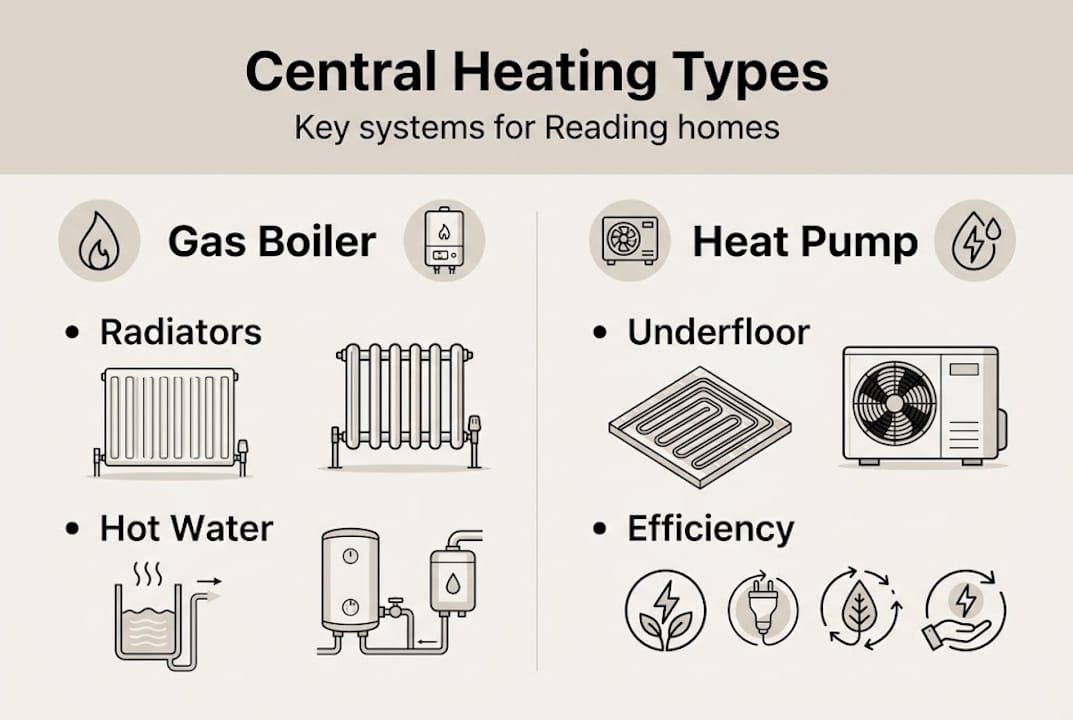
Heat emitters are the parts of the system you actually feel. Radiators are the most common in Reading homes. Underfloor heating circulates warm water through pipes beneath the floor, which suits heat pumps well because it spreads heat evenly at lower temperatures. Air-blown systems use fan coil units and are more common in commercial settings.
How heat moves through your system:
| Stage | Gas boiler | Heat pump |
|---|---|---|
| Heat source | Gas combustion | Outdoor air |
| Water temperature | 65 to 75°C | 45 to 60°C |
| Distribution | Radiators or underfloor | Radiators (oversized) or underfloor |
| Control | Thermostat and programmer | Smart controller and thermostat |
Core components of any central heating system:
- Boiler or heat pump unit
- Pipework and valves
- Radiators or underfloor heating loops
- Room thermostat and programmer
- Hot water cylinder (where applicable)
- Expansion vessel and pressure gauge
Understanding plumbing costs explained helps you budget realistically when any of these components need attention.
Pro Tip: Check your boiler's pressure gauge regularly. It should sit between 1 and 1.5 bar when the system is cold. Low pressure means the system can't circulate water properly, which reduces efficiency and puts strain on the pump.
Comparing gas boilers and heat pumps: Costs, efficiency, and practicalities
With the basics in hand, it's time to weigh your main heating options in Reading today. The choice between a gas boiler and a heat pump isn't simply about going green. It involves your budget, your property type, and your willingness to make complementary changes.
Cost comparison: Gas boiler vs heat pump in 2026
| Factor | Gas boiler | Air source heat pump |
|---|---|---|
| Installation cost | £2,500 to £4,500 | £8,000 to £15,000 |
| With BUS grant | N/A | Reduced by £7,500 BUS grant |
| Annual running cost | £900 to £1,400 | Near-parity to gas in 2026 |
| Lifespan | 12 to 15 years | 20 to 25 years |
| Carbon output | High | 70% less carbon than gas |
The Boiler Upgrade Scheme grant of £7,500 makes heat pumps far more accessible, but the upfront cost is still significant. Running costs have reached near-parity with gas in 2026, and long-term savings are possible once the system is optimised.
Gas boilers remain cost-effective in the short term, but heat pumps offer genuine future-proofing. A well-insulated home with a correctly sized system can achieve a coefficient of performance above 3.5, meaning you get more than three units of heat for every unit of electricity used.
Before assuming a heat pump is right for you, work through these steps:
- Check your loft and wall insulation. Poor insulation is a deal-breaker for heat pump efficiency.
- Assess your radiators. Heat pumps need larger radiators to work at lower flow temperatures.
- Measure the space outside your property for the outdoor unit.
- Review your electricity tariff and consider time-of-use options.
- Get a heat loss survey carried out by a qualified engineer.
Insulation is not optional. A heat pump installed in a draughty Victorian terrace without wall insulation will underperform and cost more to run than the gas boiler it replaced. Explore heating upgrade alternatives if a full heat pump switch isn't yet viable for your property.
Maintenance and servicing: Keeping your system safe, efficient, and legal
Once you've settled on a system, keeping it in top condition is essential. Servicing isn't just about reliability. For gas systems, it's a legal and safety matter.
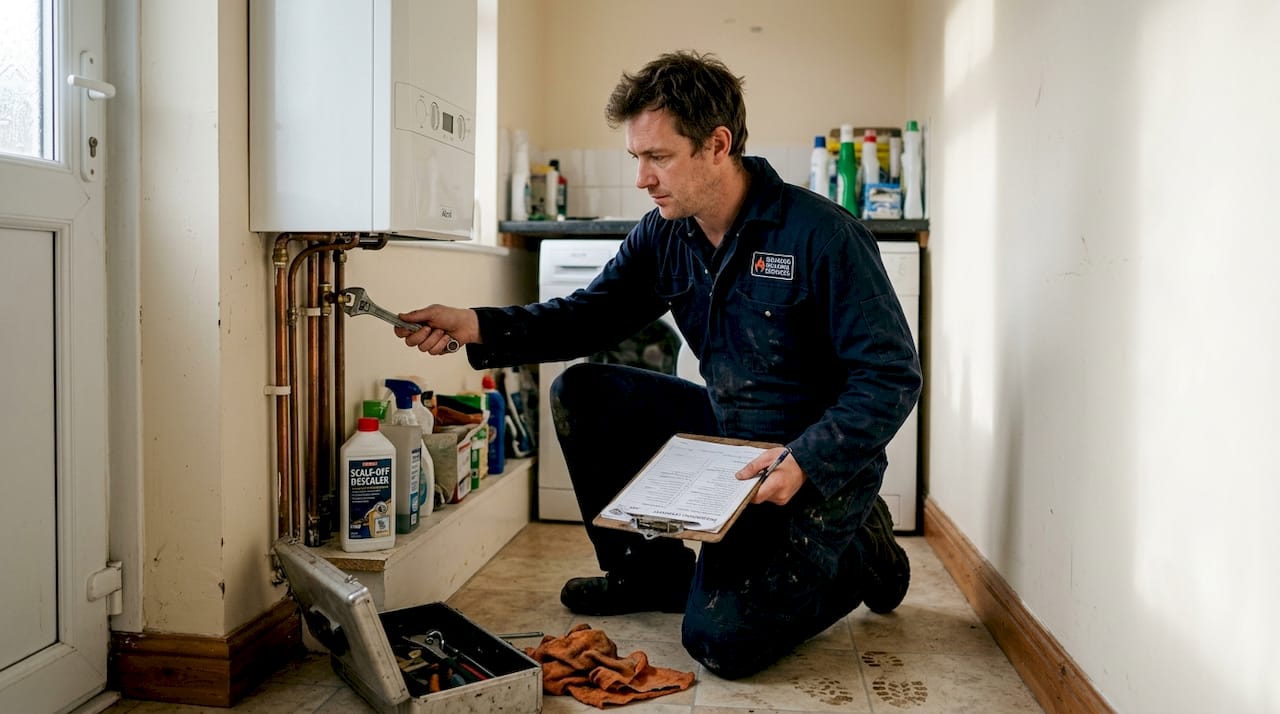
Annual servicing via Gas Safe engineers is the single most important thing you can do to protect your heating system and your family. Only engineers on the Gas Safe Register are legally permitted to work on gas appliances in the UK. Hiring anyone else is not just risky; it's illegal.
Annual checks for gas boiler systems:
- Flue integrity and ventilation clearance
- Burner operation and heat exchanger condition
- Gas pressure and flow rate
- Safety devices including pressure relief valves
- System pressure and inhibitor levels
- Carbon monoxide alarm function
Annual checks for heat pump systems:
- Refrigerant levels and pressure
- Outdoor unit condition and airflow clearance
- Controls, sensors, and thermostat calibration
- Filter cleaning
- Pipework insulation condition
- Hot water cylinder performance
Our boiler servicing guide goes deeper on what a proper annual service covers, and our Gas Safe certification article explains exactly what to look for when hiring an engineer. For a broader view, the heating maintenance checklist covers both plumbing and heating in one place.
Pro Tip: Even a brand new boiler or heat pump needs its first service within twelve months. Manufacturers often require proof of annual servicing to honour the warranty, and skipping it in year one can void your cover entirely.
Pipe lagging is often overlooked but it matters. Insulating exposed pipework in lofts, garages, and outside walls reduces heat loss between your boiler and your radiators, keeps your system running more efficiently, and prevents burst pipes in winter.
Upgrading your heating: What to consider before making the switch
If you're thinking about a new system, make sure you're prepared for the realities and choices ahead. Upgrading is not just a financial decision. It's a lifestyle one too.
Key questions to ask before upgrading:
- Is your home well insulated? Loft, walls, and floor insulation all affect the outcome.
- What is your realistic budget, including any complementary upgrades?
- Do you have outdoor space for a heat pump unit?
- Are you eligible for the Boiler Upgrade Scheme or other 2026 grants?
- How old is your current system, and is a repair a better short-term option?
- Are your radiators large enough for lower-temperature operation?
Common pitfalls Reading homeowners face:
- Underestimating the total cost of a heat pump installation, including radiator upgrades
- Assuming a heat pump will work like a gas boiler in terms of heat delivery
- Skipping the insulation stage and then blaming the heat pump for poor performance
- Choosing a system based on grant availability alone rather than suitability
- Not accounting for the noise of an outdoor heat pump unit near a bedroom or neighbour's boundary
Heat pumps deliver steady low-level warmth rather than quick bursts of heat, which means you may need to run your heating for longer periods at a lower temperature. This suits some households perfectly and frustrates others. Time-of-use electricity tariffs can reduce running costs if you shift heating to off-peak hours, but that requires some adjustment to your daily routine.
Complementary upgrades worth considering include underfloor heating for comfort and radiator resizing, both of which improve the performance of heat pumps significantly. Speaking with local plumber's guidance early in the process helps you avoid costly missteps and prioritise the right improvements for your specific property.
Not every upgrade pays off. If your home needs £10,000 of insulation work before a heat pump becomes viable, it may make more financial sense to replace your gas boiler with a newer, more efficient model and revisit the heat pump question in a few years.
Our perspective: What most guides miss about central heating upgrades
Most heating guides focus on the headline numbers: installation costs, grant amounts, and carbon savings. What they underplay is how much the success of any upgrade depends on the condition and character of the property itself.
We see this regularly with Reading homeowners. A heat pump installed in a well-insulated modern semi performs brilliantly. The same unit fitted in a 1930s end-of-terrace with single-skin walls and no floor insulation is a disappointment from day one. The technology isn't at fault. The preparation was skipped.
The most effective heating upgrades we've seen follow a clear sequence: fix draughts and improve insulation first, then reassess the heating system. This approach consistently delivers better results than simply swapping the boiler. It's less exciting than fitting new technology, but it works. Before committing to any system change, read through the questions for your plumber so you go into any consultation fully prepared.
Next steps: Get local expertise for your home heating
Understanding your central heating system is the first step. Acting on that knowledge with the right local support is what actually improves your home's comfort and efficiency.

At Your Local Plumber Reading, we work with Reading homeowners every day on everything from annual boiler servicing and Gas Safe checks to full system assessments and upgrade planning. We know the local housing stock, we understand which systems suit which properties, and we give you honest advice rather than a sales pitch. Whether you want to keep your existing system running well or you're seriously considering a heat pump, we're here to help you make the right call for your home and your budget.
Frequently asked questions
What is the most efficient heating system for Reading homes in 2026?
Well-insulated Reading homes get the best efficiency from heat pumps, but heat pumps struggle in draughty older properties, making an upgraded gas boiler a more practical choice until insulation is improved.
How often should a central heating system be serviced?
You should have your system serviced every year by a qualified engineer. Annual servicing via Gas Safe engineers keeps your system safe, efficient, and within warranty terms.
Do I need to upgrade my insulation before getting a heat pump?
Yes. Poor insulation raises costs and reduces heat pump efficiency significantly, so improving insulation before installation is essential rather than optional.
Are grants available for heating upgrades in Reading in 2026?
Yes. The £7,500 BUS grant is available through the Boiler Upgrade Scheme for eligible homes installing a heat pump, which substantially reduces the upfront installation cost.