
TL;DR:
- Shut off the main water supply immediately to prevent further damage during emergencies.
- Keep essential tools like wrenches, PTFE tape, and towels ready for quick temporary repairs.
- Verify repairs by monitoring the area for 24 to 48 hours before assuming issues are resolved.
A burst pipe at two in the morning is every Windsor homeowner's nightmare. Water spreading across the kitchen floor, the boiler making alarming noises, and no idea where to start. These moments are stressful, costly, and surprisingly common. The good news is that knowing exactly what to do in the first few minutes can mean the difference between a minor inconvenience and thousands of pounds in water damage. This guide walks you through every stage, from the initial panic to verified repairs, with practical Windsor-focused advice at every step.
Table of Contents
- Assessing the emergency: what to do first
- Essential tools and materials for urgent repairs
- Step-by-step guide to handling common plumbing emergencies
- Verifying repairs and preventing future emergencies
- What most homeowners miss during plumbing emergencies
- Get fast, expert help for Windsor emergencies
- Frequently asked questions
Key Takeaways
| Point | Details |
|---|---|
| Quick assessment matters | A rapid initial evaluation limits water damage and determines when to call professionals. |
| Be prepared | Having basic tools and supplies ready minimises disruption during plumbing emergencies. |
| Follow step-by-step solutions | Clear action steps for pipe bursts, leaks, and blockages help resolve most home emergencies safely. |
| Trust local Windsor experts | Local knowledge and fast response is crucial for lasting repairs and peace of mind. |
| Prevent future issues | Routine checks and maintenance reduce the risk of unexpected plumbing emergencies. |
Assessing the emergency: what to do first
The moment something goes wrong with your plumbing, your instinct might be to grab towels and hope for the best. That instinct is not entirely wrong, but there is a smarter first move. Quick assessment can prevent further damage during a plumbing emergency, and it starts with shutting off your water supply.
Your main stopcock is usually found under the kitchen sink, in an airing cupboard, or near the front door. Turning it off clockwise stops the flow immediately. If you cannot find it, check your property survey or ask a neighbour who may have a similar layout.
Once the water is off, assess what you are dealing with:
- Visible leak or burst pipe: Identify the source and contain the water with towels or buckets.
- Blocked drain or toilet: Do not keep flushing. Repeated flushing worsens blockages rapidly.
- Boiler issues: Switch off the boiler and check for visible error codes before touching anything else.
- Damp patches or hidden leaks: These are slower emergencies but still require prompt attention.
Safety must come first. If water is near electrical sockets or fuse boxes, turn off the electricity at the consumer unit before entering the affected area. Never assume water and live electrics are safe together. If you smell gas at any point, leave the property and call the National Gas Emergency Service on 0800 111 999 immediately.
"Knowing your shut-off points before an emergency strikes is the single most valuable piece of preparation any homeowner can do."
Pro Tip: Walk through your home this week and locate every shut-off valve, including those under sinks and behind toilets. Label them with small stickers so anyone in the household can act fast. For a fuller picture of emergency plumbing essentials, it pays to be prepared well in advance. If you are ever unsure whether the situation is beyond your control, local plumbing expertise is only a phone call away.
Common mistakes homeowners make include waiting too long to act, using excessive force on stuck valves, and attempting repairs near live electrics. Avoid all three.
Essential tools and materials for urgent repairs
Preparedness with essential tools can minimise water damage before professionals arrive. Keeping a basic emergency kit in your home costs very little but can save a great deal of money and stress when things go wrong.
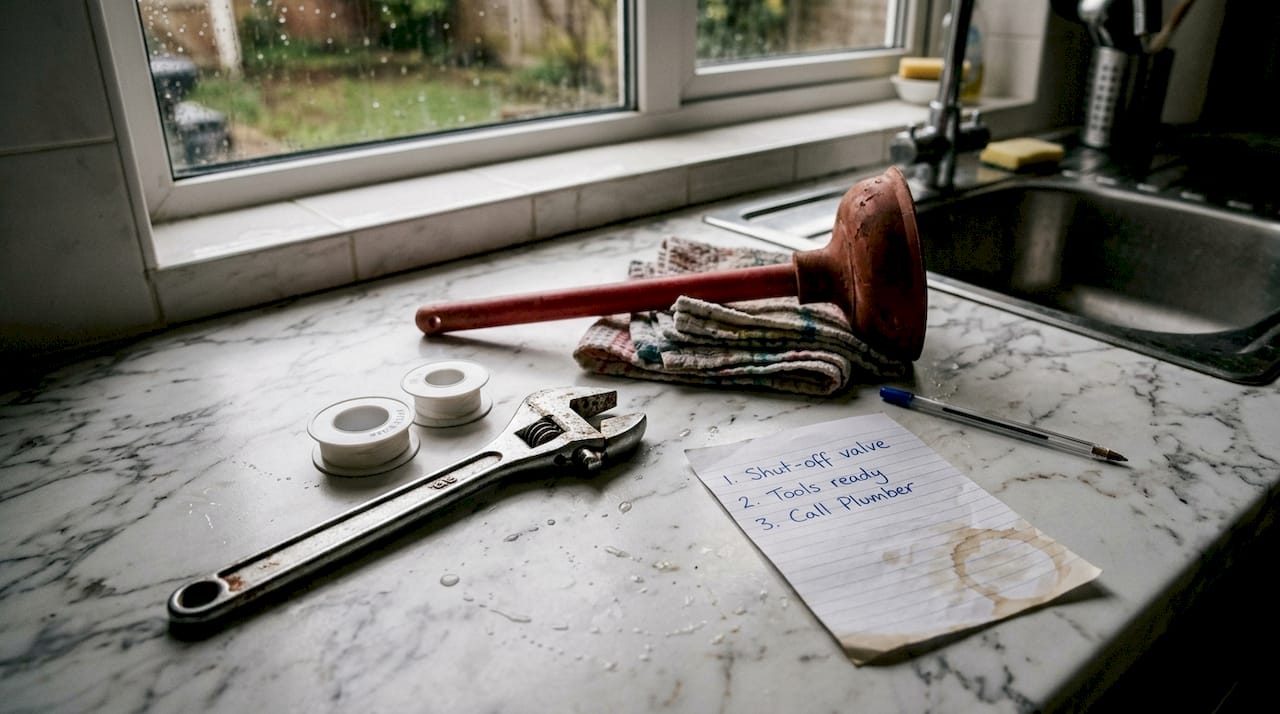
Here is what every Windsor homeowner should have to hand:
- Adjustable wrench: For tightening or loosening pipe fittings quickly.
- PTFE tape (plumber's tape): Wraps around threaded joints to create a temporary watertight seal.
- Pipe repair clamp: Clamps over a cracked or leaking pipe section as a short-term fix.
- Plunger: Essential for clearing blocked sinks, toilets, and drains.
- Bucket and towels: For containing water and limiting spread to flooring and walls.
- Waterproof sealant: Useful for sealing small gaps around fixtures temporarily.
- Torch: Pipework is often in dark, awkward spaces under sinks or in cupboards.
| Tool or material | Primary use | Temporary or permanent fix |
|---|---|---|
| PTFE tape | Sealing threaded joints | Temporary |
| Pipe repair clamp | Burst or cracked pipes | Temporary |
| Adjustable wrench | Tightening fittings | Either |
| Plunger | Clearing blockages | Either |
| Waterproof sealant | Small gaps and cracks | Temporary |
| Replacement washers | Dripping taps | Permanent |
It is important to understand that most of these tools support temporary fixes only. They buy you time until a qualified engineer can make a proper repair. Do not mistake a pipe clamp holding firm for a job that is done.
Pro Tip: Several builders' merchants in and around Windsor offer same-day or urgent delivery on plumbing supplies. Keep their numbers saved in your phone alongside your plumber's contact details. Reviewing a thorough plumbing maintenance checklist can help you identify which supplies to stock before any emergency arises.
Step-by-step guide to handling common plumbing emergencies
With your tools ready and your assessment complete, you can take targeted action. Clear procedural steps help minimise damage during crises like leaks or pipe bursts, so follow these sequences carefully.
For a burst pipe:
- Shut off the main water supply immediately.
- Turn off your boiler and central heating to prevent further stress on the system.
- Open all cold taps to drain remaining water from the pipes.
- Apply a pipe repair clamp over the burst section as a temporary measure.
- Call a Windsor emergency plumber. This is not a permanent DIY fix.
For a blocked drain or toilet:
- Stop adding water to the affected fixture.
- Use a plunger with firm, steady pressure. Avoid aggressive force.
- Try a drain snake or flexible rod if the plunger does not clear it.
- If the blockage is deep or affects multiple fixtures, it may be in the main drain. Call a professional.
For a leaking tap or joint:
- Turn off the isolation valve beneath the fixture.
- Wrap PTFE tape around the threaded joint and retighten.
- Replace the washer if the tap is dripping from the spout.
- Monitor for 30 minutes after the repair before considering it resolved.
| Situation | DIY appropriate? | Call a professional if... |
|---|---|---|
| Dripping tap | Yes | Leak continues after washer replacement |
| Blocked sink | Yes | Multiple fixtures affected |
| Burst pipe | Temporary fix only | Always call for permanent repair |
| Boiler fault | No | Any boiler issue requires an engineer |
"Never attempt to repair a boiler yourself. Gas appliances require a Gas Safe registered engineer, full stop."
For guidance on handling emergencies in a structured way, the same principles apply across most UK properties. For anything involving your heating system, boiler repairs Windsor specialists should always be your first call.
Verifying repairs and preventing future emergencies
Once you have made a temporary repair or a professional has completed the work, verification is essential. Do not assume the problem is resolved just because the visible leak has stopped.
Here is how to check your repairs properly:
- Run water slowly through the affected fixture and watch for any drips or seepage.
- Dry the area thoroughly before checking, so new moisture is easy to spot.
- Check water pressure at nearby taps. A sudden drop may indicate an ongoing issue.
- Inspect surrounding pipework for signs of corrosion, discolouration, or damp patches.
- Monitor for 24 to 48 hours after any repair, particularly for joints and clamps.
Routine checks and preventative maintenance greatly reduce emergency risks, and the statistics back this up. Research suggests that homes with annual plumbing inspections experience significantly fewer emergency call-outs, saving homeowners both money and disruption over time.
Prevention is far less expensive than emergency repairs. A few simple habits make a real difference:
- Insulate exposed pipes before winter to prevent freezing.
- Clear gutters and downpipes regularly to avoid overflow into the property.
- Never pour fat or grease down kitchen drains.
- Check under sinks every few months for slow drips or damp patches.
- Ensure your property complies with UK plumbing regulations to avoid costly retrofits later.
Pro Tip: Book an annual plumbing inspection with a local Windsor plumber each autumn, before the cold weather arrives. It is the single most cost-effective step you can take to protect your home through winter.
What most homeowners miss during plumbing emergencies
Here is something we see time and again. Homeowners spend hours watching online tutorials and attempting repairs that are beyond their skill level, only to call us once the situation has worsened considerably. The DIY instinct is understandable. Nobody wants to pay for a call-out if they think they can manage it themselves. But plumbing is not always as visible or as simple as it looks on a screen.
Windsor has its own quirks. Older properties in the area often have non-standard pipework, ageing lead joints, or systems that have been modified by previous owners without proper documentation. A generic online guide will not account for any of that. Choosing local professionals leads to quicker response and better outcomes precisely because they understand these local variables.
The other thing homeowners consistently underestimate is the speed at which water damage escalates. Within an hour, water can penetrate flooring, reach joists, and begin encouraging mould growth. The cost of a professional call-out is almost always lower than the cost of remediation after a delayed response. Windsor plumber expertise is not a luxury. In many cases, it is the cheaper option.
Get fast, expert help for Windsor emergencies
When a plumbing emergency strikes, every minute matters. You now have the knowledge to act quickly, contain the damage, and make informed decisions about when to call in the professionals.

At Your Local Plumber, we provide fast, reliable support for Windsor homeowners facing urgent plumbing and heating issues. Whether you need to book a plumbing service for a scheduled repair or require an emergency plumber Windsor right now, our experienced engineers are ready to respond. Browse our service gallery to see the quality of work we deliver across the local area. Do not wait for a small issue to become a costly disaster. Get in touch today.
Frequently asked questions
What should I do first if my pipe bursts in Windsor?
Shut off your main water supply immediately to stop further flooding, then call a local emergency plumber. Quick response mitigates water damage significantly in those first critical minutes.
Which essential tools help with emergency plumbing?
A wrench, PTFE tape, and towels are your most important first-response items before professionals arrive. Preparedness with basic tools minimises damage and buys you valuable time.
How do I verify a plumbing repair has worked?
Dry the area completely, then run water slowly and watch for any new drips or damp patches over 24 to 48 hours. If issues persist, contact a Windsor expert promptly, as verification ensures no further hidden damage develops.
Are emergency plumbers available 24 hours in Windsor?
Yes, many Windsor plumbers offer round-the-clock emergency services for urgent repairs at any hour. Local plumbers provide faster response times than national call centres because they are already in the area.