
TL;DR:
- UK plumbing regulations ensure safety, efficiency, and protect against costly legal and insurance issues.
- Homeowners can perform minor repairs but require professionals for major installations and system alterations.
- Always verify plumber credentials, use approved materials, and follow technical safety thresholds to ensure compliance.
Plumbing regulations might seem like dry paperwork, but the stakes for getting them wrong are genuinely serious. Over 2,000 UK hospital admissions every year are linked to scalding incidents caused by non-compliant hot water installations. Beyond physical danger, ignoring the rules can void your home insurance, trigger fines, and create costly problems when you sell your property. Whether you are planning a bathroom renovation or simply want to know what your plumber should be doing, this guide cuts through the confusion. We will walk you through the key frameworks, what you can and cannot do yourself, the safety thresholds that matter, and how to hire someone you can trust.
Table of Contents
- What governs plumbing regulations for UK homes
- What homeowners can do and when you need a professional
- Key safety and efficiency rules every UK household must follow
- How to verify and hire compliant plumbers
- Why regulations are your ally, not a hassle: Lessons from the field
- Ready for hassle-free, compliant plumbing solutions?
- Frequently asked questions
Key Takeaways
| Point | Details |
|---|---|
| Regulations protect safety | UK plumbing laws mandate safety devices and prevent contamination to safeguard health. |
| DIY limits exist | Homeowners can handle basic repairs but must use professionals for complex or notifiable jobs. |
| Hiring certified plumbers is crucial | WaterSafe and Gas Safe credentials ensure compliance and prevent costly mistakes. |
| Non-compliance leads to penalties | Ignoring regulations can invalidate insurance, cause health risks, and lower property value. |
What governs plumbing regulations for UK homes
Understanding which rules apply is the first step. The UK does not have a single plumbing law. Instead, several overlapping frameworks work together to protect you, your property, and the public water supply.
Homeowner plumbing is regulated by Building Regulations Parts G, H, and L, alongside the Water Supply (Water Fittings) Regulations 1999. Here is what each covers:
- Part G covers sanitation, hot water safety, and water efficiency in dwellings
- Part H deals with drainage and waste water disposal
- Part L addresses energy efficiency, including hot water system insulation
- Water Fittings Regulations 1999 govern the materials, fittings, and installation methods used to connect to the mains supply
The Water Fittings Regulations are enforced by your local water supplier, not the council. They have the power to inspect your property if they suspect non-compliant work, and they can require you to fix or remove anything that risks contaminating the public supply. Building Regulations, on the other hand, are overseen by your local authority's building control department or an approved inspector.
For everyday homeowners, the most important thing to understand is that these rules are not just about new builds. They apply whenever you carry out work that affects your plumbing system, including extensions, conversions, and even some like-for-like replacements.
A useful starting point is keeping a plumbing maintenance checklist so you can spot issues before they become notifiable problems. Staying on top of your system means fewer surprises and less risk of accidentally crossing into regulated territory without realising it.
The DIY plumbing rules in the UK are more permissive than many people assume, but the boundaries are firm. Knowing where they sit protects you legally and financially.
Stat callout: The UK records over 2,000 hospital admissions annually from scalding incidents, many of which are directly linked to non-compliant hot water installations. This is not a theoretical risk.
What homeowners can do and when you need a professional
One of the most common misconceptions is that all plumbing work requires a qualified tradesperson. That is not true, but the distinction between what you can do yourself and what requires professional involvement is important to get right.
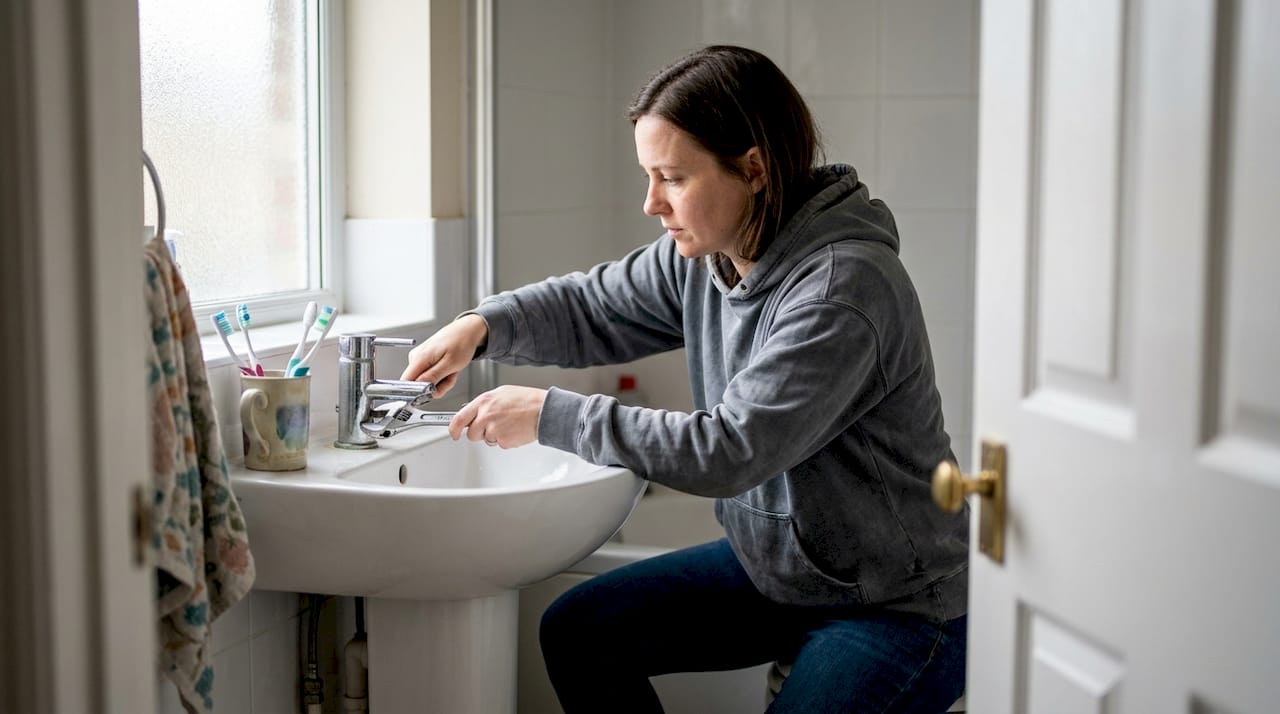
Minor fixes like tap leaks are perfectly DIY-friendly, while new bathrooms and mains alterations require professional sign-off or building control notification. Here is a practical breakdown:
| Task | DIY allowed? | Notification required? |
|---|---|---|
| Fixing a dripping tap | Yes | No |
| Replacing a showerhead | Yes | No |
| Unblocking a sink or toilet | Yes | No |
| Fitting an outside tap | Yes, but see note | Notify water supplier |
| Installing a new bathroom | No | Yes, building control |
| Replacing an unvented cylinder | No | Yes, Part G |
| Altering mains pipework | No | Yes, water supplier |
The edge cases are where homeowners most often get caught out. Outside taps, for example, seem simple but must include a double-check valve to prevent backflow into the mains. Backflow is when contaminated water flows backwards into the public supply, and it is taken very seriously under the water supply regulations. Similarly, greywater systems that reuse bath or sink water for toilet flushing need to be correctly isolated to avoid cross-contamination.
Knowing the likely cost of professional work helps you budget properly. Our plumbing pricing guide gives you realistic figures so you are not caught off guard. And if you are unsure what kind of engineer you actually need, understanding plumber roles in homes can save you from hiring the wrong person for the job.
Pro Tip: Always use WRAS-approved (Water Regulations Advisory Scheme) materials for any plumbing work you carry out yourself. WRAS approval means the product has been independently tested to meet UK water regulations. Using non-approved fittings can invalidate your work and cause problems during property sales.
Key safety and efficiency rules every UK household must follow
Beyond knowing who can do what, there are specific technical thresholds that every home must meet. These are not optional guidelines. They are enforceable standards with real consequences if ignored.
Baths must have a maximum of 48°C hot water delivered via thermostatic mixing valves (TMVs), unvented hot water systems must include expansion vessels and temperature and pressure relief valves (TPRVs), and maximum water use is capped at 125 litres per person per day in new builds.
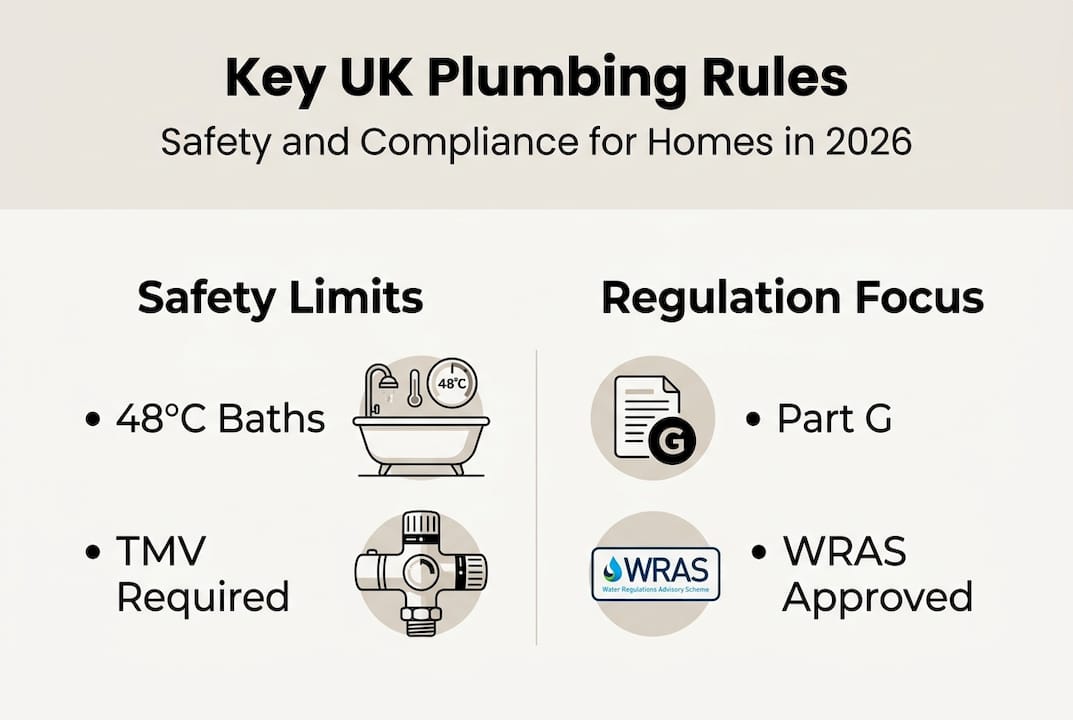
Here is a summary of the key thresholds:
| Requirement | Standard | Relevant regulation |
|---|---|---|
| Maximum bath water temperature | 48°C via TMV | Part G |
| Unvented cylinder safety devices | Expansion vessel and TPRV required | Part G |
| Water efficiency limit | 125 litres/person/day | Part G |
| Hot water storage temperature | Minimum 60°C to prevent Legionella | HSE guidance |
The Part G hot water rules exist because scalding can happen in under five seconds at 60°C. A TMV blends hot and cold water at the outlet to ensure the delivered temperature never exceeds the safe limit, even if the boiler runs hotter. This is especially critical in homes with young children or elderly residents.
Unvented cylinders (the pressurised hot water tanks common in modern homes) carry additional risk because they store water under pressure. Without a functioning TPRV and expansion vessel, a fault can cause catastrophic failure. These systems must be installed and serviced by a qualified engineer holding an unvented cylinder qualification, full stop.
The numbered steps below summarise what you should confirm with any plumber working on your hot water system:
- Confirm a TMV is fitted or will be fitted at bath outlets
- Check the unvented cylinder has a current service record
- Ask to see the TPRV and confirm it is not blocked or painted over
- Verify the stored water temperature is set to at least 60°C
- Ask the right questions for your plumber before work begins
"At 60°C, scalding occurs in under five seconds. At 48°C, the risk is dramatically reduced, which is why Part G mandates TMVs at bath outlets in all new and significantly refurbished installations."
If something goes wrong with your hot water system, knowing when to call for help is critical. Our emergency plumbing guide explains what counts as a genuine emergency and what steps to take while you wait for an engineer. You can also review Part G FAQs for further technical detail.
How to verify and hire compliant plumbers
Knowing the rules is one thing. Making sure the person you hire follows them is another. The UK has a system of self-certification schemes that allows qualified plumbers to sign off their own work without requiring a separate building control inspection. This is faster and cheaper for you, but only if the plumber is genuinely registered.
WaterSafe-approved plumbers can self-certify domestic installations through Competent Person Schemes, and Gas Safe registration is mandatory for any work involving gas. Here is what to check before you commit:
- WaterSafe registration for water fitting and plumbing work
- Gas Safe ID card for any boiler, gas pipe, or appliance work
- Public liability insurance of at least £1 million
- A written quote before work starts, not a rough verbal estimate
- A fixed business address, not just a mobile number
Avoid anyone who insists on cash only with no receipt, cannot provide a registration number you can verify online, or pressures you to make a decision on the spot. These are red flags for unregistered traders whose work will not meet regulatory standards and will not be covered by any insurance.
Understanding Gas Safe certification is particularly important if your plumbing work touches the boiler or any gas appliances. It is a legal requirement, not a nice-to-have. For local, verified services, you can also explore options like our Swindon plumber services as an example of what a properly registered local team looks like in practice.
Pro Tip: Use the WaterSafe plumber search tool to find approved plumbers in your area. It takes thirty seconds and gives you instant confidence that whoever you hire is working within the regulatory framework.
Why regulations are your ally, not a hassle: Lessons from the field
After years of working in domestic plumbing, we have seen the same pattern repeat itself. A homeowner hires someone cheap and unregistered. The work looks fine. Then, eighteen months later, a leak develops behind a wall, or worse, an insurance claim is rejected because the installation was non-compliant. Suddenly, a saving of a few hundred pounds has turned into a bill of several thousand.
Regulations are not designed to slow you down. They are the accumulated wisdom of decades of plumbing failures, injuries, and property damage, written into law so that future homeowners do not have to learn those lessons the hard way. When a plumber self-certifies work through a Competent Person Scheme, you get a certificate that protects you legally, keeps your insurance valid, and adds demonstrable value to your property.
The homeowners who treat regulations as a checklist to tick off before moving on are the ones who call us in a panic later. The ones who genuinely engage with the process, ask the right questions, and keep records, find that their homes run better and cost less to maintain over time. Keeping a proper maintenance checklist is the simplest way to stay ahead of the curve. Regulations are not bureaucracy. They are future-proofing.
Ready for hassle-free, compliant plumbing solutions?
Now that you understand the regulatory landscape, the next step is making sure your home's plumbing is in safe, certified hands. At Your Local Plumber, every engineer we send is fully registered, insured, and up to date with current UK regulations.

Whether you need a routine installation, a safety check on your hot water system, or an urgent fix, we make it straightforward. Browse our local plumbing services to see the full range of work we cover, or book a plumber online in just a few clicks. If you are based in the South West, our Swindon plumber team is ready to respond fast. Compliance does not have to be complicated when you have the right people on your side.
Frequently asked questions
Do I need permission for all plumbing work as a homeowner?
You only need formal notification for complex or notifiable plumbing work such as installing new bathrooms or unvented cylinders. Minor repairs like fixing taps or unblocking drains can be carried out without any notification.
What is a WaterSafe-approved plumber and why does it matter?
A WaterSafe-approved plumber is certified to self-certify domestic installations through Competent Person Schemes, meaning they issue compliance certificates without requiring a separate building control inspection, saving you time and money.
What happens if plumbing regulations are ignored?
Ignoring regulations can result in fines, invalid home insurance, and serious health risks including scalding or water contamination that could affect your entire household.
Can I use rainwater for toilet flushing under UK regulations?
Yes, rainwater and greywater can legally be used for toilet flushing and washing under UK regulations, but they must be kept completely separate from the drinking water supply at all times.
Recommended
- Emergency plumbing explained: fast relief for UK homeowners
- Essential plumbing maintenance checklist for UK homeowners
- Gas Safe certification explained: what UK homeowners must know
- How to manage emergency plumbing in Milton Keynes: 2026 guide
- Why drainage inspections are vital for UK homeowners 2026