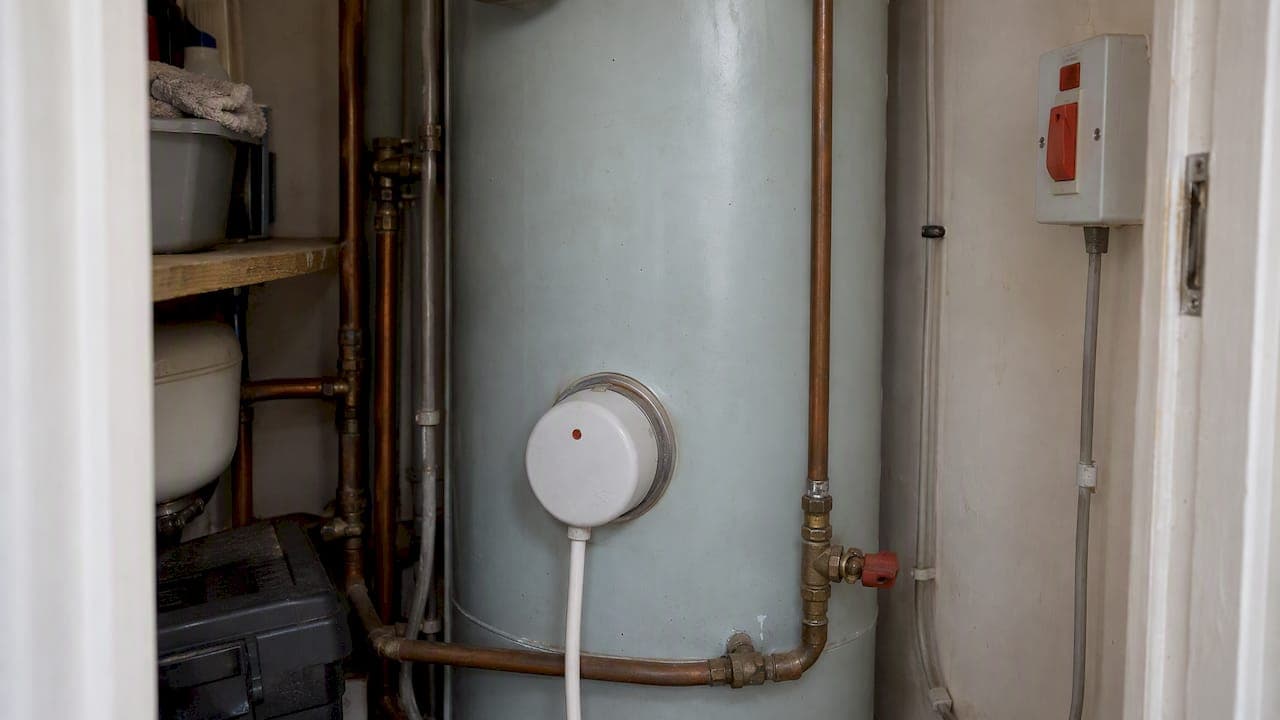
If your immersion heater has stopped making hot water, switch it off at the consumer unit and work through the quick checks below, unless you spot emergency signs. The HSE warns of scalding risk from overheating units, and Electrical Safety First advises professional inspection. Never touch live wiring. If in doubt, we at Your Local Plumber can send an engineer.
TL;DR:
- Reset a tripped RCD or MCB only once; check the timer, programmer, and thermostat, then stop if the switch trips again.
- Keep cylinder water between 60°C and 65°C to control bacteria, but rely on a working thermostat because overheating can cause severe scalds.
- Steam, bubbling, excessively hot taps, or hot water from cold taps require immediate shutdown; stop using hot water and call a registered engineer.
- Electrical Safety First recommends electrical inspections that include the immersion heater and thermostat at least every ten years; rented homes require checks every five years.
- A single failed element is usually repairable, but repeated element or thermostat faults may point to scale or an aging cylinder; get a professional quote.
Table of Contents
- What can you check yourself when the immersion heater stops working?
- Why do immersion heaters stop working?
- How do you safely test and reset an immersion heater?
- Which warning signs mean it is an emergency?
- Should you repair or replace a faulty immersion heater?
- Why does a professional check matter?
- An engineer's view: where DIY should stop
- How can we help with an immersion heater emergency?
- FAQ
- Sources
What can you check yourself when the immersion heater stops working?
Work through these in order. Each one is safe without specialist tools.
- Check the consumer unit. Look for a tripped RCD or MCB switch, usually sitting in the "off" position or midway. Flip it fully off, then back on once. If it trips again straight away, stop and leave it off.
- Check the timer or programmer. A timer knocked out of schedule, or a switch left on "off", is a very common reason for cold water.
- Check the cylinder thermostat dial. It may simply have been turned down or knocked.
- Press the reset button, if there is one. Some units have a red reset button reachable without taking off any cover. Press it once. Never remove covers or poke at terminals.
- Look for warning signs. Leaks, steam or bubbling noises mean you should stop using the system.
- Still cold? Book an engineer rather than carrying on with riskier tests.
Pro Tip: Take a photo of the timer and thermostat settings before you change anything, so you can put them back if needed.
Why do immersion heaters stop working?
Most faults fall into a few categories, and your symptoms usually point to one of them.
- Electrical trips and blown fuses: An RCD or MCB trips to protect the circuit, and it can be reset. A blown fuse has sacrificed itself and must be replaced, which points to a fault worth investigating.
- Thermostat failure: A faulty thermostat may stop the element heating at all. More dangerously, it can fail closed, so the water keeps heating and the cylinder overheats.
- Element failure and limescale: A burnt-out element gives you a heater that seems on but never warms the water. Limescale coats the element, makes it work harder and shortens its life, particularly in hard water areas.
- Thermal cut-outs and single-use fuses: Some cut-outs reset with a button. Others are single-use and need replacing once they have operated, which means a call to a professional.
- Older installations: Many older immersion heaters lack a modern safety cut-out. Electrical Safety First advises that a registered professional upgrades the thermostat where one is missing.
If a hot water tank is leaking rather than just cold, our leaking tank guide covers the safe first steps.
How do you safely test and reset an immersion heater?
Keep to what a homeowner can do. Anything involving wiring is for a registered electrician.
- Isolate first. If your consumer unit labels the immersion circuit, switch it off before checking anything near the cylinder.
- Recognise a trip. A tripped RCD or MCB sits in a different position from its neighbours. Reset it once only. Repeated tripping means a fault, so leave it off.
- Check the programmer. Make sure the hot water channel is set to come on, and that the timer is showing the correct time of day.
- Check the cylinder thermostat. Set it so the water reaches a sensible temperature. Cylinder water is ideally held between 60°C and 65°C to control bacteria, but that also carries scalding risk, so a working thermostat matters.
- Press the reset button only if the manufacturer's guidance allows and it is reachable without removing anything.
- Stop and call us if you smell burning, see scorched terminals or find wet insulation.
Pro Tip: Wait a few hours after resetting before judging the result. A full cylinder takes time to heat.
If the issue is lukewarm rather than cold water, our tepid hot water guide may fit better.
Which warning signs mean it is an emergency?
Some symptoms are not a troubleshooting job. Treat these as red flags: excessively hot taps, steam in the roof space, hot water from cold taps and loud bubbling. Switch off the immersion at the consumer unit, stop using hot water, keep children and vulnerable people away from taps, and call a registered engineer.

HSE advises switching off the electrical supply immediately and not using the heater again until a competent person has inspected it. Overheated water scalds quickly, so continuing to use it is not worth the risk.
Should you repair or replace a faulty immersion heater?
A single failed element is usually a straightforward repair. Repeated faults tell a different story.
- Frequent element or thermostat failures suggest heavy scale or an ageing cylinder, and replacement often makes more sense than another repair.
- An upgrade to a thermostat with an integrated safety cut-out adds protection, and a modern timer makes scheduling easier.
- Get a professional quote and check the cylinder's age and any warranty before deciding.
Where the problem is the boiler or cylinder as a whole, our new boiler quote service can help you compare options.
Why does a professional check matter?
Safety bodies are consistent on this, and it is worth knowing what they say.
- Electrical Safety First recommends including the immersion heater and thermostat in periodic electrical inspections, at least every ten years for homes, as set out in its immersion heater advice.
- The HSE safety alert describes thermostat failure warning signs and advises immediate shutdown and inspection.
- For rented homes, government guidance says landlords must ensure provided electrical equipment is checked at least every five years.
An engineer's view: where DIY should stop
My usual order is the same every time: consumer unit, then timer, then thermostat reset, then a visual look at the cylinder. Plenty of no-hot-water calls end there. But the moment there is overheating, a burning smell or repeated tripping, it stops being a homeowner job and belongs with a registered engineer.
— Michael
How can we help with an immersion heater emergency?
When the checks do not bring the hot water back, we can get an engineer to you quickly.

- 60-minute response: our emergency heating engineer service is built for fast, safe call-outs.
- Professional help: electrical immersion faults need a competent person.
- Book now: choose a time online or ask for a quote.
FAQ
How do I reset my immersion heater?
Check the consumer unit for a tripped RCD or MCB and reset it once. If your heater has an accessible red reset button, press it once. If it trips again, do not keep trying, and call an engineer.
How much does it cost to fix an immersion heater?
The cost depends on whether the element, thermostat or wiring is at fault. Our heating work is charged at £110 per hour (heating rates); current prices are on our website.
What is the most common cause of immersion heater failure?
A failed element or thermostat, often made worse by limescale, is a common cause. Trips at the consumer unit also point to a fault that needs checking.
How long does an immersion heater last?
Lifespan varies with water hardness, use and the age of the installation. A unit that fails repeatedly is usually a sign to replace rather than patch it, after a professional check.
Sources
- Scalding risk from domestic hot water systems - Safety alert - HSE
- Immersion heater advice from the Electrical Safety Council