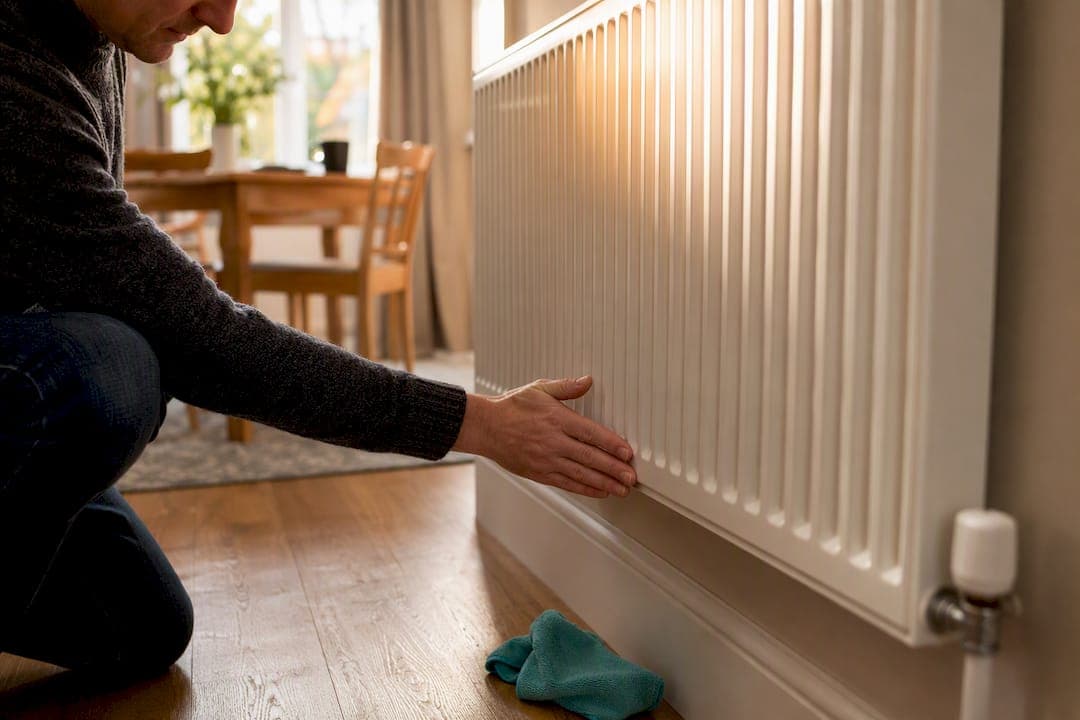
If a radiator is hot at the top but cold at the bottom, the most likely cause is sludge sitting in the system. Bleed the radiator, check the colour of the water that comes out, and check your boiler pressure. If the bottom stays cold after bleeding, you probably need a professional flush rather than another DIY attempt.
TL;DR:
- If a radiator remains cold at the bottom after bleeding and pressure checks, a professional chemical or power flush is likely needed to remove internal sludge.
- Discoloured bleed water indicates magnetite build-up, whereas clear water suggests valve or balancing issues rather than contamination.
- Regular use of inhibitors and magnetic filters, along with annual system servicing, can prevent sludge from reforming and prolong equipment lifespan.
- DIY checks should focus on bleeding for discoloured water, valve operation, and system pressure before considering a professional flush.
- Skipping straight to a power flush without ruling out simpler causes can waste money and risk damaging aging pipework or valves.
Table of Contents
- Why is a radiator cold at the bottom but hot at the top?
- Simple, safe DIY steps to try now
- What heating engineers do about sludge and blockages
- How to stop sludge coming back
- How Your Local Plumber can help if DIY checks don't fix it
- What the sludge scare gets wrong
- Book a professional check with Your Local Plumber
- Sources
- FAQ
Why is a radiator cold at the bottom but hot at the top?
A radiator that is warm up top and cold lower down almost always points to sludge, technically called magnetite, sitting at the base. This black, gritty residue forms as steel radiators corrode internally over years of use, and because it is heavier than water, it settles at the lowest point of the radiator and blocks the flow of hot water through that section.
This is different from trapped air, which behaves the opposite way. Air rises, so an air-locked radiator is typically cold at the top and warm at the bottom, the reverse of the sludge pattern. Sticky thermostatic radiator valves (TRVs) or lockshield valves can also cause patchy heating, but the radiator usually stays cold in patches or entirely, rather than following the neat top-hot, bottom-cold split.
A simple checklist helps you tell these apart before you do anything else:
- Feel the radiator at the top, middle and bottom with your heating on to map exactly where the cold starts.
- Bleed the radiator with a key and note whether the water that escapes is clear or discoloured.
- Check that the TRV and lockshield valve at each end actually turn and are not seized in one position.
- Check your boiler pressure gauge and listen for gurgling or unusual pump noise, both common with a sludged system.
If the water from bleeding is black or dark grey, sludge is the likely culprit. If the water is clear but the heating pattern is still patchy, you are probably dealing with a valve or balancing issue rather than contamination.
Simple, safe DIY steps to try now
Before booking an engineer, a few careful checks can rule out the easy causes. None of these require special tools beyond a radiator key, a cloth and a bit of patience.
- Turn off your boiler and let the radiator cool fully before touching the bleed valve, to avoid scalding.
- Hold a cloth or small bowl under the valve, insert the radiator key and turn slowly anticlockwise until you hear a hiss of escaping air.
- Close the valve as soon as water starts to flow steadily, and check whether that water is clear or discoloured.
- With the system back on, feel the radiator again after 20 to 30 minutes to see if heat has reached the bottom.
- Check each TRV and lockshield valve turns freely. A valve that will not move at all should not be forced, especially on an older system, as the spindle can snap.
- If bleeding has let air into the system, check your boiler pressure gauge and top up if needed, aiming for the 1 to 1.5 bar range most manufacturers specify, and always check your own boiler manual first.
- To rule out imbalance, turn all TRVs to 0, let the system cool, then reopen them to setting 2 starting with the radiator furthest from the boiler and working back.
Pro Tip: Keep a bowl and cloth handy and bleed radiators from the ground floor up. It makes it easier to spot which ones are drawing air from where.
Stop and call an engineer if the bleed water runs black, if there is no improvement after bleeding and re-pressurising, if you spot any leaks around valves or joints, or if the pressure gauge behaves oddly, dropping repeatedly or refusing to hold. These are signs the fix needs professional equipment rather than another attempt at home.
For more ground-level checks before you call anyone, our guide to common radiator problems and our radiator bleeding walkthrough cover the basics in more detail.
What heating engineers do about sludge and blockages
When DIY checks confirm sludge or a stubborn blockage, engineers have three main options. A quick guide from Which? sets these out clearly:
- A gravity drain and refill, the mildest option, suited to light contamination or as routine maintenance.
- A chemical flush, which circulates a cleaning agent through the system to loosen and dissolve moderate sludge.
- A power flush, the most forceful method, which uses a pump to force water at varying pressure and velocity through the system and is reserved for heavy contamination.
Before recommending either flush, a competent engineer checks the system's pH and looks for signs of corrosion or fragile, ageing pipework. Where corrosion risk is high, a less aggressive chemical flush is often advised instead of a power flush, since older systems can be damaged by the higher pressures involved.
Sludge build-up makes boilers work harder and can shorten their lifespan, according to Which?, which also notes that a magnetic filter fitted after cleaning is a cost-effective way to catch debris before it recirculates. Many boiler manufacturers also expect a clean system as a condition of certain warranty claims.

Timeframes and costs vary by system size, contamination level and location, so treat any figure as a starting point and get a local quote before committing. When you speak to an engineer, ask what equipment they use, what pressure a power flush would run at, and what inhibitor plan follows the job.
How to stop sludge coming back
Cleaning the system once is only half the job. Without ongoing protection, sludge tends to reform within a few years.
- Add a chemical inhibitor to the system immediately after any drain or flush, and note the date somewhere you will remember, such as a boiler service diary.
- Fit a magnetic filter near the boiler to catch debris before it circulates, a step engineers increasingly treat as standard after a flush.
- Bleed radiators roughly twice a year and keep them free of thick covers or furniture that trap heat.
- Fit reflector panels behind radiators on external walls if your home suits them, to reduce wasted heat.
- Book an annual boiler and system service to catch small issues before they become blockages.
Pro Tip: Write the inhibitor brand and dose on a sticker inside the airing cupboard door, so whoever services the boiler next knows exactly what's already in the system.
The pay-off for this small effort is a more efficient system, fewer emergency call-outs, and a boiler that lasts longer before needing major work. For more on what an annual visit covers, see our guide to boiler servicing.
How Your Local Plumber can help if DIY checks don't fix it
If bleeding and balancing haven't sorted the problem, Your Local Plumber can take it from there. Our engineers carry out radiator and boiler pressure checks, chemical and power flushing, magnetic filter fitting, and annual servicing, all booked through the same platform.
- No call-out fee and a fix no fee guarantee, so you only pay for completed work.
- Same-day emergency response and 24/7 availability, including holidays.
- Transparent, fixed pricing agreed before work starts, backed by a 12-month warranty.
Before a visit, it helps to note which radiators are affected, whether you've already bled them, and what colour the water was. That gives the engineer a head start on deciding between a chemical flush and a full power flush, and on agreeing a follow-up inhibitor plan. You can check availability and book through our plumbing services page.
What the sludge scare gets wrong
The instinct with any heating fault is to assume the worst and book a power flush straight away. That's usually overkill. Plenty of cold-bottom radiators turn out to be a balancing issue or a sticky lockshield valve, not years of magnetite build-up, and a five-minute bleed test tells you which you're dealing with before you spend anything.
Where conventional advice falls short is in treating every discoloured bleed as an emergency. Some sludge is normal in an older system and a chemical flush with a magnetic filter afterwards will often do the job without the disruption of a full power flush. The reader's priority should be sequence: check air and valves first, look at the water, and only escalate to a professional flush once you've ruled out the cheap, quick causes. Skipping straight to the most aggressive fix wastes money and, on fragile old pipework, can create new leaks where none existed.
— Michael
Book a professional check with Your Local Plumber
If your own checks point to sludge, or you'd rather skip the DIY stage entirely, Your Local Plumber can diagnose and fix it in one visit. Our engineers cover everything from a straightforward radiator bleed and pressure check through to a full power flush and magnetic filter fitting, with no call-out fee and payment only once the work is done.

Heating jobs are charged at fixed rates agreed with you before work starts, and every job carries a warranty. If your system needs more than a flush, such as a new boiler, we also offer free on-site quotes. Book online through our emergency heating engineer page for a same-day slot, or arrange a routine inspection at a time that suits you.
Sources
FAQ
How do you fix a radiator that is cold at the bottom?
Start by bleeding the radiator and checking whether the water is clear or discoloured, then check your boiler pressure and whether the valves turn freely. If the bottom stays cold after these checks, the system likely needs a professional chemical or power flush to clear sludge.
Why is my radiator cold at the bottom but hot at the top?
This pattern usually means sludge, a build-up of corroded metal particles, has settled at the base of the radiator and is blocking water flow there. Trapped air causes the opposite pattern, cold at the top and warm at the bottom, so the direction of the cold spot tells you which problem you have.
How do I get rid of sludge in my radiator?
Light sludge can sometimes be reduced with a chemical flush, which circulates a cleaning agent through the system, while heavier contamination usually needs a power flush using pumped water at higher pressure. After either treatment, an inhibitor and a magnetic filter help stop the sludge reforming.
Why are my radiators cold even though my heating is on?
Cold radiators with the heating running can point to sludge, trapped air, a stuck valve, low boiler pressure or an unbalanced system where some radiators draw more flow than others. A quick bleed and pressure check, followed by a professional balance if that doesn't help, usually identifies the cause.