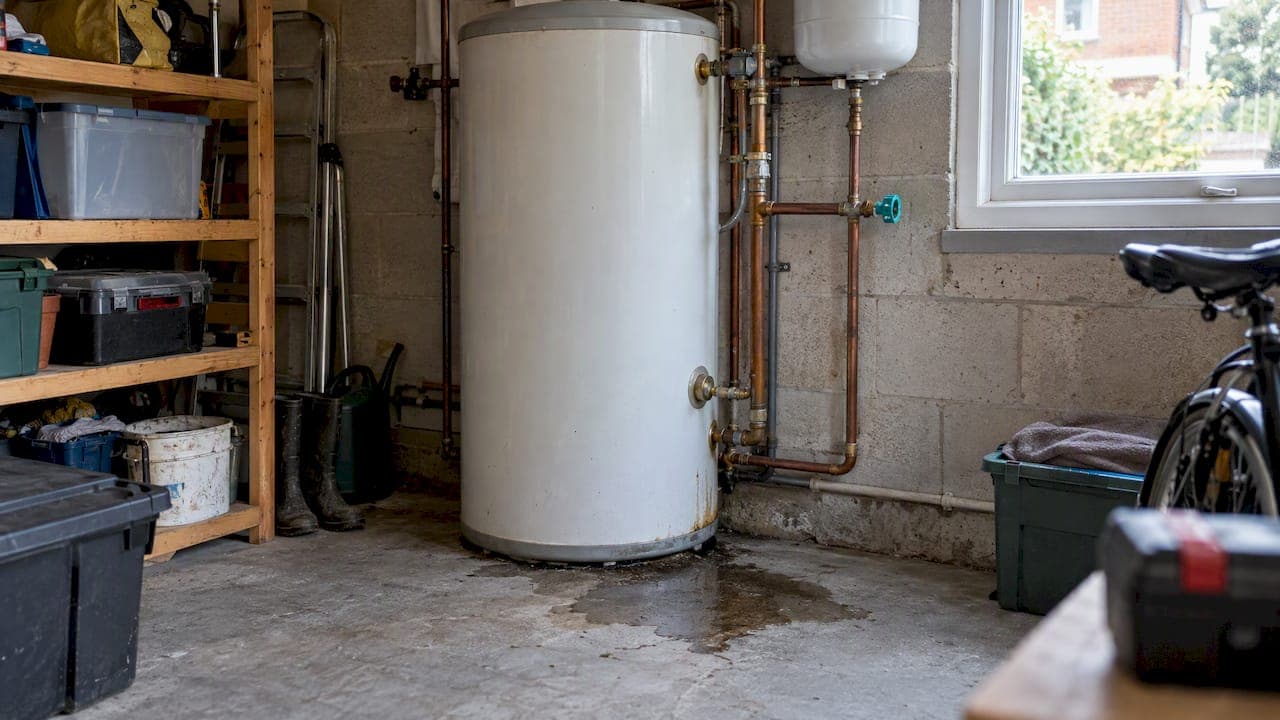
If your hot water tank is leaking, isolate the water supply at the cylinder isolator valve or the main stopcock straight away, and switch off the immersion heater or boiler if water has reached electrics or the system seems to be overheating. A fast flow, scalding water, steam, or a bulging cylinder means this is an emergency: stop reading and get help now. If the leak is slow and contained, you have time to find the exact source and plan the right fix.
TL;DR:
- Trace water upward from the wettest point; leaks often travel, and a steady tundish trickle can signal overheating or expansion problems.
- After shutting off supply, open taps to drain residual water and reduce pressure; only a G3 qualified engineer should handle unvented cylinder safety devices.
- Valve, joint, drain valve, or immersion element faults are often repairable, while tank seams, body leaks, or widespread corrosion usually require cylinder replacement.
- Arrange annual servicing to check expansion vessels, safety devices, and corrosion; homeowners typically cover internal pipework and the cylinder, while tenants should notify landlords in writing.
Table of Contents
- Locate the leak: checking valves, pipes, tundish and the cylinder body
- Stop the damage: isolation steps to prevent scalding and electrical risk
- When to call now: emergency signs and what to tell the engineer
- Repair or replace: weighing up your options
- Prevent future leaks: servicing, checks and insurance basics
- A plumber's view: what we see most often, and the mistakes to avoid
- How we can help with a leaking hot water tank
- FAQ
- Sources
Locate the leak: checking valves, pipes, tundish and the cylinder body
Water rarely drips straight down from its source, so trace the path upward from the wettest point before assuming you know where it started.
- Check the tundish or pressure relief valve for a steady trickle, which often points to overheating or expansion problems.
- Look at the drain valve near the base of the cylinder for a loose cap or worn washer.
- Run a hand along pipe joints and immersion heater entry points for damp patches or corrosion staining.
- Inspect the tank body itself, especially the base and seams, for rust, flaking paint or weeping patches.
- Note the water temperature and flow rate: scalding or fast-flowing water is more serious than a slow, cool drip.
Stains on ceilings or damp patches in a loft below the cylinder are often the first visible sign, even when the actual leak point is some distance away. Catching drips in a bucket for a few minutes gives you a rough sense of severity and buys time to plan the next step.
Stop the damage: isolation steps to prevent scalding and electrical risk
Acting in the right order limits water damage and keeps you safe while you wait for help.
- Isolate the hot water at the cylinder's own isolator valve first; this stops the leak at the source without cutting off cold water to the rest of the house.
- If you cannot find or close the cylinder isolator, turn off the main stopcock instead.
- Switch off electricity at the consumer unit if water has reached sockets, switches or the immersion heater, and never touch wet electrics yourself.
- Turn off the boiler's gas supply only if you know exactly how to do so safely; otherwise leave this to an engineer.
- Place buckets and towels under the leak, and move anything electrical or valuable out of the splash zone.
Local council guidance on plumbing emergencies recommends opening taps after isolating the supply, which drains residual water from the pipework and reduces pressure on the leak itself, according to council repair guidance. For unvented cylinders, avoid touching the pressure or safety valves yourself. Isolating the water supply is the safest action a homeowner can take.
Pro Tip: Label your stopcock and cylinder isolator valves now, before anything leaks, so you are not hunting for them in a panic later.

When to call now: emergency signs and what to tell the engineer
Some leaks need immediate action; others can wait for a scheduled visit.
- Call now if the flow is fast, the water is scalding, water is pooling near sockets or wiring, or you cannot locate or close the isolator valve.
- Book an engineer soon for a slow, contained drip, visible corrosion that is not yet actively leaking, or a safety valve that discharges occasionally rather than constantly.
- Have ready: the exact location of the leak, what you have already isolated, photos of the affected area, and whether any electrics got wet.
- Check who is responsible: homeowners typically cover internal pipework and the cylinder itself, while tenants should notify their landlord in writing and keep records, as Citizens Advice explains.
If the leak follows recent building or insulation work elsewhere in the property, it is worth ruling out water ingress from those works too; guidance on checks after spray foam installation covers a related scenario worth knowing about.
Repair or replace: weighing up your options
Many leaks are genuinely fixable without replacing the whole cylinder. A worn valve, a loose joint, a faulty drain valve or a poorly seated immersion element can usually be repaired or swapped out in a single visit.
- Replacing a safety valve, drain valve or expansion vessel is often quick and restores the system fully.
- Re-seating or replacing an immersion heater element resolves many leaks around that fitting.
- Tank body leaks, seam failures or widespread corrosion generally call for replacement rather than repair, since patching a corroded tank rarely lasts.
- An older cylinder nearing the end of its working life is often better replaced than repeatedly patched, especially if it is also underperforming on heat retention.
A typical repair visit follows the same sequence: isolate the water, drain the cylinder, inspect the fault, replace the part or the whole unit, then pressure test and recommission the system before handing it back. Check whether your cylinder is still under warranty, since that can make the repair-versus-replace decision for you; our guide to plumbing warranties explains what is usually covered.
Prevent future leaks: servicing, checks and insurance basics
Annual servicing is the single best way to catch problems before they become leaks. The Energy Saving Trust compares it to an MOT for your car: a yearly check lets an engineer spot early corrosion or minor leaks and deal with them before the tank fails outright.
- Ask your engineer to check the expansion vessel, test the safety devices and examine the tank for early corrosion at each service.
- Keep the cylinder insulated to reduce strain on the system and limit heat loss.
- Know where your stopcock and isolator valves are, and label them clearly for next time.
- Photograph any leak as soon as you spot it, noting the date, since insurers often ask for this.
Most buildings insurance policies cover damage from burst or leaking pipes, though terms vary, so it is worth checking your policy and contacting your insurer early if you suspect a claim, as coverage explainers note. If the leak has already caused damage beyond the cylinder itself, our piece on trace and access cover explains what insurers typically pay for.
Pro Tip: Keep your service records together with your warranty paperwork: both become useful evidence if you ever need to make an insurance claim.

A plumber's view: what we see most often, and the mistakes to avoid
Most leaks we deal with come down to two things: a worn valve that nobody noticed, and a service interval that slipped by a year or two longer than it should have. Corrosion rarely appears overnight; it builds quietly until a seam finally gives way.
The mistake we see most is homeowners trying to open up an unvented cylinder's safety devices themselves. These systems hold pressure and heat that can cause real harm if handled incorrectly, and only a G3 qualified engineer should work on them. Isolating the water and calling for help is always the safer move.
— Michael
How we can help with a leaking hot water tank
We offer diagnosis for leaking cylinders, whether that means a straightforward valve replacement or a full cylinder swap when the tank itself has failed. Our pricing is transparent before any work begins.

Before you call, it helps to have a few things ready:
- Photos of the leak and the general area around it.
- Whether you have already isolated the water supply.
- Any signs of overheating, such as steam, bubbling or scalding hot water at the taps.
If your cylinder needs more than a repair, we can also talk you through a new boiler quote where a replacement system makes more sense. For a fast response, book our emergency plumbing and heating engineer service and we will aim to be with you within 60 minutes.
FAQ
What do you do if the hot water tank is leaking?
Isolate the water at the cylinder isolator valve or the main stopcock, and switch off the immersion heater or electrics if water has reached them. Once the area is safe, check the tundish, drain valve, pipe joints and tank body to narrow down the source before calling an engineer.
Can I still use my hot water heater if it's leaking?
It depends on where the leak is and how fast it is flowing: a slow drip from a valve may allow limited use while you arrange a repair, but a leak near electrics, a fast flow or signs of overheating means you should stop using it and isolate the system immediately. When in doubt, treat it as unsafe until an engineer has checked it.
How long will a hot water heater last once it starts leaking?
There is no fixed timeline, since it depends on the cause: a loose valve can be fixed with no lasting effect on the tank's life, while corrosion or a seam leak usually means the tank is close to the end of its working life regardless of how slowly it is currently leaking. Our guide on signs your water heater is failing covers the warning signs worth watching for.
Is a leaking hot water tank an emergency?
It is an emergency if the flow is fast, the water is scalding, it is reaching electrics, or you cannot isolate the supply yourself. A slow, contained drip from a valve is urgent but can usually wait for a booked visit rather than an emergency call-out.
Sources
Most leaks trace back to one of a handful of causes, and the pattern of water tells you a lot before an engineer even arrives.
- Boiler service explained - Energy Saving Trust
- Repairs and housing conditions - Citizens Advice
- Repair handbook for council tenants - Leicester City Council
The HSE safety alert on hot water systems flags these overheating signs specifically: steam or moisture in the roof space, abnormally hot water at the taps and bubbling within the cylinder. These are rare but serious, since a failed safety arrangement combined with overheating can send near-boiling water through ceilings. If you notice any of these signs, switch off the immersion heater immediately and treat it as an emergency.