TL;DR:
- High-efficiency boilers convert more fuel into heat, reducing both costs and environmental impact. Regular maintenance and modern features like modulating burners and outdoor reset controls enhance performance and longevity. Upgrading older, inefficient boilers yields significant savings and helps meet stricter emission standards.
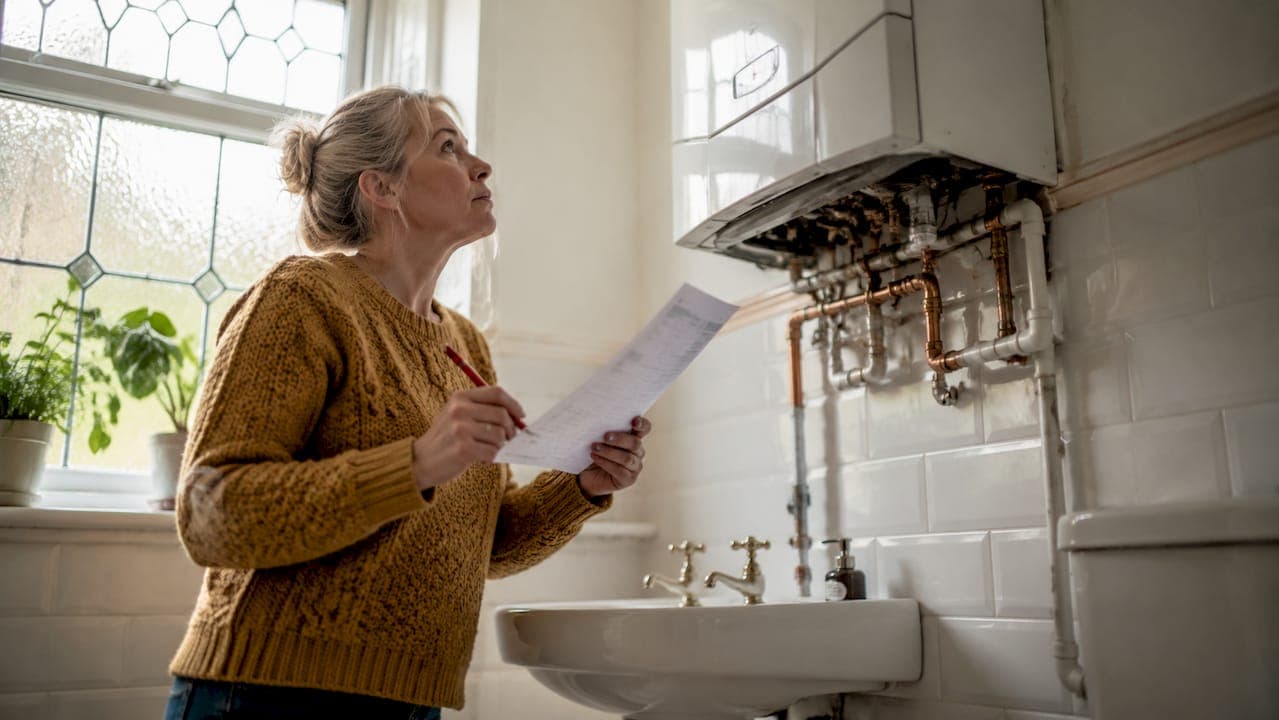
Boiler efficiency is the measure of how well your boiler converts fuel into usable heat for your home. A boiler rated at 90% efficiency turns 90p of every £1 of gas into warmth, while the remaining 10p escapes as waste. Modern condensing boilers routinely exceed 90% efficiency, compared to older models that often sit at 60–70%. The gap between those two figures is the difference between a manageable heating bill and a genuinely expensive one. Understanding the importance of boiler efficiency is the first step towards cutting costs, reducing your carbon footprint, and keeping your home reliably warm.
How does boiler efficiency affect your heating bills?
Boiler efficiency translates directly into the amount of fuel your home burns every winter. A boiler running at 65% efficiency wastes roughly 35p in every £1 you spend on gas. That waste compounds across an entire heating season, adding up to hundreds of pounds per year.
Replacing an outdated boiler rated at 60–70% efficiency with a modern high-efficiency model above 90% saves homeowners 20–30% annually on heating costs. For a household spending £1,200 a year on gas, that saving sits between £240 and £360 every year. The financial case is straightforward.
Several technologies directly improve how much fuel your boiler uses:
- Modulating aquastats with outdoor reset controls reduce fuel consumption by 5–10% by adjusting water temperature based on outdoor conditions rather than running at full heat regardless of the weather.
- Time-delay relays cut unnecessary boiler firing between heating cycles, delivering a further 10% reduction in fuel use.
- Intermittent ignition devices replace continuously burning standing pilot lights, saving an additional 3–5% on fuel costs.
Poor efficiency does not just cost money. It means your boiler works harder, wears faster, and breaks down sooner. Every percentage point of wasted fuel is also a percentage point of unnecessary strain on the system.
Pro Tip: Check your boiler's efficiency rating on the SEDBUK (Seasonal Efficiency of Domestic Boilers in the UK) database. Any boiler rated below a B grade is worth reviewing for replacement or servicing.
What are the environmental benefits of high boiler efficiency?
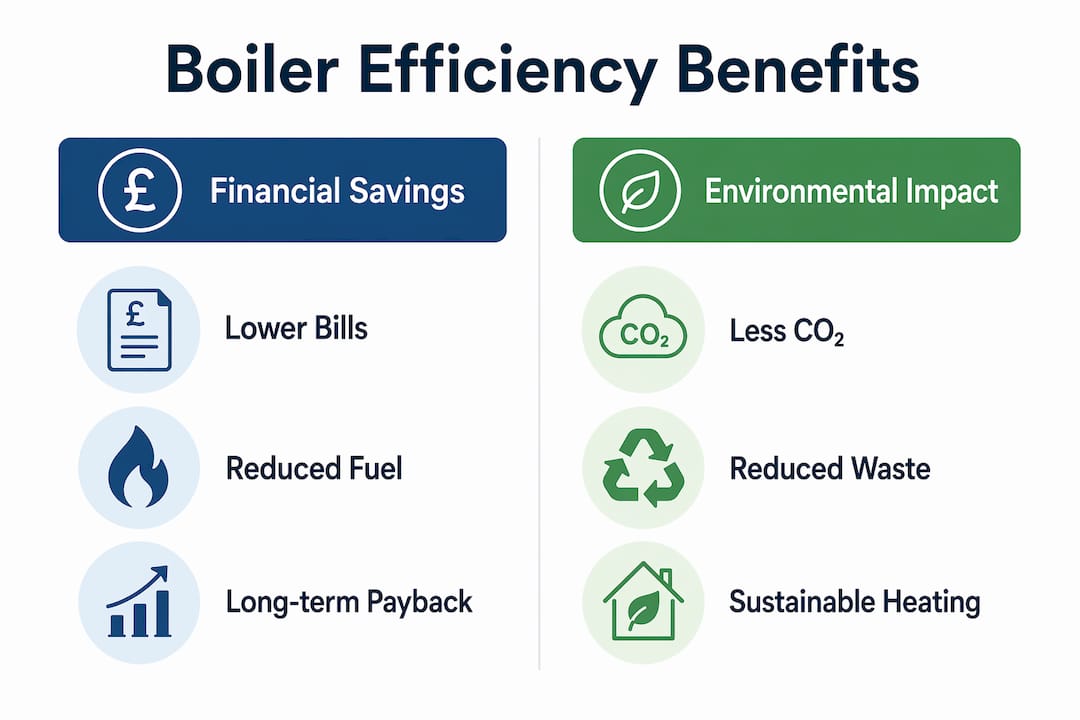
An efficient boiler burns less fuel to produce the same amount of heat. Less fuel burned means fewer carbon dioxide and nitrogen oxide emissions released into the atmosphere. The link between boiler performance and your household carbon footprint is direct and measurable.
The UK government has progressively tightened environmental regulations around domestic heating. Upgrading to a high-efficiency system reduces fuel consumption by 15–30%, which helps homeowners stay ahead of tightening emissions standards rather than scrambling to comply later. That matters as the UK continues its transition away from fossil fuel heating.
Efficient boilers also produce cleaner combustion. A well-maintained, properly tuned boiler burns gas more completely, leaving fewer unburned hydrocarbons in the flue gases. The environmental benefits of keeping your boiler in good condition include:
- Lower annual CO₂ emissions from your home
- Reduced nitrogen oxide output, which contributes to local air quality
- Compliance with current and forthcoming UK environmental standards
- A smaller overall energy demand, which supports national grid stability
"Maintaining boiler efficiency is a continuous cycle. Stack temperature monitoring serves as an early alert to efficiency decline. Maintenance is an investment, not an expense." — CCR Magazine
Long-term environmental stewardship starts at home. Choosing to maintain or upgrade your boiler is one of the most practical steps a UK homeowner can take to reduce their household's environmental impact.
Which features make modern boilers more efficient?
Modern boilers are built around technologies that older systems simply do not have. Understanding these features helps you make a better decision when servicing or replacing your current system.
Modulating burners
Modulating boilers avoid the energy-intensive stress of frequent start-stop cycles. Instead of firing at full power and then switching off, a modulating burner adjusts its output continuously to match the heat demand of your home. This improves indoor temperature consistency and extends equipment lifespan by reducing mechanical stress. Think of it like the difference between driving at a steady 50mph versus constantly accelerating and braking.
Outdoor reset controls
Outdoor reset controls link your boiler's water temperature to the temperature outside. On a mild autumn day, the boiler runs cooler water through your radiators. On a cold January morning, it increases output accordingly. This prevents the common inefficiency of running full-temperature water through your system when the weather does not require it.
Intermittent ignition devices
Older boilers use a standing pilot light that burns gas continuously, 24 hours a day, whether the boiler is firing or not. Intermittent ignition devices only spark when the boiler needs to fire. The fuel saving is modest but consistent, and the upgrade is straightforward for a qualified engineer.
The table below shows how efficiency compares across boiler generations:
| Boiler type | Typical efficiency | Annual fuel waste |
|---|---|---|
| Pre-1990 conventional boiler | 55–65% | 35–45% of fuel spend |
| 1990s standard boiler | 70–80% | 20–30% of fuel spend |
| Modern condensing boiler (A-rated) | 90–94% | 6–10% of fuel spend |
Pro Tip: When comparing new boilers, look for an ErP (Energy-related Products) A-rating. This EU-derived standard, still used in the UK, confirms the boiler meets the highest efficiency threshold available.
What maintenance practices keep your boiler running efficiently?
Maintaining boiler efficiency is not a one-off task. It requires consistent attention to several key areas, most of which a qualified engineer can address during an annual service.
-
Annual professional inspection and cleaning. A soot layer as thin as 0.8mm reduces heat transfer efficiency by nearly 10%. That is a significant loss from something invisible to the naked eye. Regular cleaning of heat exchanger surfaces restores performance and reduces fuel consumption.
-
Combustion flue gas analysis. Visual inspections alone are insufficient to verify true boiler performance. Combustion flue gas analysis measures the actual gases leaving your boiler, identifying whether it is burning fuel cleanly and completely. This test prevents breakdowns and extends boiler life.
-
Seasonal aquastat adjustment. Adjusting your aquastat temperature down from the typical 160–180°F (71–82°C) to around 120°F (49°C) during milder weather reduces fuel consumption by 5–10% without any new hardware. Your heating engineer can do this during a standard service visit.
-
Installing a time-delay relay. This small device prevents your boiler from firing again immediately after a heating cycle ends. It allows residual heat in the system to circulate before the burner restarts, cutting unnecessary fuel use by around 10%.
-
Upgrading standing pilot lights. Replacing a standing pilot with an intermittent ignition device saves 3–5% on fuel costs. The upgrade must be carried out by a Gas Safe registered engineer for safety compliance.
Monitoring your boiler's stack temperature is also worth doing between services. A rising stack temperature signals that heat transfer surfaces are becoming dirty and efficiency is falling. Catching this early avoids larger repair bills later. For a full overview of what a professional service covers, the boiler servicing guide from Your-local-plumber explains the process clearly.
Is upgrading your boiler a cost-effective decision?
For most homeowners with a boiler older than 15 years, upgrading is the single most cost-effective heating decision available. The financial case rests on three factors: current efficiency, projected savings, and payback period.
An older boiler running at 65% efficiency costs significantly more to run than a modern A-rated condensing boiler at 92%. The fuel saving from upgrading sits between 15–30% annually, depending on the size of your home and current usage. On a £1,500 annual gas bill, that represents £225 to £450 saved every year.
Key factors that strengthen the case for upgrading include:
- Frequent breakdowns. Repair costs on an ageing boiler often exceed the cost of replacement within two to three years.
- Rising energy bills. An inefficient boiler amplifies every gas price increase because it wastes more of every unit it burns.
- Improved home comfort. Modern modulating boilers maintain more consistent room temperatures, reducing cold spots and temperature swings.
- Property value. An A-rated boiler and a current Energy Performance Certificate (EPC) rating improve your home's marketability and value.
- Environmental compliance. Upcoming UK regulations on fossil fuel heating make upgrading now a proactive rather than reactive decision.
The payback period on a new boiler installation typically falls between five and ten years, depending on your current system's age and your household's gas consumption. For homeowners planning to stay in their property long term, the return is clear. Reviewing your options against the UK plumbing regulations guidance ensures any upgrade meets current compliance requirements.
Key takeaways
Boiler efficiency directly determines how much of your fuel spend heats your home and how much is wasted, making it the most controllable factor in your annual heating costs.
| Point | Details |
|---|---|
| Efficiency gap costs money | Upgrading from 65% to 90%+ efficiency saves homeowners 20–30% on annual heating bills. |
| Soot causes hidden losses | A 0.8mm soot layer cuts heat transfer by nearly 10%, making annual cleaning non-negotiable. |
| Small adjustments add up | Seasonal aquastat changes and time-delay relays together save up to 20% on fuel without new hardware. |
| Modern tech reduces waste | Modulating burners and outdoor reset controls prevent unnecessary fuel use and extend boiler lifespan. |
| Upgrade ROI is measurable | Most boiler replacements pay back within five to ten years through fuel savings alone. |
Why boiler efficiency matters more than most homeowners realise
I have been in enough plant rooms and airing cupboards to know that most homeowners do not think about their boiler until it stops working. That is understandable. It sits quietly in a cupboard, the heating comes on, and life continues. But the boilers I see most often in trouble share one common trait: they have been ignored for years, and their efficiency has quietly collapsed.
The thing that surprises people most is the soot finding. A layer you cannot even see with the naked eye, less than a millimetre thick, cutting performance by 10%. That is not a dramatic failure. It is a slow, invisible drain on your money and your comfort. Most homeowners I speak to have never had a combustion flue gas analysis done. They have had a visual check, maybe a pressure test, and been told everything looks fine. That is not the same thing.
My honest view is that the industry undersells maintenance as a financial tool. People hear "boiler service" and think of it as a compliance exercise, something you do to keep the warranty valid. The reality is that a properly done annual service, including combustion analysis and aquastat adjustment, can pay for itself in fuel savings within the same heating season. That is a better return than most home improvements.
The environmental argument has also shifted. Five years ago, talking about carbon footprints felt abstract to most homeowners. Now, with energy prices where they are and regulations tightening, efficiency and sustainability point in exactly the same direction. You save money and reduce emissions at the same time. There is no trade-off to make.
If your boiler is over 12 years old and has never had a combustion analysis, that is where I would start. Not with a replacement quote. With a proper diagnosis.
— Michael
Get professional boiler servicing from Your-local-plumber
Your boiler works hardest when you need it most. Keeping it efficient requires more than a quick annual check. Your-local-plumber provides thorough boiler servicing carried out by experienced, Gas Safe registered engineers who check combustion performance, clean heat transfer surfaces, and identify efficiency losses before they become expensive problems.

Whether you need a routine service, a combustion flue gas analysis, or advice on whether your current system is worth keeping, Your-local-plumber offers transparent pricing and fast local response. For homeowners considering an upgrade, the team can also assess your current boiler's efficiency and recommend the most cost-effective path forward. Visit Your-local-plumber to book a service or speak to an engineer about your heating system today.
FAQ
What is a good efficiency rating for a home boiler?
A good home boiler efficiency rating is 90% or above, which corresponds to an A-rating under the ErP scale. Modern condensing boilers typically achieve 90–94% efficiency.
How much can I save by upgrading to a high-efficiency boiler?
Replacing an older boiler rated at 60–70% efficiency with a modern model above 90% saves 20–30% on annual heating costs. On a typical UK gas bill, that can mean several hundred pounds per year.
How often should a boiler be serviced to maintain efficiency?
A boiler should be professionally serviced once a year. Annual servicing that includes combustion flue gas analysis and heat exchanger cleaning is the most reliable way to sustain peak efficiency and catch problems early.
Does a dirty boiler use more gas?
A soot layer of just 0.8mm reduces heat transfer efficiency by nearly 10%, which directly increases the amount of gas your boiler burns to reach the same temperature. Regular cleaning restores performance.
Can I improve boiler efficiency without replacing the unit?
Seasonal aquastat adjustments, time-delay relay installation, and replacing standing pilots with intermittent ignition devices can collectively reduce fuel use by 15–20% without replacing the boiler itself.