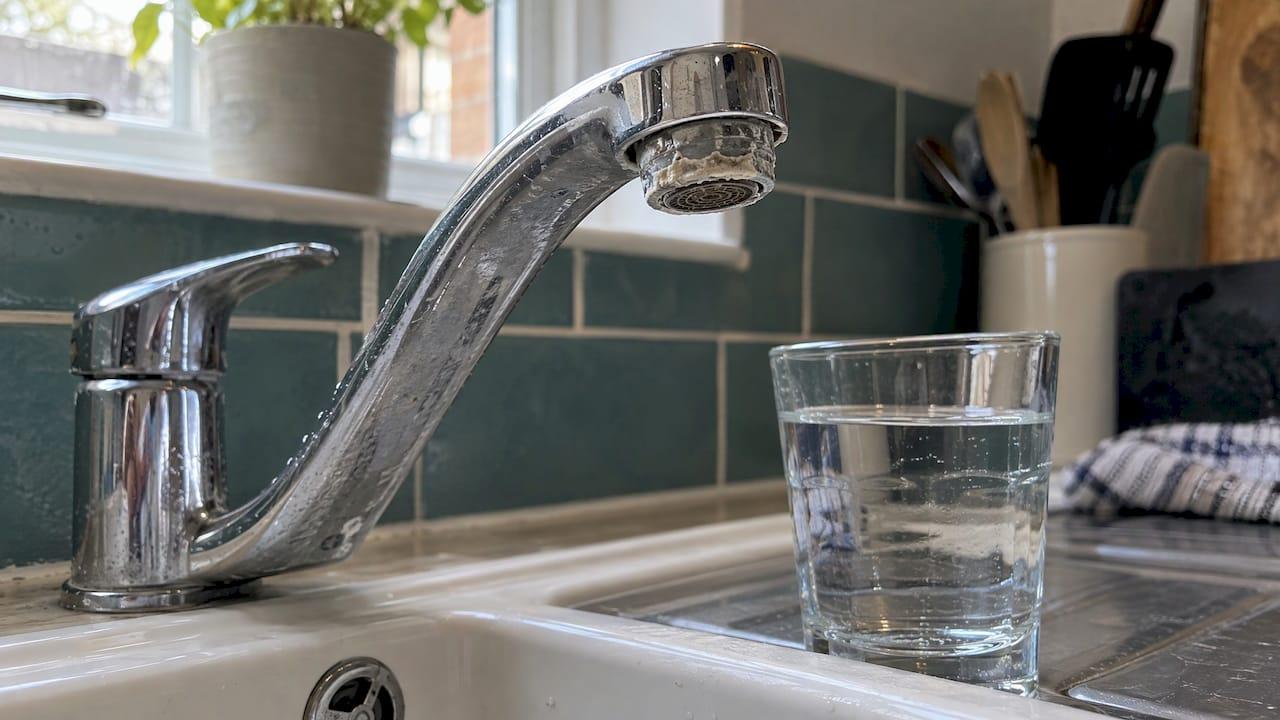
Yes. Bristol's tap water is hard, and so is Reading's. Bristol's supplier describes its whole supply area as moderately hard to very hard, with some seasonal variation. Thames Water, which supplies Reading, says all the water in its region is hard. Neither is a health problem. The cost shows up in your kettle, your taps, your shower and, most expensively, your boiler and hot water cylinder. If limescale has already started to cause trouble, we can book an engineer to look at it.
TL;DR
- Bristol water is hard. Published 2025 zone figures for the city run from about 194 to 264 mg/L of calcium carbonate, which sits in the "moderately hard" to "hard" bands.
- Reading water is hard to very hard. Estimates for individual postcode districts sit at roughly 258 to 327 ppm, depending on the source and the district.
- Hard water is safe to drink. The damage is to heating elements, boilers, cylinders, taps and showerheads, where scale builds up over the years.
- Your own postcode is what counts. Use your water company's checker, then judge the effects by what you see at home.
- Heating and boiler work with us is £110 per hour, with no call-out fee. New boilers supplied and fitted start from £1,300.
Table of Contents
- Is the water hard in Bristol?
- Does Reading have hard water?
- How to read hardness figures
- Is hard water safe to drink?
- Signs of hard water in your home
- What scale does to taps, showers, boilers and cylinders
- How to check the hardness at your address
- Our view on hard water
- Getting limescale problems looked at
- Hard water or soft water: what changes for homeowners
- FAQ
- Sources
Is the water hard in Bristol?
Bristol Water says the hardness comes from calcium and magnesium that dissolve from the local limestone as water passes through the ground. The Drinking Water Inspectorate (DWI), the regulator for drinking water in England and Wales, gives the same explanation. Hardness follows local geology, so it is a feature of the ground, not a fault in the supply.
The supplier uses these bands, measured as milligrams of calcium carbonate per litre (mg/L):
| Band | mg/L calcium carbonate |
|---|---|
| Soft | 0 to 50 |
| Moderately soft | 51 to 100 |
| Slightly hard | 101 to 150 |
| Moderately hard | 151 to 200 |
| Hard | 201 to 300 |
| Very hard | Above 300 |
These bands come from Bristol Water's hardness page. Thames Water's bands are very close: soft up to 100, slightly hard 100 to 150, moderately hard 150 to 200, hard 200 to 300 and very hard above 300.
Hardness figures across Bristol
Hardness differs from one part of the city to another, because homes are fed from different supply zones. One data site compiled from supplier records for 1 January to 31 December 2025 reports 194 to 264 mg/L across 12 Bristol zones. Kingswood, Fishponds and Mangotsfield came out at 264 mg/L, and Bedminster at 201 mg/L. Both of those figures fall in the "hard" band.
Zoom out to the whole Bristol supply area and the spread widens. The same site's wider dataset shows 27 zones in 2025 ranging from 161 to 385 mg/L. So someone on the edge of the supply area could sit in the "moderately hard" band, and someone else could be in "very hard".

Supply boundaries move and water can be blended, so treat these as a guide to the range. They are not a result for your address.
Does Reading have hard water?
Yes, and generally harder than Bristol. Thames Water explains that its water comes from rivers and underground sources that pass through chalky limestone. It describes hardness as a natural property of the source that it cannot change.
Postcode-level estimates from independent sites vary a little, but they agree on the picture:
- One guide to Reading puts the town's average at 295 ppm, which it calls very hard. Its district estimates include 285 for RG4, 290 for RG6, 295 for RG1, 300 for RG2 and 310 for RG30. It labels these as average estimates, not address-specific results.
- Another site's Reading table gives district estimates from 258 ppm in RG40 to 327 ppm in RG31.
Parts per million (ppm) and mg/L mean the same thing for water hardness, so the numbers line up with the bands above. Using the supplier's bands, most of Reading sits at the top of "hard", and some districts cross into "very hard". The estimates are modelled, so check your own address before you act on them.
How to read hardness figures
You will see hardness quoted in several units, which is the main source of confusion.
- mg/L or ppm of calcium carbonate. This is the usual UK measure, and the one the DWI uses. It classes 200 to 300 mg/L as hard and anything above 300 as very hard.
- mmol/L. Some water reports use millimoles of calcium and magnesium per litre. As a rough guide, one mmol/L is about 100 mg/L of calcium carbonate, so 2.5 mmol/L is about 250 mg/L.
- Clark, French or German degrees. Dŵr Cymru notes that hardness may be given in these older scales, and that mg/L or ppm is the usual equivalent measure. Stick to mg/L when comparing.
There are also two kinds of hardness. Dŵr Cymru describes temporary hardness, which forms limescale when the water is boiled, and permanent hardness, which stays dissolved when boiled. Most of the visible scale in a kettle or boiler comes from the temporary kind.
Is hard water safe to drink?
Yes. Thames Water says hard water is not considered harmful and that its minerals are beneficial for bones. The DWI treats hardness as a matter of how water behaves in your home, not a health measure. You do not need to avoid your tap water in Bristol or Reading.
If you have a specific medical condition or a baby on formula and are unsure what water to use, ask your GP or health visitor.
Signs of hard water in your home
The DWI and Dŵr Cymru list the same everyday signs:
- scale inside the kettle
- less lather from soap, shampoo and washing products
- tide marks on basins, sinks, baths and toilets
- a scum on the top of hot drinks
There is also a plumbing side that you cannot see. The DWI explains that scale is made of calcium and magnesium deposits that build up on heating elements over time. This can reduce the efficiency of appliances and shorten their life.
What scale does to taps, showers, boilers and cylinders
Scale forms fastest where water is hot, and a hot water system warms water over and over. In a hard water area that has practical consequences.
Taps and showerheads. Chalky crusts clog aerators and spray holes. Flow drops, spray turns uneven, and mixer cartridges stiffen. Replacing a tap or showerhead is a quick job, but it recurs if scale is left alone.
Immersion heaters. In a hot water cylinder, the immersion heater element becomes coated in scale. It has to work harder to heat the same water, and eventually it fails. If the water is lukewarm when it should be hot, our guide to fixing tepid hot water walks through the likely causes.
Boilers and heat exchangers. Scale insulates the surfaces that transfer heat, so the boiler works harder for the same output. Early warning signs often include kettling, a rumbling or banging from the boiler, and slow heat-up. If your boiler is making odd noises, this guide to noisy boiler sounds and safe checks explains what the common ones mean.
For the UK safety side, including what the 200 ppm figure means for boilers, we have written up limescale in boilers. For a broader view of how the damage builds up, see our hard water damage guide.
Not every home in a hard water area has a problem. A newer boiler in regular use, with a good installation, can run for years. What matters is noticing changes early: slower heating, new noises, falling hot water temperature or a rising gas bill.

How to check the hardness at your address
Your postcode matters more than the city average. A short routine:
- Use your supplier's checker. In Bristol, Bristol Water's water hardness page points you to its water quality postcode checker for details specific to your area. In Reading and the Thames Water region, use Thames Water's own water quality tools.
- Note the number and the unit. Look for mg/L (or ppm) of calcium carbonate. If you only find mmol/L or degrees, convert before comparing.
- Place it in the bands. Above 200 is hard and above 300 is very hard.
- Look at what you see. Tide marks, kettle scale, weak showers and a boiler that has slowed down tell you more than the figure alone.
- Ask for a boiler or cylinder check if you are seeing problems. An engineer can look at the equipment itself and say whether scale is the cause.
If you live elsewhere in the area we cover, the same logic applies. Newbury, Basingstoke, Oxford, Swindon, Cheltenham, Gloucester, Milton Keynes and much of the Thames Valley are largely chalk and limestone country, so check your own supplier's figure before you assume anything.
Our view on hard water
Most of the calls we get about limescale start the same way: hot water that has gone lukewarm, a boiler that has started to rumble, or a shower that sprays in three directions. Nobody thinks of hard water until something stops working.
Our advice is to know your number, and then look at the equipment that heats your water. Boilers, immersion heaters and hot water cylinders are where scale does the most expensive work, and where a diagnosis helps most.
When you book with us you speak directly to the engineer. We charge no call-out fee, you pay only after the work is done successfully, and our work carries a 12-month warranty. Boiler and heating work is £110 per hour, so you know where you stand before we start.
Michael
Getting limescale problems looked at
If your taps, shower, immersion heater or boiler are showing the signs above, we cover tap and toilet repairs, showers, leak repairs, hot water cylinder immersion heaters, boiler diagnostics and repairs, and central heating repairs across Bristol, Reading and the surrounding towns. Heating and boiler work is charged at £110 per hour. We offer no call-out fee and a no fix, no fee guarantee, and you pay once the work is successfully completed.
If a boiler or the heating has failed completely, our emergency engineer service offers a 60 minute response time, 24/7, including holidays. For a boiler that has reached the end of its life, new boilers supplied and fitted start from £1,300 one-off, and you can request a new boiler quote. For everyday jobs, see our plumbing service page.

More than 300 Trustatrader reviews are on our profile if you would like to see what other homeowners say.
Hard water or soft water: what changes for homeowners
Our guide on hard versus soft water covers the practical differences for UK homes. The short version for Bristol and Reading is that you cannot change the supply, so the useful questions are about your own equipment: how old it is, how well it is serviced and how it behaves.
FAQ
Is Bristol water hard or soft?
It is hard. Bristol Water classes its supply as moderately hard to very hard, and 2025 zone data for the city shows 194 to 264 mg/L. Your exact figure depends on which zone you are in.
Does Reading have hard water?
Yes. Thames Water says all water in its region is hard, and postcode estimates for Reading run from the high 200s to over 300 ppm. Some districts therefore fall in the "very hard" band.
What is mmol/L in water hardness?
It is millimoles of dissolved calcium and magnesium per litre. As a rough conversion, 1 mmol/L is about 100 mg/L of calcium carbonate. Most UK suppliers use mg/L, so convert before comparing figures.
How do I know if I have hard water?
Look for scale in the kettle, poor soap lather, tide marks on basins and baths, and scum on hot drinks. Then check your supplier's postcode checker for the figure. Above 200 mg/L is hard.
Is hard water in the UK safe to drink?
Yes. Thames Water says it is not considered harmful. The effects are on appliances and plumbing, not on your health.
Sources
- Water Hardness, Bristol Water
- Bristol water hardness, Tapwaterdata
- Water hardness by postcode, Tapwaterdata
- Hard water, Thames Water
- Water Hardness / Hard Water, Drinking Water Inspectorate
- Water hardness, Dŵr Cymru Welsh Water
- Does Reading have hard water?, WaterHardness.uk
- Is Reading water hard or soft?, WaterHard.uk