TL;DR:
- Hard water, rich in calcium and magnesium, causes scale buildup that reduces appliance efficiency and increases costs. Soft water improves cleaning, reduces soap usage, and is gentler on skin, though it may cause corrosion in older copper pipes. Proper testing, household assessment, and professional guidance are essential for choosing the right water treatment solution.
Most people assume that water is just water. You turn on the tap, you get what you get. But the difference between hard and soft water shapes nearly every aspect of how your home functions, from the state of your boiler to the condition of your skin after a shower. If you live in southern England, there is a strong chance you are dealing with hard water every single day without realising how much it is costing you. Understanding the distinction is the first step towards protecting your home and making smarter decisions about water treatment.
Table of Contents
- Key takeaways
- The difference between hard and soft water
- Effects of hard water on your home
- Hard water and your skin and hair
- How to soften water: your options
- My honest take on water hardness in UK homes
- Sort your water hardness with Your-local-plumber
- FAQ
Key takeaways
| Point | Details |
|---|---|
| Hard water carries minerals | Calcium and magnesium in hard water cause scale, reduce appliance efficiency, and increase energy bills. |
| Soft water cleans more effectively | Soft water reduces detergent use by up to 70% and prevents the soap scum build-up common in hard water areas. |
| Health impact is generally low | Neither hard nor soft water poses a direct health risk, though hard water can aggravate sensitive skin and eczema. |
| Water softeners offer real savings | NSF-certified salt-based softeners remove over 90% of hardness minerals and extend appliance lifespan significantly. |
| Treatment should suit your household | Skin type, plumbing age, and local hardness levels should all inform your decision to install a softener. |
The difference between hard and soft water
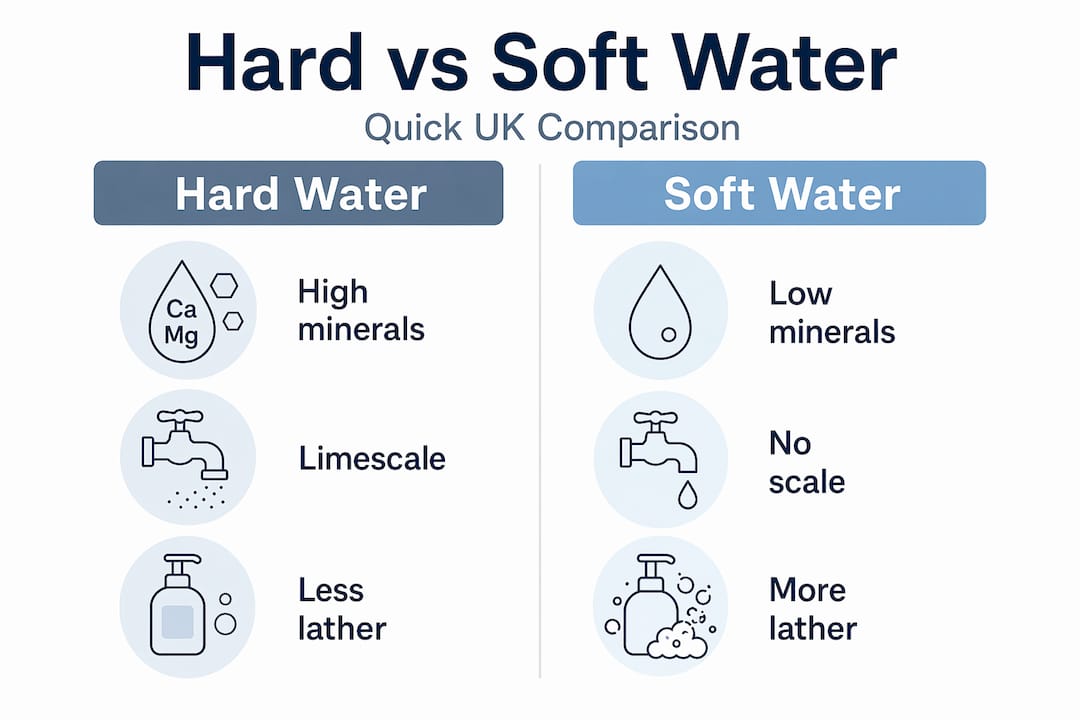
The core difference comes down to mineral content. Hard water contains elevated levels of dissolved calcium and magnesium, picked up as rainwater filters through chalk and limestone rock formations. Soft water, by contrast, has very low concentrations of these minerals. It either falls in areas with granite or other impermeable geology, or it has been treated to remove minerals artificially.
Water hardness is measured in milligrams per litre (mg/L), parts per million (ppm), or grains per gallon (gpg). The hardness categories break down like this:
| Category | mg/L | gpg |
|---|---|---|
| Soft | 0 to 60 | 0 to 3.5 |
| Moderately hard | 60 to 120 | 3.5 to 7.0 |
| Hard | 120 to 180 | 7.0 to 10.5 |
| Very hard | Above 180 | Above 10.5 |
Most of southern England, including London, Oxford, and the Home Counties, sits firmly in the hard to very hard category. Scotland, Wales, and parts of northern England tend to have naturally soft water because of their underlying geology.
It is worth knowing that calcium and magnesium are classified as secondary standards by water quality bodies, meaning they affect aesthetics like taste and staining rather than direct health risk. That does not mean they are harmless to your home, though. Far from it.
Effects of hard water on your home
This is where the hard and soft water comparison really matters for your pocket. Hard water leaves limescale deposits inside pipes, boilers, kettles, washing machines, and dishwashers. That chalky white residue is not just unsightly. It acts as a thermal insulator inside appliances, which forces them to work harder to heat water, driving up energy consumption considerably.
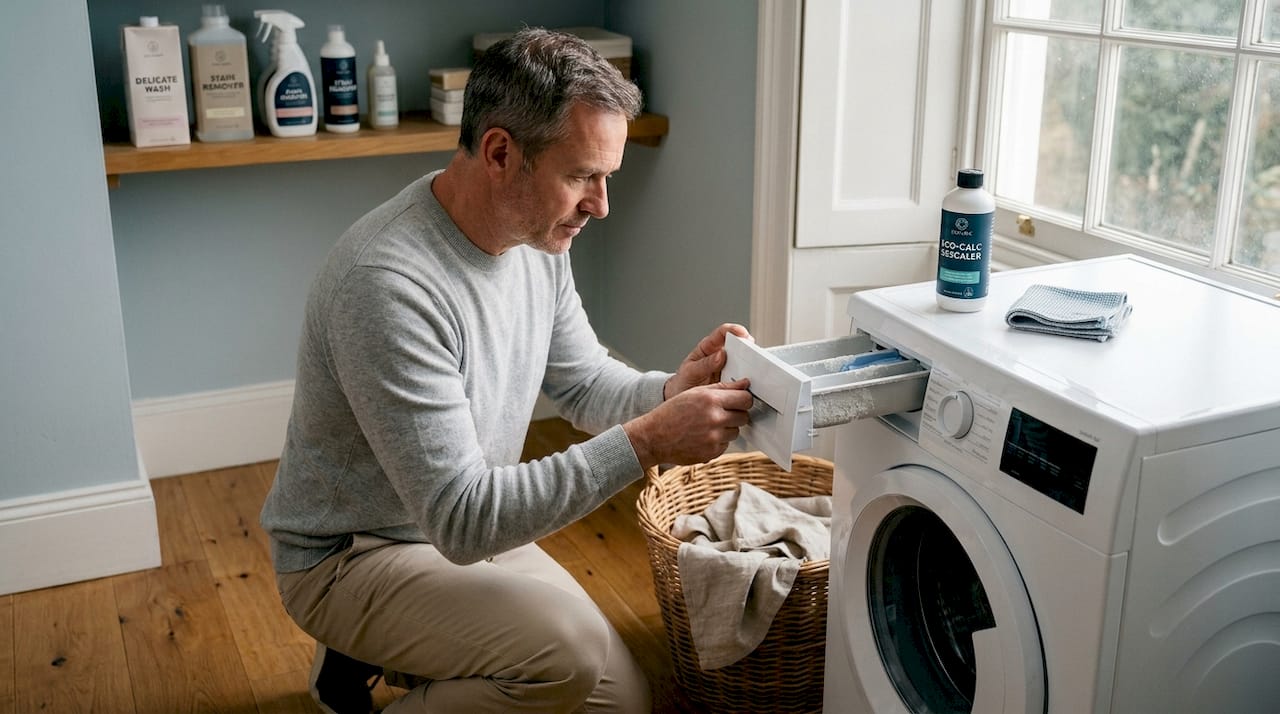
Scale build-up can reduce water heater efficiency by up to 23%, and appliances can last 33 to 50% longer when supplied with soft water. Over a number of years, that is a significant financial difference.
Soft water, on the other hand, produces noticeably better cleaning results. Detergent use drops by up to 70% in soft water areas, and you get more lather from less product. Clothes come out cleaner, dishes dry without spots, and showers require far less scrubbing to stay lime-free.
There is a nuance here that most guides skip over. Very soft water, particularly water that has been aggressively softened, can actually become slightly corrosive to older copper pipework. Without minerals to naturally coat the interior surface of pipes, slightly acidic soft water can leach copper over time. If your home was built before the 1980s and has copper plumbing, this is worth discussing with a qualified engineer before installing a softener.
Here are the most common signs that hard water is affecting your home:
- White or grey scale deposits on taps, showerheads, and kettle elements
- Reduced water flow from showerheads and taps due to scale build-up inside fittings
- Soap and shampoo that refuse to lather properly
- Persistent soap scum on shower screens and bath surfaces
- A boiler or water heater that takes longer to heat up than it used to
Pro Tip: Descale your showerhead every three to four months by soaking it overnight in white vinegar. It costs almost nothing and restores flow noticeably. For advice on keeping your whole plumbing system in good shape, the plumbing maintenance checklist from Your-local-plumber is a useful starting point.
Hard water and your skin and hair
People living in hard water areas often notice that their skin feels tight and dry after washing, and that their hair lacks shine. This is not imaginary. Hard water is linked to skin irritation and dryness, and it is particularly problematic for anyone with eczema or other inflammatory skin conditions. The calcium and magnesium ions disrupt the skin's natural moisture barrier, making it harder for skin to retain hydration.
Soft water produces a notably different sensation. Many people describe a slightly slippery feeling on their skin when bathing in soft water for the first time. That sensation is frequently misread as soap residue being left behind. It is not. The slippery feeling comes from the absence of minerals, which changes how soap interacts with your skin's surface charge. Your skin is actually cleaner, not soapier.
If you live in a hard water area and cannot install a softener right away, some practical adjustments help:
- Use fragrance-free, soap-free cleansers rather than traditional soap bars, which react more aggressively with hard water minerals
- Apply a light moisturiser immediately after bathing, while skin is still slightly damp
- Consider a filtered or softening showerhead attachment as a low-cost intermediate measure
- Use a pH-balanced shampoo designed for hard water areas to reduce scalp build-up
Neither hard nor soft water is inherently dangerous to your health. The distinction matters most for comfort, skin sensitivity, and the long-term performance of your home's plumbing and appliances.
How to soften water: your options
Once you understand the hardness of water in your area, the question becomes whether to do something about it. For homes in hard water zones, a salt-based water softener is the most effective solution available.
These systems work through a process called ion exchange. Hard water passes through a resin bed inside the unit, where calcium and magnesium ions are swapped out for sodium ions. The result is water that is chemically soft and almost entirely free of scale-forming minerals. NSF/ANSI 44 certified softeners remove over 90% of hardness minerals, extend appliance lifespan by up to 30%, and cut cleaning supply expenses by up to 70%.
When choosing a system, consider the following steps:
- Test your water first. A simple hardness test kit costs very little and confirms exactly where your supply sits on the scale before you invest in treatment.
- Match system capacity to household size. Softeners are rated by the volume of water they can treat between regeneration cycles. A family of four in a very hard water area needs a higher-capacity unit than a single-person flat.
- Look for NSF/ANSI 44 certification. This confirms the unit has been independently tested and actually performs as claimed.
- Consider upflow brining systems. Professional-grade softeners using upflow brining regenerate with 30 to 50% less salt and water than traditional downflow systems, which reduces running costs and environmental impact meaningfully over time.
- Factor in the environmental trade-off. Salt discharge from softeners can affect local waterways. Choosing an efficient, correctly sized system minimises this impact without sacrificing performance.
Pro Tip: Do not install a softener on your cold drinking water supply without adding a separate unsoftened drinking tap. Softened water contains slightly elevated sodium levels, which most adults tolerate without issue, but it is not recommended as the sole drinking source for infants or people on sodium-restricted diets.
There are also non-salt alternatives worth knowing about, including electromagnetic descalers and polyphosphate filters. These do not soften water chemically, but they alter the behaviour of minerals to reduce scale adhesion. They tend to suit renters or those in milder hard water areas who want some protection without the commitment of a full softener installation. For guidance on how water pressure and plumbing performance are connected to mineral build-up, it is worth reading up on both issues together.
Consumption habits and plumbing materials should always guide your treatment decision, rather than hardness numbers alone. A number on a test strip does not tell you how old your pipes are, what your skin is like, or how long you plan to stay in the property.
My honest take on water hardness in UK homes
I have worked with enough UK homeowners to know that the conversation around water hardness gets overcomplicated very quickly. People either ignore it entirely or leap straight to the most expensive solution on the market. In my experience, the truth is somewhere in the middle.
Moderate hardness, somewhere in the 100 to 150 mg/L range, is genuinely tolerable for most households with newer appliances and PVC or plastic pipework. I have seen homes in that range function well for years without any treatment at all, provided the occupants descale their appliances regularly and keep an eye on the showerhead.
Where I think homeowners go wrong is in waiting too long. The limescale inside a boiler builds silently. By the time you notice a problem, you are often looking at a repair bill that dwarfs what a decent softener would have cost years earlier. I have also seen the opposite mistake: people installing high-capacity softeners in properties with borderline moderate hardness and older copper pipes, only to create a mild corrosion problem they did not have before.
My genuine advice is this: test your water, understand your plumbing, and consult a qualified local engineer before spending money on treatment. The right solution is always specific to your home, not generic to your postcode.
— Michael
Sort your water hardness with Your-local-plumber
If you have noticed scale on your taps, reduced flow from your shower, or rising energy bills without a clear cause, your water hardness could be the culprit. Your-local-plumber works with homeowners across the UK to diagnose water quality issues, carry out descaling and maintenance, and install NSF-certified water softeners suited to your household's specific needs.

Whether you need a professional water hardness test, advice on the right softener, or a full installation by an experienced engineer, the team at Your-local-plumber is available to help. Transparent pricing, fast response times, and genuine local knowledge. See our work and get in touch to book a consultation at a time that suits you.
FAQ
What is the main difference between hard and soft water?
Hard water contains high levels of dissolved calcium and magnesium picked up from rock formations, while soft water has very low mineral content. The difference affects scale build-up, cleaning efficiency, and how water feels on skin.
Is hard water bad for your health?
Hard water is not classified as a health hazard. Calcium and magnesium are secondary standards under water quality guidelines, meaning they affect taste and aesthetics rather than posing a direct risk. Hard water can, however, aggravate dry skin and eczema.
How do I know if I have hard water?
The most common signs are white limescale on taps and kettles, poor soap lather, and soap scum on shower surfaces. A simple hardness test kit, available from DIY stores, will give you a precise mg/L reading for your supply.
Does a water softener make drinking water safe?
Softened water is safe for most adults to drink, but it contains slightly elevated sodium. A separate unsoftened tap for drinking and cooking is recommended, particularly for households with infants or anyone on a low-sodium diet.
Can soft water damage pipes?
Very soft or aggressively softened water can be mildly corrosive to older copper pipes because the absence of minerals removes a natural protective coating on the pipe interior. This risk is low in modern homes with plastic pipework, but worth assessing before installing a softener in an older property.