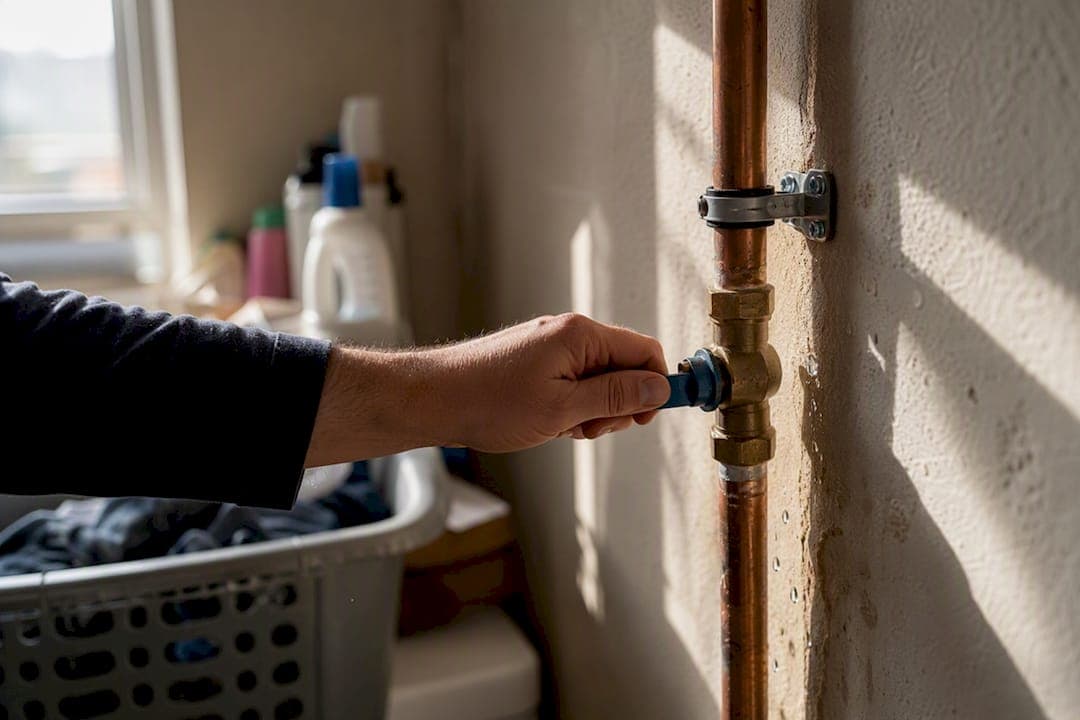
Shut off your internal stop tap immediately, turn off the boiler and central heating, and switch off the electricity if water is anywhere near sockets or appliances. Then open the taps to drain what's left in the system. That order matters: supply first, power second, mess third.
TL;DR:
- Turning off the internal stop tap, the boiler, and opening taps must be done in the correct order to minimize water damage.
- If water reaches electrical components, the power should be switched off immediately, but only if it is safe to do so.
- Limiting water spread with towels and fans while waiting for a plumber helps reduce property damage and speeds up drying.
- Call a WaterSafe registered plumber promptly, asking about their estimated arrival time and insurance, especially if water is still flowing.
- Document damage thoroughly and keep receipts to support insurance claims, as most policies require detailed proof of the incident and repairs.
Table of Contents
- Burst pipe what to do: the first ten minutes
- What if water reaches sockets or appliances?
- Containing the water while help is on the way
- Who to call for a burst pipe, and what to ask them
- Documenting the damage for your insurance claim
- How to stop this happening again
- What happens when we get the call
- Why the standard burst pipe advice undersells the first call
- Get a plumber out fast, with a price you can trust before they arrive
- Sources
Burst pipe what to do: the first ten minutes
You've found water where it shouldn't be. Before you grab a single towel, work through this order. It's the same sequence CIPHE recommends, and it exists because acting out of sequence wastes the minutes that actually limit damage.
- Find and close the internal stop tap. It's usually under the kitchen sink, in an airing cupboard, garage, or cellar. Turn it clockwise until it stops. This is the single most important action you'll take.
- Turn off the boiler and heating system. If you have a solid fuel boiler, don't shut it down abruptly without letting it cool. Isolate any immersion heater at the switch too.
- Open every hot and cold tap in the house. This drains water still sitting in the pipework, which reduces pressure on the burst section. Don't expect an instant stop. Water higher up in the system, especially in loft tanks, can keep trickling for several minutes after you've closed the stop tap.
- If the stop tap won't budge, don't force it repeatedly and risk snapping the mechanism. Thames Water notes that many homes have a fallback: the external stop tap, typically under a small cover near the property boundary. It often needs a specific key to turn, and Wessex Water points out it can take several full turns and a few minutes before flow visibly slows, so don't assume it's failed just because water is still running. If you can't locate or shift either, ring your water company's emergency line.
Once the tap is off and the system's draining, leave the heating switched off until a plumber has confirmed nothing's still under pressure or at risk of refreezing.
What if water reaches sockets or appliances?
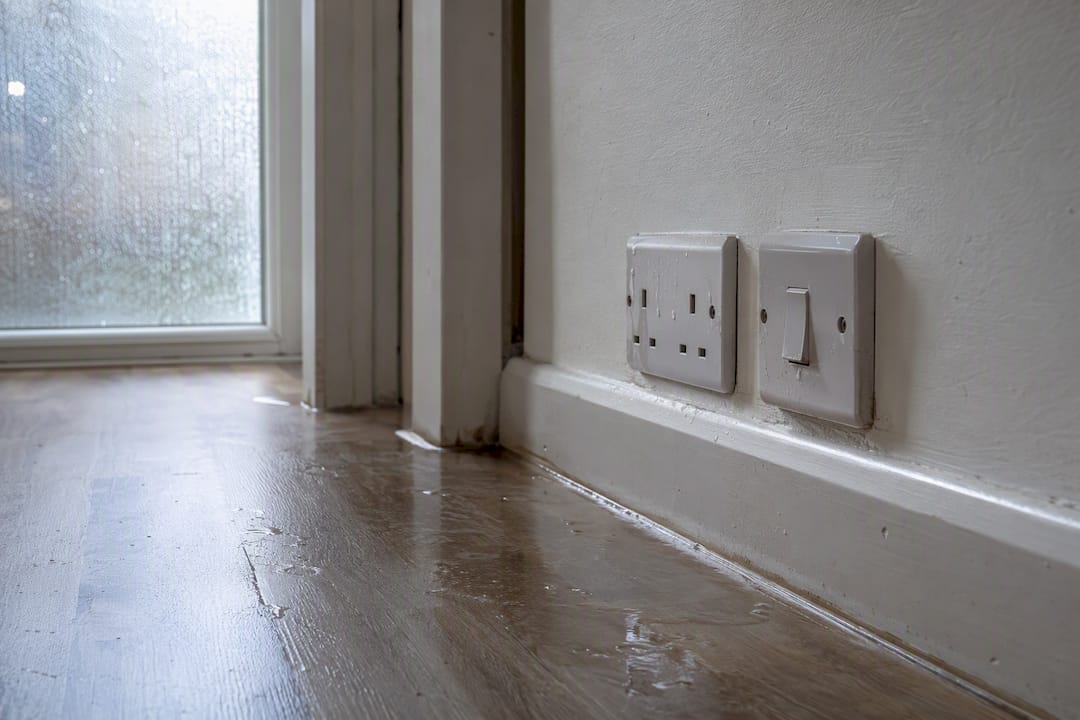
Water and electricity are a genuinely dangerous combination, and this is the one step where you shouldn't hesitate. If water is pooling near sockets, switches, or appliances, switch off the electricity at your consumer unit (the fuse box), but never while you're standing in water yourself. If reaching it means wading through a puddle, don't. Call an electrician or, if there's any doubt about immediate danger, call the fire service. Property damage is recoverable. People aren't worth the risk.
Containing the water while help is on the way
With the supply isolated, the next job is limiting how far the water spreads and how much it soaks in. This is where towels, buckets, and a bit of furniture shuffling genuinely pay off.
- Soak up standing water with old towels, mops, and buckets, wringing them out regularly rather than letting them sit sodden.
- Run a dehumidifier or a couple of fans in the room if you have them; it speeds up drying and reduces the window for mould to take hold.
- Move furniture, rugs, and valuables to a dry room, and lift anything left behind onto blocks or books to keep it off wet flooring.
- Roll back carpets where you can, rather than leaving them flat against soaked underlay.
- Use towels or a plastic sheet and clamp to slow a small, steady drip while you wait, but treat this as a stopgap, not a fix.
Pro Tip: Don't try to patch a burst copper pipe yourself with tape or a compression fitting bought that morning. Under mains pressure, an amateur seal is more likely to fail again once the water's back on, sometimes worse than the first time.
Who to call for a burst pipe, and what to ask them
Once the water's under control, you need a plumber, not a guess. Call one immediately if water's still flowing, valuables are at risk, or you couldn't isolate the supply at all. If you've managed to stop the flow and the situation's stable, it's still worth booking someone the same day rather than leaving pipework unrepaired.
Look for a contractor listed on the WaterSafe register, which confirms the tradesperson meets recognised competency standards for work on the water supply. When you call, ask:
- How soon can someone realistically get here?
- Is there anything you should do in the meantime?
- Are they insured, and will they give you an itemised invoice for your insurance claim?
A competent plumber will typically isolate the affected section, and may use a temporary clamp or freeze the pipe locally to stop the leak without draining your whole system, before assessing what a permanent repair needs. Our guide to emergency pipe repairs walks through what that visit usually involves.
Documenting the damage for your insurance claim
Insurers move faster when you hand them a clear paper trail. Photograph and film every affected area as soon as it's safe to do so, and note the date and rough time on each shot. Keep a simple written log: when you found the leak, when you shut off the water, when the plumber arrived.
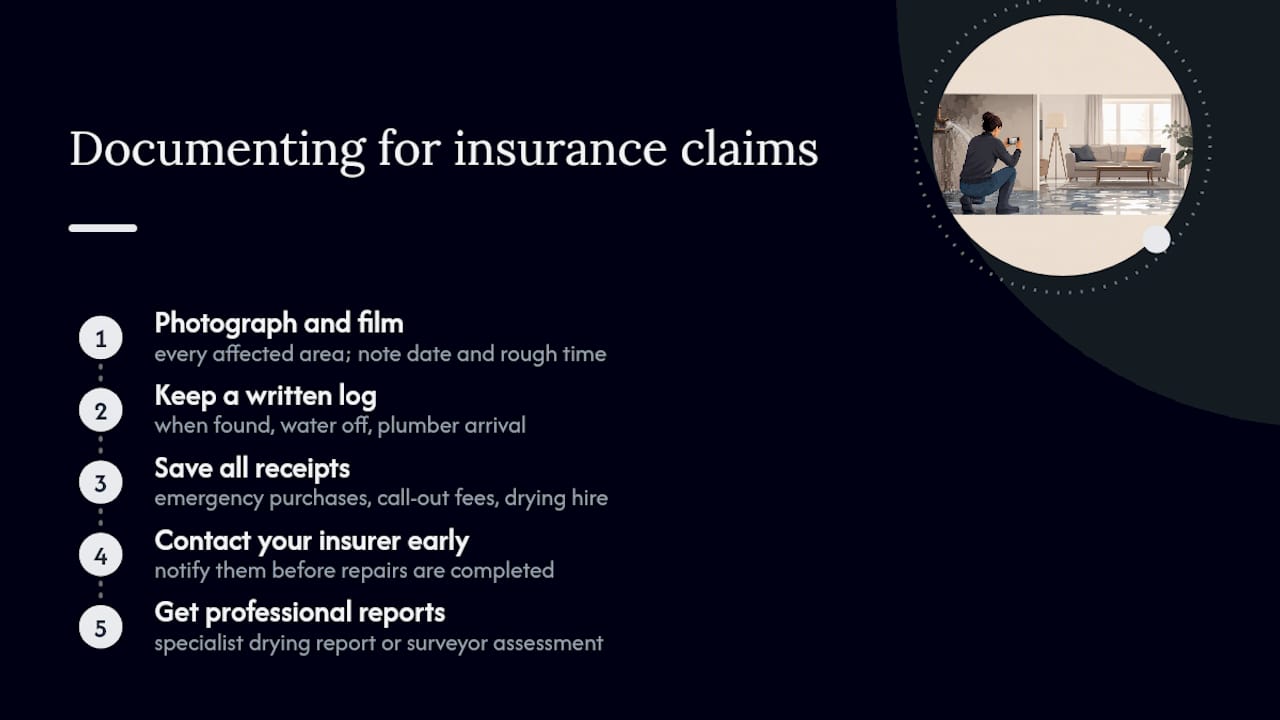
Hold onto every receipt: emergency purchases, the plumber's call-out fee, any professional drying equipment. Contact your insurer early rather than waiting until repairs are finished. Most home policies cover sudden, accidental damage like a burst pipe, but they're far less generous about damage from a leak that's been dripping unnoticed for months, so the timeline you document matters. For larger claims, a specialist drying report or a surveyor's assessment strengthens your case considerably. Our step-by-step guide to burst pipe insurance claims covers what most insurers expect to see.
How to stop this happening again
A burst pipe rarely comes out of nowhere. Cold snaps, ageing pipework, and stop taps nobody's touched in a decade are the usual culprits, and most of it is preventable with an afternoon's work.
- Insulate exposed pipework in lofts, garages, and against external walls with foam lagging.
- On genuinely cold nights, leave a slow trickle running from an outside tap, or keep your heating on a low constant setting rather than switching it off entirely.
- Test your internal stop tap every few months so you're not fighting a seized valve mid-emergency; consider fitting an automatic isolation device like a SureStop for extra protection.
- Fix small drips and weeping joints as soon as you spot them rather than waiting for them to fail properly.
- Book an annual plumbing check, particularly before winter sets in.
The Met Office is also clear on what not to do if a pipe's frozen but hasn't burst yet: never use a naked flame to thaw it. Gentle warm air or hot water bottles wrapped round the pipe are the safer route. For more seasonal detail, our winter plumbing tips cover lagging and trickle-flow setups in more depth, and this guide to leaking taps is a handy companion if you're already getting familiar with your stop tap and isolation valves.
What happens when we get the call
On an emergency callout, our engineers isolate the supply, make the area safe, and give you a clear, priced recommendation for the permanent repair, no guessing at costs after the fact. Most jobs follow the same path afterwards: drying out the affected space, completing the repair, and providing the paperwork your insurer will ask for. That's the sequence our emergency pipe repair guide walks through in more detail.
Why the standard burst pipe advice undersells the first call
Most guidance on burst pipes stops at "isolate the water and call a plumber," and technically that's correct. What it skips is that the phone call itself is where homeowners lose time. People ring round for a quote, hang up, ring the next number, and lose fifteen minutes comparing prices while water's still finding its way into a ceiling void.
The stop tap and the electrics come first, always. But the second priority isn't finding the cheapest plumber, it's finding one who can actually turn up and who's listed on the WaterSafe register, because that accreditation tells you someone else has already checked their competency so you don't have to gamble on it mid-crisis. Ask about arrival time and insurance documentation on that first call, not after they've left.
The other gap in conventional advice is prevention gets treated as a separate, optional topic for another day. It isn't. A stop tap you've never tested is a stop tap that might fail you exactly when you need it most.
— Michael
Get a plumber out fast, with a price you can trust before they arrive
Your-Local-Plumber.co.uk is built for exactly the situation this article covers: water spreading while you're deciding who to call. We give you a fixed price before work starts, so you're not signing up to an open-ended bill on top of an already stressful day.

Have your postcode, a rough idea of where the leak is, and whether you've managed to isolate the supply ready when you call, it helps us get an engineer to you faster and better prepared. Our team works around the clock, and every job comes with transparent, itemised pricing you can hand straight to your insurer. If you're dealing with a burst pipe right now, book an emergency callout and we'll talk you through next steps on the phone.
Sources
- How to deal with a burst pipe — CIPHE
- What to do if you have a frozen or burst pipe — Met Office
- What should I do if a pipe bursts? — WaterSafe
- Frozen or burst pipes — Thames Water