TL;DR:
- Recognize signs of pipe emergencies like flooding, damp patches, and low water pressure.
- Use proper tools and materials for temporary repairs on small leaks before calling professionals.
- Call a plumber immediately for large bursts, inaccessible pipes, or if temporary fixes fail.
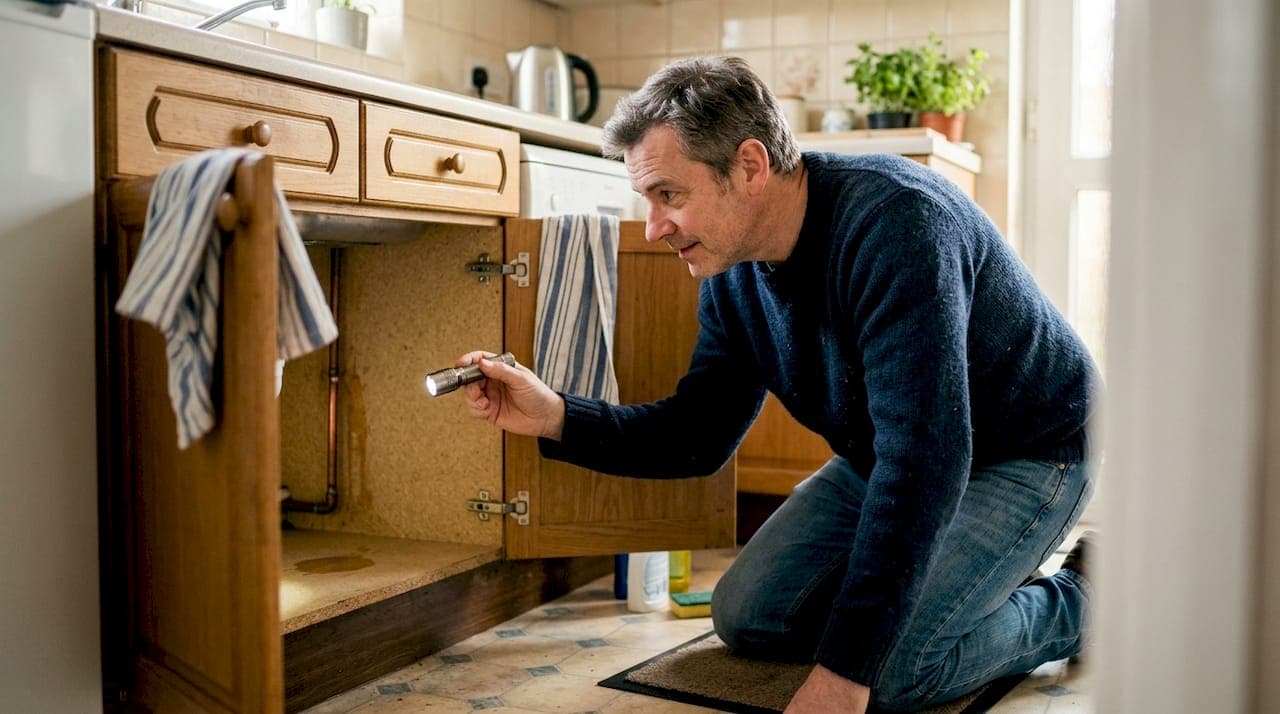
Water spreading fast across your kitchen floor from a burst pipe is one of the most alarming things a homeowner can face. Within minutes, floors warp, walls soak through, and the damage bill climbs. Most people freeze, grab a towel, and hope for the best. But the right sequence of actions in those first few minutes can mean the difference between a minor repair and a costly insurance claim. This guide walks you through how to recognise a pipe emergency, gather the right tools, apply a safe temporary fix, and know exactly when to hand over to a professional.
Table of Contents
- Recognising and assessing pipe emergencies
- Essential tools, materials and preparation
- Step-by-step emergency pipe repair process
- Permanent fixes, verification and when to call a professional
- Why experience matters: The truth about emergency pipe repairs
- Fast, reliable help when you need it most
- Frequently asked questions
Key Takeaways
| Point | Details |
|---|---|
| Act quickly and safely | Immediate action minimises damage and keeps your household safe in a pipe emergency. |
| Prepare the essentials | Keep an emergency kit and know your pipe types for faster, effective repairs. |
| Limitations of DIY | Temporary repairs work for minor leaks but always seek professional fixes for long-term safety. |
| Know when to call an expert | Contact a professional for gas leaks, large bursts, or persistent problems. |
Recognising and assessing pipe emergencies
Not every drip is a disaster, but some leaks escalate faster than you might expect. Knowing what you are dealing with before you act is the single most important step in managing an emergency pipe situation.
The most obvious signs of a pipe emergency include:
- Gushing or spraying water from a visible pipe joint or crack
- Damp patches spreading across walls or ceilings with no obvious source
- Dripping ceilings, especially after heavy rain or if a bathroom sits above
- Sudden loss of water pressure throughout the house
- Discoloured water or a sulphurous smell suggesting pipe corrosion or contamination
Once you spot any of these, your first job is to assess severity. A small drip from a compression fitting is very different from a split copper pipe under pressure. Large bursts or rising water must take priority over minor seeps. If water is spreading across the floor, you have seconds, not minutes, to act.
Locating the exact source matters. Trace water back to its highest point, since water travels along joists and pipes before dripping where you notice it. Listen carefully for the sound of running water inside walls. Check nearby isolation valves and look for obvious joint failures. Knowing where your emergency plumbing signs are coming from helps you isolate the right section quickly.
Before you touch anything, photograph the damage. Insurance companies expect documented evidence, and a quick series of photos on your phone takes thirty seconds but can save you thousands later.
Safety first: If water is near any electrical sockets, fuse boards, or appliances, do not enter the area. Turn off electricity at the consumer unit before approaching the leak. Water and live electrics are a life-threatening combination.
Also be aware of hidden risks. A burst behind a wall may not be visible until significant damage has already occurred. If you cannot locate the source but pressure has dropped sharply, consider calling a professional immediately. Knowing when to call a plumber rather than attempting to diagnose a hidden fault yourself is a skill in its own right.
As a general rule, DIY temporary fixes are effective for pinholes and small splits but will fail under full pressure or with larger bursts. Always plan to follow any temporary measure with a permanent professional repair.
Essential tools, materials and preparation
Once you have assessed the situation, smart preparation saves time and prevents further damage. Rushing in without the right materials often makes things worse.
Here is what a well-stocked home emergency kit should include:
- Pipe repair tape (self-amalgamating silicone tape for fast sealing)
- Pipe clamps or repair clamps sized to your pipe diameter
- Push-fit couplers for plastic pipe emergencies
- Buckets and old towels to contain and absorb water
- A multi-tool or pipe cutter for cutting out damaged sections
- A torch for working in dark cupboards or under floors
- Rubber gloves to protect your hands
- Isolation valve key if your system uses them
Material type matters enormously. Copper pipes require compression fittings or solder couplings. Plastic pipes such as PEX, PVC, or CPVC use push-to-connect fittings or solvent cement. Using the wrong fitting for your pipe type will not hold, and a failed repair under pressure can cause more damage than the original leak. Check your emergency plumbing essentials before you buy anything.
As noted by plumbing specialists, permanent repairs require cutting out the damaged section and replacing it with couplings or fittings specific to the pipe type. This is not something you can improvise with the wrong materials.
| Tool or material | Suitable pipe type | Purpose |
|---|---|---|
| Self-amalgamating tape | Copper, plastic | Temporary seal on small splits |
| Pipe repair clamp | Copper, steel | Temporary hold on cracks |
| Push-fit coupler | PEX, PVC, CPVC | Fast temporary or permanent join |
| Compression coupling | Copper | Permanent repair after cutting |
| Solvent cement | PVC, CPVC | Permanent bonded joint |
| Pipe cutter | Copper, plastic | Clean cut for replacement section |
Before you start any repair, move valuables away from the affected area and protect flooring with towels or plastic sheeting. Switch off electricity in the affected zone if there is any risk of water contact with wiring or sockets.
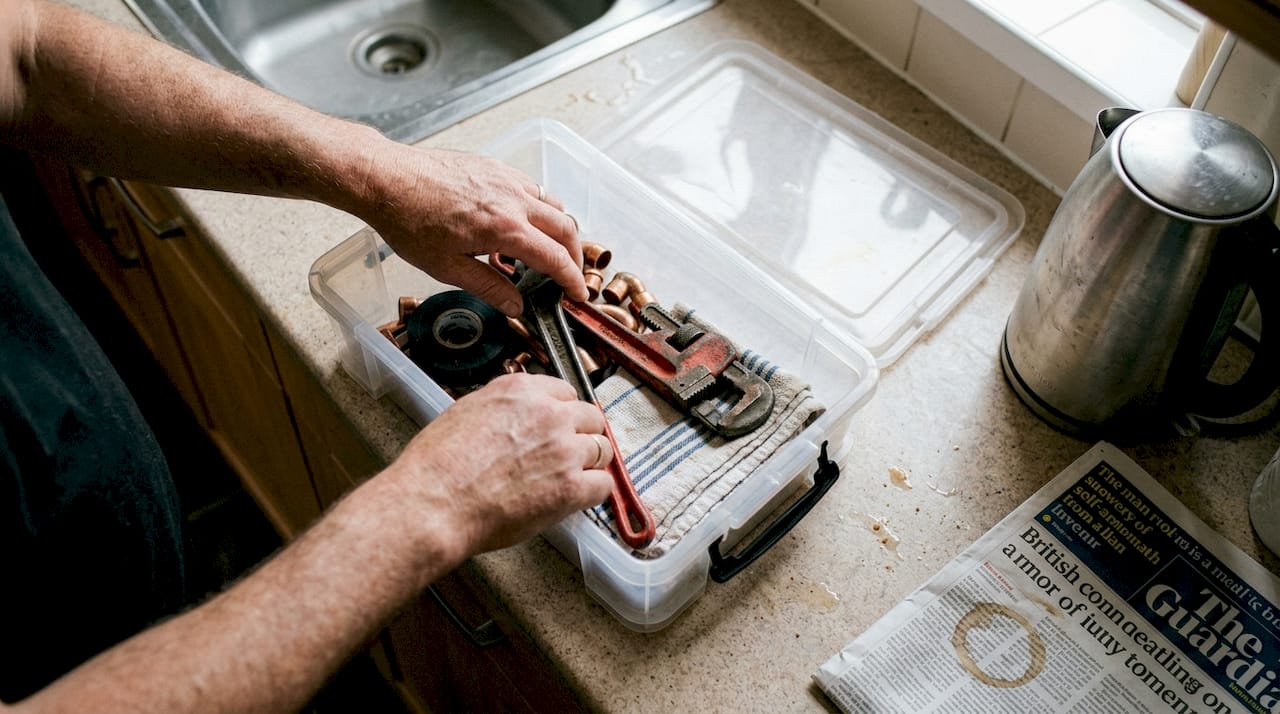
Pro Tip: Pre-assemble your emergency kit now and store it somewhere accessible, such as under the kitchen sink. When water is spreading across the floor, searching for tape in three different cupboards wastes precious minutes.
Step-by-step emergency pipe repair process
With everything prepared, you are now ready to tackle the repair itself. Follow this sequence carefully and do not skip steps.
- Shut off the water main. Your main stopcock is usually under the kitchen sink or where the supply enters the property. Turn it clockwise to close. If you have an isolation valve on the affected pipe, close that too.
- Open taps throughout the house. This drains water from the system and reduces pressure in the damaged pipe, making the repair safer and easier.
- Mop up excess water. Use towels and buckets to remove standing water before you begin. This protects your flooring and gives you a clear workspace.
- Apply a temporary fix. For a pinhole or small split, wrap self-amalgamating tape tightly around the damaged area, overlapping each layer by half. For a larger crack, fit a pipe repair clamp over the site and tighten the bolts evenly. For plastic pipes, a push-fit coupler can bridge a small gap after cutting out the damaged section.
- Place a bucket under the repair site and keep towels nearby while you test the fix.
- Slowly restore water pressure by opening the stopcock slightly. Watch the repair carefully for any seepage.
- Call a professional for a permanent fix as soon as possible.
Important: If you suspect the leak involves a gas line, or if the pipe is in a wall cavity, under a concrete floor, or otherwise inaccessible, stop immediately and call an emergency plumber. Do not attempt to work near gas pipes under any circumstances.
For a structured overview of what happens next, the emergency workflow steps followed by local engineers can help you understand the professional process. If you are in a neighbouring area, fast homeowner solutions follow the same core principles.
As plumbing specialists confirm, temporary DIY repairs work for small splits but are not a substitute for a permanent fix, particularly once full system pressure is restored.
Pro Tip: Label your internal stopcock with a small tag now. In an emergency, every second counts, and a clearly labelled valve removes one source of panic entirely.
Permanent fixes, verification and when to call a professional
No emergency repair is complete without checking your work and knowing when it is time for professional help.
A temporary fix buys you time. It does not solve the underlying problem. Here is how temporary and permanent solutions compare:
| Method | Lifespan | Pressure rating | Best use |
|---|---|---|---|
| Repair tape | Hours to days | Low | Pinholes, minor splits |
| Pipe clamp | Days to weeks | Medium | Cracks on accessible pipes |
| Push-fit coupler | Months (temporary) | Medium | Plastic pipe emergencies |
| Compression coupling | Years | High | Copper pipe permanent repair |
| Solvent cement joint | Permanent | High | PVC and CPVC permanent repair |
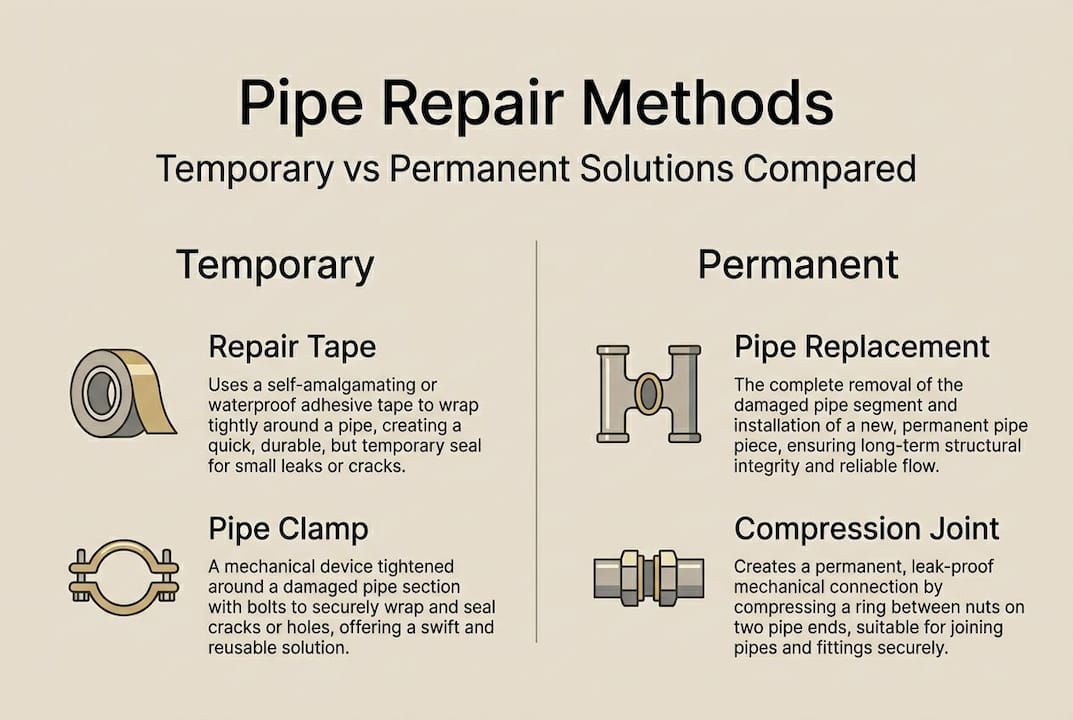
For a proper permanent repair, you need to cut out the damaged section cleanly, then fit the correct coupling for your pipe type. According to plumbing guidance, permanent repairs require copper pipes to use compression or solder couplings, PEX to use push-to-connect or crimp fittings, and PVC or CPVC to use solvent cement. After fitting, always pressure test by running water at full flow and inspecting every connection.
Knowing the limits of DIY solutions is just as important as knowing the steps. Call an emergency plumber when:
- The burst is large or the pipe has split along its length
- Water is coming from a gas supply line
- The damaged section is inside a wall, under a floor, or otherwise inaccessible
- Your temporary repair fails or begins to weep again
- You are unsure of the pipe material or correct fitting type
Professional intervention is not just about skill. It is about safety, compliance, and protecting your home long-term. Understanding the role of a plumber in an emergency context makes it easier to know when you genuinely need one.
Once you believe the repair is holding, run through this verification checklist:
- Watch the repair site for at least five minutes at full pressure
- Listen for any hissing or dripping sounds inside walls or under floors
- Feel around all connections for moisture
- Check again after an hour, and again the following morning
Why experience matters: The truth about emergency pipe repairs
Most guides focus on the mechanics of repair and leave out the harder truth: even a well-prepared homeowner working from a solid checklist can miss what a trained plumber spots in thirty seconds. We have seen it repeatedly. A homeowner successfully patches a pinhole, feels confident, and misses the corroded section two feet further along the same pipe that will fail within weeks.
There is also the question of regulations. Certain plumbing work in the UK must comply with Building Regulations and Water Regulations. An incorrectly fitted repair on a supply pipe could, in theory, affect your insurance cover or create a liability if it causes damage to a neighbouring property.
Local knowledge matters too. Plumbers working across Reading and the surrounding areas understand the age and type of pipework common in local housing stock, from Victorian copper runs in older terraces to modern plastic systems in newer builds. That context shapes every decision. The essential plumber roles in a community go well beyond fixing what is broken. They include identifying what is about to break.
The smartest outcome in any pipe emergency combines your quick, calm action in the first few minutes with professional assessment as soon as possible. Neither replaces the other.
Fast, reliable help when you need it most
If you are dealing with a pipe emergency right now, or you want to be ready before one strikes, professional support is closer than you think.

At Your Local Plumber, our insured, experienced engineers cover Reading and the surrounding areas around the clock. We respond fast, communicate clearly on pricing before we start, and carry the right materials to handle everything from a minor leak to a major burst. Whether you need professional plumbing services for a planned repair or an emergency response service right now, we are ready to help. Book online or call us directly and we will be with you as quickly as possible.
Frequently asked questions
How do I stop water flow from a burst pipe?
Turn off the main stopcock immediately and open taps throughout the house to drain water from the system and reduce pressure.
When is it essential to call a professional plumber during a pipe emergency?
Call a professional for gas leaks, large bursts, inaccessible pipe locations, or when DIY repairs fail. As specialist guidance confirms, professionals are recommended for inaccessible areas, systemic issues, or anything involving gas.
Are temporary pipe repairs safe?
Temporary fixes work well for pinholes or small splits, but as DIY temporaries confirm, they are not suitable for high-pressure situations or large bursts and must always be followed by a permanent repair.
What materials do I need on hand for emergency pipe repairs?
Keep pipe repair tape, clamps, towels, a bucket, a torch, and rubber gloves in your home emergency kit so you are ready to act immediately.
How can I check my repair has worked?
Run water at full pressure and inspect the repair site for at least five minutes, then check again after an hour, watching, listening, and feeling all connections for any sign of moisture.