TL;DR:
- Low water pressure can be caused by external network issues or internal plumbing faults.
- Using a pressure gauge helps determine if the problem is home or supply-side related.
- Professional inspection is recommended for complex issues like failed regulators or hidden leaks.
You step into the shower expecting a satisfying blast of water, and instead you get a half-hearted trickle. Or you run a bath and watch the taps fill it at a pace that tests your patience. Low water pressure is one of those household problems that starts as a minor annoyance and quickly becomes genuinely disruptive. For homeowners in Reading, Newbury, and across Berkshire, the cause might be sitting right inside your home, or it could stretch all the way back to a burst main several streets away. This guide walks you through how to spot the difference, what you can do yourself, and when it is time to call in a professional.
Table of Contents
- Understanding water pressure problems in your area
- Spotting the source: is it your home or the wider network?
- Common causes and fixes for low water pressure
- Regulations, rights, and when to seek expert help
- What most people get wrong about fixing low water pressure
- Find reliable help for water pressure issues
- Frequently asked questions
Key Takeaways
| Point | Details |
|---|---|
| Pinpoint the cause | Low pressure often results from either regional supply issues or in-home plumbing faults. |
| Test before you fix | Use a pressure gauge and basic checks before attempting repairs or calling for help. |
| Know your rights | Water companies must maintain a legal minimum pressure, and you have options if service drops. |
| Act quickly on wider issues | If neighbours are affected, contact the water supplier to speed up resolution. |
| Professional help pays | Plumbing experts can quickly diagnose complex issues that DIY might miss. |
Understanding water pressure problems in your area
Water pressure problems are rarely random. They usually have a clear cause, and understanding where your supply comes from is the first step to working out why it has dropped.
In the UK, mains water is delivered to homes through a network of underground pipes managed by regional suppliers. In Reading and Newbury, that means Thames Water. Pressure is generated at treatment works and maintained across the network, but by the time it reaches your tap, it has travelled through many kilometres of pipework, some of it quite old.
Ageing infrastructure is a genuine concern across Berkshire. Many of the distribution pipes running beneath town centres and residential streets were laid decades ago, and they are increasingly prone to failure. When a section bursts, engineers often need to reduce pressure across a wider area to carry out repairs safely. This affects entire postcodes at once, sometimes with little warning to residents. For example, a 2025 pipe burst in Thatcham caused significant low or no pressure across multiple RG postcodes, leaving hundreds of households without adequate supply for an extended period.
| Cause of pressure drop | Typical area affected | Duration |
|---|---|---|
| Burst main or repair work | Multiple streets or postcodes | Hours to several days |
| Deliberate supplier reduction | Entire zones | Weeks or longer |
| Home-side fault (valve, regulator) | Single property | Ongoing until fixed |
| Limescale or blockage | One or several fixtures | Progressive worsening |
It is also worth knowing that Thames Water and other suppliers sometimes make deliberate reductions to network pressure, not as a result of an emergency, but as a preventative measure to reduce strain on older pipes.
"Pressure issues in the Reading and Newbury areas can often be traced directly to maintenance activity or network faults managed by Thames Water. Homeowners should always check supplier notifications before assuming the fault is within their property."
Being connected to informed plumbers and emergency water supply professionals matters most during these events. Knowing the difference between an external supply problem and an internal fault can save you hours of unnecessary investigation. Resources covering emergency plumbing essentials are particularly useful if your pressure drops suddenly and without warning.
Spotting the source: is it your home or the wider network?
Before you call anyone or reach for a spanner, you need to work out whether the problem is coming from the street or from within your own walls. The symptoms are often quite different, and mixing them up leads to wasted time and money.
Signs the problem is external (supplier network):
- Multiple taps and appliances all have reduced flow at the same time
- Neighbours report the same issue
- Thames Water's website or app shows planned or unplanned works nearby
- The problem started suddenly rather than gradually
Signs the problem is internal (your plumbing):
- Only one tap or one room is affected
- Pressure has dropped slowly over weeks or months
- Other appliances such as the boiler or dishwasher still work normally
- You have recently had work done on your plumbing
The most reliable way to get a clear answer is to use a pressure gauge. Attach it to an outside tap or a tap near where the supply enters your home. Turn off all other outlets and take a reading. This is known as static pressure (pressure when nothing is running). Then turn on a tap or two and read again. This is dynamic pressure (pressure under normal use). In the UK, a healthy static reading sits between 1 and 3.5 bar. Anything below 1 bar is considered low.
Pro Tip: Check with a neighbour before doing any testing. If their pressure is also low, the problem almost certainly lies with the supply network and not your home's plumbing. This single check can save you hours of unnecessary investigation.
| Test type | What it tells you | Normal range |
|---|---|---|
| Static pressure (no outlets running) | Incoming supply pressure | 1.0 to 3.5 bar |
| Dynamic pressure (outlets open) | Pressure under real-world use | 0.7 bar minimum |
| Single fixture test | Whether the issue is localised | Consistent with others |
Berkshire falls within one of the harder water regions in England, meaning your water carries a higher mineral content. Over time, calcium and magnesium deposits build up inside pipes, taps, and showerheads. This is limescale build-up and it is one of the most commonly overlooked reasons for gradual pressure loss in this area. Understanding plumbing terminology like static and dynamic pressure makes conversations with engineers far easier and more productive. Thorough leak detection should also be on your radar if pressure drops are unexplained.
Common causes and fixes for low water pressure
Now that you know how to identify where the problem originates, here is a breakdown of the most common causes and what you can actually do about them.
1. Blocked or clogged aerators
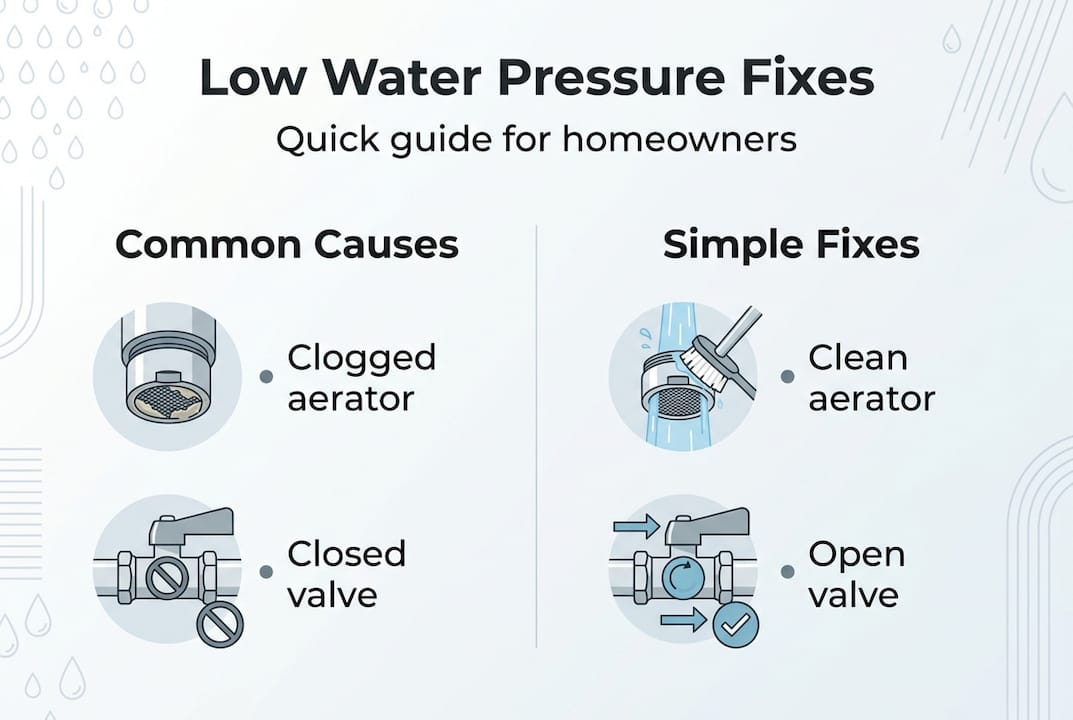
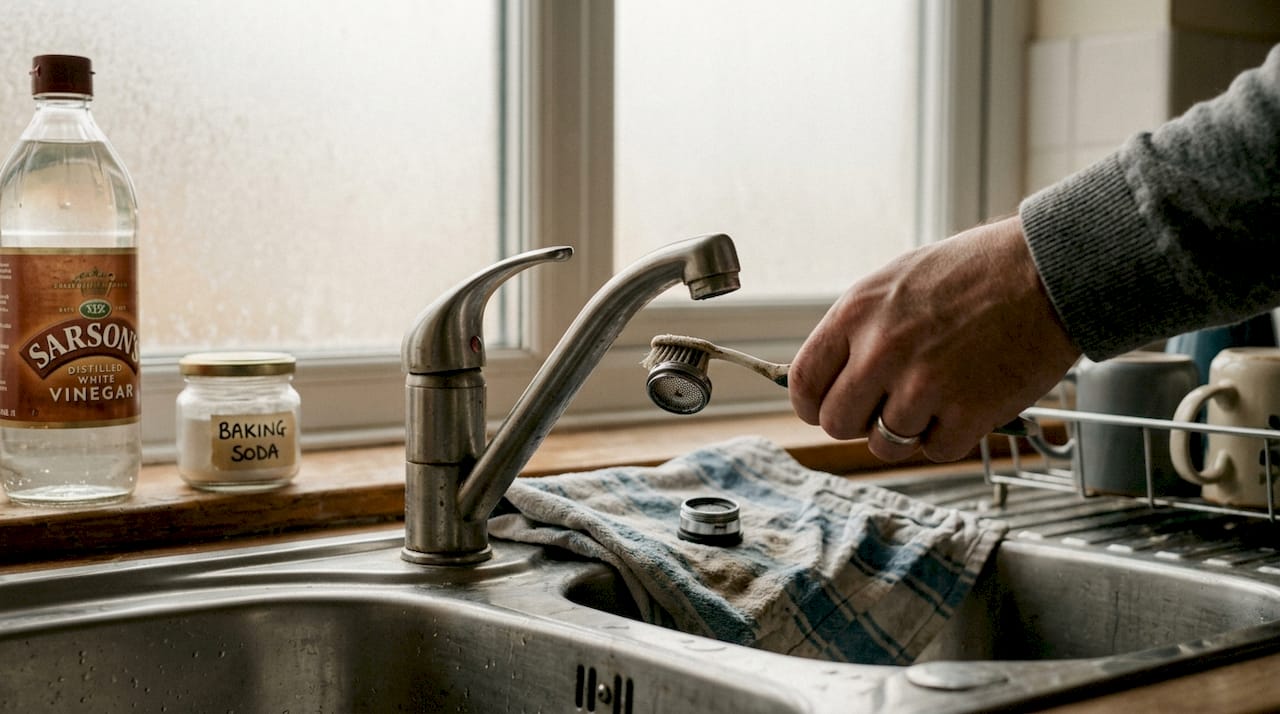
Aerators are the small mesh screens fitted to the end of your taps. They mix air into the water stream for a smoother flow, but they are also prime collectors of limescale and debris. A blocked aerator is one of the simplest fixes in plumbing. Unscrew it, soak it in white vinegar for 30 minutes, rinse thoroughly, and refit it. You may notice an instant improvement.
2. Partially closed stop valves
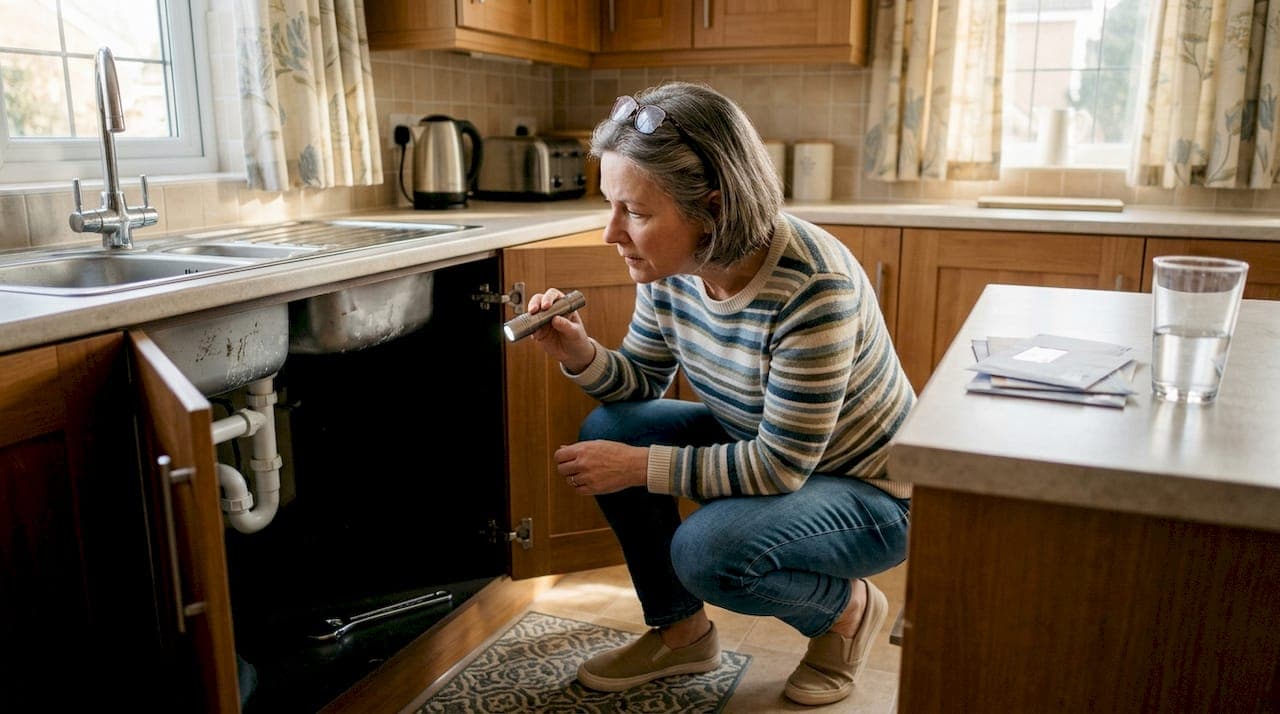
Your home has at least two main stop valves: one where the supply enters the building (usually under the kitchen sink or near the front wall) and one outside in the pavement or garden (controlled by your supplier). If either of these has been partially closed following maintenance and not fully reopened, your pressure will suffer throughout the property. Turn the internal valve fully counter-clockwise and check whether pressure improves.
3. A failing pressure regulator
Some homes, particularly those in areas where mains pressure runs high, have a pressure reducing valve (PRV) fitted. This device keeps pressure at a safe level for your pipes and appliances. When a PRV fails, it can reduce pressure far below what it should, or in some cases drive it too high. Replacing or adjusting a PRV is a job for a qualified engineer.
4. Deliberate supplier pressure reductions
Thames Water has, in certain situations, lowered pressure deliberately to reduce the risk of burst mains on ageing pipe networks. While they remain within the regulatory minimum, these reductions can be genuinely frustrating for residents who rely on consistent pressure for showers, washing machines, and garden irrigation. If this is the cause, your options include contacting Thames Water directly to register a complaint, or investing in a home booster pump to compensate.
5. Limescale build-up in pipes
As mentioned earlier, hard water areas like Berkshire experience significant limescale accumulation inside pipework over time. This effectively narrows the internal diameter of your pipes, reducing flow rates progressively. Chemical descalers, magnetic conditioners, or water softeners can slow or reverse this process. For severe cases, a plumber may recommend pipe replacement.
6. Hidden leaks
A drop in pressure can sometimes signal a leak somewhere in your plumbing system. Water escaping through a cracked pipe or a failing joint reduces the volume available at your outlets. A useful check is to turn off everything in the house and watch your water meter. If it keeps ticking, you likely have a leak. Reviewing a maintenance checklist regularly helps catch these problems before they escalate.
Statistic: Thames Water serves around 15 million customers across London and the Thames Valley. With infrastructure spanning thousands of kilometres, even small lapses in maintenance can cascade into pressure issues for thousands of homes simultaneously.
Pro Tip: If you suspect a leak but cannot locate it visually, a qualified engineer can use acoustic detection tools to pinpoint the exact location without digging up your floors or garden. This technology has transformed leak detection in the past decade.
Regulations, rights, and when to seek expert help
Many homeowners do not realise they have legal rights regarding water pressure. In England and Wales, water companies are required under the Water Industry Act 1991 to maintain a minimum mains pressure of 10 metres head (roughly 1 bar) at the boundary of your property. Below this, it is classified as an inadequate supply.
If your pressure falls below this level consistently, you can:
- Report it formally to Thames Water and request an investigation
- Ask for compensation if the problem is persistent and caused by a network fault
- Request a site visit from a Thames Water engineer to measure the pressure at your boundary
- Escalate to the Consumer Council for Water (CCWater) if you feel your complaint has not been handled adequately
- Contact Ofwat, the water industry regulator, if the problem is systemic and unresolved
It is important to understand that Thames Water's deliberate pressure reductions may technically sit above the legal minimum while still causing real disruption. In these cases, the regulatory floor does not protect you from inconvenience, only from complete inadequacy. Knowing the relevant plumbing regulations helps you hold both your supplier and any plumber you hire to the right standard.
"If your pressure consistently reads below 1 bar at the property boundary, Thames Water is obligated to investigate and resolve the issue. Document your readings with dates and times to support any formal complaint."
When should you bring in a professional plumber rather than tackling things yourself? Here are the clearest indicators:
- Pressure is low throughout the entire property with no supplier fault reported
- You have already checked stop valves, aerators, and the pressure gauge gives a low reading
- You suspect a PRV fault or a hidden leak
- The problem has developed gradually over several months
- You have recently moved into the property and pressure has always seemed inadequate
Qualified plumbers can diagnose the source quickly using the right tools, carry out pressure tests at multiple points, and identify whether the solution is a component repair, a pipe replacement, or a conversation with Thames Water on your behalf.
What most people get wrong about fixing low water pressure
Here is something we see regularly in the field: homeowners spend money on new showerheads, taps, and even boiler upgrades, only to find the pressure problem remains exactly as it was. The fault was never the fixture. It was somewhere else entirely.
The single biggest mistake people make is treating low pressure as a fixture problem rather than a system problem. Replacing a showerhead feels logical because the shower is where you notice the issue most. But the showerhead is just the messenger. If the pressure upstream is inadequate, a new fitting will not help.
The second most common error is ignoring the stop valve. We have attended properties where the entire issue came down to a valve that had been turned during a previous repair job and never fully reopened. It takes less than a minute to check, yet many homeowners overlook it completely.
There is also a widespread reluctance to test actual pressure numbers. Most people describe their problem in subjective terms: the shower feels weaker, or the bath takes longer to fill. This is useful context, but it does not replace a real measurement. A pressure gauge costs very little and removes all the guesswork from the diagnosis.
Understanding the role of a plumber goes further than most people expect. An experienced engineer does not just fix what you point to. They trace the fault back to its origin. That systematic approach is what separates a lasting fix from a temporary one. In our experience, the most satisfying outcomes come when a homeowner and an engineer work through the diagnosis together rather than guessing from first impressions.
DIY fixes have their place. Cleaning an aerator or reopening a stop valve is well within most people's ability. But anything involving pressure regulators, internal pipework, or suspected leaks warrants a professional assessment. The risk of making things worse, or missing a more serious underlying issue, is real.
Find reliable help for water pressure issues
If you have worked through the checks in this guide and you are still dealing with low pressure, or if the problem came on suddenly and you need someone there quickly, the next step is straightforward.

At Your Local Plumber, we work across Reading, Newbury, and the surrounding Berkshire area, providing fast assessments and practical fixes for water pressure problems of all kinds. Our engineers carry the right tools to test, diagnose, and resolve issues at the first visit wherever possible. Whether you need a scheduled plumbing repair or immediate assistance, you can book directly online. For urgent situations, our emergency plumber service is available around the clock, so you are never left waiting when the problem cannot wait.
Frequently asked questions
How do I test water pressure in my home?
Attach a pressure gauge to a tap with all other outlets turned off to get your static reading, then open a tap or two to measure dynamic pressure. A reading below 1 bar at static suggests a supply problem worth investigating.
Why might only one tap in my home have low pressure?
A single fixture with low pressure usually points to a clogged aerator, limescale build-up, or a fault specific to that fitting rather than a network or system-wide issue.
Are water companies allowed to reduce pressure deliberately?
Yes. Thames Water has reduced pressure intentionally in certain areas to protect ageing mains, provided it remains above the legal minimum of 1 bar at the property boundary.
What should I do if everyone on my street has low pressure?
Contact Thames Water to report the issue, as street-wide pressure loss is almost always a network fault rather than a private plumbing problem. Keep a record of when it occurs and how long it lasts.
Can hard water cause long-term pressure issues?
Absolutely. Limescale in hard water areas like Berkshire gradually coats the inside of pipes and fixtures, reducing the effective bore and cutting flow rates noticeably over time.