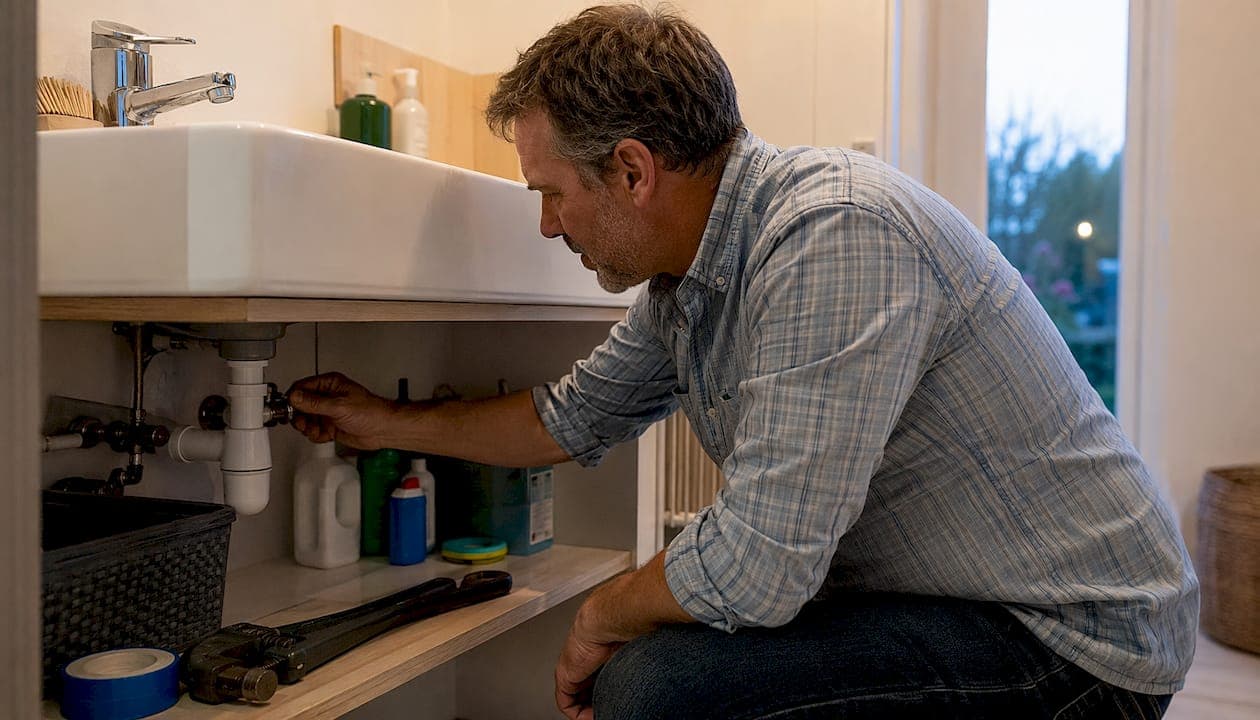
Burst pipes, blocked drains, water heater breakdowns, and sewer backups are the most common after-hours plumbing failures UK homeowners face, and every one of them can escalate from inconvenience to structural damage within minutes. The single most important thing you can do the moment you discover any of these is turn off the stopcock to halt water flow immediately. After that, if water is anywhere near sockets or your consumer unit, cut the electricity at the main switch before touching anything else.
Here is what to do the moment a plumbing emergency strikes:
- Locate and turn the internal stopcock clockwise until it stops
- Switch off your boiler and central heating
- Open the lowest cold taps to drain residual pressure from the pipes
- Cut electricity at the consumer unit if water is near any electrics
- Move valuables, lift rugs, and place buckets under active drips
- Photograph all visible damage before cleaning up (your insurer will need this)
- Call a 24/7 emergency plumber with your postcode and a clear description of the fault
Pro Tip: The internal stopcock is typically found under the kitchen sink or close to the water meter. Find it now, before an emergency, and make sure every adult in your household knows exactly where it is and how to operate it.
Table of Contents
- 1. Burst pipes: how to spot them at night and react fast
- 2. Clogged drains and toilets: managing blockages safely after hours
- 3. Water heater failures: recognising warning signs and what to do
- 4. Sewer backups: dangers, signs, and urgent action
- 5. Leaking taps and fixtures at night: detection and interim control
- 6. Essential safety guidelines during plumbing emergencies
- 7. When and how to contact a professional plumber after hours
- 8. Temporary DIY fixes to control damage before help arrives
- 9. Common tools to keep on hand for after-hours plumbing issues
- 10. What happens when you delay responding to a plumbing failure
- Your-local-plumber: fast, local help when plumbing fails after hours
- Key takeaways
1. Burst pipes: how to spot them at night and react fast
Burst pipes are most common during UK winters, when freezing temperatures cause water inside pipes to expand and crack the pipe wall. Ageing copper or plastic pipework, particularly in uninsulated loft spaces or external walls, is especially vulnerable. You may hear a sudden rushing sound, notice a dramatic drop in water pressure, or find water spreading across a ceiling or floor with no obvious source.
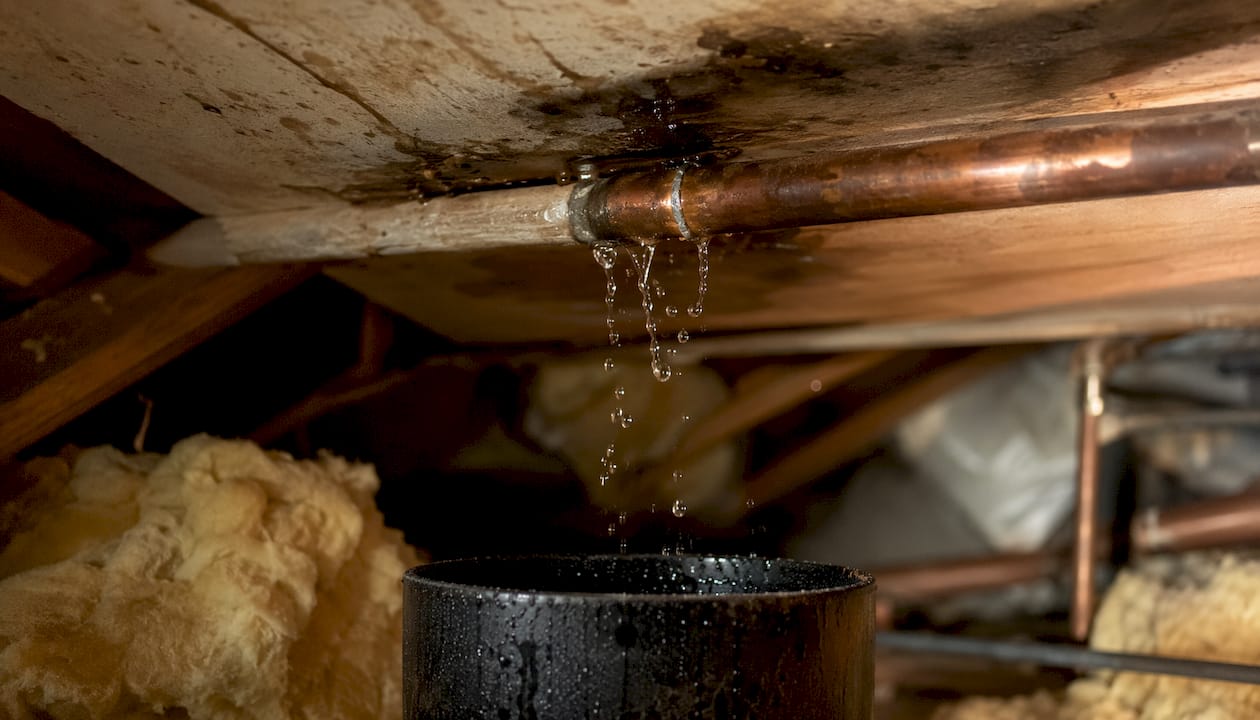
The moment you suspect a burst, turn off the stopcock and then open the cold taps downstairs to drain the system. Do not attempt to patch the pipe while the water supply is still live. Attempting repairs under pressure almost always makes the situation worse.
Keep these items accessible for burst pipe emergencies:
- A torch (pipes often burst in dark, awkward spaces)
- Old towels and a mop bucket
- A camera or phone to photograph damage
- The number of a 24/7 emergency plumber stored in your contacts
Pro Tip: Concealed leaks behind walls often show up as soft, discoloured plaster or a musty smell before any visible water appears. If a patch of wall feels damp without explanation, get it checked before it becomes a late-night crisis.
2. Clogged drains and toilets: managing blockages safely after hours
Blocked drains rarely announce themselves at a convenient time. Grease and food debris accumulating in kitchen pipes, foreign objects flushed down toilets, and tree roots infiltrating older clay drainage runs are the three most common culprits. Signs include water draining noticeably slowly, a gurgling sound from the plughole, water backing up into a basin or bath, and a foul smell rising from the drain.
Resist the urge to reach for a chemical drain cleaner at midnight. These products generate heat and pressure inside the pipe, and in an already stressed system they can crack older pipework or splash back and cause burns. A plunger is your safest first tool: use a cup plunger on sinks and a flange plunger on toilets, applying firm, steady pressure rather than frantic jabbing.
Do's and don'ts for late-night blockages:
- Do use a plunger before anything else
- Do check and clear the exterior drain cover if water is backing up across multiple fixtures
- Do call a professional if more than one drain is blocked simultaneously (this signals a main drain issue)
- Don't pour boiling water into plastic waste pipes; it can soften and distort them
- Don't use chemical cleaners on a fully blocked drain
- Don't ignore sewage smells, which indicate a deeper blockage requiring urgent attention
3. Water heater failures: recognising warning signs and what to do
A water heater or boiler that fails after hours is disruptive, but the response matters more than the inconvenience. Common signs of failure include no hot water at all, strange banging or rumbling noises from the unit, and visible water pooling around the base of the boiler or cylinder. Reduced heat output that worsens gradually often points to a failing heating element or a build-up of limescale, both of which are more common in hard-water areas of England.
Switch off the boiler at its electrical isolator (usually a switched fused spur mounted on the wall beside the unit) and turn off the central heating at the programmer. Running a boiler dry damages the heat exchanger, so do not attempt to restart it until a qualified engineer has assessed the fault. Crucially, do not open hot taps if the cold supply has been isolated; pulling air into the system can cause further damage.
Safety steps specific to water heater failures:
- Turn off the boiler at the electrical isolator immediately
- Switch off the central heating programmer
- If there is a hot-water cylinder with an immersion heater, isolate that too
- Contain any leak with towels and buckets
- Do not attempt to restart the boiler yourself
- Call a Gas Safe registered engineer for any gas boiler fault
4. Sewer backups: dangers, signs, and urgent action
A sewer backup is one of the most serious plumbing problems at night because it combines structural damage with a genuine health hazard. Raw sewage contains harmful pathogens, and exposure, even brief, carries real risk. Causes include a heavily blocked main drain, a collapsed section of pipe, or the wider sewer system becoming overloaded during heavy rainfall.
The warning signs are hard to miss: a strong, persistent sewage smell inside the property, water or visible waste backing up into baths, basins, or ground-floor toilets, and gurgling from multiple drains at once. Sewage backflow into sinks or baths signals a serious blockage and demands immediate professional intervention.
Emergency precautions for a sewer backup:
- Do not use any water fixtures until the backup is resolved
- Avoid all contact with the backed-up water or waste
- Open windows to ventilate affected rooms
- If contamination is spreading or health risk is present, evacuate the property and call from outside
- Call an emergency plumber immediately; this is not a situation to monitor overnight
Pro Tip: Fitting drain guards over external gullies and avoiding flushing anything other than toilet paper significantly reduces the risk of a sewer backup. A CCTV drain survey every few years catches root ingress and structural issues before they cause a midnight crisis.
5. Leaking taps and fixtures at night: detection and interim control
Not every drip at 2am is a full emergency, but the line between a minor leak and a serious failure is worth understanding clearly. A slow drip from a tap washer is annoying and wasteful; water seeping from a joint behind a wall or under a floor is a different matter entirely. Slow drains and dripping taps generally do not require an emergency call-out, but they do need attention before they escalate.
Signs worth investigating at night include a persistent dripping sound you cannot locate, water stains appearing on a ceiling below a bathroom, or an unexpected wet patch on a kitchen cabinet floor. If you can identify the source, check whether the fixture has its own isolation valve (a flat-head screw slot on the supply pipe beneath the sink or behind the toilet cistern). Turning it 90 degrees closes the supply to that fitting without shutting off the whole house.
Quick checks and tools to have available:
- A torch and a mirror to inspect under-sink pipework
- A flat-head screwdriver to operate isolation valves
- PTFE tape for a temporary seal on a leaking compression joint
- A bucket or large bowl to collect drips overnight
- Your plumber's number, ready to call first thing in the morning if the leak is contained
6. Essential safety guidelines during plumbing emergencies
Water and electricity together are the most dangerous combination in any home emergency. If water reaches electrical sockets, lights, or your consumer unit, go to the consumer unit and cut the main power before you do anything else. Do not touch any switch or socket that may be wet. This applies even if the water looks contained; it travels along surfaces and through cavities in ways that are not always visible.
Once the water supply is isolated and the electricity is off where necessary, drain the pipework by opening every cold tap in the house, starting with the lowest floor and working upwards. This releases residual pressure and stops water continuing to push out through the leak point even after the stopcock is closed. Many homeowners skip this step, and it is the reason a closed stopcock sometimes fails to stop a leak entirely.
Critical safety steps in order:
- Close the main stopcock first
- Switch off the boiler and central heating
- Open cold taps from the lowest floor upwards to drain the system
- Cut electricity at the consumer unit if water is near any wiring
- Do not touch wet switches or sockets under any circumstances
- Photograph damage before clearing water
Pro Tip: Keep a small torch and a flat-head screwdriver near your consumer unit. In a flood scenario, you may need to operate the main switch in poor light, and fumbling for tools costs precious seconds.
7. When and how to contact a professional plumber after hours
Some situations require a professional immediately, regardless of the hour. Call an emergency plumber without delay if water is spreading and you cannot stop it, if there is any sewage smell inside the property, if a pipe has visibly cracked or burst, if water is in contact with electrical fittings, or if you have lost all running water and vulnerable occupants are present. Emergency plumbers typically respond within approximately 90 minutes for genuine emergencies, so calling early matters.
When you ring, have the following ready: your full postcode, a clear description of the fault (burst pipe, major leak, sewage backup, no water), whether you have successfully isolated the water supply, and whether anyone in the property is vulnerable. This information helps the dispatcher triage correctly and send the right engineer with the right equipment.
Steps to take before the plumber arrives:
- Confirm the stopcock is closed and note its location to tell the engineer
- Clear access to the affected area (move furniture, unlock side gates)
- Keep pets and children away from the affected space
- Have your insurance policy number to hand
- Do not attempt further DIY repairs once you have called
Be aware that after-hours call-outs carry a premium charge. For issues that are urgent but not catastrophic, such as a dripping tap that will not fully close or a slow toilet refill, it is usually worth waiting until normal hours to avoid the out-of-hours rate. For a 24-hour plumbing emergency checklist that covers these decisions in detail, the linked resource is a useful reference.
8. Temporary DIY fixes to control damage before help arrives
Temporary repairs are exactly that: temporary. Their only purpose is to slow or stop water loss until a qualified plumber can make a permanent fix. An emergency pipe clamp works well on an accessible, pressurised pipe section and can hold for 24–48 hours. Epoxy putty suits small punctures and slow leaks, but it needs a dry surface and adequate curing time, so it is not useful on an actively gushing pipe. A rubber patch secured with waterproof tape can manage a hairline crack in a low-pressure situation.
Push-fit connectors are the most reliable temporary solution for a clean pipe break, provided you can cut out the damaged section. They require no tools beyond a pipe cutter and a deburring tool, and they hold under normal household pressure. Whatever method you use, restore water pressure gradually by opening the stopcock a quarter turn at a time while watching the repair site closely.
Never use a temporary fix and consider the problem solved. Even a repair that holds perfectly still has an underlying cause, whether that is corrosion, excessive pressure, or a failing joint, that will cause a repeat failure. Schedule a professional assessment within 48 hours of any emergency repair.
9. Common tools to keep on hand for after-hours plumbing issues
A small kit stored in an accessible place can make the difference between a contained incident and a flooded room. You do not need a professional toolkit, just the basics that cover the most common late-night plumbing troubles.
| Tool | What it handles |
|---|---|
| Adjustable spanner | Tightening compression fittings and isolation valves |
| Cup and flange plungers | Sink blockages and toilet blockages respectively |
| PTFE tape | Temporary seal on leaking threaded joints |
| Emergency pipe clamp | Pressurised pipe leaks on accessible pipework |
| Epoxy putty | Small punctures and pinhole leaks |
| Torch | Inspecting under sinks, in loft spaces, and behind panels |
| Flat-head screwdriver | Operating isolation valves and consumer unit switches |
| Buckets and old towels | Containing active drips and standing water |
Store this kit somewhere every adult in the household knows about. A kit in the garage is no use if the burst pipe is in the loft and only one person knows where the torch is. For broader guidance on pipe maintenance habits that reduce the likelihood of needing this kit at 3am, building a routine inspection habit pays dividends.
10. What happens when you delay responding to a plumbing failure
The cost of delayed action is rarely proportional to the original fault. A burst pipe left running for an hour can saturate floor joists, penetrate wall cavities, and ruin plasterwork across multiple rooms. Water damage that might have cost a few hundred pounds to repair if caught immediately can run into thousands once structural drying, replastering, and redecoration are factored in.
Sewer backups carry an additional risk: the longer contaminated water sits on surfaces, the deeper it penetrates porous materials like concrete and timber, making decontamination far more involved. Water heater failures left unaddressed can result in a dry-fired boiler, which destroys the heat exchanger and typically requires a full boiler replacement rather than a component repair.
The pattern across all common plumbing emergencies is the same: the first few minutes of correct action (closing the stopcock, cutting power, draining the system) determine the scale of the repair bill far more than the fault itself. Understanding how plumbers protect your home during these situations helps set realistic expectations for what a rapid professional response can achieve.
Your-local-plumber: fast, local help when plumbing fails after hours
When a pipe bursts at midnight or a drain backs up on a Sunday, the gap between knowing what to do and having someone qualified to do it is where real damage happens. Your-local-plumber fills that gap with a 24/7 emergency response service built specifically for UK homeowners who need a reliable, local engineer fast, without the uncertainty of who will actually turn up.

Experienced engineers handle everything covered in this guide: burst pipes, sewer backups, water heater faults, blocked drains, and leak detection, all with transparent pricing discussed upfront so there are no surprises on the invoice. The service covers both emergency call-outs and planned repairs, which means the same team that fixes your midnight crisis can return to carry out the permanent repair properly.
If you are dealing with an after-hours plumbing emergency right now, or want to have a trusted local number saved before one strikes, contact Your-local-plumber today for a fast response from an engineer who knows your area.
Key takeaways
Isolating the water supply at the stopcock is the single most effective action a homeowner can take to limit damage from any after-hours plumbing failure.
| Point | Details |
|---|---|
| Stopcock first, always | Turning off the main stopcock immediately halts water flow and limits damage across all failure types. |
| Electricity is the hidden risk | Cut power at the consumer unit the moment water contacts any electrical fitting or socket. |
| Drain the system after isolation | Opening cold taps from the lowest floor upwards releases residual pressure and stops ongoing leaks. |
| Know the difference | Slow drains and dripping taps can wait until morning; burst pipes, sewage backups, and flooding cannot. |
| Your-local-plumber | Provides 24/7 emergency call-outs across the UK with transparent pricing and experienced local engineers. |