
TL;DR:
- Worn fixtures and aging pipes are the main causes of water leaks in UK homes, leading to increased bills and possible damage. Regular inspection, early leak detection, and preventative measures like pipe lagging and pressure reduction can help homeowners avoid costly repairs. Addressing leaks promptly and scheduling professional checks ensure home safety and water conservation.
Worn toilet flappers, dripping faucets, corroded pipes, and environmental stressors are the most common causes of water leaks in UK homes. The EPA WaterSense programme estimates that the average household wastes more than 9,300 gallons of water yearly through fixable leaks. That waste translates directly into higher water bills and, left unchecked, serious structural damage. Understanding the sources of plumbing leaks is the first step toward protecting your home and your wallet.
1. Worn toilet flappers
The toilet flapper is the rubber seal at the bottom of the cistern that controls water flow into the bowl. When it deteriorates, water trickles continuously from the cistern into the bowl without you ever noticing. This type of silent leak is one of the most common water leak issues in residential plumbing.
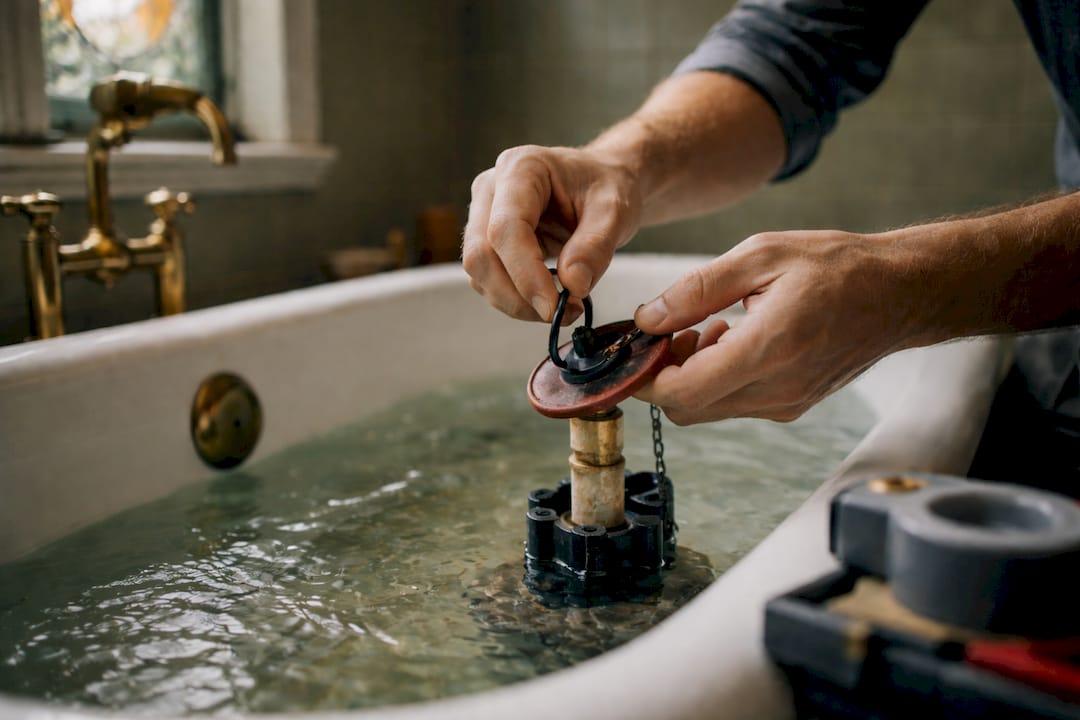
The EPA recommends replacing toilet flappers at least every five years. Worn rubber loses its seal, allowing thousands of gallons to drain away annually. The fix costs under £10 and takes less than 20 minutes.
Pro Tip: Listen for a toilet that refills on its own without being flushed. That sound confirms a flapper leak, even if you cannot see any water on the floor.
2. Dripping faucets
A dripping faucet is rarely just an annoyance. A faucet dripping at one drip per second wastes over 3,000 gallons per year. The cause is almost always a worn washer or gasket inside the tap body that no longer creates a watertight seal when the tap is closed.
Kitchen and bathroom taps are the most frequent offenders because their moving parts wear down with daily use. Replacing a washer costs pence and stops the drip immediately. If the leak returns within weeks, the tap seat itself may be damaged and will need professional attention.
3. Leaking valves and O-rings
Valves throughout your home, including the stopcock, isolation valves under sinks, and shower cartridge valves, all rely on rubber O-rings and seals to stay watertight. These seals degrade over time, particularly in older properties where original fittings have never been replaced.
Common leak points include kitchen and bathroom sinks, showers, and toilets, precisely because these areas have the highest concentration of moving parts and O-rings. A weeping isolation valve under a basin is easy to miss until the cabinet floor is saturated. Check these valves during any routine inspection.
4. Corroded and ageing pipes
Corrosion is one of the primary sources of plumbing leaks in homes built before the 1980s. Older copper and steel pipes develop pinhole leaks as the metal oxidises from the inside out. These holes are tiny but release water continuously into wall cavities and floor voids.
Leaking pipes from age, freezing, or deteriorated fittings commonly cause internal damage that goes unnoticed for months. By the time a damp patch appears on a wall, the leak may have been active for weeks. If your property has original pipework from the 1970s or earlier, a professional inspection is the most reliable way to assess its condition. Read more about ageing plumbing components and what to watch for.
5. Damaged or loose pipe joints
Pipe joints are the weakest points in any plumbing system. Compression fittings, push-fit connectors, and soldered joints all degrade under repeated pressure cycles. A joint that was installed slightly out of alignment will fail faster than one fitted correctly.
Ground movement, particularly in clay-heavy soils common across much of England, shifts buried pipework and stresses joints underground. These leaks are invisible until they saturate the ground around your foundations or cause a sudden drop in water pressure. A licensed plumber can use pressure testing to locate a failing joint without excavating unnecessarily.
6. Freezing temperatures and burst pipes
Frozen pipes are one of the most destructive types of water leaks a homeowner can face. Water expands as it freezes, and that expansion creates pressure inside the pipe that the material cannot withstand. The pipe cracks or splits, and when the thaw arrives, water pours out.
Seasonal factors like freezing temperatures and water pressure fluctuations cause significant stress on plumbing, with leaks clustering during cold periods. Pipes in unheated lofts, garages, and external walls are at highest risk. Lagging these pipes before winter is the single most cost-effective preventative measure you can take. For detailed guidance, see these winter plumbing tips.
Pro Tip: If you return home after a cold spell and notice reduced water pressure, turn off your stopcock immediately before the pipes thaw fully. This limits the volume of water released when a crack opens.
7. Irregular or excessive water pressure
High water pressure feels satisfying in the shower, but it puts constant stress on every pipe, joint, and appliance connection in your home. Pressure above 80 psi accelerates wear on washers, seals, and fittings, making leaks far more likely over time.
Leaks can stem from irregular water pressure as well as equipment failure and incorrect installation. A pressure-reducing valve fitted at the mains entry point keeps pressure within a safe range. These valves cost between £30 and £80 and protect every fixture in the property simultaneously.
8. Appliance hose and seal failures
Washing machines, dishwashers, and refrigerators with ice makers all connect to your water supply through rubber hoses and seals. These components have a finite lifespan. A washing machine supply hose that has been in place for ten years is a leak waiting to happen.
Appliance leaks often start behind the machine where they are invisible. The first sign is usually a damp patch on the floor or a musty smell from the kitchen or utility room. Replacing rubber supply hoses with braided stainless steel alternatives significantly extends their lifespan and reduces failure risk.
9. Roof leaks and water ingress
A roof leak is not a plumbing problem in the traditional sense, but it is one of the most significant home water damage causes. Roof leaks occur from damaged materials, improper installation, or storm damage, allowing water to enter the roof space and track down through ceilings and walls.
The tricky part is that water entering through a roof tile rarely drips straight down. It travels along rafters and joists before appearing as a stain on a ceiling that may be metres away from the actual entry point. Annual roof inspections after autumn storms catch damage before winter rain turns a small gap into a major ingress problem.
10. Clogged gutters and drains
Blocked gutters force rainwater to overflow and run down the exterior walls of your property. Over time, that water finds its way into wall cavities through mortar joints, window frames, and any gap in the building envelope. The result looks identical to a plumbing leak but originates entirely outside.
Clearing gutters twice a year, once in late autumn after leaf fall and once in spring, prevents this type of water ingress. Downpipes blocked with debris cause the same problem. A simple visual check from ground level after heavy rain shows whether water is flowing freely or spilling over the gutter edge.
11. Incorrect fixture installation
A tap, shower head, or toilet fitted incorrectly will leak from day one, though the leak may be slow enough to go unnoticed initially. Common installation errors include undertightened connections, missing PTFE tape on threaded joints, and push-fit connectors that were not fully seated.
Leaks also stem from incorrect fixture installation, alongside corrosion and environmental stressors. If a new fixture starts dripping within weeks of installation, the fitting itself is rarely faulty. The connection is the first place to check. A qualified plumber can reseat or retighten the joint in minutes.
How to detect water leaks early
Catching a leak early prevents minor water waste from becoming major home water damage. The most reliable DIY method for toilets is the dye test. Adding food colouring to the cistern and watching for colour in the bowl within 15–30 minutes confirms a flapper or overflow pipe leak without any tools.
For the rest of your home, watch for these signs:
- Unexplained increases in your water bill without a change in usage
- Water stains or discolouration on ceilings, walls, or floors
- Peeling paint or bubbling wallpaper, particularly on external walls
- Damp patches or a persistent musty smell in cupboards under sinks
- The sound of running water when all taps and appliances are off
Many leaks start hidden behind walls or ceilings, so indirect signs like stains and dampness are often the only early warning you get. Monitoring your water meter is equally useful. Turn off every tap and appliance, then check whether the meter dial is still moving. If it is, water is escaping somewhere in the system.
Persistent or hidden leaks require a licensed plumber to avoid ongoing damage. Learn more about finding and fixing leaks with a step-by-step approach.
Preventing water leaks: practical steps for homeowners
Prevention is significantly cheaper than repair. These measures reduce your risk across the most common leak causes:
- Inspect washers and flappers annually. Replace any component that shows cracking, stiffness, or discolouration.
- Fit a pressure-reducing valve if your mains pressure regularly exceeds 80 psi.
- Lag all exposed pipes in unheated spaces before the first frost of the season.
- Clear gutters in late autumn and spring to prevent overflow and wall saturation.
- Replace rubber appliance hoses every five to seven years, or switch to braided steel alternatives.
- Install a leak detection device at the mains supply. These devices monitor flow patterns and shut off the water automatically if an abnormal flow is detected.
- Book a professional plumbing inspection every two to three years, particularly in properties over 30 years old.
Fixing household leaks saves about 10% on water bills. That saving compounds year on year when combined with the cost of repairs avoided. For guidance on protecting your home from hidden leaks, the risks are well worth understanding before they become urgent.
Key takeaways
The most effective way to prevent home water damage is to address worn fixtures and ageing pipes before they fail, not after.
| Point | Details |
|---|---|
| Worn fixtures cause most leaks | Toilet flappers, tap washers, and O-rings account for the majority of fixable household leaks. |
| Silent leaks waste thousands of gallons | A dripping tap or faulty flapper can waste over 3,000 gallons per year without visible flooding. |
| Environmental factors accelerate damage | Freezing temperatures, high water pressure, and seasonal stress cause pipe failures that fixtures alone do not. |
| Early detection limits repair costs | Dye tests, meter checks, and visual inspections catch leaks before they cause structural damage. |
| Prevention is cheaper than repair | Annual inspections, pipe lagging, and pressure management reduce leak risk across the whole property. |
Why I think most homeowners underestimate their plumbing
Most homeowners I speak with only think about their plumbing when something goes visibly wrong. A puddle on the floor, a stain on the ceiling. By that point, the leak has usually been active for weeks or months. The real damage is rarely the water you can see.
The leaks that concern me most are the ones behind walls and under floors. A pinhole in a copper pipe inside a partition wall releases water slowly, saturating the timber frame and insulation long before any external sign appears. Mould follows. Then structural deterioration. The repair bill at that stage is not a plumbing bill. It is a building bill.
My honest advice is to treat your plumbing the way you treat your boiler. Service it on a schedule, not on a crisis. A professional inspection every two to three years costs a fraction of what a single hidden leak can cause in damage. Combine that with the simple habit of checking your water meter monthly and you will catch the vast majority of problems while they are still cheap to fix.
DIY fixes for flappers and washers are genuinely worth doing. They are simple, inexpensive, and effective. But know the limit. If you cannot identify the source of a leak within 30 minutes of looking, call a professional. Hidden leaks do not resolve themselves.
— Michael
Water leak issues? Your-local-plumber can help
Water leaks left unattended cause damage that compounds quickly. Your-local-plumber provides professional leak detection and repair for homeowners across the UK, from identifying hidden pipe leaks to replacing worn fixtures and valves.

Your-local-plumber's experienced engineers carry out thorough assessments with transparent, upfront pricing. Whether you have a dripping tap, a silent toilet leak, or a suspected pipe fault behind a wall, the team responds quickly and resolves the problem properly. Contact Your-local-plumber to book an inspection or arrange an emergency call-out. Proactive maintenance now prevents a far more costly repair later.
FAQ
What is the most common cause of a water leak at home?
Worn toilet flappers and dripping tap washers are the most common causes. These fixable leaks account for the majority of household water waste and are inexpensive to repair.
How do I know if I have a hidden water leak?
Check your water meter with all taps and appliances turned off. If the dial continues to move, water is escaping somewhere in the system. Damp patches, peeling paint, and a musty smell are also reliable indicators.
Can I fix a water leak myself?
Many fixture-related leaks, such as a worn flapper or tap washer, are straightforward DIY repairs. Persistent or hidden leaks require a licensed plumber to locate and repair safely.
How does water pressure cause leaks?
Excessive water pressure stresses pipes, joints, and seals beyond their design limits, accelerating wear and causing failures. Fitting a pressure-reducing valve at the mains entry point protects the entire system.
How much water does a leaking tap waste?
A tap dripping at one drip per second wastes over 3,000 gallons per year. Fixing it promptly saves water and reduces your bill.