TL;DR:
- Hidden leaks can waste up to 400 litres of water daily, increasing bills and causing structural damage.
- Prompt repair can save homeowners significant costs, with late repairs leading to much higher expenses.
- Professional inspection and timely action prevent escalating damage, insurance issues, and household disruptions.
A dripping tap or damp patch on the wall can seem like a minor annoyance, something to deal with eventually. But a concealed leak wastes around 400 litres of water every single day, quietly inflating your bills and silently damaging your home's structure. Many UK homeowners put off repairs, assuming the problem is too small to matter. The truth is that water leaks are one of the most costly and disruptive issues a home can face. This article explains exactly why fixing leaks quickly matters, what the real financial stakes are, and what practical steps you can take right now to protect your property.
Table of Contents
- Hidden leaks: The silent drain on your home and wallet
- The true cost: Insurance, repairs and water waste
- Why prompt repairs matter: Escalating costs and damage prevention
- DIY, pro or new tech? Options for fixing water leaks
- Why the real cost of ignoring water leaks is peace of mind
- Protect your home: Fast, expert help when it matters
- Frequently asked questions
Key Takeaways
| Point | Details |
|---|---|
| Hidden leaks waste money | Even a small leak can drain hundreds of pounds a year from your utility budget. |
| Insurance risk is real | Most costly home insurance claims in the UK are due to water leaks, not accidents. |
| Act early to save | Prompt leak repair prevents escalating damage and keeps repair bills manageable. |
| Professional help pays off | Certified plumbers ensure leaks are properly fixed and protect your insurance coverage. |
Hidden leaks: The silent drain on your home and wallet
Most homeowners picture a leak as something obvious, water gushing from a burst pipe or pooling on the kitchen floor. In reality, the most damaging leaks are the ones you cannot see. They hide inside walls, beneath floorboards, behind bathroom panels, and within loft tanks. Weeks or even months can pass before you notice any sign of them, by which time the damage is often significant.
The scale of water waste is striking. A single concealed leak costs UK households millions collectively each year, and households that fix leaks promptly save an average of £130 annually on their water bills. That is money being poured away, quite literally, while you carry on with your daily routine.
| Leak type | Estimated daily waste | Estimated annual bill increase |
|---|---|---|
| Dripping tap | 15 to 30 litres | £10 to £25 |
| Running toilet | 200 to 400 litres | £60 to £130 |
| Concealed pipe leak | Up to 400 litres | £100 to £200+ |
Beyond the water bill, hidden leaks create damp conditions that encourage mould growth, weaken structural timber, and damage plaster, all of which lead to repair bills far exceeding the cost of fixing the original leak. Common locations where leaks hide include:
- Cold water storage tanks in the loft
- Toilet cisterns with faulty flush valves
- Underground supply pipes running beneath floors
- Joints behind tiled bathroom or kitchen walls
- Radiator valves in older central heating systems
Pro Tip: Take a water meter reading last thing at night and again first thing in the morning before anyone in the house uses any water. If the reading has changed, you almost certainly have a hidden leak somewhere. Understanding the leak detection basics before calling in a professional means you can give an engineer much more useful information when they arrive.
The true cost: Insurance, repairs and water waste
It is not just your water bill at risk. The broader financial picture for homeowners who delay leak repairs is considerably more alarming than most people realise.
"Escape of water" is the top UK insurance claim type, with the average claim exceeding £15,000. That figure covers damage to ceilings, floors, electrics, and personal belongings, all from a leak that may have started as a small drip. Many insurers also require policyholders to demonstrate they took reasonable steps to identify and address leaks. Delay that, and you risk your claim being disputed.
At a national level, UK households lose £700 million every year to leaks through a combination of water waste and repair costs. That figure puts the scale of the problem into sharp perspective.
| Scenario | Likely repair cost | Insurance implication |
|---|---|---|
| Minor leak caught early | £120 to £300 | Minimal or no claim needed |
| Hidden leak found late | £300 to £1,500 | Claim possible but excess applies |
| Major water damage | £5,000 to £15,000+ | Large claim, potential premium rise |
| Emergency call-out | £250 to £600+ | Emergency clause may apply |
A single leaky toilet left unrepaired for a year can waste over 140,000 litres of water and cost hundreds of pounds in avoidable bills.
If you discover a leak, the sequence you follow in the first hour matters enormously. Understanding the emergency plumbing benefits of acting fast can make the difference between a manageable repair and a full-scale disaster.
- Locate and turn off the stopcock to stop water flow immediately.
- Move valuables and furniture away from the affected area.
- Take photographs of visible damage for your insurance records.
- Contact your insurer to report the issue promptly.
- Call a qualified plumber to assess and carry out the repair.
Having a clear sense of the typical repair cost breakdown before work begins helps you make confident decisions rather than reacting under pressure.
Why prompt repairs matter: Escalating costs and damage prevention
There is a predictable pattern to how water leak repairs escalate in cost. A small, visible leak repaired quickly is a straightforward job. Leave it untouched, and that same issue can turn into a structural repair involving flooring, joists, and plasterwork.
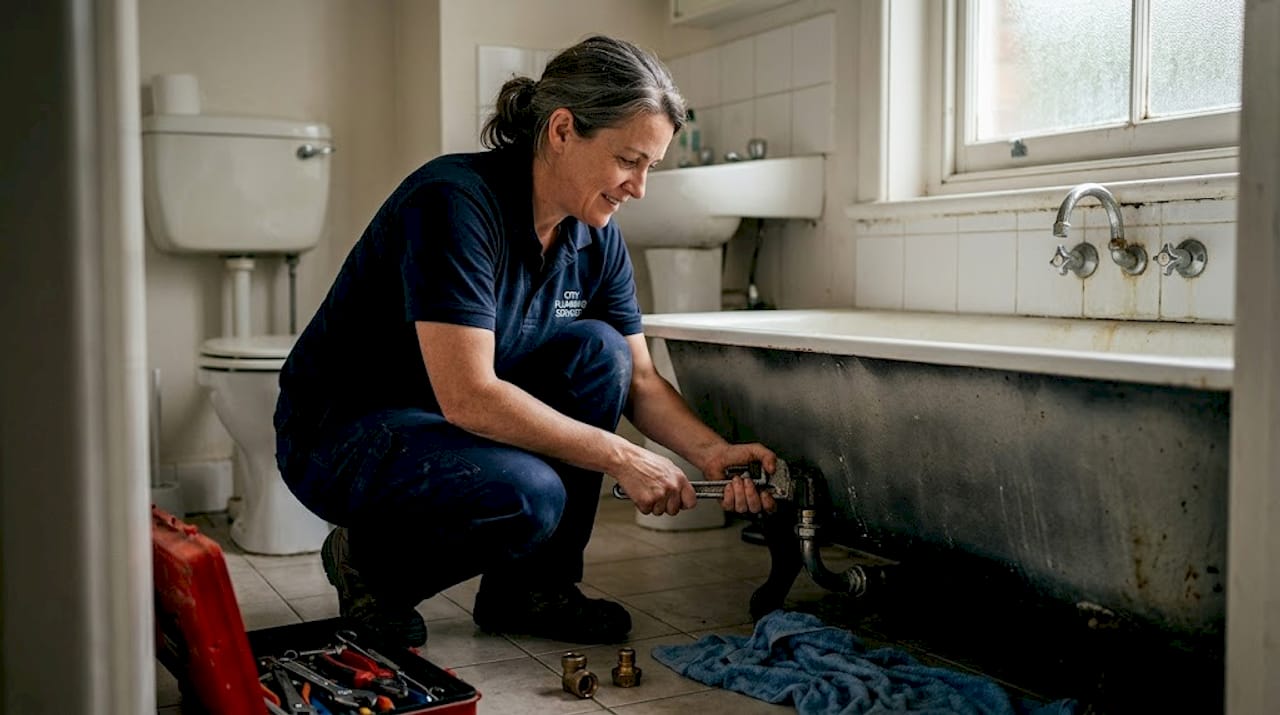
Repair costs vary significantly depending on how long a leak has been active. A minor pipe repair typically runs between £120 and £200, a hidden leak discovered after some time costs £300 to £800 or more, and emergency call-outs for burst pipes or flooding can reach £250 to £600 before materials are even factored in.
The cost jump between "caught early" and "found late" is not slight; it can be four or five times higher. That gap represents the mould remediation, timber replacement, and secondary water damage that accumulate when a leak is left alone.
Pro Tip: Book an annual plumbing inspection with a local engineer. A qualified plumber can spot early signs of corrosion, worn washers, and failing joints before they develop into costly problems. Following a set of routine leak check tips throughout the year also helps you stay ahead of issues between professional visits.
When you notice any sign of a leak, here is a simple action sequence:
- Do not ignore it or add it to a mental list of "things to sort later."
- Shut off the water supply to the affected area if you can.
- Note when you first noticed it and any changes since.
- Contact a plumber without delay, even for an assessment.
- Check your home insurance policy for any leak-related conditions.
Most home insurance policies contain clauses that favour policyholders who report and repair leaks promptly. Waiting can mean a valid claim is reduced or rejected.
DIY, pro or new tech? Options for fixing water leaks
Not every leak requires an emergency call-out. Understanding which approach fits your situation can save you time and money while still making sure the repair is done properly.
When DIY is reasonable:
- A dripping tap where the washer or O-ring is visibly worn
- A loose compression fitting on an accessible pipe
- A toilet cistern overflow caused by a faulty fill valve you can replace yourself
For these situations, hardware stores stock the parts, and plenty of reliable guidance exists. DIY fixes succeed roughly 85% of the time for straightforward, visible leaks according to Affinity Water, but success drops sharply once a leak is concealed or involves the mains supply.
When to call a professional:
- Any leak you cannot physically locate or access
- Recurring leaks that keep returning after DIY repairs
- Leaks near electrical fittings or consumer units
- Anything involving the mains supply or underground pipework
Knowing when to call a plumber is genuinely important. Attempting a repair on a pressurised main or a concealed pipe without the right tools can transform a small problem into a large one, and it can also create complications if you later need to make an insurance claim.
On the technology front, no-dig pipe repair technology is now reducing repair times by up to 90% and cutting associated costs by 88% in some cases. These techniques allow engineers to fix underground or concealed pipes without excavating floors or digging up gardens, making professional repairs far less disruptive than they once were.
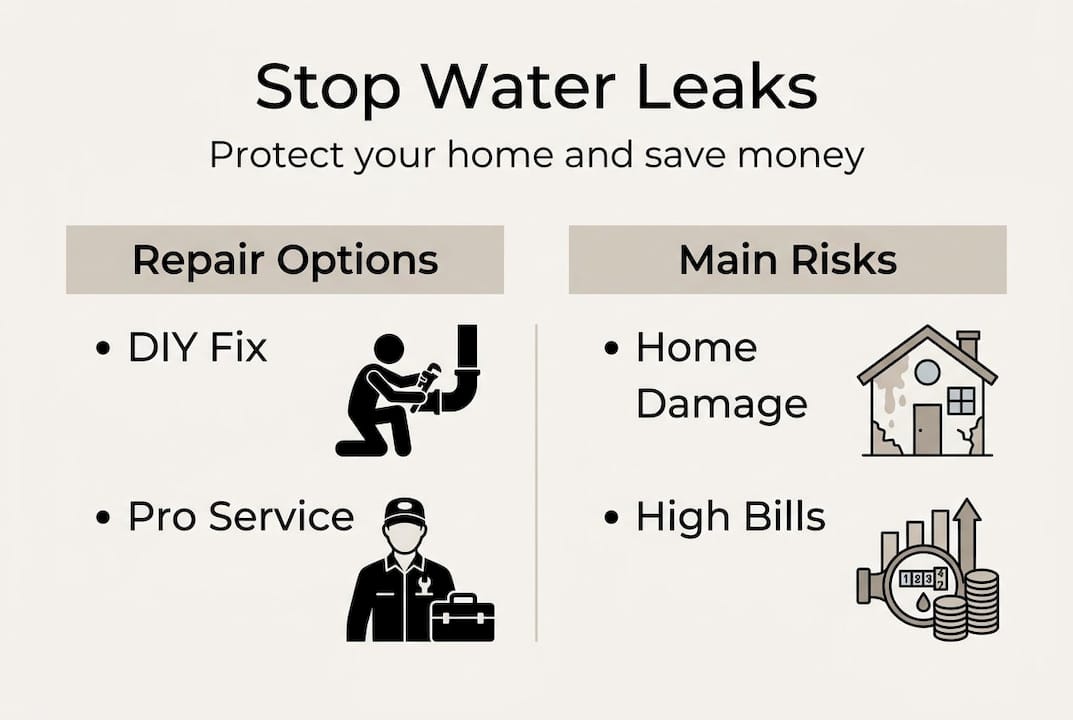
It is also worth noting that property-side leaks are the homeowner's legal responsibility. Once a leak sits beyond the water meter and within your property boundary, your water supplier will not fix it. That responsibility rests entirely with you. Understanding the plumber vs DIY debate in practical terms helps you make that call with confidence rather than guesswork.
Pro Tip: For any recurring leak on the property-side of the mains, always consult a professional rather than attempting repeated patch fixes. A permanent repair almost always costs less in the long run than several temporary ones.
Why the real cost of ignoring water leaks is peace of mind
We talk a great deal about repair bills and wasted water, and rightly so. But there is another cost to ignoring a leak that rarely appears on any invoice: the toll it takes on your daily life.
We have seen homeowners who put off a repair for months, telling themselves it was not urgent. By the time they called us in, they were dealing with damp bedrooms, arguments over rising utility bills, and the stress of hosting builders for a week. The financial cost was larger than it needed to be, but the disruption to family life was arguably worse.
Fixing a leak quickly is not just a practical decision; it is a decision to stay in control of your home rather than letting a problem grow until it controls you. Plumbing issues have a habit of escalating at the worst possible times, mid-winter, before a house sale, or just before guests arrive. Protecting your peace of mind is a legitimate reason to act, not a luxury. A small investment of time and money now is almost always far less painful than the alternative.
Protect your home: Fast, expert help when it matters
If you have spotted the early signs of a leak or you are simply overdue a plumbing check, there is no benefit to waiting. The longer a leak runs, the more it costs.

At Your-Local-Plumber.co.uk, we provide fast, dependable support for everything from leak detection to emergency repairs, with clear, upfront pricing so you always know where you stand. Our experienced engineers cover a wide range of plumbing services and are on hand when you need them most. Whether you need an emergency response or want to arrange a routine inspection, you can book a local plumber online in minutes. Take control of your home before a small drip becomes a big problem.
Frequently asked questions
How much water does a typical household leak waste each day?
A concealed leak wastes around 400 litres daily, which rapidly inflates your utility bill and may go unnoticed for weeks. Checking your water meter overnight with no usage is the quickest way to confirm a hidden leak.
Are all leaks the homeowner's responsibility in the UK?
Property-side leaks beyond the water meter are your legal responsibility, while leaks on the public supply side are managed by your water supplier. If you are unsure which side of the meter your leak sits on, a qualified plumber can identify this quickly.
What are the main risks if I ignore a small water leak?
Ignoring a leak risks high repair bills, mould damage, and disputed insurance claims, with the average escape of water claim exceeding £15,000. Structural damage to floors and ceilings can also develop surprisingly fast once a leak is established.
Can I fix a water leak myself or should I call a professional?
Simple visible leaks have an 85% DIY success rate, but hidden, recurring, or mains-side leaks are best handled by a professional to avoid higher costs and potential insurance complications. When in doubt, a quick assessment call to a local plumber is always worth it.