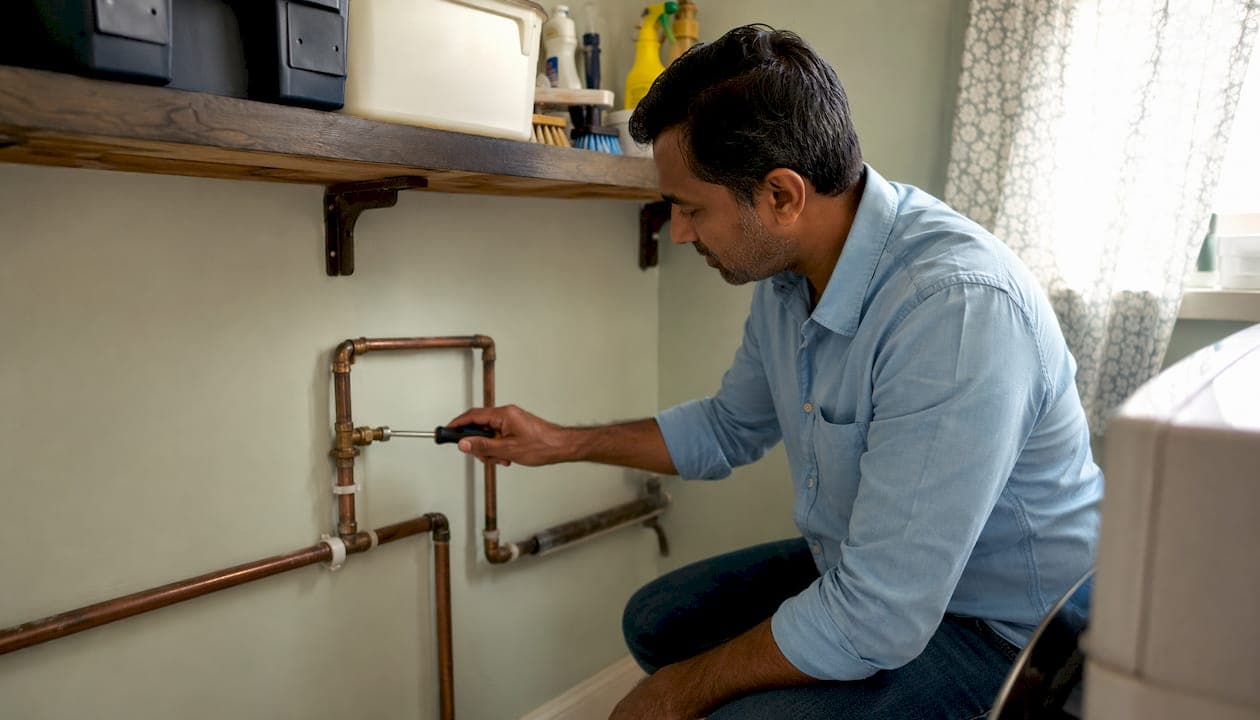
Water isolation valves let you shut off water to a single appliance or pipe section without cutting the supply to your whole home. Fitted to toilets, washing machines, basins, and boilers, they are the difference between a quick tap replacement and a full household shutdown. Under the Water Supply (Water Fittings) Regulations 1999, every water system must include enough servicing valves to allow maintenance with minimal water discharge. Explaining water isolation valves properly means covering not just what they are, but why they matter and how to keep them working.
Key functions at a glance:
- Stop water flow to one appliance without affecting the rest of the house
- Allow safe repairs, replacements, and inspections
- Limit water damage during leaks by enabling fast, targeted shut-off
- Meet legal requirements under UK water fitting regulations
- Reduce the need to locate and operate the main stopcock for routine jobs
Common types of water isolation valves in UK homes
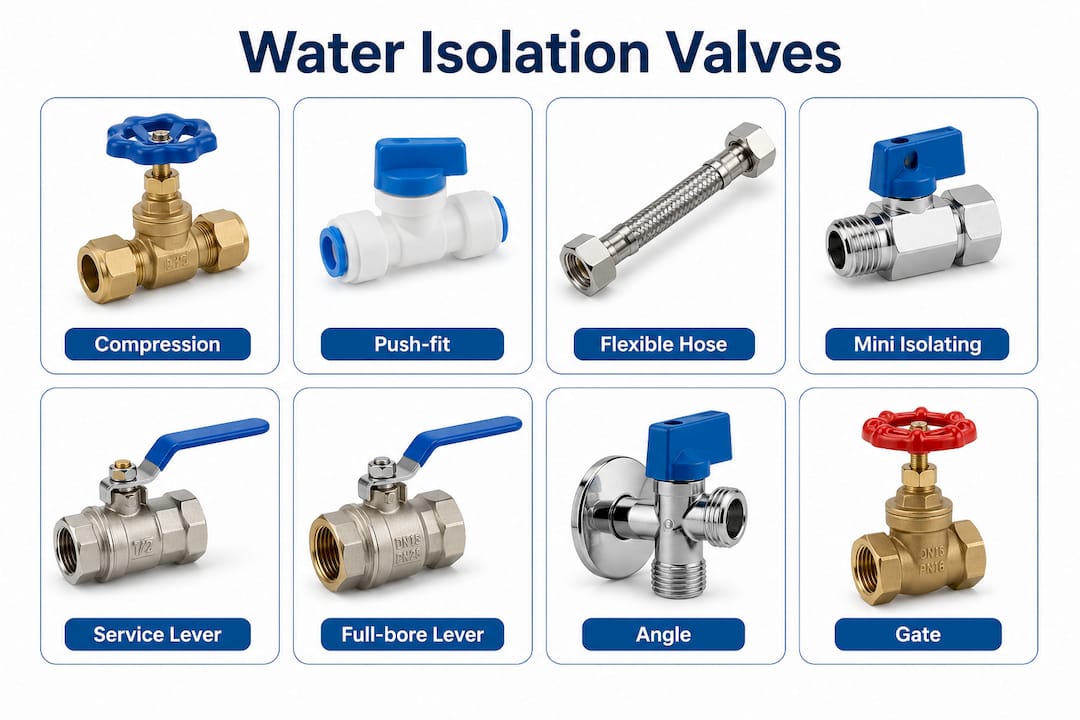
1. Compression valves
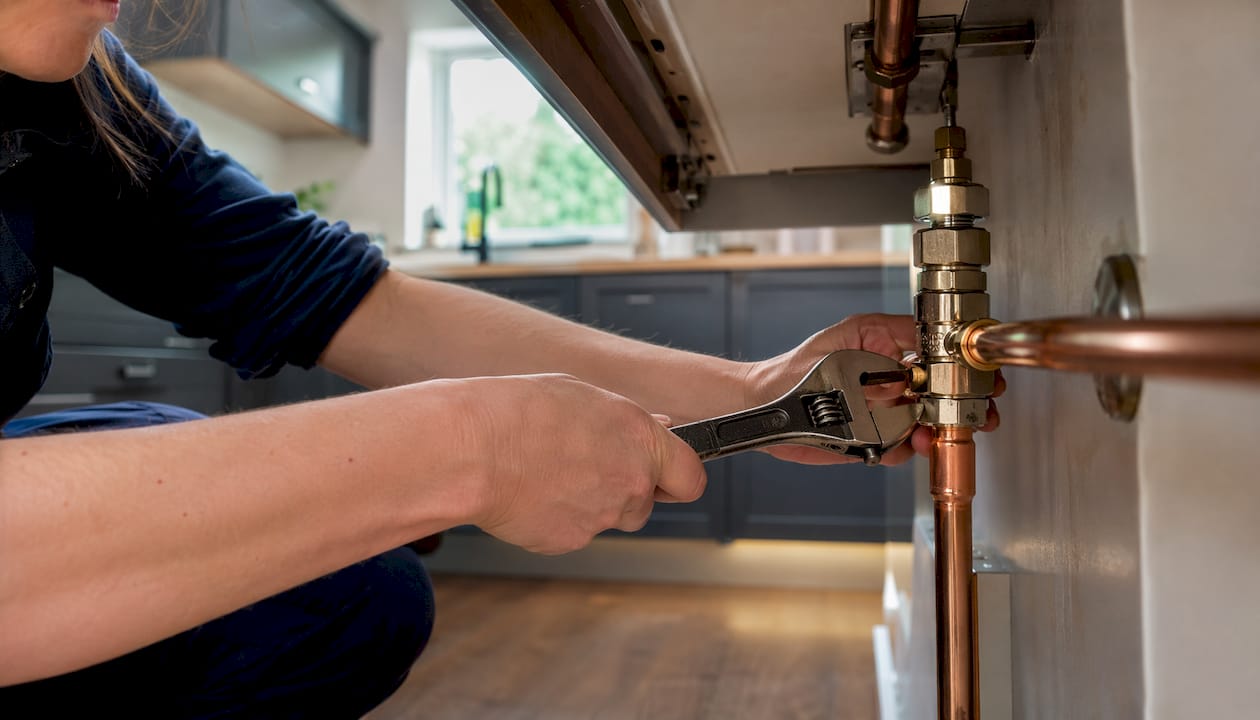
Compression valves are fitted using a spanner to tighten brass olives onto copper pipe, creating a watertight seal. They are reliable and long-lasting, but require a degree of confidence with tools. Most commonly found on existing copper pipework under sinks and behind toilets.
2. Push-fit (Speed Fit) valves
Push-fit systems are the easiest option for homeowner installation. You push the pipe into the valve body until it clicks, with no soldering or compression tools needed. Speed Fit valves work with both copper and plastic pipe, and they are increasingly the go-to choice for DIY repairs and retrofits.
3. Flexible hose valves
Flexible hose valves combine a braided supply hose with an integrated isolation function, typically used to connect taps to the hot and cold supply. The isolation is built into the hose connector itself, so no separate valve is needed. Common under bathroom basins and kitchen sinks.
4. Mini isolating valves (screwdriver-operated)
The most common type in domestic plumbing. A flat-bladed screwdriver turns a quarter-turn ball inside the valve body: slot parallel to the pipe means open, slot across the pipe means closed. Compact and inexpensive, they sit inline on 15mm pipe runs throughout the home.
5. Service valves (lever handle)
A service valve is essentially a mini isolating valve with a lever handle instead of a screwdriver slot. The lever position gives instant visual confirmation: parallel to the pipe is open, across the pipe is closed. Lever-operated service valves are preferred for WC cistern isolation and anywhere a non-trade person might need to operate the valve quickly.
6. Full-bore lever valves
Standard isolating valves have a reduced internal bore, which creates a small pressure drop. Full-bore valves maintain the same internal diameter as the pipe, so there is no flow restriction. Use them on combi boiler cold mains inlets, shower feeds, and any high-pressure application where pressure loss would affect performance.
7. Angle valves
Angle valves turn the flow 90 degrees while isolating it, combining the function of an elbow and a valve in one fitting. They are common under kitchen sinks and bathroom vanity units where the pipe runs along the wall and the tap tail comes straight down.
8. Gate valves
Gate valves are the large red or blue-handled valves found on gravity-fed systems, typically on the flow and return connections of hot water cylinders and cold water tanks. They are full-bore when open and suit gravity circuits where gradual operation prevents water hammer. Not suitable for mains-pressure applications.
What UK regulations say about isolation valves
The Water Supply (Water Fittings) Regulations 1999 set the legal baseline. Regulation 11 states that water supply systems must be fitted with an adequate number of servicing valves and drain taps to minimise water discharge during maintenance or replacement. In practice, every appliance connected to water, including washing machines, dishwashers, WC cisterns, and water heaters, requires its own dedicated isolation point.
Standard domestic valve sizes run to 15mm for under-sink and basin supplies, and 22mm for boiler feeds and cold mains drops. Sizes of 28mm and above are reserved for primary circuits and commercial plant.
Any valve fitted on a potable water system must carry WRAS approval. WRAS (Water Regulations Advisory Scheme) confirms that the valve materials will not contaminate drinking water. Fitting a non-WRAS approved valve is a regulatory breach and can invalidate your water undertaker's acceptance of the installation, with potential knock-on effects for insurance claims.
Key legal requirements:
- Every appliance must be isolatable without shutting off the whole supply
- Servicing valves must be readily accessible for operation and maintenance
- All potable water valves must be WRAS approved
- Valves and stopcocks must be labelled so the sections they control can be identified
How to maintain your isolation valves and fix common problems
Isolation valves seize when left unoperated for years. The internal ceramic or rubber disc bonds to the valve body, and when you finally need to shut off the supply in an emergency, the screwdriver slot shears before the valve turns. The fix is simple: operate every isolation valve once a year, turning it fully off and back on again.
Pro Tip: Map and label every isolation valve in your home now, before you need them. A small sticky label on each valve, noting which appliance it controls, takes ten minutes and saves real panic during a leak.
Safe valve operation, step by step
- Locate the valve (under the sink, behind the toilet, or on the pipe feeding the appliance).
- Use a flat-bladed screwdriver for mini valves, or your hand for lever types.
- Turn slowly and gently. A quarter turn closes the valve.
- Open a tap downstream to confirm the supply has stopped.
- After work is complete, reopen the valve slowly and check for leaks at the joint.
Troubleshooting common issues
- Seized valve: Do not force it. Shut off at the next upstream isolation point and call a plumber to replace the seized valve.
- Valve leaks at the joint: On compression fittings, try gently tightening the compression nut. If the leak persists, the olive may be damaged and the fitting needs replacing.
- Partial closure: If the valve will not fully stop the flow, the internal ball or disc has likely deteriorated. Replacement is the only reliable fix.
- Pressure drop after isolation: Check whether a reduced-bore valve has been fitted on a high-flow application. Swap it for a full-bore type.
For a broader look at keeping your plumbing in good order, the plumbing maintenance checklist for UK homeowners covers valve checks alongside other annual tasks.
Your-local-plumber can handle isolation valve work for you
Getting isolation valves installed correctly, and to WRAS-approved standards, is something Your-local-plumber does every day across the UK. Whether you need a single valve fitted under a new basin, a full set of service valves installed during a kitchen refit, or a seized valve replaced before it becomes a flood risk, the team turns up fast and prices the job clearly before starting.

Your-local-plumber's engineers carry the full range of valve types and sizes, so the right fitting goes in first time. No return visits, no guesswork on compliance. If you are not sure what you have or whether it meets current regulations, a quick inspection visit will give you a straight answer. Book a visit or get a quote at your-local-plumber.co.uk.
Key takeaways
Isolation valves are a legal requirement under the Water Supply (Water Fittings) Regulations 1999 and the single most effective way to limit water damage during a leak or repair.
| Point | Details |
|---|---|
| Legal requirement | The Water Supply (Water Fittings) Regulations 1999 require every appliance to be isolatable without shutting off the whole supply. |
| WRAS approval | All valves on potable water systems must be WRAS approved to avoid regulatory breaches and potential insurance issues. |
| Annual testing | Turn every isolation valve fully off and on once a year to prevent seizure and confirm it will work in an emergency. |
| Right valve for the job | Use full-bore valves on combi boiler feeds and shower supplies; standard mini valves suit low-pressure under-sink applications. |
| Your-local-plumber | Your-local-plumber installs and replaces isolation valves to current UK regulations, with transparent pricing and fast response. |