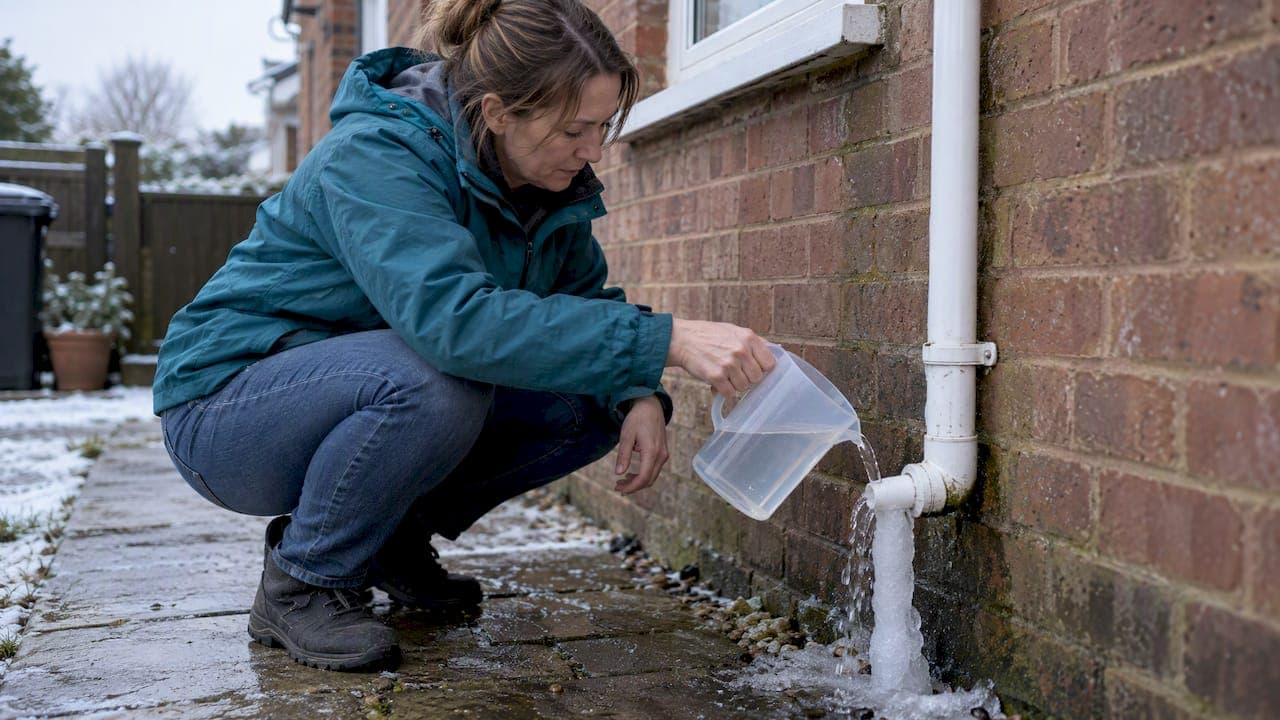
If your boiler has stopped firing during a cold snap, the most likely cause is a frozen condensate pipe. Thaw it at ground level with warm (not boiling) water or a hot-water bottle, then reset the boiler and wait a few minutes to see if it restarts. If it does not fire up, or the pipe runs at height, stop and book a qualified engineer rather than carry on.
TL;DR:
- Let kettle water cool for 10 to 15 minutes, apply it from the drain toward the boiler, then reset and wait 2 to 3 minutes.
- Use warm water or a heat wrap, never boiling water, a flame, or a heat gun; thaw only pipes safely reachable from the ground.
- Call a Gas Safe registered engineer if the pipe is elevated, damaged, hard to identify, or the boiler fails to restart or repeats its fault.
- Start with weatherproof insulation, a clear drain outlet, a shorter external run, and proper fall toward the drain; reserve rerouting or trace heating for repeat freezes.
Table of Contents
- How to tell the condensate pipe is frozen
- Step-by-step safe thawing procedure
- How to stop the condensate pipe freezing again
- When to stop and call an engineer
- Engineer tips from Michael at Your-Local-Plumber.co.uk
- What matters most when your boiler stops in the cold
- Your-Local-Plumber.co.uk: emergency and prevention services
- FAQ
- Sources
How to tell the condensate pipe is frozen
The condensate pipe is the plastic pipe that carries waste water from the base of a modern condensing boiler out to an external drain, soil stack or gulley. On most homes it runs down an outside wall before disappearing into the ground, and a short length left exposed to the cold is usually where ice forms first.
A few signs point clearly to a freeze:
- Your boiler displays a fault or lockout code and will not fire up.
- You hear gurgling or bubbling noises as the boiler tries and fails to drain.
- The exposed outdoor section of pipe feels solid or has visible ice inside it.
Before touching anything, check the pipe is reachable from ground level and that the area underfoot is clear, since spilt water can freeze into a slip hazard within minutes. If you cannot tell which pipe is the condensate line, or it runs above head height, stop here and arrange a visit instead.
Step-by-step safe thawing procedure
Once you have confirmed the frozen section is at ground level, the fix is usually quick.
- Turn the boiler off at the controls, or isolate the electrics, and put on a pair of gloves before you start.
- Check your footing. Clear any ice or standing water nearby so you are not working on a slippery surface.
- Boil a kettle, then let it stand for 10 to 15 minutes so the water is warm rather than boiling, since boiling water can crack the plastic pipe. A hot-water bottle or heat wrap works just as well and carries less risk.
- Pour the warm water over the pipe in stages, starting at the point where it enters the drain and working back towards the boiler, or wrap the hot-water bottle around the frozen section and hold it in place until the blockage clears.
- Once the ice has gone, press the reset button on the boiler and wait 2 to 3 minutes for it to fire up again.
- If the boiler still will not restart, or the same fault reappears, stop attempting further thaws and call a qualified engineer.
Pro Tip: Keep the drain outlet clear of ice and slush as you work, since water that pools and refreezes around the base of the pipe can block drainage again within the hour.
Never use a naked flame, a hot air gun or boiling water straight from the kettle. Local authority guidance is consistent on this point: only attempt a thaw at ground level, and call an engineer if you are at all unsure.
How to stop the condensate pipe freezing again
A frozen condensate pipe is rarely a one-off if the underlying run is exposed, so a handful of changes make a real difference before the next cold snap.
- Fit weatherproof, UV-stable lagging around any external section of pipe.
- Add a drain cover to stop the outlet itself icing over.
- Minimise the length of pipe left outside where the layout allows it.
- Check the pipe has a proper fall towards the drain so water cannot sit and freeze in a dip.
Prevention measures such as lagging and reducing the external pipe run are the primary steps recommended for cutting the risk of a freeze, with trace heating or internal rerouting kept for properties that keep freezing despite basic insulation.
For persistent problem properties, an engineer can reroute the pipe internally, fit a wider-diameter pipe, install a siphon trap, or add an electrical trace heating cable bonded along the run. Which? notes that increasing the pipe diameter and improving the fall, carried out to manufacturer instructions, are among the more durable fixes for homes with long external runs. Black pipe fixed to a sheltered, sun-facing wall tends to fare better than one on an exposed, north-facing elevation, and keeping a small clearance from the ground helps drainage rather than letting the outlet sit in standing water. If you are weighing up lagging against a full reroute, our guide to avoiding a call-out fee walks through the options, and our piece on pipe insulation and energy efficiency covers lagging materials in more detail.
Cold weather is not confined to pipework either. If draughts and exposure are an issue around your property generally, One Day Doors & Closets has a useful piece on winterising external doors that covers similar exposure principles.
When to stop and call an engineer
DIY thawing has firm limits, and knowing where they sit keeps you safe and avoids making the problem worse.
- The pipe is above ground level or otherwise hard to reach safely.
- The pipe looks cracked, split or damaged rather than simply frozen.
- The fault returns after you have thawed and reset the boiler.
- You are not certain which pipe is the condensate line.
A Gas Safe registered engineer can reroute the pipe internally, fit trace heating, or replace ageing pipework that keeps failing, none of which are jobs to attempt yourself. For a broader view of when professional help beats a DIY attempt, see our guide on thawing frozen pipes safely. Many emergency services, including ours, offer a 60-minute response target and same-day visits where slots allow, so a call does not usually mean a long wait in the cold.
Engineer tips from Michael at Your-Local-Plumber.co.uk
Before you even pick up the phone, jot down three things: where the pipe sits, any error code on the display, and whether it is within arm's reach from the ground. That alone can cut an engineer's diagnosis time right down.
The most common mistakes Michael sees are homeowners pouring boiling water straight onto the pipe, climbing to reach a run at height, and clearing the ice but leaving the drain outlet itself blocked so the fault returns within the hour.
Pro Tip: Take a photo of the fault code on the boiler display before you reset it, since it often disappears once the system fires up again and an engineer may ask for it.
When a same-day visit is booked, expect a quick diagnosis, a clear quote before any work starts, and either a repair on the spot or a recommendation for preventive work such as lagging or rerouting.

What matters most when your boiler stops in the cold
The advice that circulates every winter tends to focus on dramatic failures: burst pipes, flooded kitchens, boilers condemned on the spot. A frozen condensate pipe is usually none of these things. It is a built-in safety shutdown, not a mechanical fault, and in most cases it is fixed within the hour with nothing more than warm water and patience.

Where conventional advice falls short is in treating every frozen pipe the same way. The reader with a short, ground-level run behind the house is in a completely different position to the one whose pipe runs along a first-floor wall. The first should feel confident thawing it themselves; the second should not attempt it at all, regardless of how many online guides make it look simple.
If there is one thing to prioritise, it is judging your own access honestly before reaching for a kettle. Getting that call right matters more than any technique for applying heat.
— Michael
Your-Local-Plumber.co.uk: emergency and prevention services
When the fix is not straightforward, or the pipe sits somewhere we would not recommend working yourself, we offer a direct route back to a working boiler without the trial and error. Our emergency heating engineer service targets a 60-minute response, with no call-out fee and a fix-no-fee guarantee, so you are not paying for a diagnosis that goes nowhere.

- Emergency diagnosis and repair for a frozen or persistently faulty condensate pipe.
- Internal rerouting, insulation and trace heating fitted where a pipe keeps freezing.
- A new boiler quote where replacement makes more sense than repeated repairs.
Every visit comes with a transparent quote before work starts and a 12-month warranty on the job. Get in touch through our plumbing services page for same-day help.
FAQ
What happens if a condensate line freezes?
The boiler detects that it cannot drain safely and shuts itself down as a protective measure, usually showing a fault code or lockout rather than causing damage. Once the ice is cleared and the boiler reset, normal service resumes in most cases within minutes.
How do I know if my boiler condensate pipe is blocked?
Look for a fault code on the display, a gurgling or bubbling sound as the boiler tries to drain, or the boiler simply refusing to fire. Checking the exposed outdoor section of pipe for visible ice is usually the quickest way to confirm a freeze rather than another kind of blockage.
Can pipes freeze in one night in the UK?
Yes, a short spell of sub-zero temperatures overnight is enough to freeze an exposed, uninsulated section of condensate pipe, particularly if it runs along a cold, shaded wall. This is why lagging and reducing the external run are worth doing before the cold sets in rather than after.
How much does it cost to replace a condensate pipe?
Current prices for heating and boiler work, including pipe repairs, rerouting or replacement, are available on our website. Where a new boiler is the better option, prices for boilers supplied and fitted can be found on our website.
Sources
- How to thaw a frozen boiler condensate pipe - Which?
- Protecting your pipes from cold weather – Welwyn Hatfield Borough Council
- If your pipes freeze in cold weather - Cambridge City Council
- Boilers - Energy Saving Trust