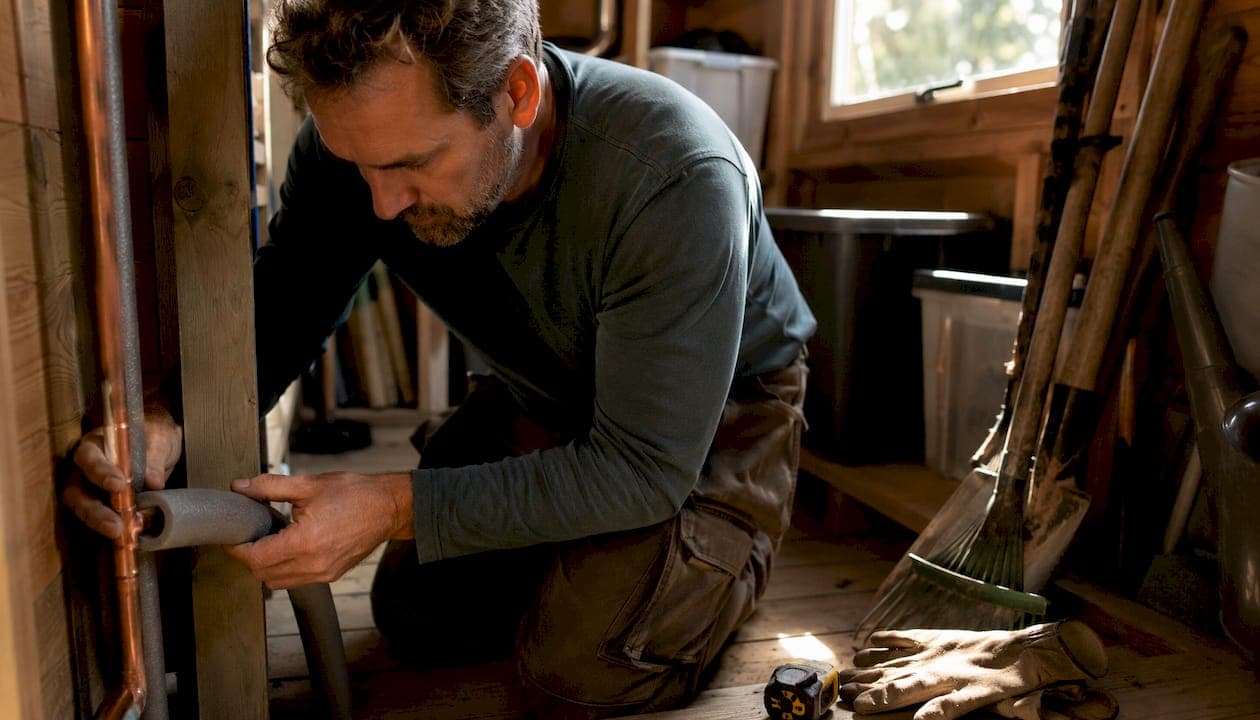
Pipe insulation is one of the cheapest, most effective things you can do to your home's plumbing. It reduces heat loss from hot water pipes, protects against freezing in cold weather, and pays for itself within weeks of fitting. The Energy Saving Trust estimates that insulating hot water pipes saves around £6 per year on energy bills, while adding a jacket to an uninsulated hot water tank can save £45–£85 annually depending on house type. For a material that costs roughly £1.50–£2 per metre, the maths is straightforward.
Key benefits at a glance:
- Reduces heat loss from hot water pipes, so your boiler works less
- Protects pipes from freezing in lofts, garages, and other cold spots
- Delivers hotter water to taps and radiators faster
- Lowers your household carbon footprint
- Costs very little and pays back quickly through energy savings
- Extends the working life of pipework by preventing condensation and corrosion
Why pipe insulation works: the science in plain English
Pipe insulation means wrapping your pipes in a material that slows the transfer of heat between the pipe and the surrounding air. Hot water naturally loses heat to cooler surroundings through three mechanisms: conduction (heat passing directly through the pipe wall), convection (warm air rising away from the surface), and radiation (heat emitting outward). A layer of insulation creates a thermal barrier that interrupts all three.
The critical word is continuous. A pipe wrapped in foam for 90% of its length but left bare at a valve or elbow still loses heat at that gap. Gaps at elbows and valves can cause local freezing within an hour in extreme cold. The insulation only works as a system, not as a collection of separate pieces.
British Standard foam pipe insulation, specifically closed-cell tubular foam meeting the W35 standard with a thermal conductivity of 0.035 W/mK, is the benchmark product for UK installations. It is pre-slit for easy fitting, moisture-resistant, and available at most builders' merchants. This is the material UK water industry guidance points to as the minimum acceptable standard for pipes outside the thermal envelope.
The real benefits of insulating your pipes
Energy savings come first. When hot water travels through an uninsulated copper pipe in a cold garage or loft, the pipe radiates heat constantly. By the time water reaches your tap, it is already cooler than when it left the boiler. Your boiler then fires more often to compensate, and you run the tap longer waiting for hot water to arrive, wasting both energy and water.
£5–£10 per metre, per year. The Carbon Trust estimates that insulating a 22mm hot water pipe saves around £5–£10 per metre annually, depending on location and how long the system runs. A modest home with 10 metres of bare pipe in a cold garage could recover the entire material cost within weeks.
Freeze protection is the other half of the story. A burst pipe in a loft or garage is not just inconvenient. It can cause thousands of pounds of water damage before anyone notices. Uninsulated pipes in cold locations such as lofts, garages, and external runs are at high risk of cracking when frozen water expands inside them. Insulation does not prevent freezing indefinitely, but it buys time, slowing heat loss until the ambient temperature rises again.
Comfort and carbon. Insulated pipes deliver hotter water faster, which means shorter waits at the tap and less water wasted running it cold. Over a year, that adds up. There is also an environmental dimension: every unit of heat you stop wasting is a unit your boiler did not need to generate, which directly reduces your household's carbon output.
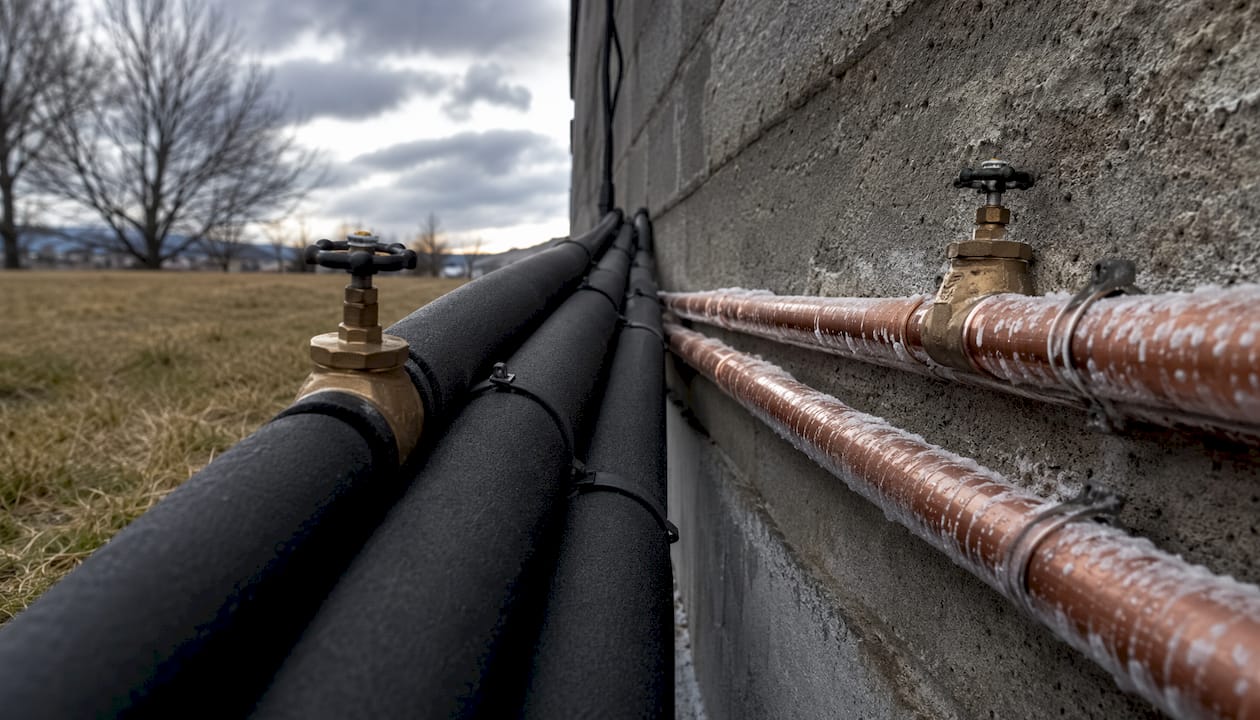
Condensation and corrosion prevention round out the picture. Cold water pipes in warm, humid spaces can sweat, and that moisture accelerates corrosion. Insulation keeps the pipe surface above the dew point, preventing the condensation that shortens pipe life.
What materials are used for pipe insulation?
The choice of material depends on where the pipe sits, what temperature it carries, and whether it faces moisture or mechanical damage.
| Material | Thermal performance | Moisture resistance | Best for | Notes |
|---|---|---|---|---|
| Closed-cell foam (BS W35) | Good (0.035 W/mK) | Excellent | External and loft pipes | UK standard; pre-slit for easy fitting |
| Rubber foam | Good | Very good | Internal hot and cold pipes | Flexible; suits awkward runs |
| Fibreglass | Good | Poor | Internal pipes only | Not acceptable for external use per UK guidance |
| Mineral wool (Rockwool) | Good | Poor | Internal applications | Not suitable for outdoor or damp locations |
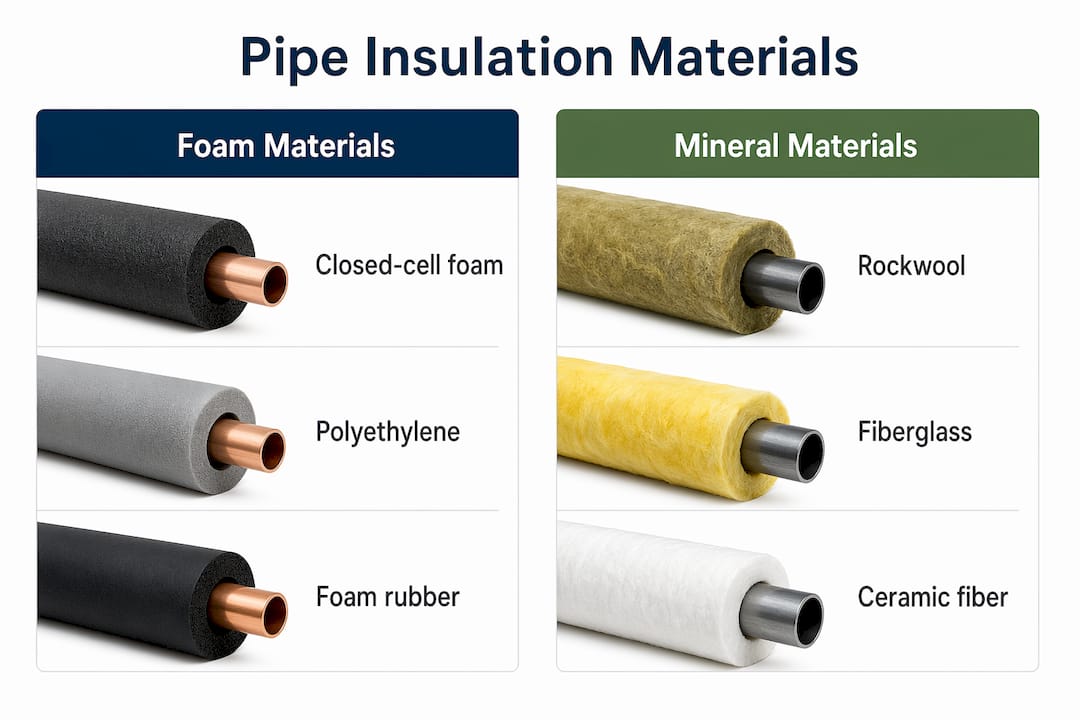
Closed-cell foam is the go-to for any pipe outside the thermal envelope, meaning any pipe in an unheated space. Rockwool and fibreglass types are not acceptable for external use because they absorb moisture, which destroys their insulating properties and can accelerate corrosion. For internal pipes in airing cupboards or under sinks, rubber foam or standard foam tubes both work well and are easy to cut and fit.
Thickness matters too. BS5422 sets minimum insulation thicknesses for pipework, and for pipes in extreme conditions, such as those fully outside the building, a minimum 32mm wall thickness is typically required. For internal pipes in heated rooms, thinner foam is usually sufficient.
How to install pipe insulation properly
Getting the installation right is as important as choosing the right material. Foam tubes are easy to fit, but a few common mistakes undo most of the benefit.
Key installation points:
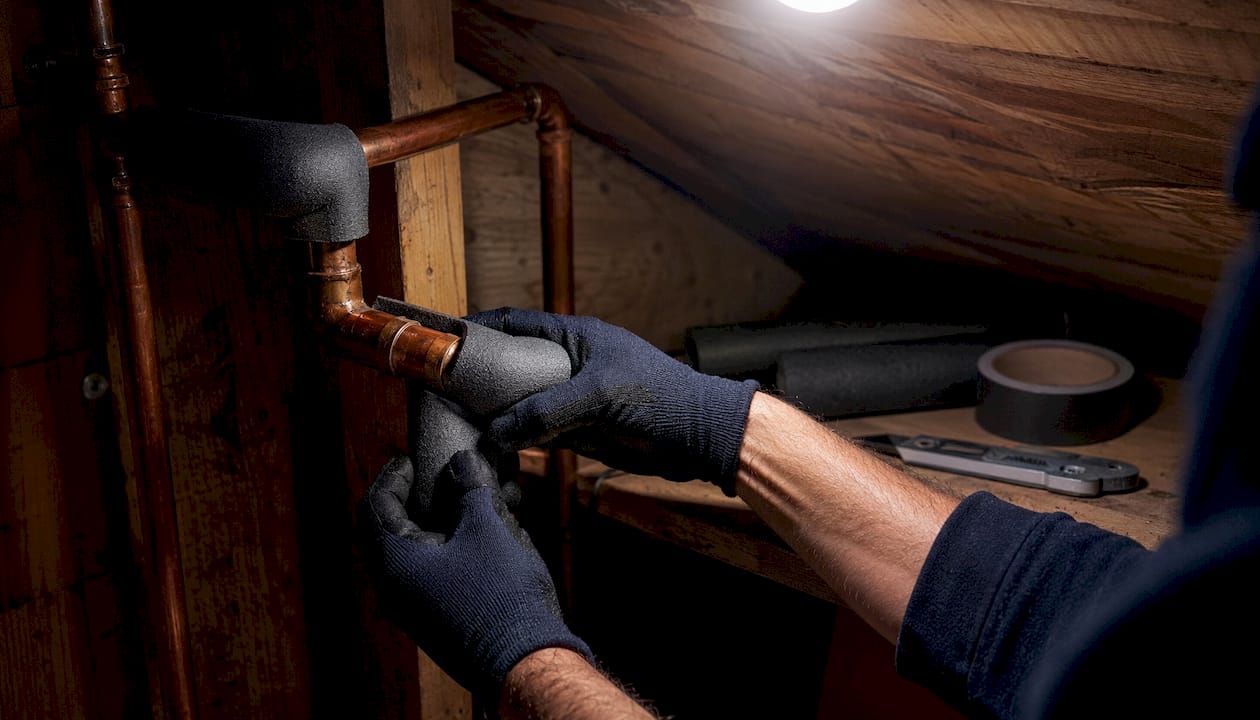
- Cover every section of pipe continuously, including bends, valves, and fittings. Do not leave gaps.
- Seal all joints with manufacturer's tape or a compatible sealant. Unsealed seams let cold air in.
- Use pipe clips designed to support the pipe without compressing the insulation. Crushed foam loses its thermal properties.
- Match insulation thickness to the pipe's location. Pipes in extreme conditions need thicker coverage than those in heated rooms.
- Do not insulate pipes directly beneath a cold water tank in the loft. You need heat rising from the room below to keep that water from freezing.
- Protect any insulation exposed to the elements with weatherproof tape or a UV-stable outer wrap.
Pro Tip: When insulating around valves and elbows, cut the foam at 45-degree angles and butt the pieces tightly together before taping. This is far more effective than trying to stretch a single piece around a bend, and it eliminates the cold spots that cause the most freeze damage.
Continuous closed-cell insulation prevents moisture ingress and cold spots. Partial or poorly sealed insulation is not just less effective; it can create concentrated freeze-risk zones at exactly the points where pipes are most vulnerable. For a more detailed walkthrough of the DIY installation process, the steps are straightforward even for a first-time DIYer.
UK cost savings and freeze prevention: what the data shows
The financial case for pipe insulation in the UK is clear, and the payback period is unusually short compared to most home energy measures.
Payback in weeks, not years. DIY foam tube installation often pays for itself over a single winter, given that materials cost around £1.50–£2 per metre and the annual saving per metre of hot water pipe can reach £5–£10.
The freeze-prevention benefit is harder to quantify but potentially far more valuable. A single burst pipe in a loft can cause thousands of pounds of damage to ceilings, floors, and contents. Water industry bodies, including Water UK, urge homeowners to lag pipes in lofts and garages specifically because uninsulated pipework in those locations is the most common source of freeze-thaw damage during cold snaps.
Where to prioritise insulation in a UK home:
- Loft pipes, especially those above ceiling insulation where no warmth rises from below
- Garage and outbuilding pipework, which sits in effectively outdoor temperatures
- External pipe runs and meter boxes
- Pipes under suspended ground floors and in unheated utility rooms
- The first metre of pipe leaving the hot water cylinder, where heat loss is highest
The concept of the thermal envelope is central here. Any pipe outside the heated living space of your home needs more protection than one running through a warm kitchen. UK water industry guidance requires that pipes outside the thermal envelope meet extreme-condition standards, not just normal ones. That distinction drives the choice of material, thickness, and sealing method.
Pipe insulation also works year-round. In summer, when the boiler runs only for hot water, every unit of heat lost through bare pipes is entirely wasted. Insulated pipes retain warmth between uses, so the cylinder fires less often and hot water arrives at the tap faster. That is a genuine energy-saving home upgrade with no seasonal off-switch.
Does your climate or setting change what you need?
The short answer is yes, quite significantly. A pipe running through a heated kitchen needs only basic foam lagging. The same pipe routed through an unheated garage in northern Scotland needs closed-cell foam at 32mm wall thickness, sealed seams, and possibly a weatherproof outer wrap.
UK guidance distinguishes between two protection levels. Normal conditions apply to pipes in unheated rooms within the thermal envelope, where 12 hours of freeze protection is the minimum standard. Extreme conditions apply to pipes fully outside the building or in spaces that are unheated for more than 12 hours a day, such as garages, communal areas in flats, and roof spaces above ceiling insulation. Insulation in extreme conditions must be substantially increased beyond the normal minimum.
Coastal and rural properties with exposed external pipework face additional wind-chill effects that accelerate heat loss. In those settings, the standard 25mm foam tube that works fine for an internal airing cupboard pipe is simply not enough. Older properties with gravity-fed cylinder systems often have long pipe runs through multiple unheated zones, which compounds the heat loss problem and makes thorough insulation even more worthwhile.
How to tell if your pipes need insulation
The most obvious sign is bare copper or plastic pipe visible in a cold space. If you can see unlagged pipework in your loft, garage, or under a suspended floor, it needs insulating. No further diagnosis required.
Beyond the obvious, a few symptoms point to inadequate insulation. If you wait more than 20–30 seconds for hot water at a tap that is not far from the cylinder, heat is being lost along the pipe run. If your boiler fires frequently even when no hot water is being drawn, the cylinder or pipes are losing heat faster than they should. Cold patches on pipes that should be carrying hot water are another clear indicator.
Pipe insulation should be inspected annually during boiler servicing, since foam can settle, split, or shift over time, creating gaps that negate the protection. If you find sections where the foam has pulled away from a joint or compressed around a clip, replace those sections before the next cold spell. A torch and ten minutes in the loft during an annual service visit is all it takes to catch problems early. For a broader check of your winter plumbing readiness, pipe insulation is always the first item on the list.
Let Your-local-plumber handle the hard-to-reach pipes

Some pipe runs are straightforward DIY jobs. Others, particularly those buried under floors, running through walls, or connected to complex valve arrangements, are worth leaving to a professional. Your-local-plumber carries out pipe insulation and plumbing work across the local area, with experienced engineers who know exactly where the vulnerable spots are in a typical UK home. Call 07760 547 999 or book online to arrange a visit.
Key takeaways
Pipe insulation is one of the fastest-payback energy improvements available to UK homeowners, combining immediate bill savings with meaningful protection against freeze damage.
| Point | Details |
|---|---|
| Energy savings are real and quick | Insulating hot water pipes saves around £6 per year for a typical UK home; tank insulation saves £45–£85 annually. |
| Freeze protection is the bigger risk | Uninsulated loft and garage pipes can crack within an hour of extreme cold at an uninsulated gap. |
| Use British Standard closed-cell foam | W35 standard foam (0.035 W/mK) is the UK minimum for pipes outside the thermal envelope. |
| Continuous coverage is non-optional | Gaps at valves and bends are where freezing starts; seal every joint with manufacturer's tape. |
| Inspect annually during boiler servicing | Foam settles and splits over time; a quick check prevents gaps from becoming costly problems. |