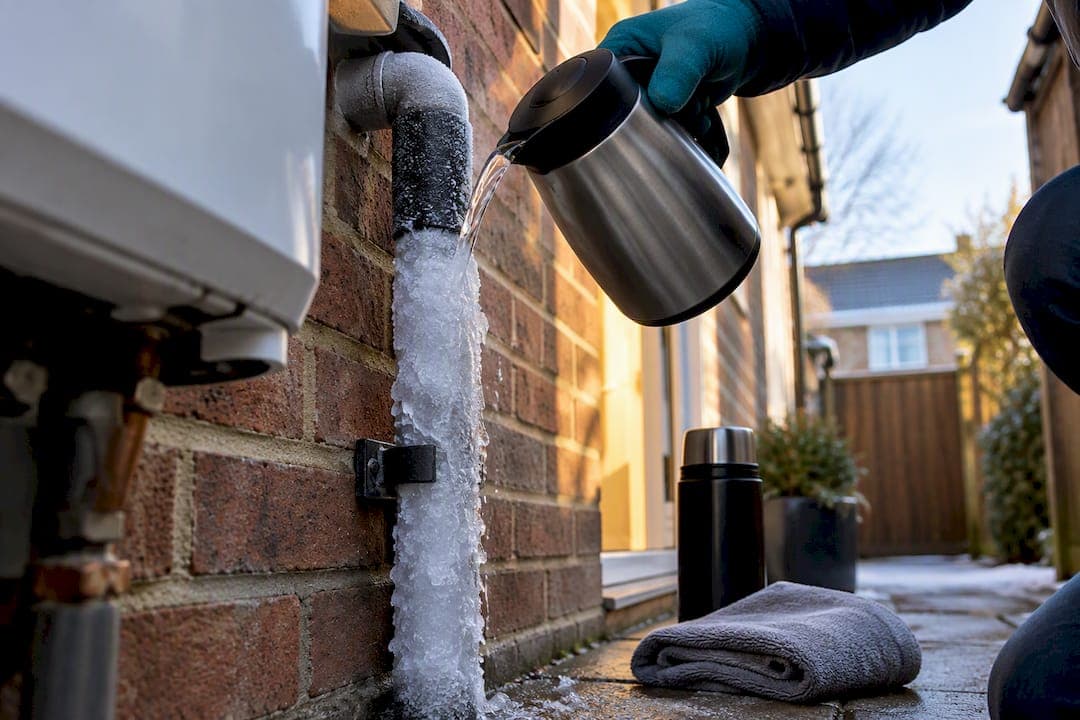
If your boiler has cut out in cold weather, the most likely culprit is a frozen condensate pipe, and the safest first move is to check the white plastic outlet on the outside wall. If it's frozen and within reach, thaw it gently with warm, not boiling, water or a hot water bottle, then reset the boiler. Stop and call a Gas Safe engineer if the pipe is hidden, part of the flue, or fault codes persist after thawing.
TL;DR:
- A frozen condensate pipe outside your home is the most common cause of boiler shut-downs during cold weather, especially at bends, dips, or through cold wall cavities.
- Thaw the visible pipe section with warm, not boiling, water or a hot water bottle, and confirm flow before resetting the boiler or calling a professional.
- Call a Gas Safe engineer if the pipe is inaccessible, the fault code persists after thawing, or you notice leaks or damp patches, to prevent damage or safety hazards.
- Upgrading external pipe insulation, rerouting the pipe internally, or installing trace heating can significantly reduce the risk of freezing recurrence.
- DIY thawing is typically cost-effective; professional repairs or rerouting usually range from £75 to £150, with higher costs for difficult access or extensive rerouting.
Table of Contents
- Symptoms and quick checks to confirm a condensate pipe blockage
- Step-by-step DIY: safely thawing or unblocking a condensate pipe
- When to call a professional and safety or legal precautions
- How to prevent future condensate pipe blockages
- Michael's view: common patterns we see and what to expect from a visit
- How Your Local Plumber can help with condensate pipe problems
- Sources
- FAQ
Symptoms and quick checks to confirm a condensate pipe blockage
A boiler that locks out during a cold spell, gurgles before shutting down, or flashes a fault code is usually telling you the condensate line has frozen or clogged. Manufacturers use different codes for the same underlying problem: a common example is Vaillant's F28 or F29, while Worcester Bosch boilers often display an "EA" fault when condensate drainage is disrupted.
The condensate pipe carries the slightly acidic water produced by a condensing boiler, usually running from the boiler down through an internal or external wall to a drain. Freezing tends to happen at predictable points: the exposed outlet outside, any bends or dips in the run, and sections that pass through a cold cavity wall.
Before assuming the worst, run through a few checks:
- Look at the external pipe for visible ice, especially near the outlet.
- Listen for gurgling or bubbling from the boiler just before it shuts down.
- Check whether the fault code matches known condensate issues for your boiler's brand.
If any of these match, you're very likely dealing with a frozen or blocked condensate pipe rather than a more serious fault.
Step-by-step DIY: safely thawing or unblocking a condensate pipe
Before you touch anything, confirm which pipe you're dealing with. The condensate pipe is a narrow plastic pipe, typically white or grey, separate from the wider metal flue that vents combustion gases. Never apply heat, water or force to the flue, and avoid naked flames anywhere near either pipe. If the pipe runs at height or somewhere you'd need a ladder to reach safely, skip ahead to calling a professional instead.
For an accessible outlet, gather a few simple things: warm water from the kettle mixed with cold in a jug or watering can (never boiling water), a hot water bottle or heat wrap as an alternative, and gloves plus sturdy, grippy footwear, since spilled water on a frozen path is a genuine slip risk.
- Locate the external condensate outlet and check it for a visible ice blockage.
- Pour the warm water slowly and directly over the frozen section, starting at the outlet and working back towards the wall.
- Wrap a hot water bottle around the pipe instead if you prefer not to pour water outdoors in freezing conditions.
- Watch for a trickle of water escaping the outlet, which confirms the ice has cleared.
- Clear any visible debris, leaves or grit from the outlet once the ice has gone.
- Reset the boiler following the manufacturer's instructions and wait for it to fire up normally.
Pro Tip: Keep a small jug and a hot water bottle near the boiler cupboard during winter so you're not searching for supplies mid-thaw.
Which? and manufacturers both recommend attempting this kind of safe thaw before booking an engineer, since it often resolves the fault without any call-out at all. If the boiler restarts and runs quietly without repeating the fault code, you're done.
If pouring warm water over the visible pipe doesn't restore flow, the ice may be hidden inside a cavity wall, or you might be dealing with hardened sludge or a glued joint rather than ice. At that point, further DIY risks damaging the pipe, and it's time to call in a professional. For more detail on safe thawing technique, see this guide to thawing frozen pipes.
When to call a professional and safety or legal precautions
Some situations call for a Gas Safe engineer rather than another attempt with a hot water bottle. Cutting, extending or permanently rerouting condensate or flue pipework is gas work, and doing it yourself can be unsafe and invalidate your boiler's warranty.
Call a professional when:
- The pipe runs at height, through a roof space, or somewhere you can't reach safely.
- The fault code returns after you've thawed the visible section.
- You notice damp patches or water inside a wall, suggesting a hidden leak or freeze.
- You're not confident which pipe is the condensate line and which is the flue.
A frozen condensate fix typically costs £75–£150 for a professional thaw or diagnostic visit when DIY doesn't work, according to Worcester Bosch's own guidance, though winter demand can push this higher. Access difficulties, the need to reroute pipework, or adding insulation or trace heating will all affect the final price. When you call, have the fault code, a note of whether you've already attempted thawing, and photos of the external pipe run ready. It speeds up diagnosis and often means a shorter visit.
How to prevent future condensate pipe blockages
Most repeat problems come down to pipe routing, and there's a fair amount homeowners can do without calling anyone.
- Ask an engineer to run the condensate pipe internally where possible, since industry guidance from HHIC treats this as the preferred option over an external run.
- Fit weatherproof, UV-resistant lagging around any external section, insulating right up to the pipe tip rather than stopping short of it.
- Ask your installer to eliminate dips and keep the external run short, vertical and with a steady fall, since horizontal sections let condensate pool and freeze.
- Consider upsizing the pipe where it must run externally, since a wider bore is more resistant to freezing.
- Ask about trace heating for a persistently cold or exposed run. It's the most reliable protection against freezing, but it needs professional sizing and fitting.
Pro Tip: If your boiler was installed years ago with a long external condensate run, ask an engineer at your next service whether it could be rerouted internally instead.
Lagging a pipe is a job most confident homeowners can do themselves. Rerouting, upsizing pipework or fitting trace heating means bringing in a Gas Safe engineer, both for competence and because it affects the boiler's warranty. For broader seasonal advice, see these winter plumbing tips.
Michael's view: common patterns we see and what to expect from a visit
On winter callouts, the two patterns repeat: a frozen outlet that a customer could have thawed themselves, and a hidden freeze inside a cavity wall that no amount of kettle water would have reached. On arrival, an engineer inspects the full run, thaws it safely if needed, and advises on insulation or rerouting before quoting for any further work using the latest job management software for heating engineers to streamline scheduling and updates. For related troubleshooting, see this piece on boilers that won't ignite.
— Michael
How Your Local Plumber can help with condensate pipe problems

When a hot water bottle and a jug of warm water haven't fixed things, or the pipe is somewhere you simply can't reach, we can take it from there. Our emergency plumbing or heating engineer service offers a 60 minute response for thawing, diagnostics and urgent condensate pipe work, with no call-out fee and payment only after the job's done. If your pipe run needs a permanent reroute, better insulation, or your boiler is old enough that a repair isn't worth it, we can quote for that too.
Before you call, it helps to have your fault code, whether you've already tried thawing the outlet, and a photo or two of the external run.
- Book a general plumbing visit for condensate repair, insulation or reroute work.
- Request an emergency heating engineer for same-day thawing and diagnostics.
- Ask for a new boiler quote if repeated condensate problems point to an ageing system.
Sources
- How do I know that my condensate pipe is blocked? | Worcester Bosch
- How to thaw a frozen boiler condensate pipe | Which?
- HHIC launch condensate pipe guidance for heating engineers
FAQ
How do I know if my condensate pipe is clogged?
Your boiler will usually shut down, sometimes after gurgling or bubbling noises, and display a fault code linked to condensate drainage. Checking the external outlet for ice is the quickest way to confirm it.
How do I unblock a condensate pipe myself?
Pour warm, not boiling, water over the outlet and work back along any visible bends, or wrap a hot water bottle around the frozen section. Once you see a steady trickle from the outlet, reset the boiler and it should restart normally.
How much does it cost to replace or fix a condensate pipe?
A professional thaw or diagnostic visit typically costs £75 to £150 when DIY methods haven't worked, though prices can rise during busy winter periods. The final cost depends on access, whether the pipe needs rerouting, and any insulation work involved.
What should I do if my condensate pipe is full of water?
Check whether the pipe is frozen further along its run rather than just at the visible outlet, since a hidden freeze inside a cavity wall won't clear with surface thawing. If warming the accessible sections doesn't restore flow, it's worth calling a Gas Safe engineer rather than continuing to pour water over it.