TL;DR:
- Proper plumbing ventilation maintains pressure balance and prevents sewer gases from entering homes. UK regulations require vent pipes to extend at least 900 mm above nearby openings, and improper trap-to-vent distances can cause siphonage. Regular inspections and correct vent routing are essential for system safety and efficiency.
Plumbing ventilation is the process of introducing airflow into drainage systems to balance pressure and protect trap water seals from siphoning. Without it, sewer gases enter the home as pressure swings pull water out of traps, leaving your pipes open to toxic and foul-smelling air. The industry term for this system is the drain-waste-vent (DWV) system, and every residential property in the UK relies on it to function safely. This guide to plumbing ventilation covers code requirements, vent types, common faults, and practical upgrades so you can keep your home's system working correctly.
What does a guide to plumbing ventilation cover?
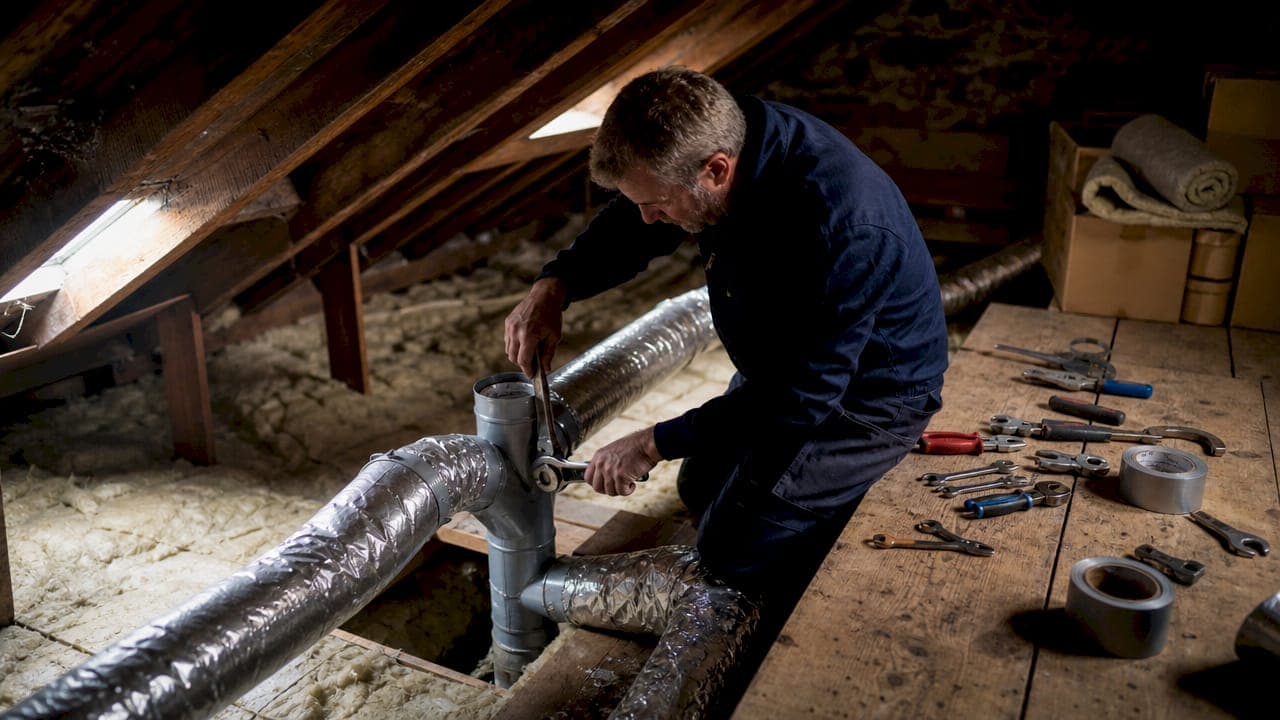
Proper plumbing ventilation is fundamental to both system efficiency and healthy indoor air quality, especially in homes with multiple fixtures. The DWV system works by connecting every fixture trap to a network of vent pipes that terminate outside the building, usually through the roof. These pipes allow air in and out of the drainage system, keeping pressure near atmospheric levels. When pressure stays balanced, the water sitting in your traps stays put and blocks sewer gas from rising into your kitchen or bathroom.
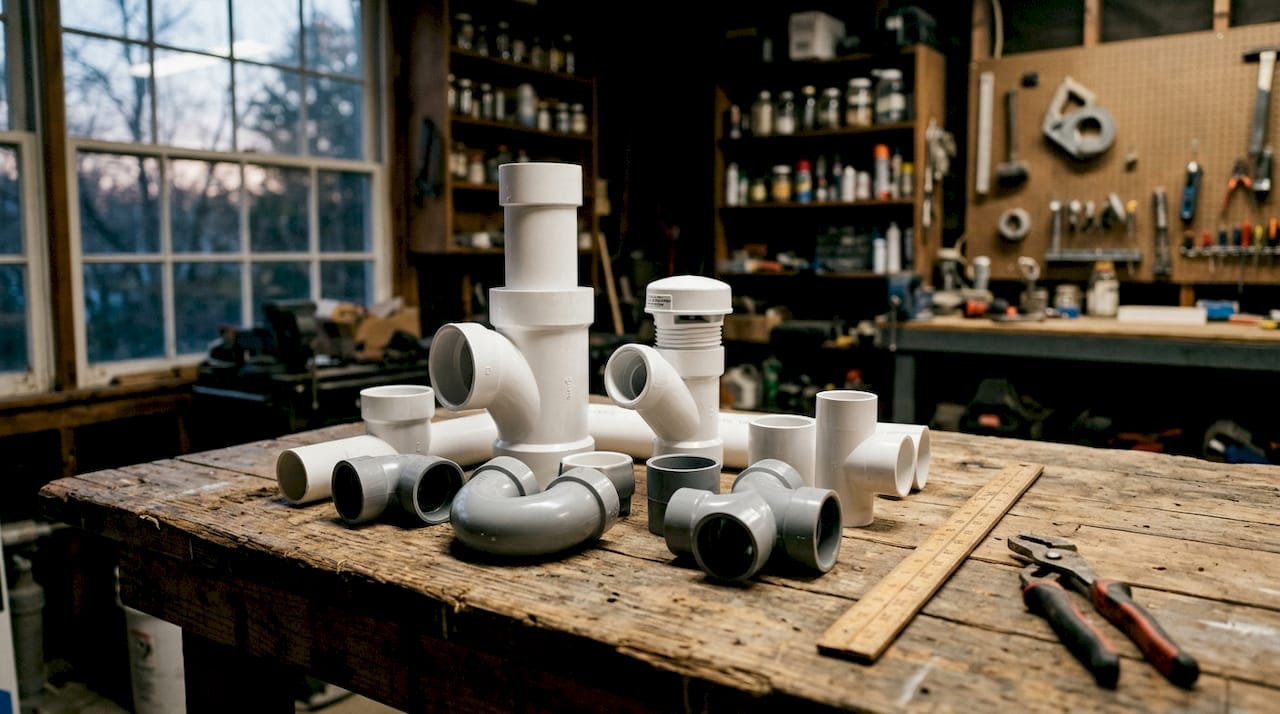
The main components you will encounter are soil stacks, vent pipes, trap arms, and air admittance valves (AAVs). A soil stack is the large vertical pipe that carries waste from toilets and other fixtures down to the drain. Vent pipes branch off the drainage system and rise to the roof or connect to an AAV. Understanding how these parts interact is the starting point for any homeowner dealing with ventilation problems or planning a renovation.
What are the UK code requirements for plumbing vent pipes?
UK Building Regulations require soil and vent pipes that terminate through the roof to extend at least 900 mm above any window, door, or ventilation opening within 3 metres. This rule prevents sewer odours from drifting back into the property through open windows. Failing to meet this height is one of the most common compliance errors in older homes and DIY installations.
The table below compares key dimensional requirements between UK Building Regulations and the International Plumbing Code (IPC) and International Residential Code (IRC), which are widely referenced in professional practice.
| Requirement | UK Building Regulations | IPC / IRC 2024 |
|---|---|---|
| Vent termination height | 900 mm above openings within 3 m | 6 inches above roof; 10 ft from openings |
| Max trap-to-vent distance (1.25 in pipe) | Not specified by dimension | 2.5 ft trap arm |
| Max trap-to-vent distance (4 in pipe) | Not specified by dimension | 10 ft trap arm |
| AAV permitted | Yes, where accessible and ventilated | Yes, ASSE 1051 listed |
| Vent pipe slope | Drain to vent, no water trapping | Drain to vent, no water trapping |
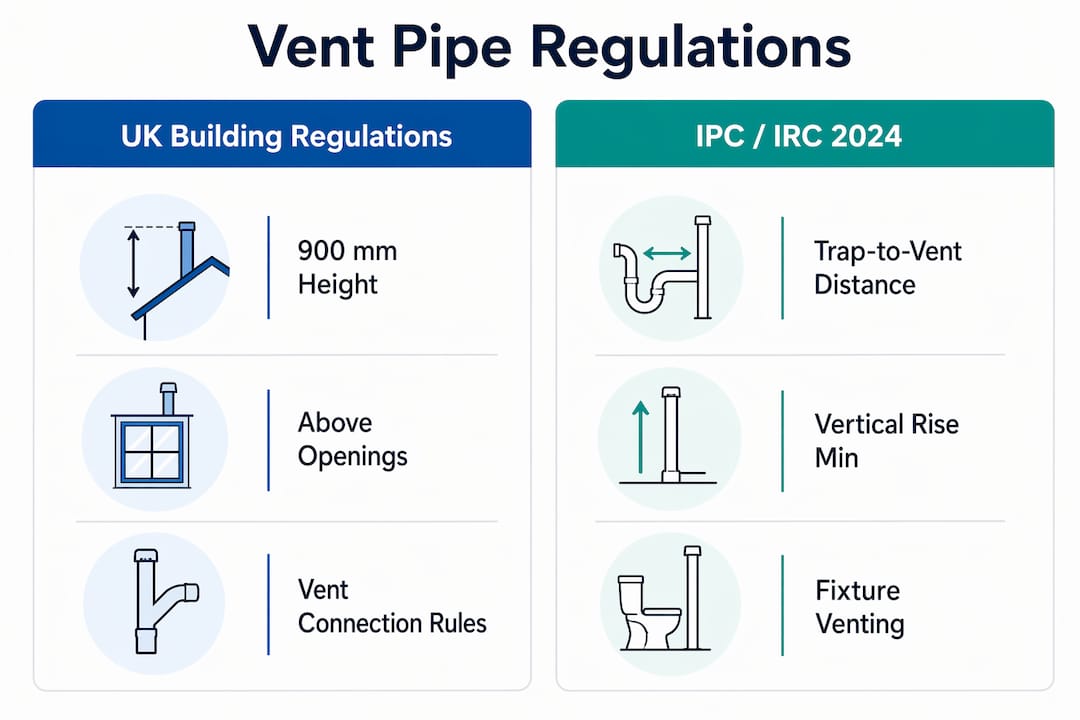
The IPC sets trap-to-vent distances by trap size, ranging from 5 ft for 1.25-inch traps up to 16 ft for 4-inch traps. Exceeding these distances risks trap seal loss through siphonage. UK regulations do not always specify these distances numerically, but the underlying principle is identical: keep the vent close enough to the trap to prevent pressure imbalance.
Each vent connection must also sit above the pipe centreline, with a minimum vertical rise of 6 inches above the fixture flood level before any horizontal offset. This prevents the vent pipe from filling with water and behaving as a drain rather than an air path.
Pro Tip: Before any renovation, check your UK plumbing regulations to confirm vent pipe heights and distances. A five-minute check now saves a costly correction later.
How do the different types of plumbing ventilation systems work?
Residential properties use several venting methods, and the right choice depends on your layout, pipe sizes, and local code compliance.
Individual venting connects a dedicated vent pipe directly to each fixture's trap arm. It is the most reliable method because each fixture has its own protected air supply. The downside is that it requires more pipework, which makes it expensive in tight spaces.
Wet venting allows one pipe to serve as both a drain and a vent for multiple fixtures simultaneously. It is common in bathrooms where a basin and bath share a single vent run. Wet venting reduces the number of pipes needed but requires careful sizing to avoid the vent filling with water.
Common venting connects two fixtures on opposite sides of a wall to a single vent pipe between them. This works well for back-to-back basins in en-suite bathrooms. Both fixtures must be at the same level for the system to function correctly.
Soil and vent pipes are the backbone of UK residential drainage. The soil stack handles waste from toilets and connects to branch pipes from other fixtures. In most UK homes built before the 1980s, the soil stack vents through the roof as an open pipe.
| Vent type | Pros | Cons | Typical use |
|---|---|---|---|
| Individual vent | Most reliable, code-compliant | More pipework, higher cost | All fixtures, especially toilets |
| Wet vent | Fewer pipes, space-saving | Sizing critical, limited fixtures | Bathrooms with basin and bath |
| Common vent | Simple for back-to-back fixtures | Same-level fixtures only | En-suite or mirrored bathrooms |
| Air admittance valve | Easy to install, no roof penetration | Cannot replace main stack vent | Isolated fixtures, extensions |
AAVs deserve particular attention. They open under negative pressure to admit air and close under positive pressure or gravity to prevent gas escape. AAVs must be listed to ASSE 1051, installed with the inlet at least 4 inches above the horizontal drain, and placed in a ventilated, accessible location. They cannot replace the main roof vent stack entirely. AAVs are useful for specific fixtures and difficult vent runs but require proper placement and code adherence to function reliably over time.
Pro Tip: Never install an AAV inside a sealed cabinet or under a floor with no airflow. A valve in an unventilated space will fail and mimic a blocked vent, making diagnosis very difficult.
What are the most common plumbing ventilation problems?
Recognising a venting fault early saves you from expensive repairs and unpleasant living conditions. The symptoms are usually obvious once you know what to look for.
- Gurgling sounds from a basin or bath after flushing a nearby toilet indicate trapped air creating a vacuum effect in the drain line.
- Slow drainage without a visible blockage often points to a vent restriction rather than a blocked pipe.
- Sewer odours in bathrooms or kitchens signal trap seal loss caused by pressure imbalance in the DWV system.
- Toilet bubbling when you run a basin tap is a reliable sign that the shared vent is partially blocked.
- Frost or ice in winter can block roof vent outlets in exposed locations, causing all the above symptoms simultaneously.
Sewer gas odours generally indicate venting failure resulting in trap seal loss, while physical backups indicate drain pipe blockages. Distinguishing between the two helps you target the correct repair. If water drains slowly but does not back up, suspect the vent first.
Roof vent outlets often fail due to blockage from leaves, bird nests, or debris. Clearing these is straightforward with a torch and a length of flexible rod. Check roof vents at least once a year, ideally in autumn after leaf fall.
Pro Tip: Pour a bucket of water into a rarely used floor drain or gulley once a month. Traps in infrequently used fixtures dry out and let sewer gas through. Keeping them topped up costs nothing and prevents odours.
For pipe maintenance habits that support your ventilation system year-round, regular checks on trap water levels and roof vent clearance are the two highest-value tasks.
How do you upgrade plumbing ventilation in an older home?
Older UK homes, particularly those built before the 1970s, often have single-stack systems with no dedicated vent pipes. These rely on careful pipe sizing and fixture placement to prevent siphonage, and they work well until someone adds a new fixture or moves an existing one.
- Audit your existing system. Identify where each fixture connects to the stack and measure trap arm lengths. Compare these against current code distances to find any non-compliant runs.
- Plan vent routes before opening walls. Retrofitting vent paths after finishes are installed is expensive. Confirm vent routes before any drywall or tiling work begins.
- Install AAVs where roof penetration is impractical. A kitchen island or a utility room in a single-storey extension often cannot connect to the main stack without major structural work. An AAV installed in an accessible, ventilated cupboard solves this cleanly.
- Reroute non-compliant trap arms. If a basin or bath trap arm exceeds the permitted distance to the vent, the fix is usually to move the fixture closer to the stack or add a branch vent.
- Upgrade soil stack connections. Older push-fit or solvent-weld connections on soil stacks can crack over time. Replacing them with modern rubber-ring push-fit fittings reduces the risk of leaks and makes future access easier.
Homeowners often misjudge whether a visible vertical pipe is a compliant vent. A pipe rising vertically from a drain is not automatically a valid vent. The connection point, height above flood level, and distance from the trap all determine whether it functions correctly. When in doubt, have a qualified plumber assess the system before you invest in new fixtures.
Key takeaways
Correct plumbing ventilation protects trap seals, prevents sewer gas entry, and keeps drainage flowing freely by maintaining near-atmospheric pressure throughout the DWV system.
| Point | Details |
|---|---|
| Vent height compliance | UK regulations require vent pipes to extend at least 900 mm above nearby openings. |
| Trap-to-vent distances | Keep trap arms within code limits to prevent siphonage and trap seal loss. |
| AAV placement | Install air admittance valves in accessible, ventilated locations and never as a full stack replacement. |
| Fault diagnosis | Gurgling and odours indicate vent problems; backups indicate drain blockages. Treat them differently. |
| Upgrade early | Plan vent routes before finishing walls to avoid costly retrofits in older homes. |
What I have learned from years of plumbing ventilation work
Most homeowners I speak to assume that if their drains flow freely, the ventilation system is fine. That assumption is wrong, and it is the single most common mistake I see. A drain can flow perfectly while the vent is partially blocked, and the only sign is a faint sewer smell that comes and goes. By the time the smell becomes constant, the trap seals are failing regularly and the problem is well established.
The second thing I have noticed is that people underestimate how much a single poorly placed AAV can affect an entire bathroom. I have attended jobs where a plumber installed an AAV inside a sealed vanity unit with no airflow. The valve failed within two years, and the homeowner had spent months assuming the smell was coming from the drain. Opening the cupboard and replacing the valve in a ventilated location fixed everything in under an hour.
My honest recommendation is to treat vent inspection as part of your annual home maintenance, not something you only think about when there is a problem. Check the roof vent outlet for debris every autumn. Top up infrequently used traps monthly. And if you are planning any bathroom or kitchen work, confirm your vent routes with a qualified engineer before the walls go up. The cost of getting it right at the design stage is a fraction of the cost of cutting into finished walls later.
For homeowners thinking about natural ventilation alongside their plumbing system, improving general airflow through the property also helps dilute any residual odours and supports better indoor air quality overall.
— Michael
How Your-local-plumber can help with your ventilation system
Plumbing ventilation faults are rarely obvious until they become serious. A professional inspection identifies blocked roof vents, non-compliant trap arm distances, and failing AAVs before they cause odour problems or structural damage.

Your-local-plumber provides ventilation assessments, vent pipe installation, and AAV upgrades carried out by experienced engineers across the UK. Whether you are dealing with persistent gurgling, a sewer smell you cannot trace, or planning a kitchen or bathroom renovation, the team can assess your existing DWV system and recommend the most practical fix. Transparent pricing and fast response times mean you get a clear answer without waiting. Contact Your-local-plumber to book a plumbing inspection and protect your home's air quality before a small fault becomes a costly repair.
FAQ
What is plumbing ventilation and why does it matter?
Plumbing ventilation introduces airflow into the drain-waste-vent system to balance pressure and protect trap water seals. Without it, sewer gases enter the home through dry or siphoned traps.
How high does a vent pipe need to be above the roof in the UK?
UK Building Regulations require vent pipes to extend at least 900 mm above any window, door, or ventilation opening within 3 metres of the pipe outlet.
Can an air admittance valve replace a roof vent?
An AAV can supplement venting for individual fixtures but cannot replace the main roof vent stack entirely. At least one open vent to atmosphere is required for the system to function correctly.
What causes gurgling sounds in plumbing?
Gurgling occurs when trapped air creates a vacuum in the drain line, usually because a vent is blocked or the trap arm exceeds the permitted distance from the vent connection.
How often should I check my plumbing vent pipes?
Inspect roof vent outlets at least once a year, ideally in autumn, to clear leaves, debris, and any bird nests that could block airflow and cause drainage or odour problems.