
TL;DR:
- Choosing the right plumbing materials depends on application, environment, and compliance requirements, not price. Copper, PEX, and CPVC are suitable for supply lines, while PVC and cast iron are used for drainage systems. Proper material selection and adherence to UK standards ensure long-lasting, safe plumbing installations.
Plumbing materials are the pipes, fittings, and connectors that form every water supply and drainage system in your home. The most common types include copper, PEX, PVC, and CPVC, each engineered for specific functions and conditions. Choosing the wrong material for a repair or renovation is not just a waste of money. It can cause leaks, fail inspections, and create safety hazards. This plumbing materials guide cuts through the confusion so you can make confident decisions, whether you are patching a leak, renovating a bathroom, or planning a full installation.
What are the main types of plumbing materials used in homes?
Residential plumbing pipes divide into two distinct categories: supply lines and drain-waste-vent (DWV) systems. Supply lines carry pressurised water to taps, showers, and appliances. DWV pipes remove waste water and gases from the building. These two systems use different materials, different sizing, and different installation methods. They are not interchangeable.
Supply pipe materials
- Copper is the traditional choice for hot and cold water supply. It is durable, heat-resistant, and has a proven lifespan of 50 years or more in typical UK conditions. The trade-off is cost. Copper requires soldering, specialist tools, and skilled labour, which pushes up installation prices.
- PEX (cross-linked polyethylene) is the fastest-growing supply pipe material in modern residential plumbing. It is flexible, lightweight, and compatible with push-fit or crimp fittings, which reduces installation time considerably. PEX suits both hot and cold water lines.
- CPVC (chlorinated polyvinyl chloride) handles hot and cold potable water and is a popular mid-range option. It is cheaper than copper and easier to work with, using solvent cement rather than a blowtorch.
- Galvanised steel was standard in UK homes built before the 1970s. Galvanised steel is rarely used in modern residential plumbing and is now mostly replaced during renovation work.
Drain-waste-vent (DWV) materials
- PVC (polyvinyl chloride) dominates modern DWV systems. PVC is lightweight, corrosion-resistant, and solvent-welded, making it straightforward to cut and join. Its smooth interior reduces blockages.
- ABS (acrylonitrile butadiene styrene) is a black plastic pipe used in some DWV applications. It is slightly more impact-resistant than PVC but less common in UK installations.
- Cast iron appears in older properties and offers excellent sound dampening for waste pipes. It is heavy, expensive to work with, and largely replaced by plastic in new builds.
The key distinction to remember: PVC is a drainage material, not a supply material. Using it for hot water supply is a common and costly mistake.
How do copper, PEX, PVC, and CPVC compare?
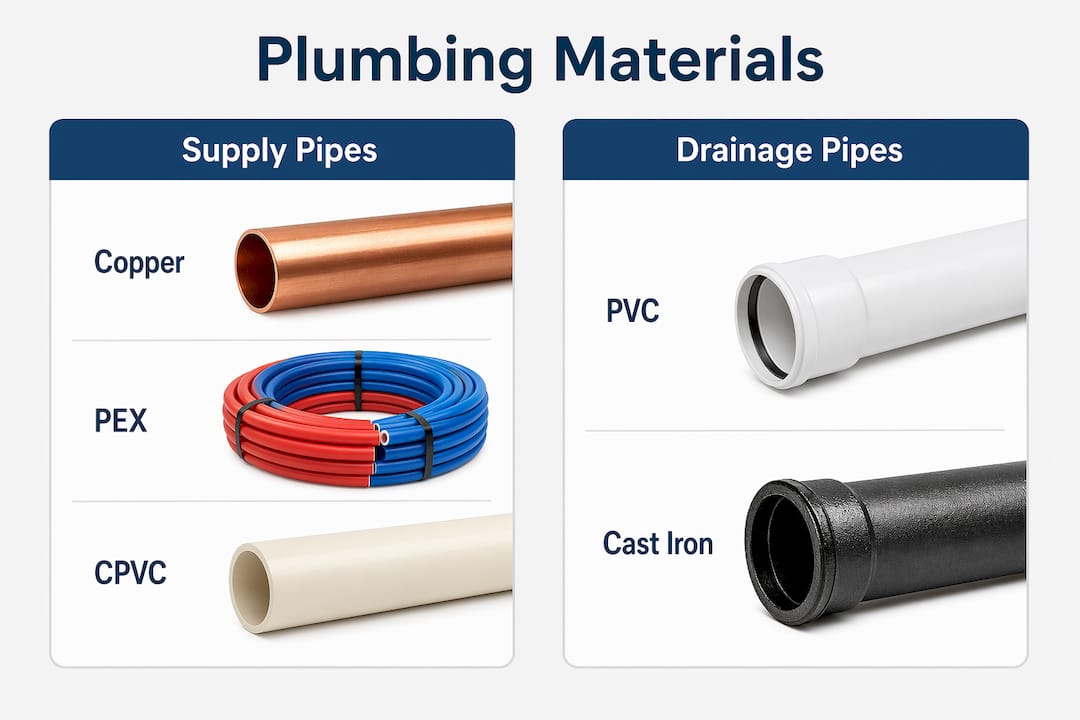
Understanding the differences between these four materials is the core of any practical plumbing materials guide for homeowners. The table below summarises the critical factors.
| Material | Max temperature | Installation method | Relative cost | Best use |
|---|---|---|---|---|
| Copper | ~200°C | Soldering (skilled) | High | Hot and cold supply |
| PEX | ~93°C | Push-fit or crimp | Low | Hot and cold supply, hydronic heating |
| CPVC | ~93°C | Solvent cement | Medium | Hot and cold potable supply |
| PVC | ~60°C | Solvent cement | Low | DWV systems only |
Durability and lifespan
Copper leads on longevity when installed correctly. Poor soldering joints, however, are a common source of slow leaks that go undetected for months. PEX and CPVC both offer 25 to 50-year lifespans under normal conditions. PVC in DWV applications is effectively maintenance-free once installed.
Freeze resistance
In freezing conditions, PEX expands under freeze pressure and typically recovers without bursting. Copper, by contrast, often splits in unheated spaces such as loft voids or uninsulated external walls. If your property has exposed pipework in cold areas, PEX is the safer choice. Pairing the right material with proper pipe insulation significantly reduces freeze risk regardless of material type. For broader cold-weather advice, the Your-local-plumber guide on winter plumbing protection covers practical steps for UK homes.
UV sensitivity
PEX requires UV protection in any outdoor or exposed installation. Sunlight degrades the polymer over time, causing brittleness and eventual failure. If you are running PEX in a conservatory, garage, or external chase, it must be sheathed or boxed in. CPVC and copper do not share this limitation.
Installation complexity
Copper demands a skilled hand and a gas torch. One poorly soldered joint can cause a slow leak inside a wall cavity for years before detection. PEX, by comparison, uses mechanical fittings that a competent DIYer can manage, though the 2026 PEX installation guide from the Plastics Pipe Institute makes clear that joining method and system design are just as critical as material choice. Getting the design wrong negates the material's advantages.
Pro Tip: If you are replacing a section of existing copper pipework, use a push-fit connector rather than attempting to solder onto old pipe. Old copper often has residual moisture or surface oxidation that prevents a clean solder joint.
What do UK plumbing codes require from your materials?
Compliance is not optional, and it is not just about passing an inspection. Using non-compliant materials can void your home insurance and create liability if a failure causes water damage to a neighbouring property.
The most important thing to check before purchasing any pipe or fitting is the product marking. Pipes lacking required markings such as ASTM F876, NSF 14/61, or ASME B16.22 are commonly rejected during inspections. These markings confirm the product has been independently tested to the relevant standard. Unmarked fittings from unverified suppliers are a known source of inspection failures.
Key compliance points for UK homeowners:
- Check product markings on every pipe, fitting, and valve before installation. Reputable suppliers stock certified products; discount marketplaces do not always guarantee this.
- Verify material suitability for the application. Code compliance depends heavily on correct material selection, not just correct installation technique.
- Notify Building Control for notifiable plumbing work, including new installations and significant alterations to drainage systems.
- Use a registered engineer for gas-related plumbing work. Gas Safe registration is a legal requirement, not a preference.
"Installers must verify standard listing markings before installation. Unmarked parts are commonly rejected at inspection and cause costly delays." Source: Plumbing material approval IRC 2024
For a full breakdown of what UK regulations require from homeowners and their contractors, the Your-local-plumber guide on UK plumbing regulations is worth reading before you start any project.
How to choose the right plumbing material for your project
Selecting the best plumbing materials comes down to four practical questions. Answer these before you buy anything or brief a plumber.
- Is this a supply line or a drainage application? Supply lines need pressure-rated materials: copper, PEX, or CPVC. Drainage needs slope-friendly, smooth-bore materials: PVC or cast iron. Mixing these up is the single most common homeowner error.
- Will the pipe carry hot water? Standard PVC cannot handle hot water and will warp above 60°C. For hot supply lines, use copper, PEX, or CPVC. CPVC tolerates up to 93°C, making it a reliable and affordable option for hot water runs.
- Is the installation exposed to UV light or freezing temperatures? Avoid unprotected PEX outdoors. In cold loft spaces or unheated outbuildings, PEX outperforms copper on freeze resilience. If you are hiding pipework inside kitchen units or behind panels, the Happy Doors guide on concealing kitchen pipework offers practical ideas for a clean finish.
- What is already installed in your home? Compatibility matters. Joining copper to galvanised steel without a dielectric fitting causes accelerated corrosion. Connecting different plastic types requires the correct transition fittings. Always identify your existing material before purchasing replacements.
Pro Tip: For a like-for-like repair on an older copper system, match the pipe diameter precisely. UK copper pipe uses metric sizing (15mm, 22mm, 28mm), while some older properties have imperial pipe. Mixing the two without the correct adaptor causes leaks at the joint.
For a broader look at the full installation process, the Your-local-plumber plumbing installation guide walks through design and material decisions from start to finish.
Key takeaways
The right plumbing material is determined by application, temperature, environment, and compliance requirements, not by price alone.
| Point | Details |
|---|---|
| Supply vs drainage | Copper, PEX, and CPVC are for supply lines; PVC and cast iron are for DWV systems. |
| Temperature limits | PVC fails above 60°C; use CPVC or copper for any hot water supply application. |
| Freeze resilience | PEX outperforms copper in freezing conditions, expanding rather than splitting. |
| Compliance markings | Check for ASTM, NSF, and ASME markings on every pipe and fitting before installation. |
| UV exposure | PEX degrades in sunlight and must be sheathed or boxed in any exposed outdoor installation. |
What I have learnt from years of plumbing material decisions
The misconception I encounter most often is that copper is always the premium choice and plastic is always the budget compromise. That framing is outdated. In a well-designed modern system, PEX with quality fittings and a properly engineered layout will outlast a poorly soldered copper installation every time. The 2026 PEX installation standards make this explicit: joining method and system design matter more than the pipe itself.
The second thing I would tell any homeowner is to stop buying fittings from online marketplaces without checking the certification markings. I have seen projects delayed by weeks because unmarked fittings failed inspection. The saving on the fitting costs far less than the labour to rip it out and replace it.
My honest view on copper is that it remains the right choice for exposed or prestige installations where aesthetics matter and a skilled engineer is doing the work. For concealed pipework in a renovation, PEX is faster, cheaper, and more forgiving of the temperature and movement stresses that UK homes experience across the seasons.
One trend worth watching: more homeowners are specifying CPVC for hot water runs in properties where they want plastic simplicity but need genuine hot-water performance. It sits in a useful middle ground that does not get enough attention in most guides.
The best decision you can make is to identify your existing system before you buy anything. Take a photo of your current pipework, note the diameter, and ask a professional if you are unsure. Compatibility errors are far more expensive than the cost of a five-minute consultation.
— Michael
Get expert help with your plumbing project

Choosing the right materials is only half the job. Correct installation, proper jointing, and compliance with UK building regulations are what turn good materials into a system that lasts. Your-local-plumber provides professional plumbing installation and repair services carried out by experienced engineers who know which materials suit which applications. Whether you are replacing old galvanised pipework, fitting a new bathroom, or dealing with an urgent leak, the team offers transparent pricing and fast response times. Book online today and get the right materials installed correctly from the start.
FAQ
What are the main types of plumbing materials used in UK homes?
The most common types are copper, PEX, CPVC, and PVC. Copper and PEX are used for supply lines, PVC is used for drainage, and CPVC handles hot and cold potable water supply.
Can PVC pipe be used for hot water supply?
No. Standard PVC has a maximum temperature of around 60°C and will warp or fail with prolonged hot water exposure. Use CPVC or copper for any hot water supply application.
How long do plumbing pipes last?
Copper lasts 50 years or more when correctly installed. PEX and CPVC typically last 25 to 50 years. PVC in drainage applications is effectively maintenance-free once installed correctly.
What product markings should I check on plumbing materials?
Look for ASTM, NSF, and ASME certification markings on pipes and fittings. Unmarked products are commonly rejected during building inspections and may not meet UK compliance requirements.
Is PEX or copper better for cold climates and loft installations?
PEX is the better choice in freezing or unheated spaces. It expands under freeze pressure and recovers, whereas copper pipes frequently split and cause significant water damage.