TL;DR:
- Hidden plumbing risks like silent leaks, trap seal failures, corroded pipes, and slow drains often give little warning before causing major damage. Regular checks such as water meter tests, visual inspections, and running infrequently used drains can help detect these issues early. Professional inspection and leak detection services are recommended when unexplained signs or recurring problems occur.
Hidden plumbing risks to watch for include silent leaks, failed trap seals, corroded pipes, and subtle drainage blockages. These are the problems that cause the most damage precisely because they give so little warning. Household leaks waste nearly 10,000 gallons of water per home each year, most of it from faults that are entirely fixable once found. The challenge is knowing where to look and what counts as a warning sign before a small fault becomes a structural problem.
1. Silent leaks: the hidden plumbing risks costing you most
Silent leaks are the single most common source of undetected water loss in UK homes. They occur in toilet cisterns, dripping taps, and appliance hose connections, often running for months before a homeowner notices anything unusual. A higher water bill without increased usage is one of the clearest early indicators. That spike in cost is not a billing error. It is your plumbing telling you something is wrong.
Toilet flappers are the most frequent culprit. The flapper is the rubber valve at the base of the cistern that seals water in until you flush. When it wears out, water trickles continuously into the bowl without triggering a flush cycle. You can test for this using toilet dye testing with food colouring or a dye tablet placed in the cistern. If colour appears in the bowl within 15 minutes without flushing, the flapper is leaking.
Dripping taps and washing machine hose connections are the next most common sources. A tap dripping once per second wastes over 3,000 litres per year. Appliance hoses, particularly on dishwashers and washing machines, degrade over time and can seep behind units where the damage goes unnoticed for years.
Running water sounds when all taps and appliances are off strongly indicate a hidden leak. This sound, often described as a faint hiss or trickle behind walls, should never be dismissed as normal.
Pro Tip: Use EPA's annual Fix a Leak Week in March as a calendar trigger to check your water meter reading before bed and again first thing in the morning. If the reading has changed overnight with no water used, you have a leak.
2. Trap seal failure: the odour risk most homeowners miss
Every sink, bath, shower, and floor drain in your home contains a plumbing trap. This is the curved section of pipe beneath the fixture that holds a small amount of water at all times. That water forms a physical barrier between your living space and the sewer system below. Each trap must maintain a liquid seal between 2 and 4 inches deep to prevent sewer gas from entering the home. When that seal is lost, the consequences are immediate and unpleasant.
Trap seals fail most often through evaporation. A bathroom in a spare room, a utility sink used only occasionally, or a floor drain in a garage can lose its water seal within weeks if the fixture is not used regularly. Trap seal failure due to evaporation leads to sewer odours and potential health hazards well before any visible water damage appears. This makes it one of the most insidious of all hidden plumbing problems.
Signs of a failed trap seal include:
- A persistent sulphurous or sewage smell near a drain, particularly in rooms that are rarely used
- Slow drainage that is not caused by a physical blockage
- Gurgling sounds from drains when other fixtures are in use
- Insects such as drain flies appearing near floor drains or seldom-used sinks
The fix for evaporative seal loss is straightforward: run water in every drain in your home at least once a fortnight. For drains that are genuinely infrequent, such as a garage floor drain, seal primers or approved devices are available to maintain the liquid seal reliably over time without requiring regular water use.
Pro Tip: When you open up a holiday property or return from an extended trip, run every tap, flush every toilet, and pour water down every floor drain before assuming the plumbing is fine. Trap seals can evaporate completely in as little as three weeks.
3. Pipe corrosion: spotting deterioration before it becomes a burst
Pipe corrosion is a slow process, but its consequences are sudden. A pipe that has been corroding for years can fail without warning, releasing water into walls, floors, or ceilings. The good news is that corrosion leaves visible clues long before failure occurs, if you know where to look.
Key warning signs include:
- Rust-coloured stains on walls, ceilings, or around pipe joints, indicating oxidation in iron or steel pipework
- Green patina on copper pipes or fittings, which signals active corrosion and potential pinhole leaks
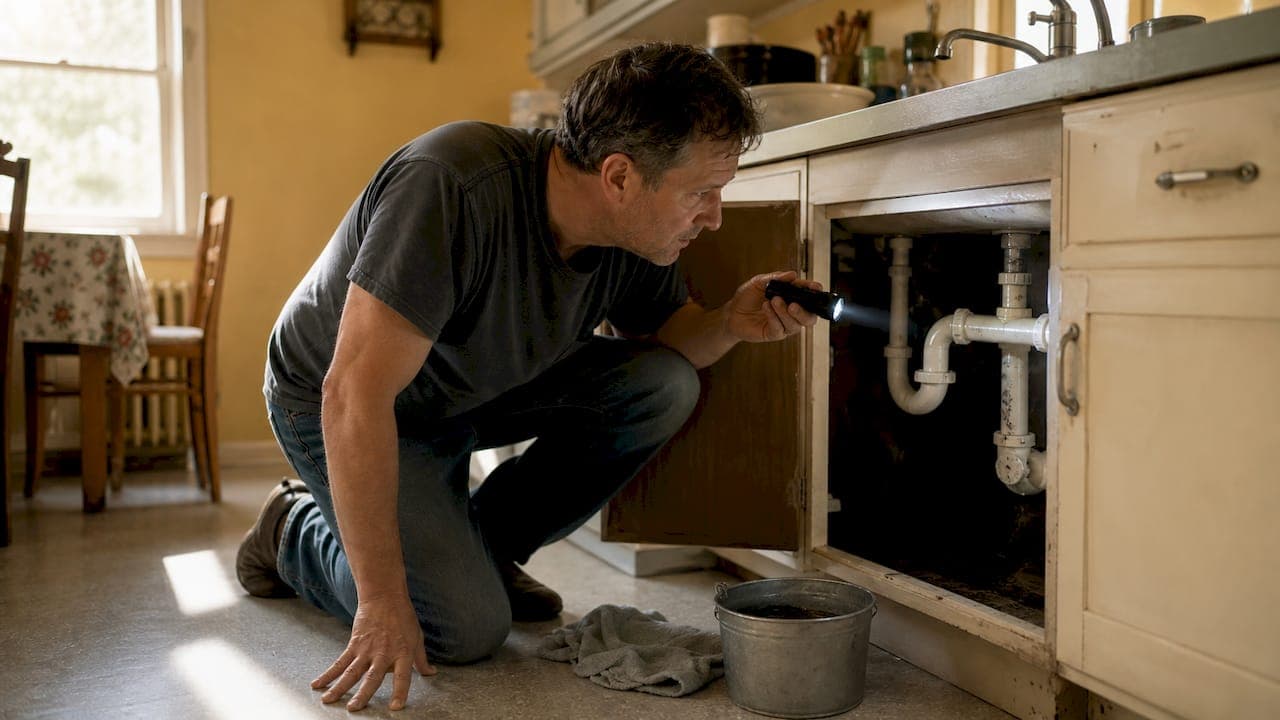
- Dark or damp spots around pipe connections under sinks or in airing cupboards
- Discoloured water at the tap, particularly a brown or orange tint when first running the cold tap in the morning
Rust-coloured stains and green patina on pipes are direct warnings of hidden leaks and potential pipe failure. These signs are not cosmetic. They indicate that the pipe wall is compromised and that pressure or temperature changes could cause a rupture.
Corrosion is accelerated by aggressive water chemistry, particularly water with a low pH or high chlorine content. Homes with older galvanised steel pipework are at significantly higher risk than those with modern copper or plastic systems. If your home was built before 1970 and has never had its pipework replaced, a professional inspection is worth scheduling as a preventative plumbing measure rather than waiting for a failure.
Inspect the exposed pipework under every sink, in your airing cupboard, and in the loft at least once a year. Early intervention on a corroded joint costs a fraction of what a burst pipe repair costs after water damage has spread.
4. Slow drains and subtle blockages: when to act and when to call
A single slow drain is usually a localised blockage caused by hair, soap residue, or food debris. It is annoying but manageable with a drain snake or a proprietary drain cleaner. The risk escalates sharply when multiple fixtures drain slowly at the same time.
Multiple slow-draining fixtures often signal a blockage deeper in the system, such as tree root intrusion or a damaged sewer line. This is not a DIY situation. Root intrusion in particular can fracture clay or cast iron sewer pipes, leading to ground subsidence, sewage backflow, and repair bills that run into thousands of pounds.
The table below outlines the most common causes of slow drainage, how to detect each one, and when to escalate to a professional.
| Cause | Detection clue | Recommended action |
|---|---|---|
| Hair and soap build-up | Single slow drain, usually bathroom | Remove trap cover and clear manually or use a drain snake |
| Grease accumulation | Slow kitchen sink, greasy residue | Hot water flush, enzyme cleaner, or professional jetting |
| Tree root intrusion | Multiple slow drains, gurgling sounds | CCTV drain survey by a qualified plumber |
| Collapsed or damaged pipe | Sewage smell, recurring blockages | Immediate professional inspection and repair |
| Partial sewer blockage | Toilets gurgling when sink drains | Professional drain jetting or rodding |
Pro Tip: Never pour cooking fat or grease down the kitchen sink. It solidifies in the pipe and accumulates over months, creating a blockage that no household drain cleaner will fully dissolve. Dispose of fat in a sealed container in the bin.
For guidance on detecting water leaks before they escalate into drainage failures, a step-by-step approach makes the process straightforward for any homeowner.
5. Water meter checks: the simplest detection tool you are not using
Your water meter is the most accurate diagnostic tool available to you, and it costs nothing to use. Checking it takes two minutes and can confirm or rule out a hidden leak before you call anyone.
Turn off every tap, appliance, and water-using device in the home. Note the meter reading, wait 30 minutes without using any water, then check the reading again. If the number has moved, water is leaving the system somewhere it should not be. This test is particularly useful for detecting hidden leaks in home plumbing systems that show no other obvious signs.
The meter test does not tell you where the leak is, but it confirms one exists. That confirmation is enough to justify calling a professional rather than waiting to see if the problem resolves itself. It never does.
6. Unusual water pressure changes: a sign of deeper problems
Water pressure that fluctuates without explanation is a plumbing warning sign that most homeowners attribute to the mains supply rather than their own pipework. In many cases, the cause is internal.
A sudden drop in pressure at a single fixture usually points to a localised blockage or a partially closed isolation valve. Pressure drops across the whole house, however, can indicate a significant leak somewhere in the supply pipe between the mains stopcock and your internal pipework. This type of leak often occurs underground or within walls, making it one of the harder hidden plumbing problems to locate without specialist equipment.
Conversely, unusually high pressure is also a risk. Pressure above 3 bar places excessive stress on pipe joints, appliance connections, and tap washers, accelerating wear and increasing the likelihood of a sudden failure. A pressure-reducing valve, fitted by a qualified plumber, resolves this permanently. Reviewing your plumbing maintenance checklist annually is the most reliable way to catch pressure anomalies before they cause damage.
Key takeaways
Hidden plumbing risks cause the most damage when ignored early: silent leaks, failed trap seals, corroded pipes, and blocked drains all give detectable warning signs long before they become emergencies.
| Point | Details |
|---|---|
| Silent leaks waste thousands of litres | Check your water meter overnight and test toilet cisterns with dye tablets annually. |
| Trap seals fail through evaporation | Run water in every seldom-used drain at least once a fortnight to maintain the liquid seal. |
| Corrosion signals imminent pipe failure | Inspect exposed pipework under sinks and in loft spaces once a year for rust stains or green patina. |
| Multiple slow drains indicate systemic faults | When more than one fixture drains slowly, arrange a professional CCTV drain survey promptly. |
| Water meter tests confirm hidden leaks | A 30-minute meter check with all water off is the fastest way to confirm a hidden leak exists. |
What years of plumbing callouts have taught me about hidden risks
Most homeowners I speak to after a plumbing emergency say the same thing: there were signs, but they assumed it was nothing. A faint smell near the utility room drain. A water bill that seemed slightly high. A tap that had always dripped. These are not minor inconveniences. They are your home's early warning system, and ignoring them is the single most expensive mistake a homeowner can make.
The conventional advice is to fix things when they break. My experience says the opposite. The homeowners who avoid the worst damage are the ones who treat a strange smell or an unexplained bill spike as a reason to investigate immediately, not something to monitor for another few months.
I have seen trap seal failures in spare bathrooms that went unnoticed for over a year because the room was rarely used. By the time the smell became undeniable, the sewer gas exposure had been ongoing for months. I have also seen corrosion on copper pipes under kitchen sinks that had been visible for years but dismissed as cosmetic. The pipe failed on a Sunday evening.
The practical shift I recommend is this: build a 20-minute plumbing walk-round into your annual home maintenance routine. Check under every sink. Run every drain. Look at the meter. Listen for sounds. Use March's Fix a Leak Week as your annual prompt if you need a calendar anchor. The best plumbing practices for 2026 are not complicated. They require attention, not expertise.
The homeowners who call me earliest always spend the least.
— Michael
Get expert help with hidden plumbing problems
When your own checks reveal something you cannot explain or fix, professional support is the right next step.

Your-local-plumber provides specialist leak detection and plumbing inspection services across the UK, using professional-grade equipment to locate faults that are invisible to the naked eye. Whether you have found signs of corrosion, noticed a pressure change, or simply want a thorough inspection before a problem develops, the team at Your-local-plumber can diagnose and resolve the issue with clear, upfront pricing. Catching a hidden fault early with professional help costs significantly less than repairing the water damage it causes if left unaddressed.
FAQ
What are the most common hidden plumbing risks in UK homes?
The most common hidden plumbing risks are silent toilet cistern leaks, failed trap seals in seldom-used drains, corroded pipework, and slow drainage caused by deep blockages or root intrusion. Each can cause significant damage before any visible sign appears.
How do I know if I have a hidden water leak?
Check your water meter with all taps and appliances off, wait 30 minutes, and check again. If the reading has changed, a hidden leak is present. A higher water bill without increased usage is also a reliable early indicator.
Why does my drain smell even though it is not blocked?
A sewage smell from a drain that flows freely almost always indicates a failed trap seal. The liquid seal in the trap has evaporated, allowing sewer gases to enter the room. Running water down the drain will restore the seal temporarily, but a seal primer device is the permanent solution for infrequently used fixtures.
When should I call a plumber rather than fixing a drain myself?
Call a plumber when more than one fixture drains slowly at the same time, when you hear gurgling from drains or toilets, or when blockages recur after clearing. These signs indicate a systemic fault such as root intrusion or a damaged sewer line that requires professional diagnosis.
How often should I check my home plumbing for hidden issues?
A basic inspection, including a meter test, visual check of exposed pipes, and running all seldom-used drains, should be carried out at least once a year. Using Fix a Leak Week in March as an annual prompt makes this easy to schedule consistently.