TL;DR:
- Early signs like leaks and dampness can lead to significant water damage and health risks if ignored.
- Persistent drainage issues and unusual noises often indicate hidden blockages or system failures needing professional attention.
- Immediate action is crucial for emergencies such as burst pipes or sewage backups to prevent costly repairs.
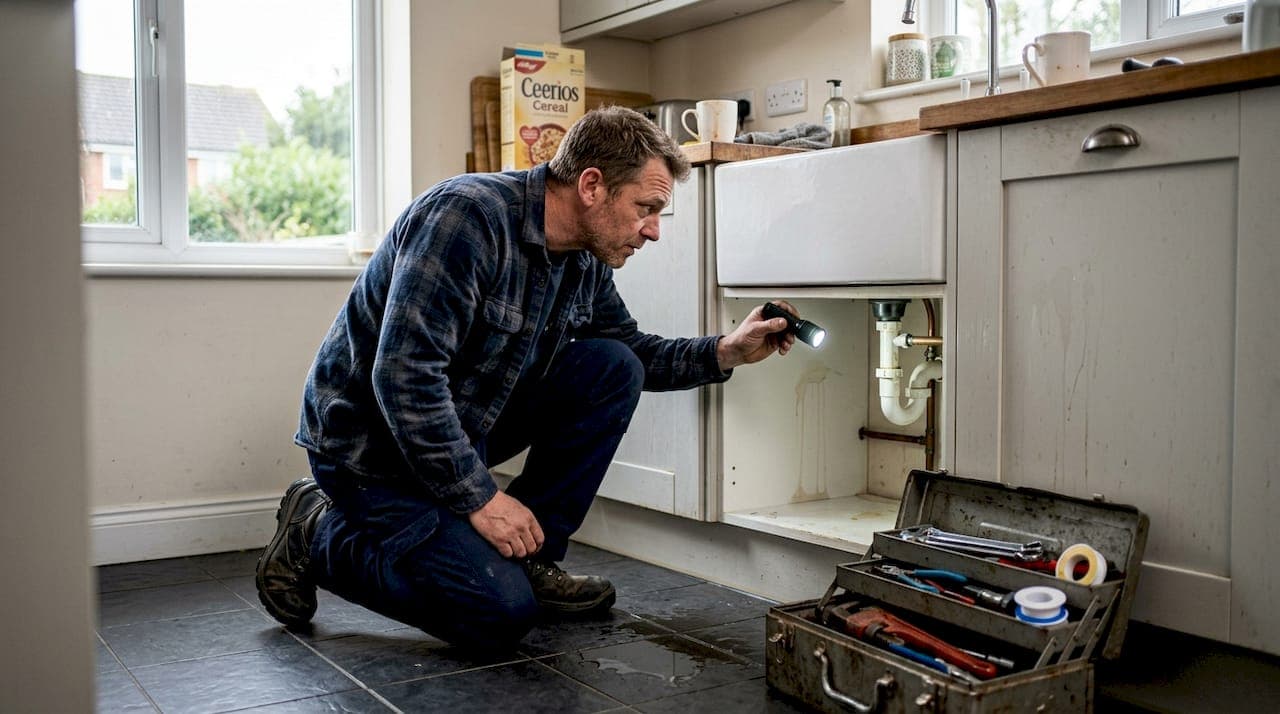
Spotting a plumbing problem early is harder than it sounds. A dripping tap, a slow drain, or a faint damp smell can each feel minor on their own, yet every one of them can be the first sign of something far more serious lurking behind your walls or beneath your floors. Many Reading homeowners dismiss these symptoms until water damage, mould, or a burst pipe forces their hand. A dripping tap wastes thousands of gallons of water every year, so the cost of ignoring even small issues adds up fast. This checklist will help you recognise the warning signs and know exactly when to pick up the phone.
Table of Contents
- Persistent leaks and water stains: When drips mean trouble
- Drainage and water pressure issues: Warning signs of bigger blockages
- Noises, smells, and high bills: Hidden dangers behind the scenes
- Emergency situations and older homes: When to call a plumber now
- Why waiting rarely pays: Our hard-won lessons from Reading homes
- Call for safe, local plumbing help in Reading
- Frequently asked questions
Key Takeaways
| Point | Details |
|---|---|
| Act on leaks early | Promptly fixing drips and dampness prevents costly water damage and mould. |
| Multiple clogs are a red flag | Clogged drains or low pressure in several fixtures signal bigger plumbing problems. |
| Hidden problems cost money | High bills, odd noises, and odours often mean unseen leaks or pipe failures. |
| Older homes need vigilance | Vintage pipes in Reading are prone to root, corrosion, and burst risks. |
| Professional checks save more | Annual maintenance is much cheaper than fixing emergencies after they happen. |
Persistent leaks and water stains: When drips mean trouble
Leaks are the most common plumbing complaint we hear from homeowners across Reading and Berkshire, and they are also the most underestimated. A single dripping tap might seem harmless, but unchecked moisture leads to mould and serious health risks over time. The water you can see is rarely the whole story.
Here are the key signs that a leak has moved beyond a minor inconvenience:
- Dripping taps or showerheads that continue even after you have turned them off fully
- Brown or yellow stains on ceilings, walls, or around skirting boards
- Persistent damp patches in cupboards, under sinks, or on floors
- Puddles forming in areas where water has no obvious reason to be
- Peeling wallpaper or bubbling paint, which signals moisture trapped behind the surface
Continuous leaks waste water and push up your bills month after month. More critically, pooling water and persistent dampness create the perfect conditions for mould growth, which can affect air quality and trigger respiratory problems. Undetected leaks inside walls or under floors can silently rot joists, weaken plasterwork, and undermine your home's structure before you notice anything visible.
'A small drip today can become a collapsed ceiling tomorrow. The cost of investigation is always less than the cost of repair.'
Pro Tip: Never assume a small drip will stay small. Pipe joints weaken, seals degrade, and water always finds the path of least resistance. Getting leak detection explained by a professional is far cheaper than repairing the damage a hidden leak leaves behind.
DIY patching with tape or sealant might stop the visible drip for a few days, but it rarely addresses the underlying cause. A professional plumber can trace the source accurately and fix it properly. Checking your home against a maintenance checklist twice a year is one of the simplest ways to catch leaks before they escalate.
With leaks and damp being the most common issues, next consider what problems with drainage and water flow might be telling you.
Drainage and water pressure issues: Warning signs of bigger blockages
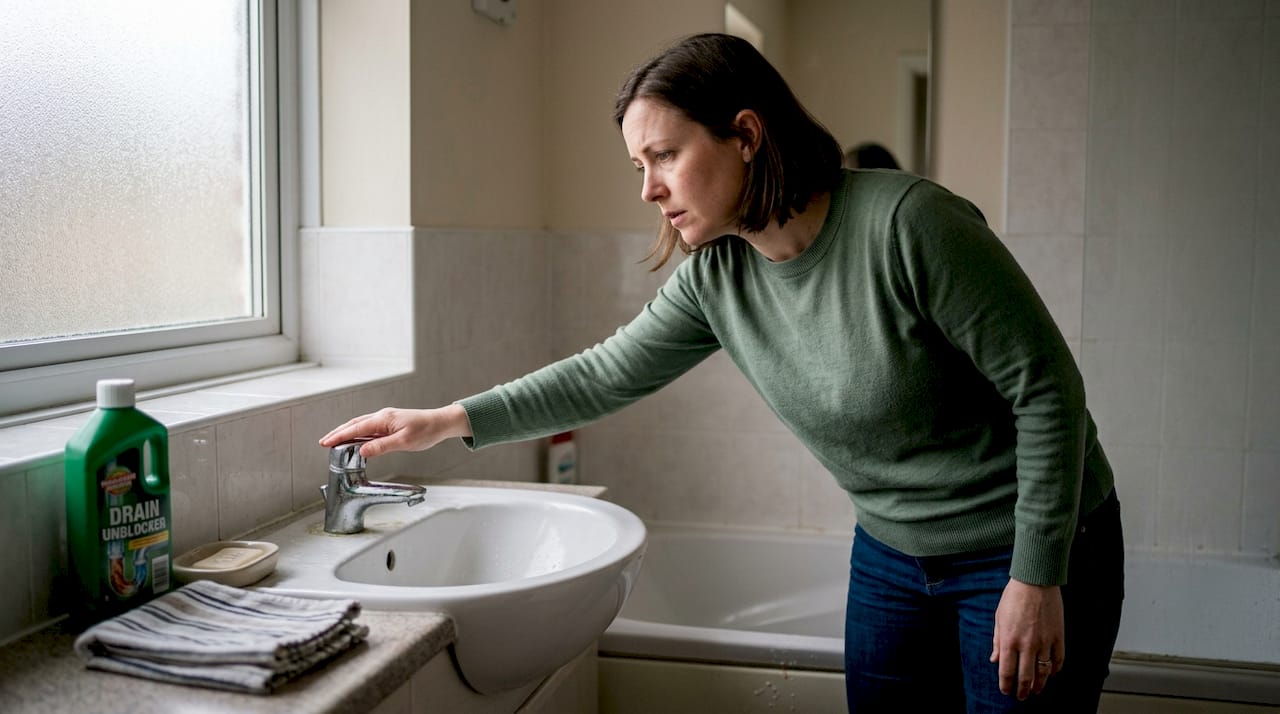
A slow-draining sink is easy to brush off as a minor annoyance. But when multiple drains in your home start running slowly at the same time, that changes everything. Multiple clogs can indicate main line issues or root intrusion into your sewer pipe, which is a very different problem from a blocked plughole.
Watch out for these drainage and pressure warning signs:
- Slow draining in sinks, baths, or showers that does not improve after basic clearing
- Repeated toilet blockages, especially if the toilet gurgles when you run a tap elsewhere
- Low water pressure that affects multiple taps or the shower
- Water backing up in one fixture when you use another
- Gurgling sounds from drains after water has emptied
Low water pressure is particularly common in Reading and the wider Berkshire area because hard water accelerates limescale build-up inside pipes, gradually narrowing the flow. Over time, this can reduce pressure noticeably across your whole home. It can also signal a hidden leak somewhere in the supply line.
Stat callout: Multiple drains blocked at once is not a coincidence. It is a main line emergency.
Pro Tip: If both your toilet and your bath are draining slowly at the same time, do not reach for a bottle of chemical cleaner. Ring a plumber. You are almost certainly dealing with a blockage much deeper in the system than any off-the-shelf product can reach.
Chemical drain cleaners are one of the most misused products in home maintenance. They can corrode older pipework and push blockages further down the line, making professional pipe clearing harder and more expensive. Trained plumbers use pipe cameras to locate the exact problem and hydro-jetting equipment to clear it safely. If you are unsure whether your situation counts as urgent, reviewing emergency plumbing essentials for Reading homeowners will help you decide. Understanding how plumbers protect your home during emergencies also puts the process in perspective.
Once you have noticed water not flowing as it should, listen carefully for any strange sounds from your pipes.
Noises, smells, and high bills: Hidden dangers behind the scenes
Some of the most serious plumbing problems are ones you hear or smell rather than see. Your pipes communicate, and learning to read those signals can save you a significant amount of money.
Unusual banging or gurgling sounds point to pressure problems or trapped air in your pipes. A loud bang when you turn off a tap, known as water hammer, suggests that pipes are not properly secured and are taking repeated stress. Left alone, this can loosen joints and cause leaks.
Foul odours are equally telling. Sewer odours near drains can mean roots, cracks, or collapsed pipes, and that is an immediate health risk, not something to monitor over time.
'If something smells off or your bills keep rising, don't ignore it. The problem is likely out of sight.'
Rising water bills with no change in your household habits are one of the clearest signs of a hidden leak. 1 in 10 homes waste over 90 gallons daily through leaks that are invisible from the surface. Understanding detecting hidden leaks is the first step to stopping that waste.
| Symptom | Likely cause | DIY or professional? |
|---|---|---|
| High water bill, no visible leak | Hidden pipe leak | Professional |
| Banging pipes when tap turns off | Water hammer, loose pipes | Professional |
| Sewage smell from drain | Sewer vent or pipe failure | Professional immediately |
| Gurgling drain sounds | Partial blockage or venting issue | Professional |
| Damp patch on ceiling | Leak from above | Professional |
For anything beyond a simple blocked plughole, emergency plumbing explained covers what to expect when you call for help. Also, checking plumbing system warning signs specific to Berkshire homes is a useful reference.
Having covered what you can see, hear, and smell, let us focus on true emergencies and ageing pipework, where you must act without delay.
Emergency situations and older homes: When to call a plumber now
Some situations require immediate action, not a wait-and-see approach. No water flow, bursts, or overflows demand immediate professional help, and delaying even a few hours can multiply the damage significantly.
Here is what to do if an emergency strikes:
- Turn off your main water valve to stop water flow immediately
- Switch off the boiler or immersion heater if pipes near it are affected
- Move valuables and furniture away from any water pooling on floors
- Take photos of visible damage for your insurance claim
- Call a local emergency plumber and describe the situation clearly
Pro Tip: Know exactly where your main water valve is located before you ever need it. Test it once a year to make sure it turns freely. A valve that has seized shut during a burst pipe emergency is a nightmare scenario.
Older Reading and Berkshire homes carry a particular risk. Many properties built before the 1980s still have clay or cast-iron pipes that are vulnerable to cracking and root invasion. If you have had repeated repairs, it is time to consider a full pipe assessment or repiping rather than patching the same problems repeatedly.
| Emergency type | Risk level | Immediate action | Long-term solution |
|---|---|---|---|
| Burst pipe | Critical | Shut main valve, call plumber | Pipe replacement |
| Sewage backup | Critical | Avoid area, call plumber | Sewer line inspection |
| No water supply | High | Check valve, call plumber | Leak or supply investigation |
| Overflowing toilet | High | Shut cistern valve, call plumber | Drain and sewer check |
| Persistent low pressure | Medium | Monitor, call plumber | Descaling or pipe repair |
For a clearer picture of what happens once you call for help, the emergency plumber workflow guide covers the process step by step. Knowing the right questions to ask your plumber also helps you get accurate quotes and honest assessments from the start. For a quick reference on signs needing immediate plumbing help, bookmark that resource before you need it.
With the main critical signs covered, what do all these issues mean for your next steps as a Reading homeowner?
Why waiting rarely pays: Our hard-won lessons from Reading homes
After years of responding to plumbing calls across Reading and Berkshire, one pattern stands out above all others: most of the worst emergencies we attend were entirely preventable. The homeowner noticed something months earlier, thought it would sort itself out, and then called us when the ceiling came down or the sewage backed up.
DIY fixes and delay are the two most expensive choices you can make. A temporary patch that hides a slow leak can cost five or six times more to repair once the damage spreads into joists and plasterwork. We have seen it happen repeatedly, and it never gets less frustrating for the homeowner involved.
Older Reading properties magnify every small symptom. Ageing pipes react faster to pressure changes, hard water, and ground movement than modern installations do. A symptom that might be minor in a newer build can signal something urgent in a Victorian terrace.
The most practical thing you can do is keep a simple note of any symptoms you notice, check them against a list like this one, and contact the role of a plumber resource to understand what a professional assessment actually involves.
Pro Tip: Annual professional maintenance costs a fraction of a single emergency call-out. Do not skip it.
Call for safe, local plumbing help in Reading
Whether you have spotted one warning sign or several, the most important thing is not to wait. Plumbing problems rarely resolve on their own, and the longer a leak, blockage, or pressure issue is left unchecked, the more it costs to put right.

At Your Local Plumber, we cover Reading and the surrounding Berkshire area with fast response times, transparent pricing, and experienced engineers who know older local properties inside out. From a simple leak check to a full emergency call-out, we are ready to help you protect your home before a small issue becomes a costly disaster. Get in touch today for an honest assessment and prompt, reliable service you can count on.
Frequently asked questions
How do I know if my plumbing problem is urgent?
Urgent problems include no water flow, overflowing toilets, strong sewer smells, or water visibly escaping from pipes. If any of these apply, call a plumber straight away rather than waiting to see if it improves.
Can I use chemical drain cleaners for slow drains?
DIY chemical cleaners worsen corrosion and can push blockages deeper into the system. Professional plumbers use cameras and hydro-jetting equipment that clear the problem safely without damaging your pipes.
Why does my water bill keep going up with no visible leaks?
Leaks waste 90 or more gallons daily in roughly 1 in 10 homes, often through hidden pipes inside walls or under floors. A professional leak detection service can locate the source quickly.
Is low water pressure always a plumbing emergency?
Low pressure from corrosion or build-up is especially common in hard water areas like Reading and Berkshire. It is not always an emergency, but it should be investigated promptly if it does not resolve on its own.
How can I prevent recurring plumbing issues in Reading homes?
Regular maintenance, prompt repairs, and annual checks prevent most emergencies in hard water areas. Older properties in particular benefit from a professional inspection every twelve months.