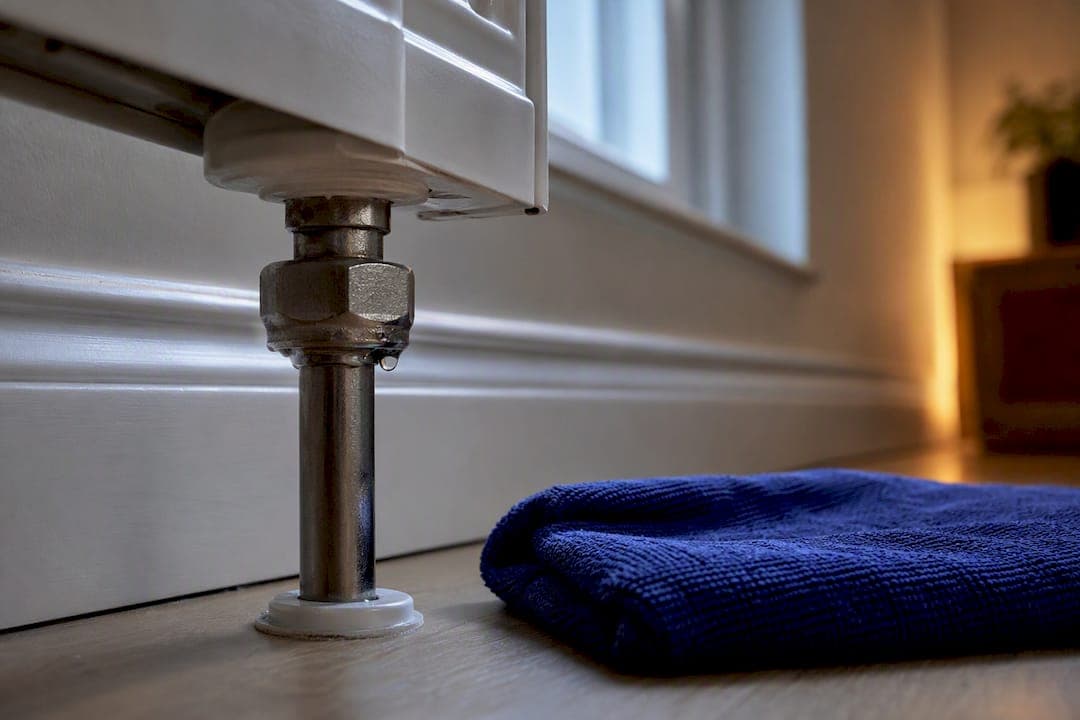
Turn off the radiator isolation valve or the main stopcock immediately: stopping the water is more urgent than finding the cause. Most small drips from a valve nut, olive or pinhole in the pipe are within reach of a confident DIYer with basic tools. Anything near electrics, at the boiler connection, or causing a fast pressure drop is a job for a plumber, not a spanner from the shed.
TL;DR:
- Most small leaks from radiator valves or pipes can be temporarily fixed with basic tools, but leaks near electrics, boiler connections, or causing rapid pressure drops require professional help.
- Turning off the radiator isolation valve or main stopcock quickly is more urgent than diagnosing the leak, and working near electrical or gas connections mandates safety precautions or professional assistance.
- Effective temporary repairs include tightening nuts, replacing olives, or wrapping leaks with silicone tape, but these should always be followed by a permanent fix by a qualified plumber.
- Fixing common leaks like replacing olive fittings or valves typically takes a few hours, while any work involving boiler connections or gas must be performed by certified professionals.
- Promptly calling a trusted, registered plumber is essential for leaks near electrics or causing fast pressure loss, and documenting temporary fixes helps streamline later repairs or insurance claims.
Table of Contents
- Finding the exact source of the leak
- Staying safe before you touch anything
- Tools and parts worth having in before you start
- Fixing the leak: temporary repairs that actually hold
- Permanent repairs and where DIY should stop
- When to call a plumber and how to pick the right one
- A practical view on containment versus calling in help
- Getting help fast when the leak won't wait
- Sources
- FAQ
Finding the exact source of the leak
A leak rarely announces itself clearly. Water travels along pipes and drips from the lowest point, so the wet patch on your carpet might be a metre from the actual fault.
Start with the boiler pressure gauge. A sudden or repeated drop often points to a leak somewhere in the system, and small leaks are frequently easier to spot when the heating is off and everything has cooled down, since a hot system expands slightly and can mask a gap that reappears once it contracts, according to Energy Saving Trust.
Work through the likely culprits in order:
- Bleed valve: check for weeping around the square or slotted fitting at the top of the radiator.
- Valve nut and spindle: look where the control or lockshield valve meets the radiator body.
- Compression fittings (the olive): inspect where pipework joins the valve, a common failure point as the olive ages.
- Pipe joints and seams: run a dry tissue along each join. Damp tissue means an active leak; a chalky white trail means a slow one that has been going on for a while.
Keep a torch and a small mirror handy for awkward angles behind radiators, and lay a towel or bucket underneath while you inspect so you're not chasing drips across the floor. Damp patches on the wall or floor some distance from the radiator itself usually mean hidden pipework rather than the radiator body, which is worth noting before you start dismantling anything.
Staying safe before you touch anything
Isolating the system properly matters more than the repair itself. Get this step wrong and you risk a scald, a shock, or a much bigger leak.
- Turn the heating off and let the pipes cool. Handling hot fittings is how minor jobs turn into burns, and HSE guidance on hot surfaces and burn risk is clear that surfaces should be allowed to cool before anyone works near them.
- Find the radiator isolation valve, usually the wheel-head or lockshield valve at each end of the radiator, and turn it off. If there's no isolation valve fitted, close the household stopcock instead.
- If the leak sits close to a socket, switch or any wiring, switch off the mains electricity before doing anything else and avoid touching wet fittings.
- Never attempt work on a boiler's gas connections yourself. UK law requires a Gas Safe registered engineer for that work, and DIY attempts on gas appliances carry serious safety risks, as HSE explains.
One detail catches people out often: what looks like a shut-off valve is sometimes a balancing valve, which controls flow rather than stopping it. Confirm which valve you're holding before you force anything, since forcing the wrong one can make a small leak considerably worse.
Tools and parts worth having in before you start
You don't need a full toolbox. Most radiator pipe leaks are solved with a short, predictable kit list.
- An adjustable spanner (and a second one to support the valve body while you turn the nut).
- A radiator bleed key, adjustable pliers, a torch, cloths and a bucket.
- Compression olive kits and a spare valve spindle in the right size for your pipework.
- PTFE tape, a proper radiator repair clamp, and self-fusing silicone tape for pinhole leaks.
Pipe and olive sizes in most homes are 15mm or 22mm, and getting this wrong means a fitting that never seals properly no matter how hard you tighten it. Check the packaging for compatibility with copper, microbore or PEX pipework, since not every olive or clamp suits every material. Plumbers' merchants and larger DIY stores both stock the common sizes.
Pro Tip: Buy two olives when you replace one. They're inexpensive and having a spare on hand saves a second trip when the first doesn't seat cleanly.

Fixing the leak: temporary repairs that actually hold
These steps buy you time and limit water damage. None of them replace a proper permanent repair, but done correctly they stop the drip long enough to plan the next step.
- Tighten a loose valve nut. Hold the valve body steady with one spanner while turning the nut with another. Go firm, not forceful: overtightening crushes the olive and turns a small leak into a bigger one.
- Replace a worn olive. Isolate the radiator, drain any residual water into a bucket, undo the compression nut, slide off the old olive and fit a new one before retightening evenly.
- Wrap a pinhole leak. Dry the pipe thoroughly, wind self-fusing silicone tape tightly around the affected section overlapping each layer, or fit a proper radiator repair clamp with a rubber sleeve secured by a jubilee clip. Give silicone tape the drying time stated on the packaging, usually a few hours, before running the system again.
- Consider a leak-sealer additive as a genuine last resort. These products can slow a hidden or hard-to-reach leak, but check your boiler manufacturer's guidance first: some sealants can affect warranties or clog fine components over time.
Clamps and self-fusing tape are recognised as effective stop-gap measures, but Which? Trusted Traders is clear that they should be followed by a permanent repair, since leaving a wrap in place long-term risks hidden corrosion underneath it.
Pro Tip: Photograph the leak and your temporary fix before covering it up. It's the fastest way to explain the problem to a plumber later, and useful if you ever need to make an insurance claim.
Permanent repairs and where DIY should stop
Some jobs are well within reach for a competent homeowner; however, if you need professional assistance, consider plumber SEO services to find trusted experts to get the job done efficiently. Others carry legal or safety weight that makes calling a professional the sensible choice, not an admission of defeat.
- Reasonable for DIY: replacing an olive or valve on a fully isolated, cold system, or swapping a short length of copper pipe with the correct fittings.
- Leave to an accredited plumber: anything involving re-soldering close to the boiler, or work that disturbs boiler connections.
- Always a Gas Safe job: any final connection of pipework to the boiler itself, which is a legal requirement, not just good practice, per HSE.
- Verify the fix: check the boiler pressure gauge, look for damp or drips over the following few days, and only consider the job done once pressure holds steady, in line with Energy Saving Trust's advice to monitor pressure after any bleeding or repair work.
A straightforward olive or valve swap is typically a same-day job. Anything touching the boiler itself, or requiring parts to be sourced, tends to stretch to a scheduled visit rather than an emergency call-out. If a leak turns out to be linked to a wider boiler fault, such as repeated pressure loss or fault codes, Citizens Advice recommends getting a qualified engineer to inspect rather than guessing at the cause.
When to call a plumber and how to pick the right one
Some situations don't leave room for a wait-and-see approach.
- Call immediately if: the leak is near electrics or wiring, boiler pressure is dropping fast, the leak is at a boiler connection, or you simply can't isolate the drip.
- Ask on first contact: whether they're Gas Safe registered if the job touches the boiler, what the call-out fee is, how quickly they can arrive, and what warranty covers the parts and labour.
- Compare more than price. Recognised training such as NVQs or City & Guilds, a clear code of conduct and genuine reviews matter more than the lowest quote, since WaterSafe points out there's no single official registry for plumbers in the UK, making credentials and reputation the real filter.
- Keep records. Photos of the leak, notes on any temporary fix, and the invoice from any callout are worth holding onto for insurance purposes, as outlined in Your Local Plumber's guide to choosing a plumber.
If the leak isn't urgent and isn't near electrics or causing rapid pressure loss, it's often cheaper to book a plumber for a normal-hours visit rather than pay an out-of-hours emergency rate, a point Which? Trusted Traders makes clearly.
A practical view on containment versus calling in help
A clamp and some silicone tape will buy you a day or two, and there's no shame in using them while you decide on the right permanent fix. What matters is knowing the boundary: anything near the boiler's gas connection is not a weekend project, whatever a forum thread suggests. Write down what you found and what you did to stop it. That note saves the next tradesperson time and saves you money.
— Michael
Getting help fast when the leak won't wait
Your Local Plumber offers same-day emergency response for leaking radiator pipes, along with leak detection and permanent repair work once the immediate drip is under control. Call and describe what you've found, including where the leak is and what you've already tried, so the engineer arrives ready with the right parts.

There's no call-out fee, work is covered by a fix no fee guarantee, and every job carries a 12-month warranty with pricing agreed upfront.
| What you get | Detail |
|---|---|
| Response | Same-day emergency response |
| Pricing | Transparent, agreed before work starts |
| Guarantee | Fix no fee, no call-out fee, 12-month warranty |
| Heating and boiler work | The pricing for heating and boiler work is available directly from the service provider |
Book online through Your Local Plumber's plumbing services or use the emergency heating engineer booking page for a rapid response.
Sources
- HSE — Domestic gas safety FAQs
- Which? Trusted Traders — How to stop a water leak
- Energy Saving Trust — Boiler services explained
- HSE — Managing the risk from hot water and surfaces (HSIS6)
- Citizens Advice — getting your broken boiler repaired or replaced
FAQ
Is it an emergency if my radiator is leaking?
It depends on where the leak is and how fast it's losing water. A slow drip from a valve nut can usually wait for a scheduled repair, but a leak near electrics, at a boiler connection, or one causing rapid pressure loss needs immediate attention, as Which? Trusted Traders advises.
Will turning off a radiator stop it from leaking?
Closing the radiator's isolation valve usually stops water reaching that radiator and halts the leak, provided the valve itself isn't the source of the problem. If there's no isolation valve fitted, closing the household stopcock achieves the same result for the whole system.
How much does it cost to fix a leaking radiator?
Costs vary depending on whether the fix is a simple olive or valve replacement or more involved pipework, and pricing is best confirmed directly with a tradesperson. Heating and boiler callout work prices are available on the service provider's website and are agreed before work begins.
How long can you go with a leaking radiator?
A small, well-contained drip caught in a bucket can be managed for a short time while you arrange a repair, but leaving it unaddressed risks corrosion, hidden water damage and a repeated drop in boiler pressure. Energy Saving Trust notes that persistent pressure drops signal a leak that needs investigating rather than ignoring.