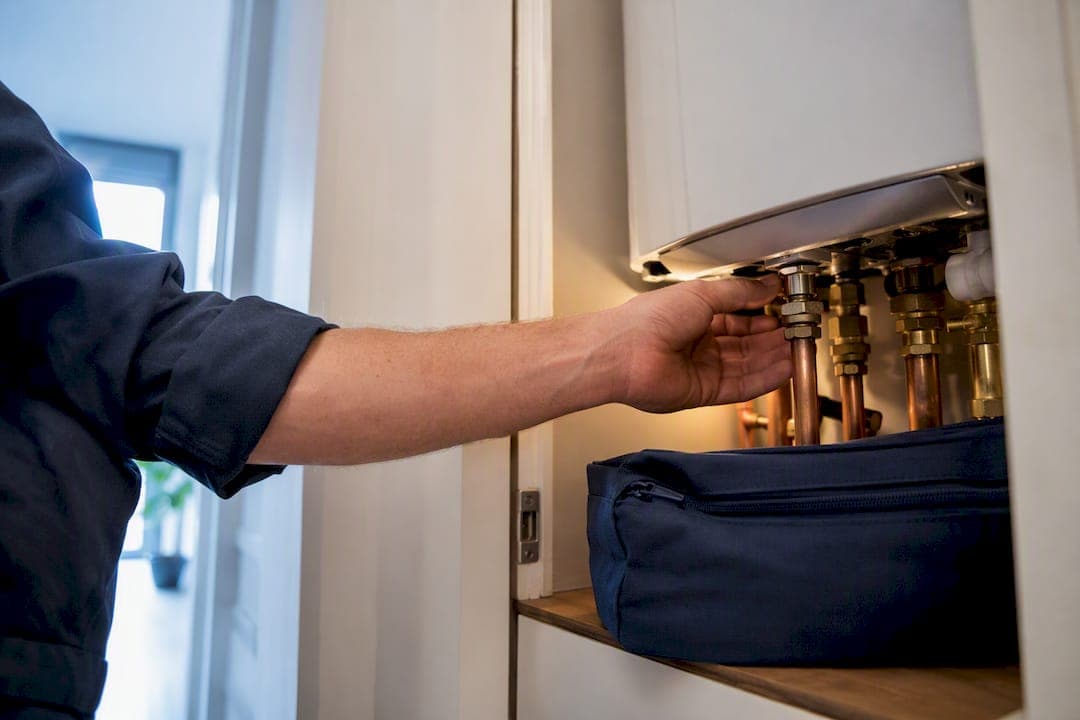
Verify the plumber's registration for the job at hand, check they carry public liability insurance, and get everything in writing before a spanner touches your pipework. If any of those three checks fails, walk away. Gas work needs a Gas Safe engineer; water fittings work should sit with a WaterSafe registered business, and there are vetted local options available if you'd rather skip the search.
TL;DR:
- Verify that gas work is carried out only by Gas Safe registered engineers, confirmed online, and only use WaterSafe-approved plumbers for water fittings.
- Demand to see current insurance certificates and written guarantees, and ask precise questions about work scope and timing before booking.
- Compare at least three detailed quotes line by line, and beware of significantly lower prices that may indicate poor quality or hidden costs.
- Recognize warning signs such as unmarked vans, reluctance to show ID or insurance, and pressure to settle on the spot, which suggest avoiding the contractor.
- Prepare all documentation, including receipts, warranties, and registration confirmations, in advance of any repair or installation to prevent disputes.
Table of Contents
- Where to find a vetted plumber before you need one
- What credentials and documents should you actually check?
- What questions should you ask before booking?
- What does a plumber actually cost, and how long should you wait?
- What red flags mean you should walk away?
- How does a reputable local plumber actually handle a call-out?
- The checklist that actually protects you
- How to book a vetted plumber today
- Quick links to check registrations yourself
- Sources
Where to find a vetted plumber before you need one
Random adverts and doorstep callers are how most bad plumbing jobs start. Start instead with lists that have already done some filtering for you.
The Gas Safe Register is the only legal register for anyone working on boilers, gas pipework, or gas appliances in Britain. Nobody outside it may legally touch gas work in your home. For anything involving water supply, mains connections, or fittings, WaterSafe is the national directory built specifically for that job, and public bodies routinely point homeowners there first rather than towards general search results.
- Search Gas Safe and WaterSafe by postcode, not by name, to get a genuine local shortlist.
- Check your local council's trading standards page for any recorded complaints against a business.
- Ask neighbours or a community group for a name they've actually used, not just heard of.
- Save two or three vetted contacts now, because reputation-driven local plumbers tend to be the ones you can actually reach at 11pm on a Sunday.
Doing this groundwork while your boiler is working fine means you're not scrambling through search results mid leak.
What credentials and documents should you actually check?
Anyone can print a laminated card. What matters is whether the number on it still means anything.
- Check the Gas Safe ID online. Go to the Gas Safe Register website, enter the ID number shown on the engineer's card, and confirm it's current and covers the specific work category you need (boilers, cookers, and central heating are licensed separately).
- Confirm WaterSafe or Approved Contractor status. This isn't a legal requirement the way Gas Safe is, but WaterSafe-approved businesses are audited against insurance and training minimums, which takes a lot of guesswork out of hiring for water fittings work.
- Look up trade body membership. The CIPHE, APHC, and SNIPEF all run membership or Approved Contractor schemes that signal training and adherence to a code of conduct, and most let you search their member lists directly.
- Ask for the insurance certificate, not just a verbal assurance. Public liability cover protects you if something goes wrong on your property during the job, and a professional plumber should hand this over without hesitation.
- Get the workmanship guarantee in writing. A minimum of 12 months is the usual industry benchmark for completed work.
Pro Tip: A Gas Safe check takes under a minute on your phone while the engineer is still stood on your doorstep. Do it before they cross the threshold, not after they've started work.
What questions should you ask before booking?
A good plumber answers these without flinching. A cowboy trader gets vague, changes the subject, or pressures you to skip the paperwork.
- Are you Gas Safe registered (if gas work) or WaterSafe approved (if water work), and can I see your ID number?
- Can I see your public liability insurance certificate?
- What's included in your quote, and what's explicitly excluded?
- Will you provide a written, itemised quote before starting?
- Is VAT included in the price you've given me?
- What's the expected start date and completion date?
- What happens if the job runs over on time or materials?
- Do you offer a written workmanship guarantee, and for how long?
- Can I see a recent review or speak to a previous customer?
- How do you prefer to be paid, and do you require anything upfront?
A proper written quote breaks the job into labour, parts, and any call-out charge, states VAT clearly, and lists what's excluded (access issues, unforeseen pipe damage, and so on). It should also give a realistic start date, not just "soon."
- Get at least three written quotes for anything that isn't an emergency.
- Compare them line by line, not just as one final total.
- Treat any quote wildly below the others as a warning sign, not a bargain.
What does a plumber actually cost, and how long should you wait?
Call-out fees typically apply to emergency or short-notice visits and usually cover the first hour or a fixed inspection charge. Beyond that, most plumbers switch to an hourly rate for small jobs or a day rate for anything that will run most of a day, such as a bathroom refit or full heating system flush.
Simple repairs like a dripping tap or a running toilet tend to sit at the lower end of the cost scale, while jobs involving replacement parts, hidden pipework, or access difficulties climb from there. Boiler installations and full central heating work cost considerably more and should always come with a written quote rather than a verbal estimate, given how much scope can shift once a wall is opened up.
Planned work, particularly boiler installations, often needs booking weeks in advance, and lead times stretch further in autumn and winter when heating failures spike demand across the country.
What red flags mean you should walk away?
Some warning signs are obvious once you know to look for them, but easy to miss when you're stressed about a leak.
- An unmarked van with no company name, logo, or contact details.
- Reluctance to show ID, insurance, or registration when asked directly.
- Insistence on cash only, especially before any work has started.
- No written quote offered, or a verbal price that keeps shifting.
- Pressure to agree on the spot or claims that "the price is only good today."
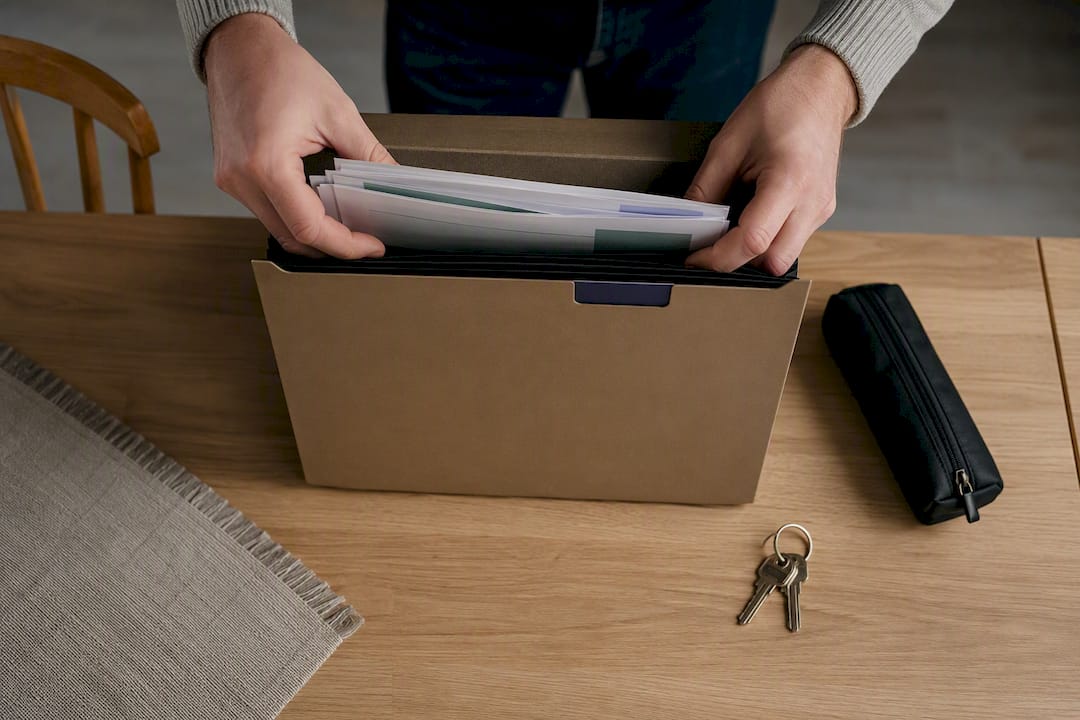
Before handing over final payment, walk the job yourself: check taps, fittings, and any exposed pipework for leaks, and ask for photos if anything was hidden behind a wall or floor. Collect the receipt, any parts warranty, the Gas Safe certificate if gas work was involved, and the written workmanship guarantee.
Pro Tip: Keep every document in one folder, digital or paper. If a dispute ever comes up, trading standards or the register the plumber belongs to will ask for exactly this paperwork, and having it ready speeds up any complaint enormously.
How does a reputable local plumber actually handle a call-out?
Here's what a properly run job looks like from first phone call to final signature, using an emergency boiler breakdown as the example.
- You call and describe the fault; a reputable firm asks specific diagnostic questions rather than just quoting a flat fee immediately.
- An engineer arrives within the stated window, shows Gas Safe ID unprompted, and inspects before pricing.
- You get a verbal estimate on the spot, followed by a written breakdown once the fault is confirmed.
- The work is completed, tested, and explained in plain terms, with an emergency call-out receipt and guarantee handed over before you pay.
Local reputation matters more for planned work than for one-off emergencies, because you'll likely want the same firm back for servicing or a follow-up fault. If you want a deeper read on what separates a heating engineer's remit from a general plumber's, or how warranty terms are usually worded, both are worth ten minutes of your time before you next need to call anyone out.
The checklist that actually protects you
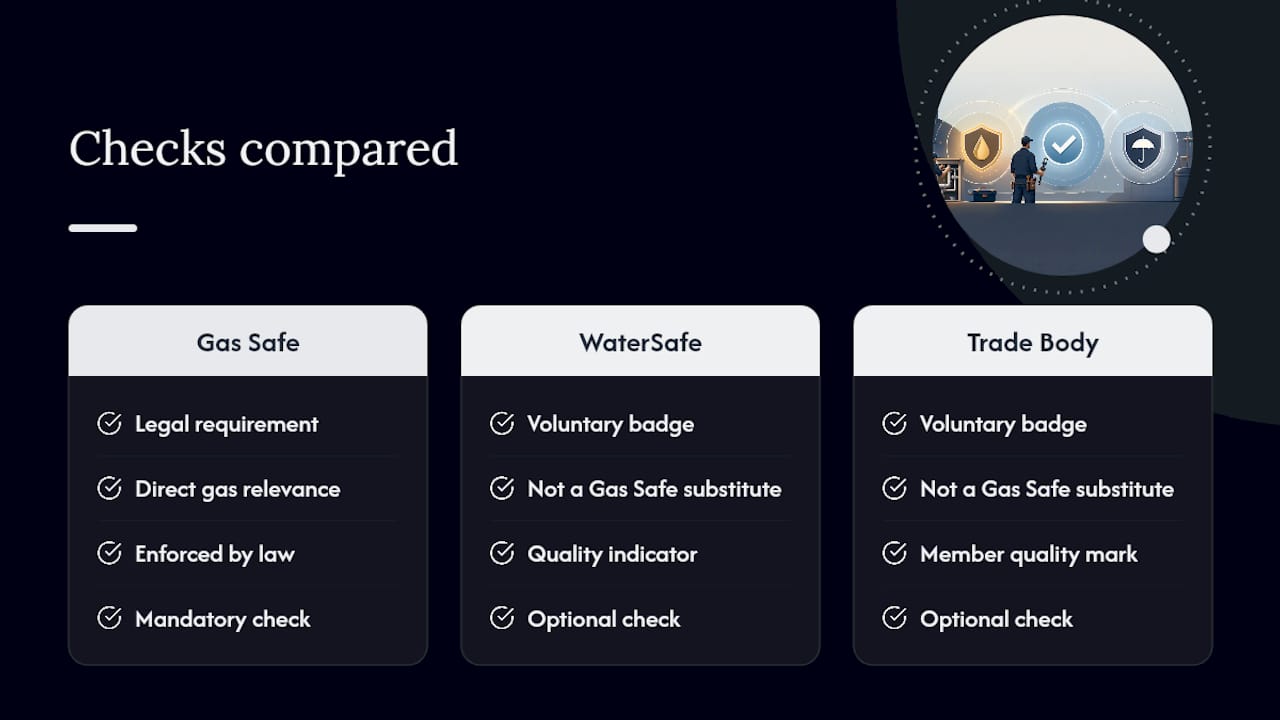
Most advice on hiring a plumber treats credentials as a box-ticking exercise, something you glance at once and forget. That's backwards. The Gas Safe check and the WaterSafe check aren't interchangeable, and conflating them is where a lot of homeowners go wrong. Gas Safe registration is a legal requirement enforced by law; WaterSafe and trade body membership are voluntary badges of quality. Treating a voluntary badge as if it carries the same legal weight as a mandatory one leads people to skip the one check that actually matters for gas safety.
What gets underrated is the written guarantee. Homeowners fixate on price and registration, then accept a verbal "yeah, I'll sort it if it goes wrong" instead of a dated, signed guarantee. Verbal promises evaporate the moment a business changes hands or the tradesperson stops answering calls.
If you take one thing from this: do the registration and insurance checks before the emergency, not during it. A trusted contact saved in your phone now is worth more than any quote comparison you'll do under pressure later.
— Michael
How to book a vetted plumber today
Some plumbing services offer an alternative to hunting through directories and cold-calling numbers off a van: one call can get you an engineer who's Gas Safe registered where required, carries public liability insurance, and works to fixed, transparent pricing rather than a vague estimate that grows once they're through the door.
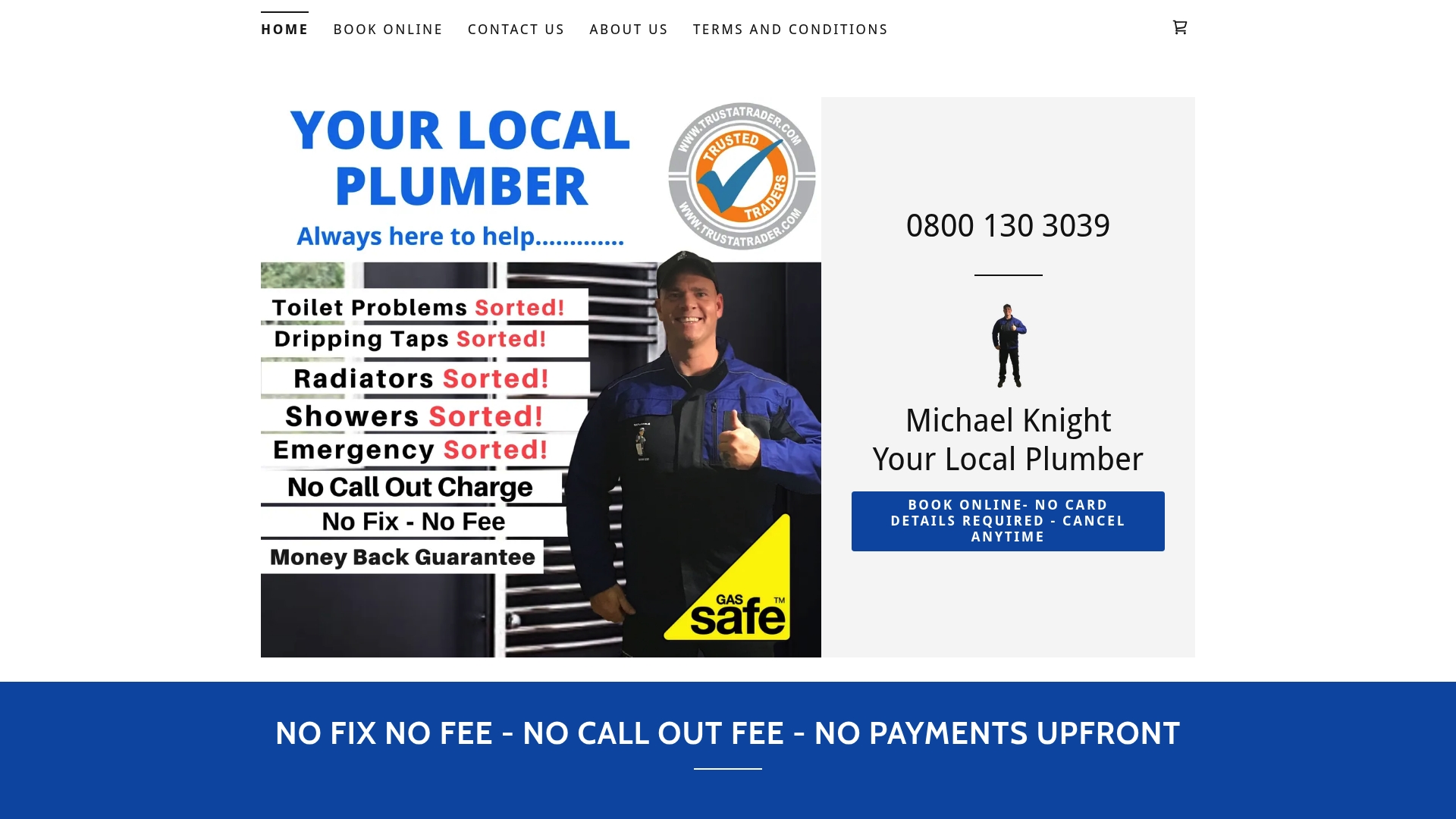
On first contact, expect a straight answer about availability, an honest estimate before anyone attends, and a written workmanship guarantee once the job's done, whether that's a burst pipe at midnight, a boiler that's stopped firing, or a planned bathroom installation booked weeks ahead. Emergency repairs, leak detection, tap and toilet fixes, shower installs, and full central heating work are all covered, with 24/7 availability for the jobs that can't wait until morning. Get a free quote or book an engineer through Your-local-plumber and skip the guesswork on who's actually turning up at your door.
Quick links to check registrations yourself
- Gas Safe Register: confirm any gas engineer's ID before work starts.
- WaterSafe Register: find approved plumbers for water fittings work.
- Gov: understand what public liability cover should include.
- DWI advice: official consumer guidance on finding a plumber.