
TL;DR:
- No hot water from taps often results from pressure imbalances or faulty valves, not necessarily a broken heater.
- System-wide issues are usually due to boiler or plumbing faults, identifiable through a systematic scope test of multiple taps.
Waking up to no hot water from taps is one of those problems that feels urgent and confusing in equal measure. Most homeowners assume the water heater has packed up and call a plumber straight away. But the truth is, your heater might be working perfectly. Cold water from taps is just as often the result of a pressure imbalance, a faulty valve, or a boiler quirk that takes ten minutes to identify. This guide walks you through a systematic approach so you can pinpoint the real cause before spending a penny on repairs.
Table of Contents
- Key takeaways
- No hot water from taps: start by finding the scope
- Common water heater faults causing no hot water
- Plumbing system factors behind hot water loss
- Boiler-related causes of no hot water
- My honest take after years of callouts
- When to call Your-local-plumber
- FAQ
Key takeaways
| Point | Details |
|---|---|
| Scope tells you everything | Test multiple taps first to determine whether the problem is isolated or affects your whole home. |
| Heaters fail in specific ways | Electric and gas heaters each have distinct fault patterns you can check yourself before calling anyone. |
| Plumbing pressure is often overlooked | Low or unbalanced water pressure is one of the most common and least diagnosed causes of hot water loss. |
| Boiler issues have clear warning signs | Low boiler pressure and a faulty diverter valve are frequent culprits behind no hot water in kitchen and bath. |
| Maintenance prevents most problems | Flushing sediment and checking pressure regularly avoids the majority of sudden hot water failures. |
No hot water from taps: start by finding the scope
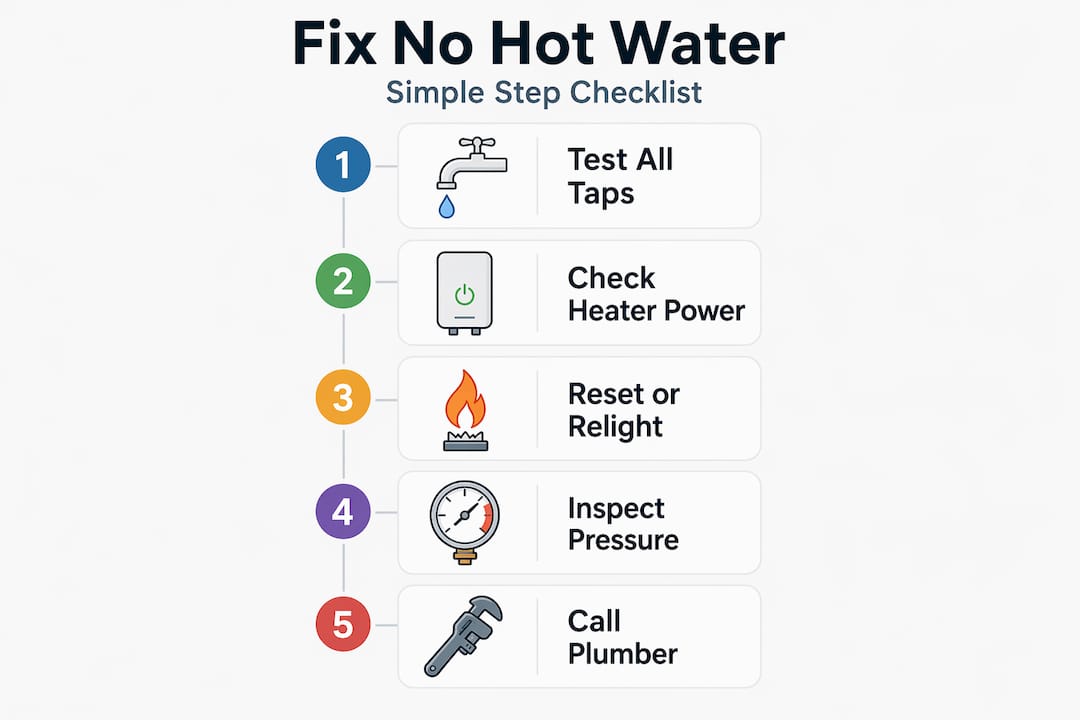
Before you touch anything, spend two minutes running a simple test. Turn on the hot tap in your kitchen, then try the bathroom basin, then the shower. This single step tells you more than anything else.
Testing hot water at multiple taps is the fastest way to localise a fault. If only one tap gives you cold water from taps while the rest run warm, the problem is almost certainly in the plumbing supplying that specific fixture, not your boiler or water heater. If every tap in the house is cold, you are dealing with a system-level fault.
Here is a quick checklist to help you assess the scope:
- Single cold tap only. Check the mixing valve or isolating valve beneath or behind that fixture.
- One room affected. Look for a closed service valve or a localised pipe issue serving that area.
- All hot taps cold, but cold water taps work fine. Suspect your water heater, boiler, or a system-wide plumbing fault.
- Intermittent hot water. Often points to thermostat failure, sediment buildup, or pressure fluctuations rather than complete unit failure.
- Hot water service delays at distant taps but eventually warm. This is a pipe length and recirculation issue, not necessarily a fault at all.
Getting this right at the start saves you from replacing a perfectly good boiler when the real culprit is a jammed tap cartridge.
Common water heater faults causing no hot water
If you have confirmed the problem is system-wide, your water heater is the logical first place to investigate. The type of heater you have determines exactly what to check.
Electric water heaters
Electric heater problems typically come down to tripped circuit breakers, failed heating elements, or a faulty thermostat. Start at your consumer unit and check whether the circuit for the immersion heater has tripped. Reset it and wait an hour. If it trips again immediately, the element or thermostat has likely failed and needs replacing.
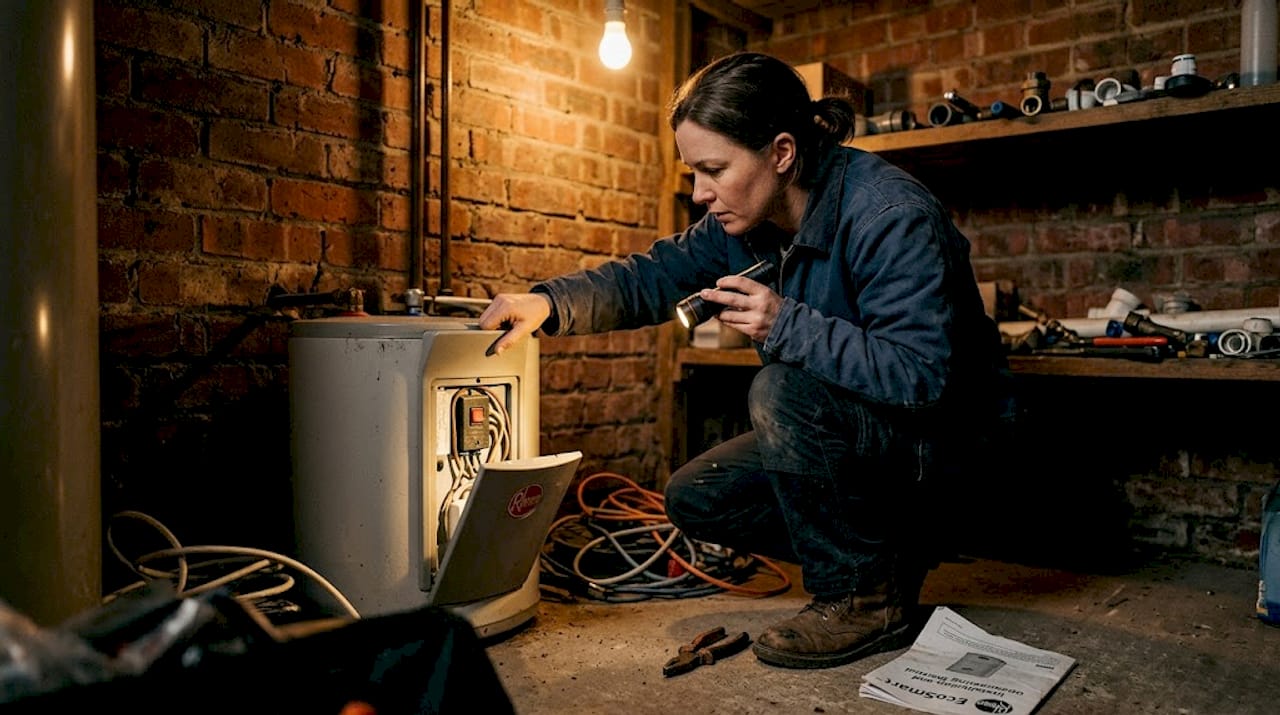
Most electric heaters also have a reset button on the unit itself, usually behind a small panel. Pressing this can restore function when a safety cutout has triggered due to overheating.
Gas water heaters
Gas heaters lose hot water supply when the pilot light goes out, when the thermocouple fails to detect the flame, or when the gas valve itself develops a fault. Relighting the pilot light is something most homeowners can do safely by following the instructions printed on the unit. If the pilot will not stay lit after several attempts, the thermocouple needs replacing. That is a job for a Gas Safe registered engineer.
Tankless and combination systems
Tankless heaters are sensitive to flow rate. If water pressure drops below the unit's minimum threshold, the burner will not fire and you get cold water from taps despite the system being in good working order. Check for any error codes displayed on the unit and consult your manual.
Sediment accumulation in storage heaters is another overlooked cause of no hot water issues. Hard water deposits build up on heating elements, reducing efficiency until the heater can no longer reach temperature. A rumbling noise during heating cycles is the tell-tale sign. Annual flushing prevents this from becoming a full replacement job.
Pro Tip: If your electric heater keeps tripping the circuit breaker, do not keep resetting it without investigating. Repeated tripping signals an underlying fault that will only worsen and may damage the unit permanently.
Plumbing system factors behind hot water loss
Here is where most diagnostic guides stop short. Your hot water heater could be functioning perfectly, and you still end up with no hot water at certain taps. Plumbing system factors are responsible for a surprisingly large proportion of no hot water issues.
How water pressure affects hot water delivery
Low or imbalanced water pressure disrupts hot water delivery in ways that are not immediately obvious. When cold water pressure is significantly higher than hot water pressure, cold water overpowers the hot at the mixer tap and you get a predominantly cold output even when both supplies are working. This is especially common in older properties without pressure regulation.
Multiple fixtures running simultaneously can trigger sudden cold bursts. When someone flushes a toilet or runs a tap elsewhere, it momentarily draws cold water pressure upward, shifting the balance at your shower or basin.
Pressure-balancing valves
Pressure-balancing valves correct exactly this problem by automatically adjusting the ratio of hot to cold flow when one side fluctuates. Older homes frequently lack these, which is why shower temperature instability is so common in period properties. Fitting one is a straightforward upgrade for a plumber and makes an immediate difference.
Pipe length and recirculation
If you wait thirty seconds or more for hot water to arrive, the problem is usually cooled pipe runs rather than a heater fault. Hot water sitting in long pipe lengths loses heat rapidly. Recirculation systems solve this by keeping hot water moving continuously from the heater to the tap and back, so warm water is available almost immediately.
Airlocks and mixing valves
Airlocks occur when air becomes trapped at high points in your pipework, physically blocking water flow. Airlocks in pipes often produce tapping or banging sounds and can cause one tap to run cold while adjacent taps work fine. A plumber can clear these by flushing the system, though some minor airlocks resolve with targeted bleeding.
Here is a side-by-side comparison to help you distinguish plumbing faults from heater faults:
| Symptom | More likely cause |
|---|---|
| All taps cold, boiler lights off | Water heater or boiler fault |
| One tap cold, others warm | Localised valve or mixing valve fault |
| Cold bursts during other water use | Pressure imbalance, needs balancing valve |
| Long wait but hot water arrives | Pipe length, consider recirculation system |
| Banging noises, then cold water | Airlock in pipework |
Follow these numbered steps to identify whether your fault is plumbing or heater based:
- Run every hot tap in the house and note which are affected.
- Check your boiler pressure gauge. If it reads below 1 bar, suspect the boiler before the plumbing.
- Run the hot tap for 60 seconds. If temperature improves slowly, recirculation or pipe length is the issue.
- Ask a household member to flush the toilet while you run the hot shower. If temperature drops sharply, pressure imbalance is the cause.
- Listen for banging or gurgling from pipes. This strongly suggests an airlock.
Pro Tip: Understanding how water pressure affects plumbing can save you from misdiagnosing a heater fault. Pressure issues are responsible for far more hot water complaints than most homeowners realise.
Boiler-related causes of no hot water
If you have a combi boiler, it handles both central heating and domestic hot water from a single unit. That convenience comes with specific fault patterns worth knowing.
Combi boilers will not deliver hot water when they fail to fire, when pressure falls outside the acceptable range, or when internal components wear out. Here are the most common culprits:
- Low boiler pressure. The pressure gauge on most boilers should read between 1 and 1.5 bar when cold. Below 1 bar and the boiler often locks out as a safety measure. Re-pressurising via the filling loop usually solves this, but if pressure keeps dropping, you have a leak somewhere in the system.
- High boiler pressure. Pressure above 3 bar can cause a pressure relief valve to activate and dump water. This is rarer but equally disruptive.
- Pilot light failure. Older boilers with a standing pilot may lose their flame due to a draught, a thermocouple fault, or a dirty injector. Modern condensing boilers use electronic ignition, so the equivalent fault is a failed igniter or electrode.
- Diverter valve faults. The diverter valve controls whether the boiler sends hot water to radiators or to the hot water circuit. When it sticks or wears out, you typically get central heating but no hot water at the tap. This is a strong diagnostic clue. If your radiators are warm but you have no hot water in kitchen or bathroom, the diverter valve is the prime suspect.
- Airlocks within the boiler circuit. These behave exactly as described in the plumbing section but are internal to the heating system. A Gas Safe engineer can purge these safely.
Any boiler fault involving gas components, ignition, or the heat exchanger requires a registered professional. Do not attempt internal boiler repairs yourself.
My honest take after years of callouts
I have attended hundreds of no hot water callouts over the years, and one pattern stands out. Homeowners almost always assume the worst and the actual fix is often something they could have spotted in five minutes with a systematic approach.
What I see most often is this: someone gets cold water from taps in the morning, panics, and calls for an emergency replacement. The engineer arrives and finds boiler pressure sitting at 0.5 bar. A two-minute re-pressurisation and the problem is gone. Weeks of worry for a job that takes less time than making a cup of tea.
The cases that genuinely require professional intervention are usually the ones with clear warning signs that were ignored for months. Rumbling noises from the hot water cylinder, repeated circuit breaker trips on the immersion heater, or heating working but no hot water at taps. None of these are mysterious if you know what to look for.
My advice is to use the scope test every single time. One cold tap is never a boiler problem. System-wide cold water is rarely a plumbing problem. That distinction alone points you toward the right solution and stops you overspending on diagnosis.
Maintenance matters more than most people acknowledge. Annual boiler servicing and occasional cylinder flushing in hard water areas genuinely prevent the majority of sudden hot water failures I attend. The cost of a service is a fraction of an emergency callout.
— Michael
When to call Your-local-plumber
Sometimes the problem goes beyond what a checklist can solve. If you have worked through the steps above and still have no hot water, or if you are seeing repeated faults with your boiler or water heater, professional diagnosis is the right call.

Your-local-plumber provides fast, reliable hot water repairs across the local area, from boiler pressure and valve faults to full water heater diagnostics and replacement. The team handles electric, gas, and combi systems, and is available for both urgent callouts and planned repairs. With transparent pricing and experienced engineers, you will know exactly what needs doing and what it will cost before any work begins. Do not sit without hot water longer than you need to.
FAQ
Why is there no hot water from my taps suddenly?
Sudden hot water loss is most commonly caused by a tripped circuit breaker on an electric heater, low boiler pressure, or a failed pilot light on a gas system. Check your boiler pressure gauge and consumer unit before assuming the worst.
How do I know if my boiler or pipes are causing the problem?
If your radiators are working but taps run cold, the boiler's diverter valve is likely at fault. If all heating and hot water have stopped, suspect boiler pressure or ignition failure rather than a plumbing fault.
Why do I have hot water service delays even when the heater works?
Waiting for hot water at distant taps is typically caused by cooled water sitting in long pipe runs, not a fault with your heater. A hot water recirculation system eliminates this delay.
Can low water pressure cause no hot water in kitchen taps?
Yes. When cold water pressure significantly exceeds hot water pressure, cold water overpowers the hot side at the mixer, leaving you with cold output despite the heater working correctly. Fitting a pressure-balancing valve corrects this.
When should I call a professional for fixing hot water problems?
Call a professional if the boiler is showing fault codes, the pilot light will not stay lit, you smell gas, or if the circuit breaker trips repeatedly. These faults require a Gas Safe registered engineer or qualified plumber and should not be tackled as DIY repairs.