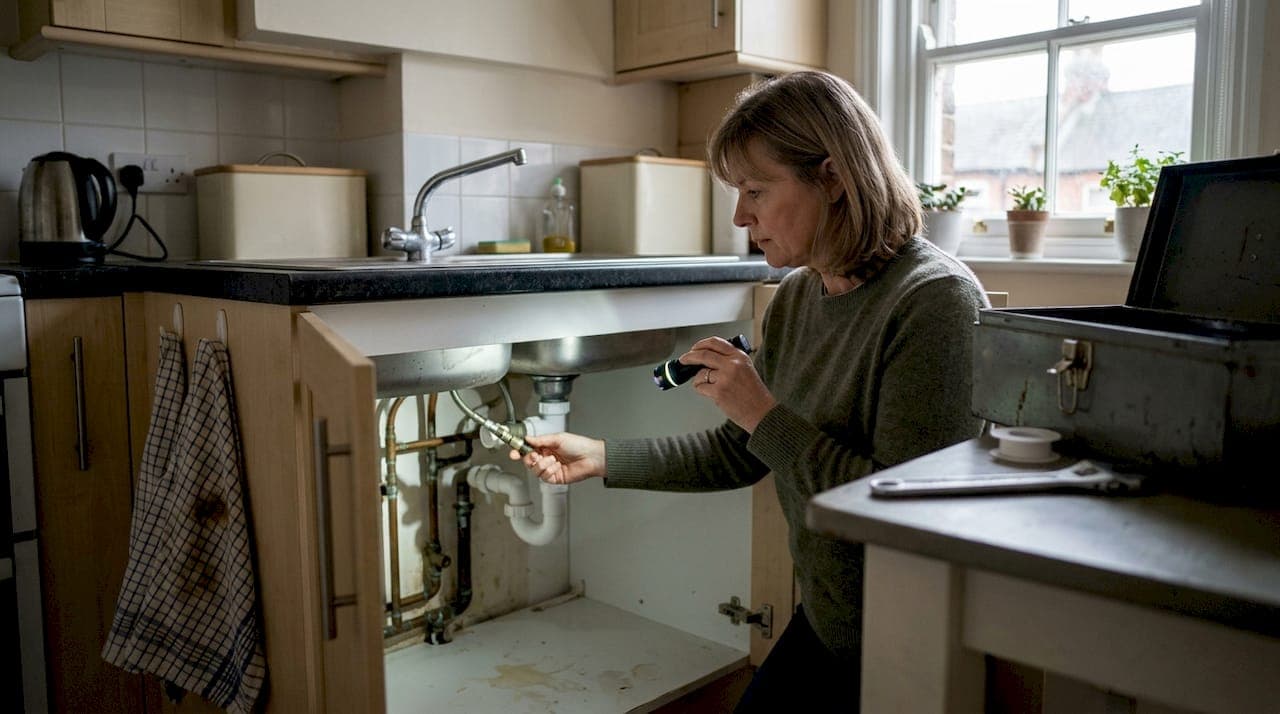
TL;DR:
- Homeowners are responsible for replacing supply pipes running within their property boundary.
- Signs like persistent leaks, low water pressure, and discoloured water signal need for pipe replacement.
- Proactive inspection and planning can save costs compared to emergency repairs after failures.
Most homeowners assume that if there's a problem with a water pipe outside their front door, it's the water company's responsibility. That assumption can be costly. In reality, you are likely responsible for the supply pipe running through your property boundary, and replacing it can set you back anywhere from £1,000 for a short run to well over £13,000 for a full replumb. This guide walks you through everything you need to know: when pipe replacement is genuinely necessary, what the process looks like, who picks up the bill, and how to make the smartest decision for your home.
Table of Contents
- Understanding pipe replacement in UK homes
- Signs you may need pipe replacement
- Who is responsible for pipe replacement?
- Costs and methods of pipe replacement
- Why most homeowners underestimate pipe replacement
- Need reliable pipe replacement? Book your trusted local plumber
- Frequently asked questions
Key Takeaways
| Point | Details |
|---|---|
| Replacement is often essential | Severe pipe damage or outdated materials generally require replacement, not repair. |
| Check your responsibilities | UK homeowners are accountable for pipes inside their property boundary while water companies cover the rest. |
| Costs vary widely | Pipe replacement costs range from a few hundred to over £20,000, depending on scope and method. |
| Know the warning signs | Leaks, low pressure, and discoloured water can all signal urgent need for pipe replacement. |
Understanding pipe replacement in UK homes
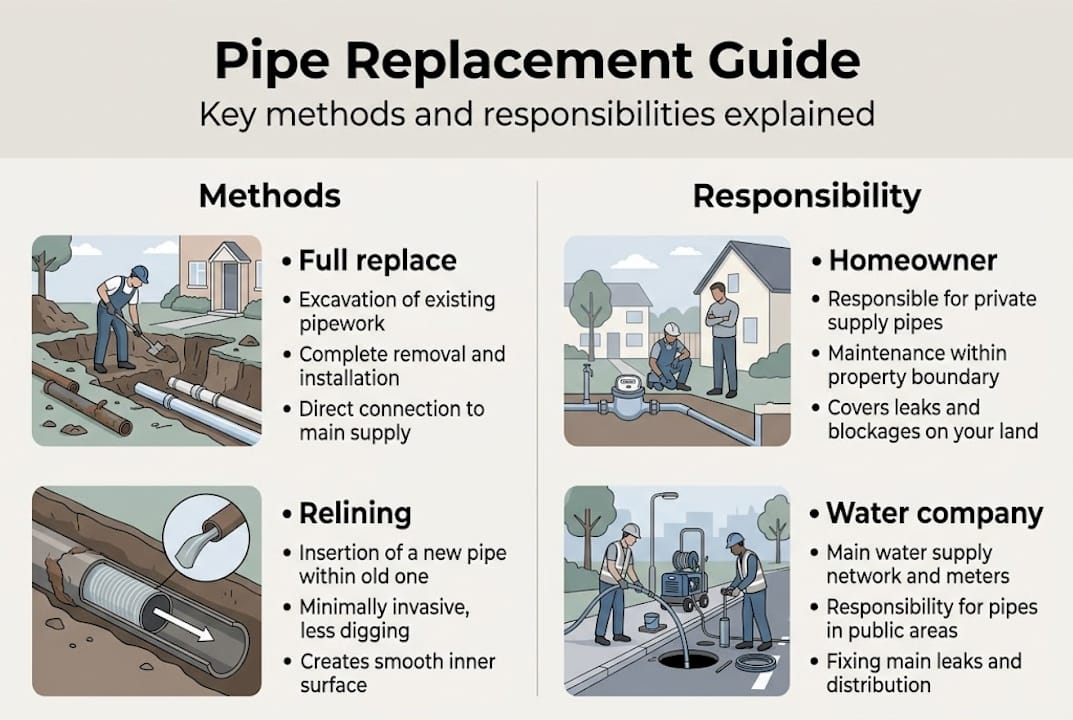
Pipe replacement means physically removing old or damaged pipework and fitting entirely new pipes in its place. It is not the same as pipe relining, which is a less invasive method where a resin liner is inserted into the existing pipe to restore function without digging it up. Both have their place, but they are not interchangeable.
Relining works well when the existing pipe is structurally sound but suffering from minor cracks or scale build-up. The pipe still holds its shape, the gradient is correct, and there is no need to reroute anything. Replacement, on the other hand, becomes necessary in more serious situations. According to guidance from Anglian Water, relining is unsuitable when pipes have collapsed or deformed, when the gradient is poor, when there is severe corrosion, or when rerouting is required. That list covers a huge proportion of older UK homes, especially those built before the 1970s.
The most common causes that drive pipe replacement include:
- Age. Pipes made from iron, clay, or lead have a finite lifespan. Many properties still have lead supply pipes fitted decades ago.
- Corrosion. Metal pipes corrode from the inside out. By the time you notice discolouration in your water, the damage may already be severe.
- Physical damage. Ground movement, accidental drilling, or tree roots can crack, crush, or collapse a pipe entirely.
- Outdated materials. Lead pipes pose a direct health risk. Galvanised iron pipes narrow over time as mineral deposits build up on the interior walls.
- Persistent blockages. If a pipe repeatedly blocks despite professional clearing, the pipe structure itself may be failing.
You specifically need full pipe replacement, rather than relining or repair, in these situations:
- The pipe has collapsed inward or shifted significantly out of alignment
- There is severe corrosion eating through the pipe wall
- The pipe needs rerouting due to building work or layout changes
- Lead or asbestos cement pipes are present and pose a health risk
- The pipe has fractured in multiple places along its length
Pro Tip: Two early warning signs that are easy to dismiss are slightly reduced water pressure and a faint metallic taste in your water. Both can indicate internal pipe deterioration long before a visible leak appears. Staying on top of your plumbing maintenance checklist means you catch these signals early rather than waiting for a burst.
"Pipe relining is not suitable as a replacement technique where pipes are collapsed, deformed, have a poor gradient, or where rerouting is required." — Anglian Water Replacement Connection Guidance
That is the core of what pipe replacement means in a UK context. Now, let's look at the specific signs that tell you it's time to act.
Signs you may need pipe replacement
Spotting early warning signs is the difference between a manageable job and a full-scale emergency. Many homeowners live with low-level plumbing problems for months, assuming they will resolve themselves. They rarely do.
Here are the key warning signs to watch for:
- Frequent leaks in the same area. A single leak repaired once might be a one-off. If the same section of pipe develops leaks repeatedly, the material has degraded and no single repair will hold indefinitely.
- Persistently low water pressure. Mineral build-up, internal corrosion, or partial collapse can all restrict flow. If your shower pressure has dropped noticeably over the past year, your supply pipe deserves attention.
- Discoloured water. Brown or orange water coming from the tap indicates rust inside iron or steel pipes. Slightly grey or cloudy water from lead pipes is a health concern that requires urgent action.
- Recurring blockages. Professional drain clearing should resolve blockages effectively. If the same pipe blocks every few months, the internal structure of the pipe is likely deforming or collapsing.
- Visibly corroded or damaged pipework. If you can see pitting, flaking, or greenish staining on exposed pipes in your airing cupboard or under the sink, you are looking at a pipe approaching the end of its useful life.
- Old pipe materials in the property. If your home was built before 1970 and has never been replumbed, there is a strong chance it still has lead supply pipes or galvanised iron heating pipes. Both require replacement on health and efficiency grounds.
- Unexplained increases in your water bill. A slow underground leak may go unnoticed for months while water quietly seeps into your garden or under your foundations.
Pro Tip: Check your water meter reading before bed and again first thing in the morning without using any water overnight. If the reading has changed, you almost certainly have a hidden leak somewhere in your supply pipe.
As highlighted in the Anglian Water guidance, pipes that are collapsed, severely corroded, or have a poor gradient cannot be remedied through relining or simple repair. Replacement is the only safe option in those cases.
It's worth understanding the scale of what might be involved. A full house replumb typically costs between £13,000 and £24,000 in the UK. That figure covers stripping out all the old pipework and installing new copper or plastic pipes throughout the property. It sounds significant, but weighed against the cost of water damage to floors, ceilings, and walls from repeated failures, proactive replacement often works out far cheaper. Understanding your plumbing regulations for homeowners also ensures any replacement work is compliant and doesn't cause issues when you sell the property.
Who is responsible for pipe replacement?
This is where many homeowners get a genuine shock. Responsibility for your water supply pipes is split between you and your water company at a very specific boundary point, and it is rarely where people expect it to be.
"Homeowners are responsible for the supply pipe running within their property boundary. The water company is responsible only for the communication pipe, which runs from the water main to the boundary of your property." — Anglian Water Replacement Connection Guidance
The table below clarifies how that responsibility is typically divided:
| Pipe section | Who owns it | Who pays for replacement |
|---|---|---|
| Water main (under the road) | Water company | Water company |
| Communication pipe (main to boundary) | Water company | Water company |
| Supply pipe (boundary to your stop tap) | Homeowner | Homeowner |
| Internal pipework (within the property) | Homeowner | Homeowner |
| Shared supply pipe (serving multiple homes) | All owners jointly | Shared between owners |
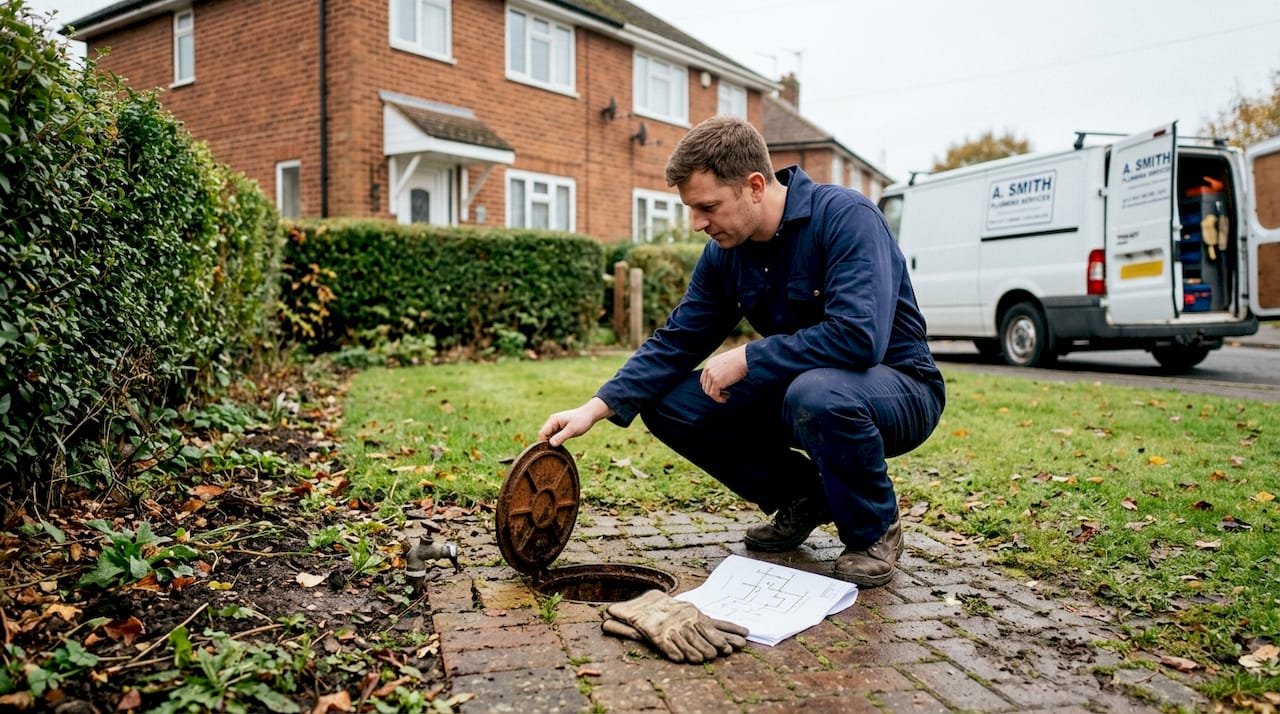
The practical consequence of this is that if your supply pipe develops a leak or collapses anywhere between your property boundary and your internal stop tap, the repair bill is yours. That stretch of pipe can run several metres underground, and digging it up and replacing it is not a small job.
There are, however, some situations where you may get financial help:
- Lead pipe replacement schemes. Several water companies run schemes to assist homeowners in replacing lead supply pipes, particularly where the lead extends from the boundary into the home. Eligibility varies by area and water company.
- Shared pipe agreements. Where a supply pipe serves more than one property, costs are typically shared. Getting a solicitor to check your deeds can clarify your obligations.
- Insurance cover. Some home insurance policies include cover for underground supply pipes. Check your policy documents carefully, as this is not always standard.
Checking your property's boundary and the location of your external stop tap is a practical first step. Your water company can confirm exactly where their responsibility ends. Reviewing your maintenance responsibility tips alongside UK plumbing compliance guidance will help you understand both your obligations and your rights as a property owner.
Costs and methods of pipe replacement
With a clear understanding of responsibility, the next question is how much it will actually cost and what methods are available.
| Replacement type | Typical cost | Notes |
|---|---|---|
| Water supply pipe (10m run) | ~£1,000 | Straightforward external dig |
| Lead pipe replacement | £800 to £2,500 | Varies by length and access |
| Pipe relining (per metre) | £50 to £250 | Suitable only for intact pipes |
| Pipe replacement (per metre) | £535 and above | Full excavation and reinstatement |
| Full house replumb | £13,000 to £24,000 | Entire internal system replaced |
These figures come from current UK replumbing cost data and represent national averages. London and the South East typically sit at the higher end or above these ranges due to labour costs and access challenges in urban properties.
Several factors will affect the final price of any pipe replacement job:
- Length of the pipe run. A longer run requires more excavation, more materials, and more labour hours. A 20 metre supply pipe is considerably more work than a 5 metre section.
- Accessibility. Pipes running under a concrete driveway, beneath a conservatory, or through finished flooring cost more to access than those in open garden or under floorboards.
- Pipe material. Replacing lead pipe often requires specialist handling and disposal. Copper and plastic are faster to fit and cheaper to source.
- Urgency. Emergency call-outs carry a premium. A burst supply pipe that needs fixing on a Sunday evening will cost noticeably more than a planned replacement booked in advance.
- Location in the UK. Costs in London can be 20 to 30 per cent higher than the national average for equivalent work.
Pro Tip: Always get at least three quotes for any pipe replacement job. Prices can vary significantly between contractors, and a written, itemised quote protects you from unexpected additions to the final bill.
It is also worth mentioning the free lead pipe schemes in more detail. Some water companies will replace the section of lead pipe that falls under their responsibility, from the water main to your boundary, at no cost to you. A smaller number of schemes extend partial funding to the homeowner's section as well. Contact your local water company directly to find out what is available in your area.
When it comes to choosing a method, the decision between relining and full replacement should always be made based on a proper survey. A CCTV drain survey (where a camera is fed through the pipe to inspect it from the inside) will reveal exactly what condition your pipes are in and whether relining is a realistic option. For planned replacements, you can explore your options through the plumbing services available in your area and book a full assessment before committing to a method.
Why most homeowners underestimate pipe replacement
Here is the uncomfortable truth we have seen repeatedly: most homeowners only think seriously about pipe replacement after a flood, a health scare, or a surveyor's report ahead of a house sale. By that point, the urgency drives up costs and limits options.
The real problem is that pipes are invisible. Out of sight, out of mind is a genuinely dangerous approach to infrastructure that directly affects your health and your home's value. We have seen properties where lead pipes had been in service for over 80 years, not because the owners were negligent, but because nobody had ever flagged it as a priority.
The smartest approach is to treat pipe replacement as a planned investment rather than an emergency expense. Scheduling a professional inspection every few years, particularly in older properties, means you can budget for replacement work on your terms rather than scrambling when disaster strikes. The role of a professional plumber in this process is not just to fix problems but to identify them before they become expensive. Proactive homeowners consistently spend less over the long term than those who wait for failure.
Need reliable pipe replacement? Book your trusted local plumber
Knowing what pipe replacement involves is one thing. Getting the right team to carry it out safely and efficiently is another.

At Your Local Plumber, our experienced engineers handle everything from single supply pipe replacements to full replumbs, with transparent pricing and no hidden surprises. Whether you need to plan a replacement or you are dealing with an urgent issue right now, you can access expert plumbing help whenever you need it. It only takes a minute to book a plumber online, and for urgent situations, our emergency plumber response team is ready to act fast. Less disruption, more confidence.
Frequently asked questions
How do I know if my pipes need replacing, not just repair?
Persistent leaks in the same section, severe corrosion or collapse, ageing lead supply lines, and pipes that repeatedly fail after repair are all strong indicators that full replacement is the safer and more cost-effective route.
Who pays for supply pipe replacement in the UK?
Homeowners are responsible for paying to replace the supply pipe within their property boundary, while the water company covers the communication pipe running from the water main to that boundary.
What schemes are available for lead pipe replacement?
Several water companies offer free or subsidised schemes for lead pipe replacement in eligible areas, so it is worth contacting your water supplier directly to find out what support is available where you live.
How much does it usually cost to replace pipes in a UK house?
A full house replumb typically costs between £13,000 and £24,000, though smaller jobs such as replacing a single supply pipe can start from around £1,000 depending on length and access.