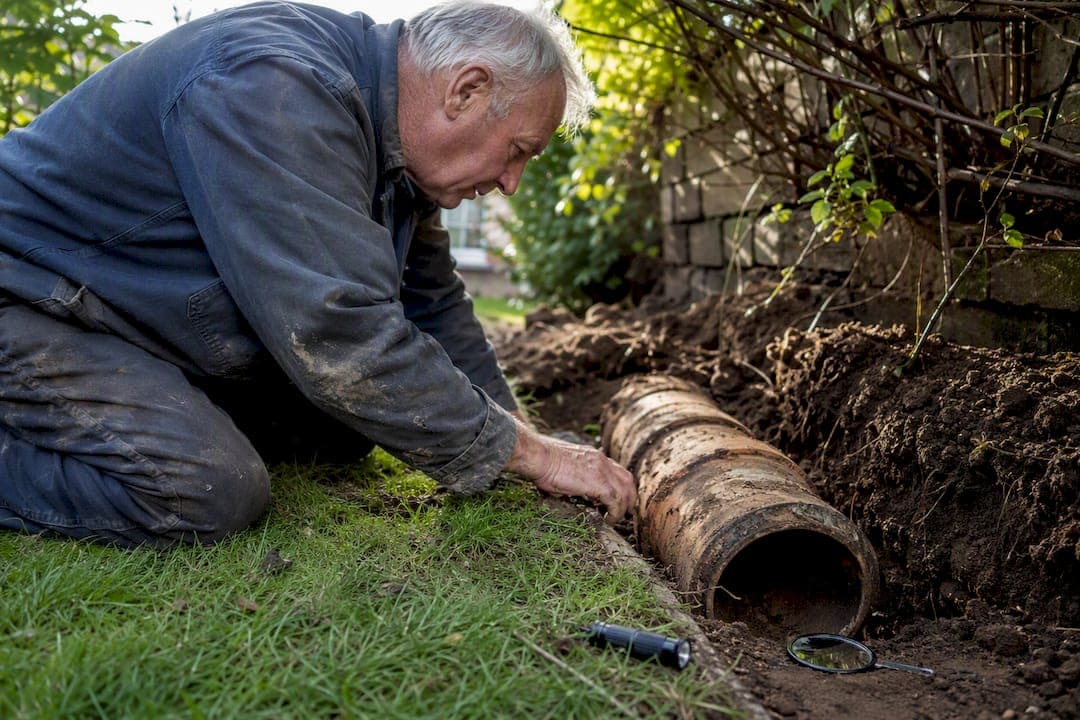
If your drains are old, get them inspected before they choose the moment for you. A collapsed clay pipe rarely announces itself with a polite warning; it turns up as a sinkhole on the lawn or sewage backing up through a downstairs toilet. Inspecting early protects your wallet and, if you're buying, your negotiating position.
- Cost control: a CCTV drain survey typically runs £75 to £500, against repair bills that climb into the thousands once a pipe actually fails.
- Sale and mortgage risk: undisclosed drainage defects can trigger lender retentions or collapse a sale at the last minute.
- Hidden defects: a desktop CON29DW search shows sewer records but nothing about actual pipe condition.
- Safety and legality: cracked or misconnected drains can create damp, subsidence, and regulatory headaches for off-mains systems.
Key Takeaways
Inspecting an old drainage system before it fails saves money, protects a house sale, and closes the blind spot a standard survey leaves open.
| Point | Details |
|---|---|
| Age is the biggest risk factor | Pre-1970 properties with clay or pitch-fibre pipes fail more predictably and need earlier inspection. |
| Desk search isn't enough | A CON29DW check shows sewer records only; a CCTV survey shows actual pipe condition. |
| Costs scale fast | Surveys run £75 to £500, but excavation repairs can reach £8,000 or more if ignored. |
| Watch for early symptoms | Slow drains, gurgling, damp patches, and pooling water outside are worth acting on. |
| Book a professional inspection | Your-local-plumber carries out CCTV surveys, unblocking, and excavation with transparent, fixed pricing. |
Table of Contents
- Why old drainage systems fail more often than new ones
- Common drainage problems found in older properties
- Signs of faulty drainage you shouldn't ignore
- What happens during a CCTV drain survey
- When to book a drainage inspection
- Typical costs and repair options for old drains
- How to choose a drainage surveyor
- Evidence snapshot: why property age drives drainage risk
- Legal and regulatory considerations for drainage work
- Drainage problems, property value, and your mortgage
- Why we recommend inspecting older drains before you commit
- Book a drainage survey with Your-local-plumber
- Sources
Why old drainage systems fail more often than new ones
Drains age like anything buried and forgotten. Properties built before 1970 commonly used clay or pitch-fibre pipes, both of which have a finite working life and degrade in predictable ways. Pitch-fibre, laid heavily through the 1950s to the 1970s, is particularly troublesome: it can deform and delaminate internally, and once that happens, relining usually isn't an option. Replacement is.
Environmental pressure adds to the problem. A mature tree within a close proximity of a drain run is a strong predictor of root ingress, since roots exploit the smallest joint gap in search of moisture. Ground movement, whether from clay soil shrinkage or nearby building work, shifts pipe joints out of alignment over decades. Layer on undocumented extensions or DIY repairs from previous owners, and you get a system nobody fully understands anymore.
Pro Tip: If a property is pre-1970, sits near large trees, or has had an extension, move it to the top of your inspection list regardless of how the drains currently seem to perform.
Common drainage problems found in older properties
Inspectors see the same faults again and again in ageing systems. Root ingress and cracked or fractured pipework tend to be the most frequent, followed by displaced joints where sections have shifted apart. Silt and fat build-up causes slow drainage long before anything structural goes wrong, and some older homes have incorrect connections where foul water discharges into surface water drains, a genuine environmental and regulatory issue.
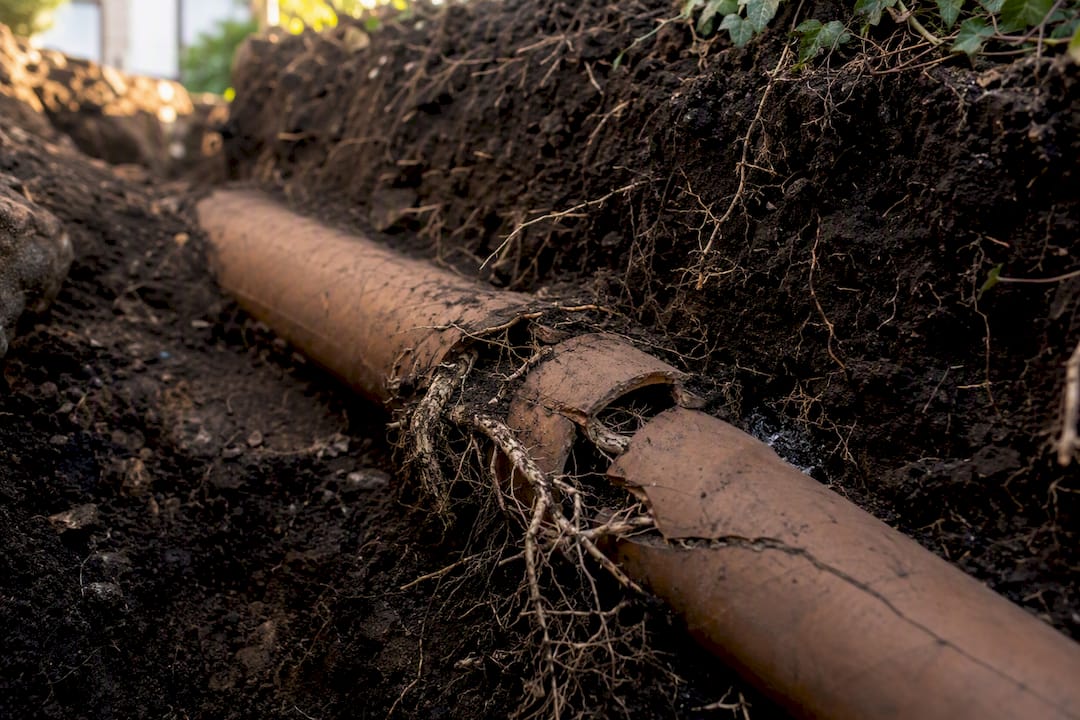
| Problem | Typical severity |
|---|---|
| Root ingress | Medium to High |
| Cracks and fractures | Medium |
| Displaced joints | Medium |
| Partial or full collapse | High |
| Silt and fat build-up | Low to Medium |
| Incorrect connections | Medium |
A full collapse is the one that turns a modest survey fee into an excavation bill, which is exactly why catching the smaller faults early matters.
Signs of faulty drainage you shouldn't ignore
Some symptoms show up inside the house, others outside. Both are worth learning to read.
- Slow-draining sinks or baths that don't improve after clearing visible blockages.
- Gurgling toilets or drains, a classic sign of a partial blockage or airlock further down the run.
- Persistent bad smells, or damp patches and fresh staining near ground-floor walls.
- Pooling surface water, new dips or soft patches in the lawn, or an unusually lush green strip tracking across the garden.
- Standing water near a soakaway that never seems to clear.
None of these guarantee a serious fault on their own, but two or more together are a solid reason to book an inspection rather than wait and see.
What happens during a CCTV drain survey
A CCTV drain survey is the physical inspection that a desktop search can never replace. An engineer feeds a waterproof camera into the drain through an existing access point, usually a manhole or inspection chamber, then guides it along the run while monitoring the footage in real time.
- Locate and open an access point.
- Insert the camera and advance it steadily through the pipe.
- Monitor footage live, noting anything unusual.
- Review the recording in full afterwards.
- Code each defect by type and severity.
- Produce a written report with recommendations.
The survey generally covers foul drainage and, depending on scope, surface water too. It's worth remembering this is a snapshot of the pipe's condition on the day, not a guarantee against future problems. A proper report should include a route map, timecoded footage references, a defect log, remedial options, and rough cost estimates, not just a verdict of "pass" or "fail".
When to book a drainage inspection
Not every property needs the same urgency. Rank the risk first, then act.
- High priority: pre-1970 homes, properties near mature trees, or anywhere with known ground movement.
- Medium priority: homes with a history of blockages or recent building work near the drain run.
- Lower priority: newer, straightforward mains-connected properties with no history of issues.
- Start with the free CON29DW desk search to rule out obvious risk.
- Commission a CCTV survey before exchange if that search or your own observations raise concerns.
- Use the findings to negotiate remediation or a price adjustment with the seller.
Typical costs and repair options for old drains
Budgeting for drainage work means understanding which fault leads to which fix. A CCTV survey costs £75 to £500; what it uncovers determines the next bill.
- Jetting is quick, usually done in a single visit, with minimal disruption.
- Relining avoids digging up the garden but needs a structurally sound pipe to bond to.
- Excavation is disruptive and slower, sometimes days rather than hours, but it's the only real fix for pitch-fibre that has already collapsed internally.
If you're buying and the survey flags a problem, a written report with costed options is far stronger leverage in negotiations than a vague concern about "old pipes". For simpler pipework issues elsewhere in the house, our step-by-step plumbing guide covers what's safe to tackle yourself and what isn't.
How to choose a drainage surveyor
Not every operator is equally thorough, so ask before you book. Find out how much CCTV survey experience they have specifically, whether they hold recognised accreditation, and whether they'll show you a sample report before you commit. Confirm insurance cover and ask what guarantee, if any, backs up recommended repairs.
Walk away from vague day-rate pricing with no itemised breakdown, refusal to hand over raw footage, or heavy pressure to book expensive work with no defect evidence to back it up. Directories such as the National Association of Drainage Contractors list accredited professionals, and asking for references from similar-aged properties is a fair, reasonable request.
Pro Tip: Ask to see the actual timecoded footage, not just the summary report. A reputable engineer will show you exactly what the camera found and where.
Evidence snapshot: why property age drives drainage risk
The 1970 threshold isn't arbitrary. It marks the point where clay and pitch-fibre pipework becomes common, both materials with a finite service life and a known tendency towards root ingress and joint failure. Survey costs of £75 to £500 look small next to a repair bill that can reach £8,000 for excavation work.
- A desk-based search records sewer location and adoption status, nothing about physical condition.
- Only a CCTV survey confirms what's actually happening inside the pipe.
- Age plus nearby trees plus previous ground movement is the highest-risk combination to prioritise.
Legal and regulatory considerations for drainage work
Drainage isn't purely a maintenance issue. It comes with legal obligations that catch out plenty of buyers and homeowners who assume it's a private matter with no wider consequences.
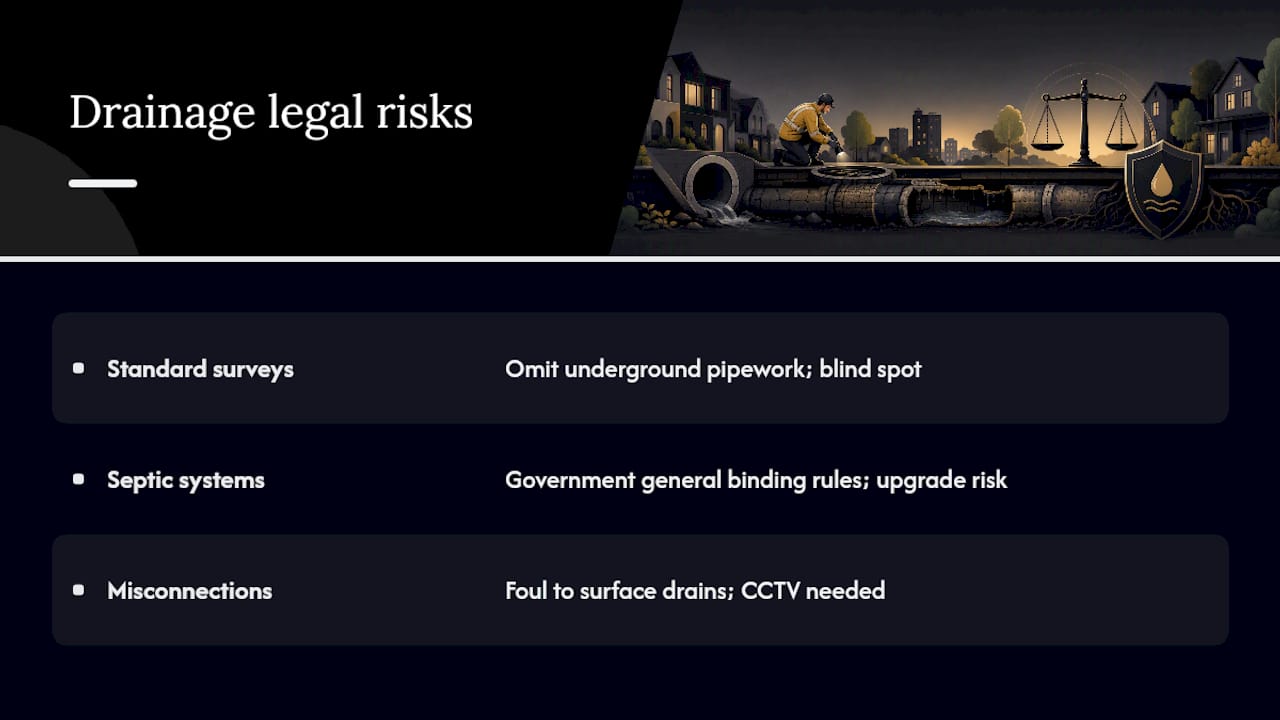
Standard property surveys, including most RICS Level 2 and 3 reports, generally don't inspect underground pipework beyond a quick flow check at a visible access point. That gap matters legally as much as practically, because it means a "clean" survey report tells you almost nothing about what's happening below ground. If you're relying on a standard survey alone before buying an older property, you're accepting a genuine blind spot, not a clean bill of health.
Properties on septic tanks or other off-mains systems face a separate layer of regulation. Government general binding rules govern small sewage discharges to surface water, and a system that doesn't comply can leave a new owner facing immediate upgrade or replacement obligations, not a gradual one to plan around. This is worth checking before exchange, not after.
Misconnections, where foul water discharges into a surface water drain instead of the foul sewer, also carry environmental and enforcement implications. These faults are often invisible from a visual inspection alone and only surface during a proper CCTV survey, which is one more reason a physical inspection outperforms paperwork checks for anyone taking on an older drainage system.
Drainage problems, property value, and your mortgage
Drainage faults sit in an odd category for lenders. They rarely refuse a mortgage on drains alone, but a CCTV survey that reveals structural movement linked to a failing drain can prompt a retention, where the lender holds back part of the mortgage until repairs are completed or costed.
That's a real complication in a chain, particularly with a completion date already set. Sellers rarely welcome a retention request days before exchange, and buyers rarely want to be the one raising it. The smarter approach is surfacing drainage risk early, ideally before an offer is even accepted, so it never becomes a last-minute crisis.
On value, drainage issues function as one of the classic "sleeper" findings on a survey: individually unremarkable, but easy to underestimate until you're staring at an excavation quote. A property with a clean, documented CCTV survey is a straightforward sell. One with unknown drainage history, especially if it's pre-1970 or near mature trees, invites buyers to either negotiate the price down or ask for remedial work as a condition of sale. Either way, the seller loses ground they could have kept by inspecting first. For older properties generally, our guide to Georgian property plumbing covers other age-related issues worth checking alongside drainage.
Why we recommend inspecting older drains before you commit
Drainage faults rarely stay small. A CCTV survey costs a few hundred pounds; excavation after a collapse costs thousands and disrupts the household for days. We've seen how much easier it is to negotiate, plan, or simply sleep better with a clean report in hand. That said, a clean survey is reassurance for today, not a lifetime guarantee against tomorrow's tree roots.
Book a drainage survey with Your-local-plumber
Your-local-plumber gets you a proper physical inspection instead of leaving you to guess from a desktop search alone. Our engineers carry out CCTV drain surveys, unblocking, no-dig lining, and full excavation work, with transparent fixed pricing agreed before anything starts.

- CCTV drain surveys with a full written report, route map, and defect log.
- Jetting and unblocking for slow or smelly drains, usually completed same day.
- Lining and excavation for structural repairs, quoted upfront with no surprises.
If you've spotted any of the signs covered above, or you're buying an older property and want peace of mind before exchange, get a free quote from Your-local-plumber and book a survey around your schedule, 24 hours a day.
Sources
- CCTV drain survey cost guide | Checkatrade
- Postcodeproperty
- What is a drainage survey? | Property Passport UK
- Gov