TL;DR:
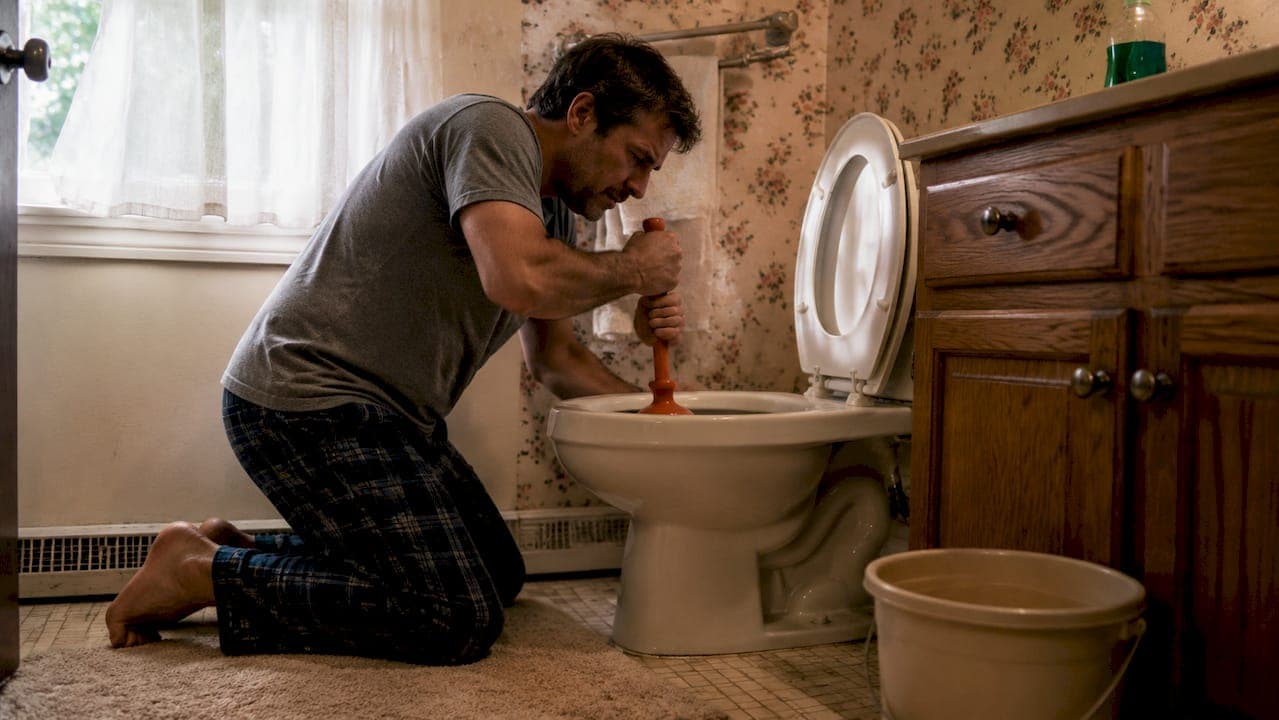
- Unblocking a toilet involves clearing clogs from the trap or drain pipe, typically using a flange plunger, hot water, or a toilet auger. Homeowners should turn off the water supply first, use the correct tools, and escalate methods logically before calling a professional plumber for deep or stubborn blockages. Avoid repeated flushing, boiling water, or chemical cleaners to prevent damage and worsening the problem.
Unblocking toilets is the process of clearing a blockage from the toilet trap or drain pipe to restore normal flushing. Most homeowners can resolve the problem themselves using three core tools: a flange plunger, hot water with washing-up liquid, or a toilet auger. Before you reach for any of them, turn off the water supply using the isolation valve at the back base of the toilet. This single step prevents overflow and protects your bathroom floor from water damage. The good news is that most simple blockages clear within 10–30 minutes using methods you already have at home.
What tools do you need to unblock a toilet?
The right tools make the difference between a five-minute fix and a flooded bathroom. Many homeowners fail at toilet clog removal simply because they reach for the wrong plunger.
The flange plunger vs. the cup plunger
A flange plunger is designed with a rubber extension that fits directly into the toilet trap, creating a tight seal. A standard flat cup plunger, the kind sold for sinks, cannot form that seal. Without the seal, you generate no hydraulic pressure, and the blockage stays put. Always use a flange plunger for toilet work.
Full tool and materials list
Gather everything before you start. Stopping mid-job to hunt for gloves or a bucket makes a messy situation worse.
- Flange plunger — the primary tool for most blockages
- Toilet auger (closet auger) — for deeper clogs beyond plunger reach
- Rubber gloves — thick, elbow-length if possible
- Old towels or newspapers — to protect the floor around the toilet
- Bucket — for bailing excess water if the bowl is too full
- Washing-up liquid — lubricates and softens organic clogs
- Warm water — not boiling; hot tap water is sufficient
- Baking soda and white vinegar — optional, for organic blockages
Pro Tip: Warm a cold flange plunger under hot tap water for 30 seconds before use. A warm, pliable rubber cup seals far better against the porcelain than a stiff, cold one.
| Tool | Function | Ease of Use | Approximate Cost |
|---|---|---|---|
| Flange plunger | Creates hydraulic pressure to dislodge clogs | Easy | £5–£15 |
| Toilet auger | Physically breaks or retrieves deep blockages | Moderate | £15–£40 |
| Washing-up liquid and hot water | Lubricates and softens organic material | Very easy | Under £2 |
| Baking soda and vinegar | Dissolves organic blockages with chemical reaction | Easy | Under £3 |
| CCTV drain camera | Diagnoses deep or complex blockages | Professional only | N/A |
How do you unblock a toilet step by step?
DIY toilet unblocking follows a clear escalation path. Start with the simplest method and move up only if it fails. Skipping steps wastes time and risks making the blockage worse.
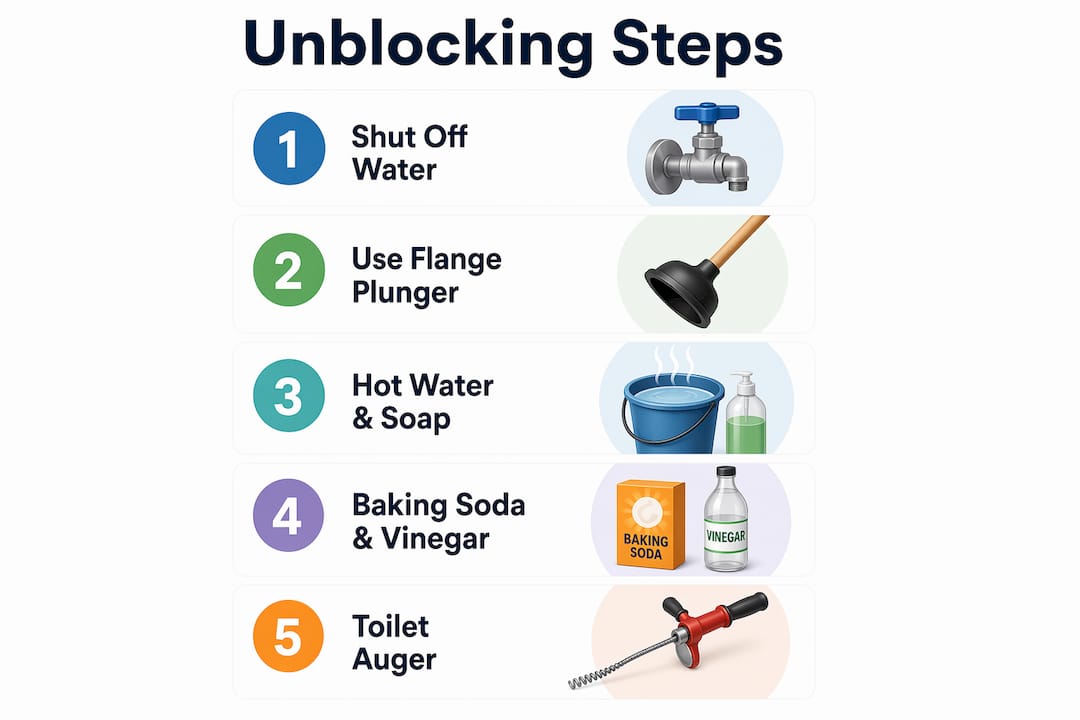
Step 1: shut off the water supply
Turn the isolation valve clockwise until it stops. The valve sits at the back base of the toilet, usually on the pipe feeding the cistern. If the water level is close to the rim, act on this step immediately. Overflow causes far more damage than the blockage itself.
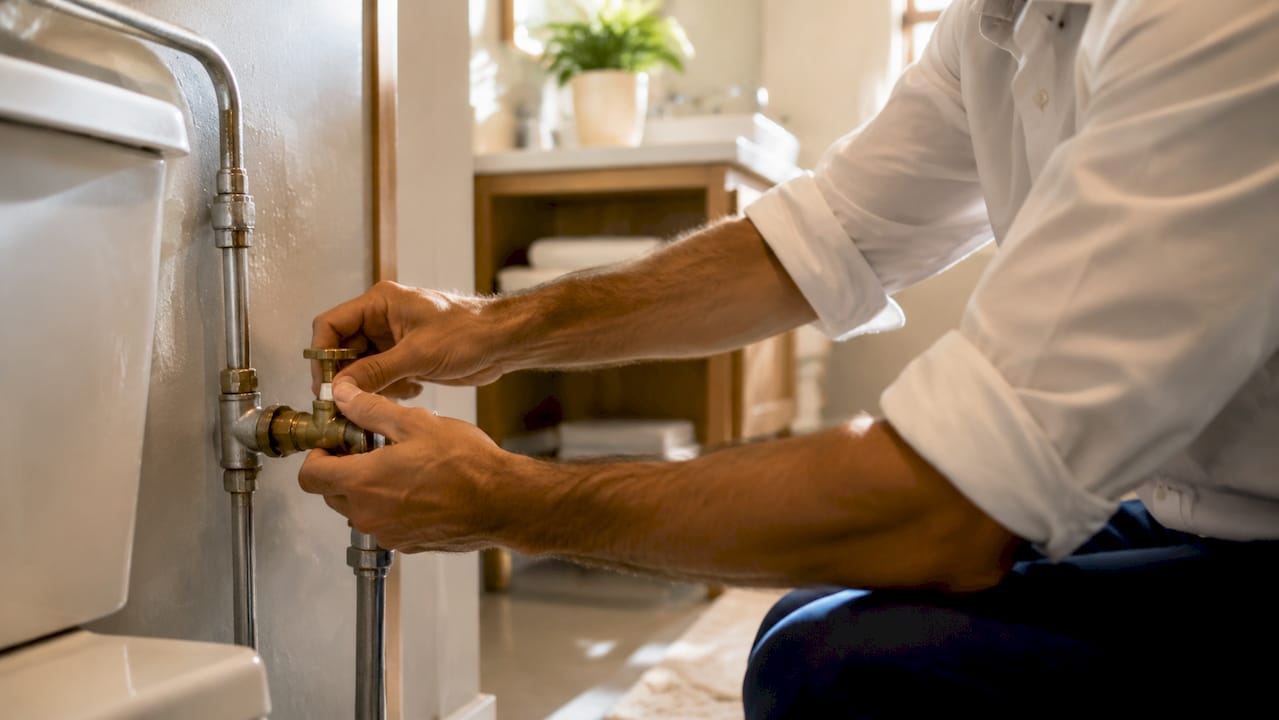
Step 2: plunge with correct technique
Lower the flange plunger into the bowl at an angle to let trapped air escape before you seal it over the drain. Once sealed, push down slowly on the first stroke, then pump vigorously with 10–15 firm strokes. Releasing trapped air first and then pumping hard creates the hydraulic pressure needed to shift the clog. Pull the plunger away sharply on the final stroke to break the seal and draw the blockage loose. Repeat two or three times before testing with a slow flush.
Step 3: try hot water and washing-up liquid
If plunging alone does not clear the drain, squirt a generous amount of washing-up liquid into the bowl and follow it with a bucket of hot tap water poured from waist height. The height increases the force of the water. Hot water and dish soap lubricate the clog and soften organic material, making it easier to flush through. Wait 10–15 minutes, then attempt a slow flush.
Step 4: apply baking soda and vinegar
Pour one cup of baking soda into the bowl, followed by two cups of white vinegar. The fizzing reaction helps break down organic blockages caused by toilet paper or waste. Leave it to work for 20–30 minutes before flushing. This method works best on soft, organic clogs and has no effect on solid objects like wipes or toys.
Step 5: use a toilet auger for deeper clogs
A toilet auger, also called a closet auger, is a hand-cranked cable tool designed to reach deeper into the drain pipe than a plunger can. Feed the cable into the bowl and crank the handle clockwise to push through or hook the blockage. A toilet auger physically removes clogs deeper in the pipe and is gentle enough to avoid scratching the porcelain. Plumbers consider it the most effective DIY tool for stubborn blockages that resist repeated plunging.
Pro Tip: After using a toilet auger, always flush twice and watch the water drain speed. A slow drain after clearing a blockage can signal a partial obstruction still sitting further down the pipe.
| Method | Best For | Time Required | Risk Level |
|---|---|---|---|
| Flange plunger | Soft clogs near the trap | 5–15 minutes | Low |
| Hot water and washing-up liquid | Organic or paper blockages | 20–30 minutes | Low |
| Baking soda and vinegar | Organic blockages | 30–40 minutes | Very low |
| Toilet auger | Deep or stubborn clogs | 10–20 minutes | Low to moderate |
What mistakes should you avoid when fixing a clogged toilet?
Knowing what not to do is as important as knowing the right steps. Several common reactions actively worsen a blockage or cause lasting damage to your plumbing.
Flushing repeatedly is the most common error. Each flush adds more water to a bowl that cannot drain. If the water level is already high, another flush risks overflow onto your floor.
Using boiling water feels logical but causes real harm. Boiling water can crack porcelain and may damage the wax seal at the base of the toilet. Hot tap water is the correct choice, not water straight from the kettle.
Reaching for chemical drain cleaners too quickly is another mistake. Chemical drain cleaners can corrode pipes and damage porcelain with repeated use. They are also ineffective against solid blockages and can create a hazardous chemical mix if you then need to plunge.
Recognising a deeper blockage: If multiple drains in your home are slow or gurgling at the same time, the problem is not in the toilet trap. It is in the main sewer line. Bubbling water in the sink when you flush the toilet is a clear signal. Stop all DIY attempts and call a professional plumber immediately.
Non-flushable items are a separate category of blockage. Wet wipes, cotton wool, nappies, and children's toys do not break down in water. If you suspect a solid object is lodged in the trap, a toilet auger may retrieve it. If it cannot, do not force it further down the pipe. You can read more about handling blocked drains at home before escalating to professional help.
How do professional plumbing methods differ from DIY?
Professional plumbers use tools that go well beyond what any homeowner keeps under the sink. Understanding the difference helps you decide when to stop and make the call.
What plumbers use that you cannot buy at a hardware shop
High-pressure jetters and CCTV drain cameras are the standard professional response to deep or solid blockages. A high-pressure jetter fires a concentrated stream of water through the pipe at pressures that obliterate grease, scale, and compacted debris. A CCTV camera locates the exact position and nature of the blockage before any work begins. These tools cost thousands of pounds and require training to use safely.
When you should stop DIY and call a plumber
- Multiple drains in the house are slow or blocked simultaneously
- The toilet has been blocked more than once in a short period
- You can see or suspect a solid object lodged in the trap
- The water level rises when you flush other fixtures
- DIY methods have failed after two or three genuine attempts
Pro Tip: Take a short video of the toilet flushing before you call a plumber. Showing the drainage speed and water behaviour gives the engineer useful diagnostic information before they arrive, which can shorten the job.
DIY methods like dish soap and warm water work well on minor organic clogs. They are ineffective against solid non-flushable objects, and forcing the issue risks pushing the object deeper into the pipe where it becomes far harder and more expensive to retrieve. Knowing this boundary protects both your plumbing and your wallet.
You can also review the safe use of toilet augers and other recommended tools for residential toilet work before deciding whether to escalate.
Key takeaways
The most effective approach to unblocking toilets is to start with a flange plunger, escalate to hot water and washing-up liquid, and use a toilet auger for deeper clogs before calling a professional.
| Point | Details |
|---|---|
| Use the right plunger | A flange plunger seals the toilet trap; a cup plunger does not work on toilets. |
| Shut off water first | Turn the isolation valve clockwise before attempting any unblocking method. |
| Escalate methods in order | Move from plunging to hot water, then baking soda, then a toilet auger. |
| Avoid boiling water and chemicals | Both can crack porcelain or corrode pipes with repeated use. |
| Know when to call a professional | Multiple blocked drains or failed DIY attempts signal a deeper sewer line problem. |
What i have learned from years of blocked toilets
Most people panic when a toilet blocks. That panic leads directly to the two worst decisions: flushing again and pouring in whatever chemical is under the sink. I have seen both choices turn a ten-minute plunging job into a full bathroom flood or a corroded pipe replacement.
The single most important thing I would tell any homeowner is this: own a flange plunger before you need one. A cup plunger sitting in the corner of your bathroom is essentially useless for a toilet blockage. The flange plunger costs under £15 and solves the majority of household blockages before they become a problem worth worrying about.
I also think people underestimate patience. The hot water and washing-up liquid method feels too simple to work, so homeowners dismiss it and go straight for chemicals. In my experience, giving that method a full 15–20 minutes clears more blockages than people expect. The fizzing baking soda and vinegar combination is similarly underrated for organic clogs.
Where I see real damage done is when someone attempts a toilet auger without reading the instructions, or tries to retrieve a solid object by pushing it further down the pipe. A toilet auger is a capable tool, but it requires a steady hand and patience. If you feel resistance and the cable will not advance, stop. Forcing it risks scratching the bowl or compacting the blockage further.
My honest advice: try the plunger, try the hot water method, and if neither works after two proper attempts, call a professional. The cost of a plumber visit is always less than the cost of a cracked toilet or a damaged sewer line.
— Michael
When Your-local-plumber can help
Some blockages are simply beyond what a plunger or auger can reach. When DIY methods have failed, or when you suspect a deeper problem in your sewer line, Your-local-plumber provides fast, professional toilet unblocking services carried out by experienced engineers. The team uses professional-grade equipment, including high-pressure jetters and CCTV drain cameras, to locate and clear blockages that home tools cannot touch. With transparent pricing and rapid response times, Your-local-plumber takes the stress out of a situation that only gets worse the longer it waits. Get in touch today and have a qualified engineer at your door when you need one most.
FAQ
What is the fastest way to unblock a toilet at home?
The fastest method is using a flange plunger with correct technique. Most soft blockages clear within 10–15 minutes of vigorous plunging.
Can i use boiling water to unblock a toilet?
No. Boiling water can crack the porcelain bowl and damage the wax seal. Use hot tap water instead, which is effective and safe.
How do i know if my toilet blockage needs a plumber?
Call a plumber if multiple drains in your home are slow or gurgling, if DIY methods have failed after two attempts, or if you suspect a solid object is lodged in the pipe.
Is a toilet auger better than a plunger for fixing clogged toilets?
A toilet auger reaches deeper into the drain pipe and physically removes blockages that a plunger cannot dislodge. Plumbers regard it as the most effective DIY tool for stubborn clogs.
Are chemical drain cleaners safe to use in a toilet?
Chemical drain cleaners are not recommended for regular toilet use. Repeated application can corrode pipes and damage porcelain, and they have no effect on solid blockages.