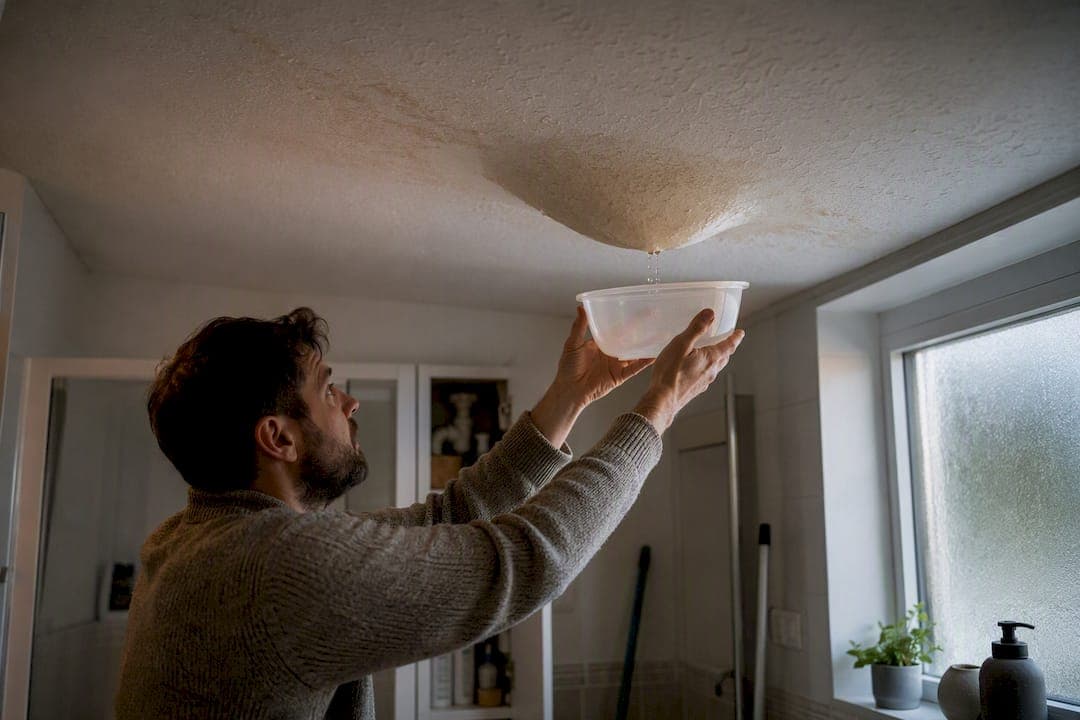
If water is coming through your ceiling, act in this order: switch off electricity to any light fitting or socket near the wet patch, shut off the water at the stopcock, and get buckets under the drip. Do all three before you do anything else.
A stained or bulging ceiling can turn into a collapsed one within minutes once the plasterboard is saturated, so speed matters more than working out exactly what's happened.
- Electrics first: if the leak is anywhere near a ceiling light, extractor fan, or socket, switch off the relevant circuit at the consumer unit, not just the light switch.
- Isolate the water: find your internal stopcock (usually under the kitchen sink or near the water meter) and turn it clockwise to stop the flow.
- Contain and protect: buckets, towels, and moved furniture limit damage while you work out next steps.
- Photograph everything before you touch anything, then call a plumber if the water is still coming or the source isn't obvious.
A burst pipe can release large volumes of water within minutes, which is exactly why stopping the flow always takes priority over diagnosing the cause.
Key Takeaways
Stopping water and electricity risk within the first few minutes matters more than identifying the exact cause of a ceiling leak.
| Point | Details |
|---|---|
| Safety comes before diagnosis | Cut power near wet fittings and isolate the stopcock before you try to work out what caused the leak. |
| Timing reveals the source | Rain-linked stains point to the roof; shower or appliance-linked stains point to internal plumbing. |
| Stains can mislead you | Water tracks along joists, so the visible patch may sit metres from the actual entry point. |
| Insurers distinguish sudden from gradual damage | Escape of water is usually covered, but slow deterioration is often excluded, so document everything. |
| Your-local-plumber offers 24/7 emergency response | Fixed pricing and leak detection make it a direct local option when you need a plumber fast. |
Table of Contents
- Step-by-step emergency actions: what to do in the next 5 to 60 minutes
- How do you tell if the leak is from plumbing or the roof?
- Safe temporary fixes while you wait for a professional
- Who should you call first: a plumber, roofer, or surveyor?
- How long does repair and drying actually take?
- Simple maintenance that stops the next leak
- Why trust this advice, and how Your-local-plumber can help
- An honest take on ceiling leak advice
- Get emergency help from a local, fixed-price plumber
- Frequently asked questions
- Sources
Step-by-step emergency actions: what to do in the next 5 to 60 minutes
Once the immediate danger is contained, work through these steps methodically. Panic leads to mistakes, and a wet ceiling gives you a few minutes to think clearly if you've already isolated the water and power.
- Locate and operate the stopcock. It's typically beneath the kitchen sink, in an airing cupboard, or near where the water main enters the property. Turn it clockwise until it stops. If you've never located yours before, this is the moment you'll wish you had, so make a mental note to find and label it once the crisis passes.
- Cut power to affected circuits. Go to the consumer unit and switch off the circuit breaker for any area where water is dripping near wiring or fittings. If you're not confident identifying the right breaker, switch off the whole board rather than guess.
- Contain the water. Place buckets or large bowls directly under drips, and lay towels or old sheets around the perimeter to catch splashes. Move furniture, rugs, and electronics away from the wet area immediately, since water spreads faster across flooring than most people expect.
- Assess any ceiling bulge. A sagging patch of plasterboard usually means water has pooled above it and the material is close to failing. Releasing that water in a controlled way is often safer than waiting for the ceiling to give way on its own, which tends to happen without warning.
- Photograph and document. Take wide shots of the room and close-ups of the stain, bulge, or dripping point. Note the date, time, and what you did to contain it. This record matters more than most homeowners realise once an insurance claim starts.
Pro Tip: If you see a ceiling bulging with trapped water, place a bucket underneath, then puncture the centre of the bulge with a screwdriver from a stepladder, standing to the side rather than directly beneath it. Releasing water through a small, controlled hole is far less damaging than letting the whole section collapse under its own weight.
How do you tell if the leak is from plumbing or the roof?
Timing and location are your best clues, and they matter more than the shape or colour of the stain itself. Ceiling leaks come from a genuinely wide range of sources, including failed bathroom seals, hidden pipework, condensation build-up, and external roof or gutter defects, so working through the pattern of when it happens narrows things down fast.
- If the stain worsens during or shortly after rain, suspect the roof, guttering, or flashing around chimneys and vents.
- If it appears when someone showers, runs a bath, or uses the washing machine, the cause is almost certainly internal plumbing or a faulty appliance connection.
- A ceiling directly beneath a bathroom or kitchen is the classic sign of an internal leak, whether from a shower tray, waste pipe, or dishwasher hose.
- Condensation-related damp tends to appear gradually, often in poorly ventilated bathrooms, and looks more like a diffuse patch than a sharp-edged stain.
Here's the part that catches people out: water doesn't fall straight down. It tracks along joists, pipes, and cables before finding a gap in the plasterboard, so the visible stain can sit metres away from where the water actually got in. A stain in the corner of a bedroom ceiling might trace back to a bathroom several feet away. This is exactly why guessing based on location alone sends so many homeowners to the wrong tradesperson first.
If you've had the same patch repaired more than once and it keeps coming back, that's your signal to stop patching and start investigating properly. A specialist leak detection survey or an independent surveyor can trace the actual entry point rather than treating the symptom again.
Safe temporary fixes while you wait for a professional
Anything you do now should buy time, not attempt a permanent repair. Ceilings and roofs both carry real risk of injury or further damage if you go beyond sensible temporary measures.
- Never touch wet wiring, light fittings, or sockets. If in doubt, leave the circuit off until an electrician confirms it's safe.
- Use old towels, dust sheets, and buckets to protect flooring and furniture rather than trying to seal the leak itself.
- To release a sagging ceiling bulge, use a screwdriver or the corner of a scraper, work from a stable stepladder, wear eye protection, and stand to the side of the bulge, never directly underneath it.
- Leave roof access to a roofer. Climbing onto a wet, possibly damaged roof to fit a tarpaulin is not a job for most homeowners, and a professional can usually secure the area far more safely and effectively.
- Don't attempt to patch or plaster the ceiling yourself until the source is fixed and the area has fully dried, since sealing in moisture only creates mould problems later.
Pro Tip: Keep a torch, a few plastic sheets, and a couple of buckets somewhere accessible, ideally in an airing cupboard or under the stairs. Fumbling to find containers while water drips onto your sofa wastes precious minutes.
Who should you call first: a plumber, roofer, or surveyor?
Match the tradesperson to the cause you've identified, because calling the wrong trade first wastes both time and money. A roofer can't fix a failed shower seal, and a plumber won't be able to help with a slipped roof tile.
- Call a plumber first for anything linked to showers, baths, appliances, or a ceiling beneath a bathroom or kitchen.
- Call a roofer first if the leak clearly correlates with rainfall, or if you can see damage to tiles, flashing, or guttering from ground level.
- Bring in a surveyor or specialist leak detection service when the source is unclear, when previous repairs haven't solved the problem, or when the stain keeps reappearing in a new spot.
Whoever you call, have this ready: photos of the damage, the date and time it started, what you've already done to contain it, and whether the property was occupied when it began. Insurers ask the same questions, so gathering this information once saves you repeating yourself.
Speaking of insurers, it's worth understanding how they treat these claims before you pick up the phone. Escape of water is one of the most common UK insurance claims, and most policies cover damage from a sudden, accidental leak, such as a pipe that bursts overnight. Damage caused by gradual deterioration, like a slowly failing seal that's been letting in moisture for months, is far more likely to be excluded or challenged. Locating a concealed leak (known as trace and access) is often covered as a separate item from repairing the pipe or seal itself, so ask your insurer directly what's included before committing to any invasive work.
How long does repair and drying actually take?
Expect a sequence, not a single visit: stop the source, dry the structure, then repair and redecorate. Skipping the drying stage is the single most common reason ceiling repairs fail and have to be redone.
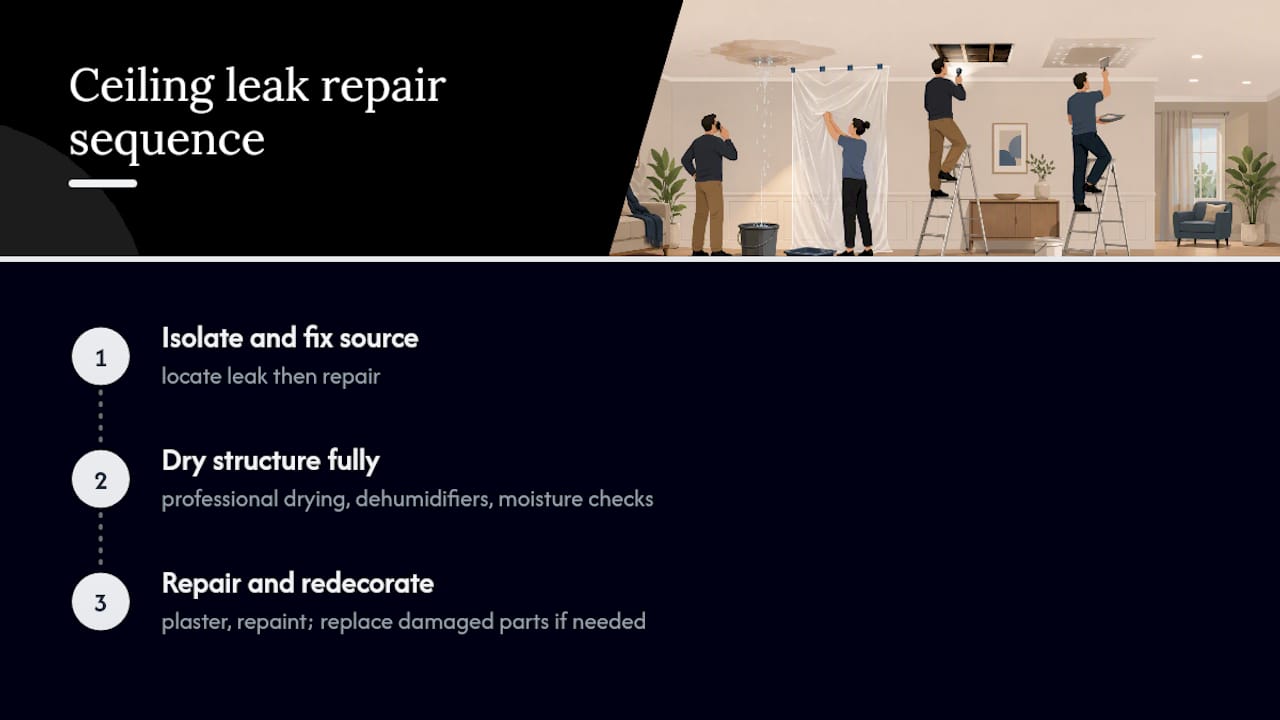
The typical order runs like this. First, the plumber or roofer isolates and fixes the actual leak. If the source wasn't obvious, trace and access work locates it before repairs begin. Once the leak is stopped, professional drying and moisture monitoring needs to happen before any plastering or redecorating starts, because sealing damp plasterboard behind fresh paint just traps moisture and invites mould.
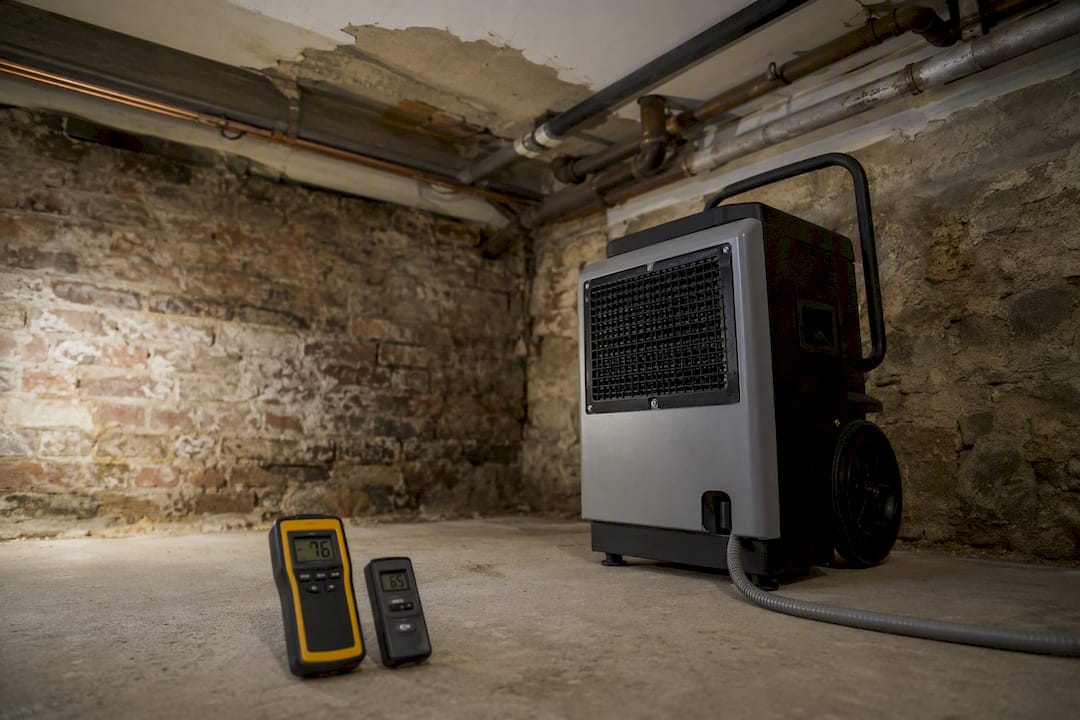
Drying times vary considerably depending on how much water got in and for how long. A small, quickly contained drip might dry out within a week or two with good ventilation. Extensive infiltration, particularly where water has soaked into insulation or timber joists, can take several weeks and usually needs industrial dehumidifiers and moisture meters to confirm it's genuinely dry before work continues.
Costs vary just as widely, and any figure you're quoted should come with that caveat attached. A small patch and repaint of a ceiling section sits at the lower end. A full replaster of a larger area costs more, and where water has damaged joists, insulation, or electrical cabling, a partial structural rebuild pushes the bill higher still. Get quotes from more than one tradesperson before committing, and ask specifically whether the price includes drying time or assumes the area is already dry. If electrical cabling was anywhere near the water, insist on an electrician's sign-off before reconnecting power to that circuit, since damp insulation on wiring is a genuine fire risk that's easy to overlook once the ceiling looks fine again.
Simple maintenance that stops the next leak
Most ceiling leaks trace back to a small number of preventable causes, and a bit of regular upkeep catches most of them before they become emergencies.
- Clear gutters at least twice a year and check flashing around chimneys and roof vents, since blocked guttering is one of the most common causes of water tracking back under roof tiles.
- Replace appliance hoses and seals periodically, particularly on washing machines and dishwashers, and have your boiler serviced annually to catch slow pipe leaks before they cause ceiling damage.
- Improve bathroom and kitchen ventilation. A well-maintained extractor fan reduces the condensation that causes damp patches homeowners often mistake for roof leaks.
- Reseal bathroom fixtures where silicone has cracked or discoloured, since a failed shower seal is one of the most frequent causes of a stain appearing on the ceiling below.
- Find, test, and label your stopcock now, before you need it in a hurry, and consider a smart leak detection alarm that shuts off water automatically if it senses an unexpected flow.
Why trust this advice, and how Your-local-plumber can help
This guidance draws on how UK insurers and tradespeople actually handle escape-of-water claims, not generic checklist advice recycled from elsewhere.
- Your-local-plumber offers 24/7 emergency call-outs, leak detection, and transparent fixed pricing across multiple UK towns and cities, which matters when you're calling at 11pm with water coming through the bedroom ceiling.
- For deeper detail on tracing hidden leaks, read our guide to leak detection or our breakdown of common causes of water leaks.
- If bathroom seals or plumbing are the likely culprit, our piece on preventing bathroom leaks covers the maintenance steps in more detail.
- For an emergency, contact Your-local-plumber directly rather than waiting to see if the drip stops on its own.
An honest take on ceiling leak advice
Most guidance on this topic overloads readers with causes before telling them what to actually do. That's backwards. The order matters: safety, containment, documentation, diagnosis, in that sequence, not the reverse.
The conventional wisdom that homeowners should "identify the source first" is where a lot of people go wrong. Standing under a dripping ceiling trying to work out if it's the roof or a pipe wastes time you don't have, and it's often unnecessary anyway, since a plumber or roofer will diagnose it faster once they're on site with the right tools.
What's genuinely underrated is the photograph. Homeowners fixate on stopping the water, understandably, but skip documenting it properly, and that's often what determines whether an insurance claim goes smoothly or drags on for weeks. Take the photos before you touch anything, even if that feels like the wrong priority in the moment. It rarely is.
Get emergency help from a local, fixed-price plumber
If you're standing in a room with water coming through the ceiling right now, Your-local-plumber offers 24/7 emergency call-outs with fixed pricing agreed before any work starts, so you're not left guessing what the bill will look like after an already stressful evening.

Unlike a general call-out service where you're quoted on arrival, Your-local-plumber gives transparent pricing upfront and covers leak detection alongside the repair itself, so tracing a hidden source and fixing it can happen in the same visit rather than two separate appointments with two separate invoices. That matters when a stain keeps reappearing and previous fixes haven't worked. Our engineers handle everything from a burst pipe to a failed shower seal, and cover multiple UK towns and cities with the same fixed-price approach throughout.
If water is actively coming through your ceiling, book an emergency plumber now rather than waiting to see if it stops on its own.
Frequently asked questions
Is a water leak from the ceiling an emergency? Yes, treat it as one whenever water is actively dripping or a ceiling is visibly bulging. The risk of electrical danger and structural collapse means it needs immediate action, even if the flow itself seems slow.
How much water damage can a ceiling leak cause before I notice it? Quite a lot, since water often spreads within the ceiling void before ever showing as a stain. By the time you see discolouration, moisture may already have reached joists, insulation, or wiring above the visible patch.
Should I turn off my water for a small ceiling leak? If you can identify the source and it's linked to plumbing, isolating the water at the stopcock or the relevant appliance valve is safer than leaving it running while you wait for a tradesperson.
Will my home insurance cover a ceiling leak? Usually, if the cause was sudden and accidental, such as a burst pipe. Damage from gradual wear, like a slowly failing seal left unaddressed for months, is often excluded, so check your policy wording and document the timeline carefully.
Can I repair a ceiling leak myself? You can manage safe temporary measures, such as containing water and carefully releasing a bulge, but the underlying leak and any structural drying should go to a qualified plumber, roofer, or drying specialist.
Sources
For more detail on insurance claims, see escape of water claim guides and our internal guide on step-by-step leak detection.
- Ceiling starts leaking — Liberay Legal
- Water leaking from the ceiling: what to do, causes, and who to call — Checkatrade
- Escape of water claims — PCLA
- Water coming through the ceiling? Where it’s really coming from — Manchester Surveyors
- Claiming on house insurance for a water leak in 7 steps — Frontier Insurance