TL;DR:
- A combi boiler provides central heating and instant hot water from mains supply in a single wall-mounted unit. It is ideal for small homes with good mains pressure and low simultaneous hot water demand, but may underperform in larger households. Proper pre-installation assessment ensures optimal performance and longevity of the system.
A combi boiler is defined as a single wall-mounted unit that delivers both central heating and instant hot water directly from the mains, with no hot water cylinder or cold water tank required. The term "combi" is short for combination boiler, which is the recognised industry name for this type of appliance. Energy Saving Trust reports combi boilers account for over 70% of new UK boiler installs in 2026. That figure reflects how well this type of unit suits the compact homes and flats that dominate British housing stock. If you are weighing up your heating options, understanding how a combi boiler works and where it fits best will save you money and frustration.
What is a combi boiler and how does it work?
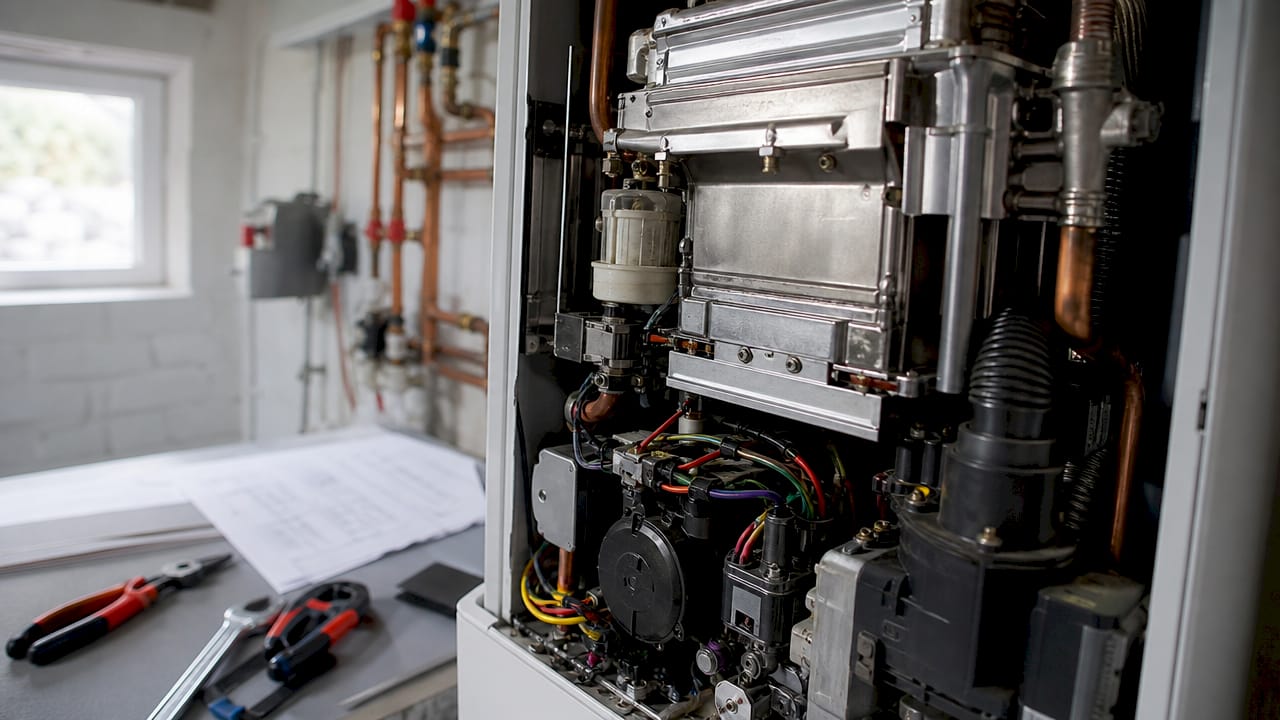
A combi boiler heats water on demand by drawing cold water directly from the mains supply and passing it through an internal heat exchanger. There is no stored hot water waiting in a cylinder. The moment you open a tap or your thermostat calls for heat, the burner fires and the heat exchanger transfers energy to the water almost instantly.
The four core components that make this possible are:
- Heat exchanger: Transfers heat from the burner flame to the water flowing through the unit.
- Pump: Circulates heated water around the radiator circuit when the heating is on.
- Diverter valve: Switches the boiler's output between the central heating circuit and the hot water tap. When a tap opens, the valve redirects flow to prioritise hot water delivery.
- Burner: Fires gas (or LPG in off-grid properties) to generate the heat the exchanger needs.
Combi boilers combine a water heater and central heating boiler, with a modulating burner that adjusts its output to match demand rather than running at full power constantly. That modulation is what makes modern units so efficient.
One point that catches many homeowners off guard: combi boilers depend entirely on mains water pressure. If your mains pressure is low, hot water flow will be weak regardless of how powerful the boiler is. A professional flow test before installation is not optional. It is the only reliable way to confirm a combi will perform as expected in your home.
Pro Tip: Ask your installer to carry out a mains flow rate test before any purchase is made. A result below 10 litres per minute at the incoming supply often signals that a combi boiler will underperform.
What are the benefits of combi boilers for UK homeowners?
The most significant benefit of a combi boiler is its energy efficiency. Modern condensing combi boilers typically achieve efficiency ratings of 90–94%, saving homeowners between £80 and £340 annually on gas bills compared to older systems. That saving compounds over the boiler's lifespan, which typically runs to 10–15 years with proper servicing.
Space saving is the second major advantage. A combi boiler fits inside a standard kitchen cupboard. Removing the hot water cylinder and cold water tank frees up an airing cupboard and loft space. For flat owners and terraced house occupants, that recovered space is genuinely useful.
Other practical benefits include:
- Simpler installation: Less pipework means lower labour costs and a cleaner finish.
- Faster hot water: No waiting for a cylinder to reheat. Water arrives hot within seconds.
- Smart controls: Many combi boilers now include time and temperature programming and smart home integration, which reduces fuel use by matching heating output to your actual schedule.
- Lower heat loss: Traditional cylinders lose heat through their walls even when well insulated. A combi eliminates that standing loss entirely.
The environmental case is straightforward. Heating only the water you use, rather than keeping a full cylinder warm around the clock, cuts gas consumption. Paired with a smart thermostat such as a Nest or Hive controller, a combi boiler can reduce your carbon footprint meaningfully without any change to your daily routine.
Pro Tip: Fitting a magnetic system filter, such as a Fernox TF1 or Adey MagnaClean, protects the heat exchanger from sludge build-up and extends the boiler's working life by several years.
What types of homes are best suited to a combi boiler?
Combi boilers are the most popular boiler type in the UK, particularly because their compact, wall-mounted design suits limited-space homes. The properties where they perform best share a few common characteristics.
Ideal property types
A combi boiler works well in:
- Flats and studio apartments with one bathroom
- Two or three-bedroom terraced or semi-detached houses
- Properties with good mains water pressure (above 10 litres per minute)
- Homes where only one hot water outlet is used at a time
Where a combi boiler may not be the right fit
The critical limitation is simultaneous hot water demand. Combi boilers cannot supply hot water to multiple outlets at the same time without a noticeable drop in pressure and temperature. Running a shower while someone fills a bath in another bathroom will reduce flow at both points.
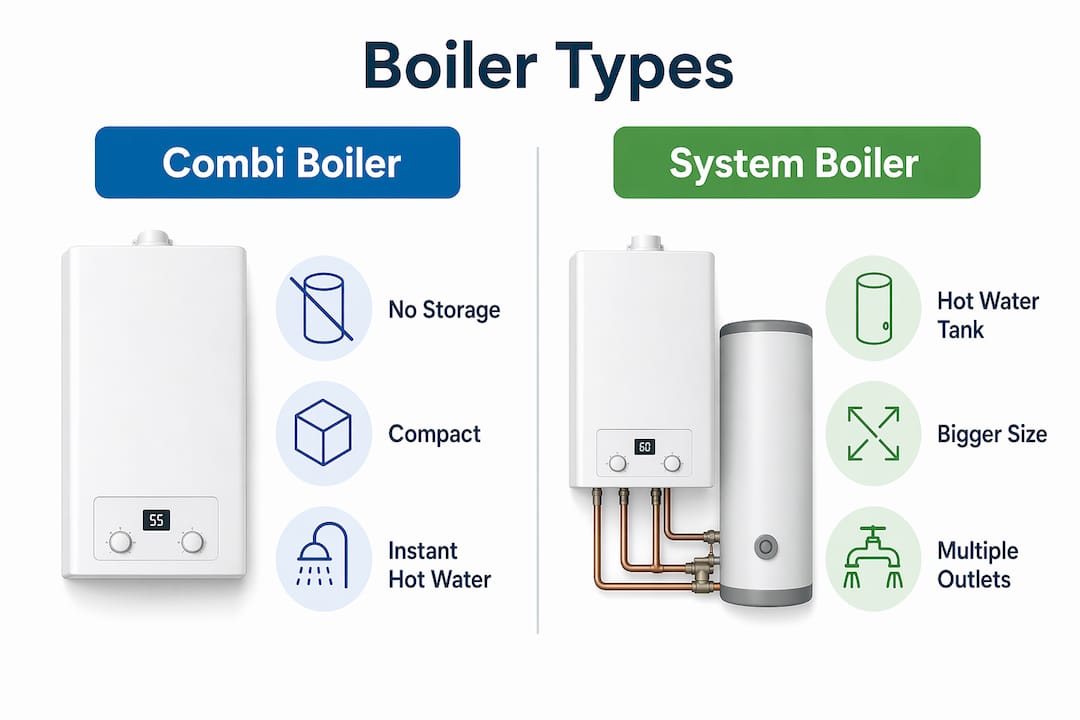
For larger homes with two or more bathrooms in regular simultaneous use, a system boiler paired with a well-insulated hot water cylinder is often the more practical choice. A regular (or heat-only) boiler suits older properties with existing gravity-fed pipework that would be expensive to replace.
The table below summarises the key differences to help you assess which type fits your home.
| Factor | Combi boiler | System boiler | Regular boiler |
|---|---|---|---|
| Hot water storage | None | Separate cylinder | Cylinder and cold tank |
| Space required | Minimal | Moderate | Significant |
| Simultaneous outlets | Limited | Good | Good |
| Mains pressure dependency | High | Low | Low |
| Best for | Flats, small homes | Medium to large homes | Older, larger properties |
Understanding central heating system types helps you match the right boiler to your property before committing to an installation.
What to consider before installing a combi boiler
Installation is where many homeowners encounter unexpected costs. The most common reason is the switch from a gravity-fed system to a pressurised sealed system. Switching from a traditional system to a combi boiler often requires re-plumbing, and that process can expose faults in radiator valves and pipework that cannot handle higher pressure. Budget for potential remedial work, not just the boiler and labour.
Follow these steps before signing off on any installation:
- Commission a mains flow test. A Gas Safe registered engineer measures the incoming water flow rate. This single check determines whether a combi is viable for your property.
- Check your existing pipework. Older copper or lead pipework may need upgrading to handle the pressurised system a combi requires.
- Verify Gas Safe registration. Every engineer who works on a gas appliance in the UK must be Gas Safe registered. Ask to see the engineer's card before any work begins.
- Read the warranty conditions. Most manufacturers require annual servicing by a Gas Safe engineer to keep the warranty valid. Missing a single service can void your cover.
- Plan for annual maintenance. A yearly boiler service costs between £60 and £120 on average and catches problems before they become breakdowns. Learning how to service a gas boiler safely helps you understand what that annual visit should include.
Choosing the wrong boiler type for your home's hot water demands and pipework increases running costs and maintenance frequency. Getting the pre-installation assessment right is far cheaper than correcting a poor choice after the fact.
Pro Tip: Request a written quote that separates the boiler cost, labour, and any re-plumbing work. Bundled quotes make it difficult to compare engineers fairly or identify where costs are inflated.
Key takeaways
A combi boiler is the right choice for most UK flats and smaller homes, but only when mains pressure is adequate and simultaneous hot water demand is low.
| Point | Details |
|---|---|
| Efficiency ratings | Modern condensing combi boilers reach 90–94% efficiency, cutting annual gas bills by £80–£340. |
| No storage needed | Combi boilers heat water on demand from the mains, freeing up cylinder and loft space. |
| Pressure dependency | Low mains pressure causes poor flow; always test before installation. |
| Simultaneous use limitation | Running two hot water outlets at once reduces pressure and temperature at both points. |
| Gas Safe installation required | UK law requires a Gas Safe registered engineer for all gas boiler installations and servicing. |
Condensing vs combi: what I've learned from years on the tools
One misconception I encounter constantly is homeowners using "condensing" and "combi" as if they mean the same thing. They describe different aspects entirely. "Condensing" refers to the efficiency mechanism, specifically the way the boiler recovers heat from exhaust gases. "Combi" refers to the delivery method, meaning one unit handles both heating and hot water. Most modern boilers are both condensing and combi, but the terms are not interchangeable.
The second thing I would tell any homeowner is this: the boiler itself is rarely the problem when things go wrong. The problem is usually a mismatch between the boiler type and the property. A combi in a four-bedroom house with two showers running every morning is always going to disappoint. No amount of brand prestige changes the physics of a single diverter valve.
My honest advice is to get a proper home assessment before you buy anything. The boiler efficiency benefits are real, but only when the unit is matched correctly to the property's size, pressure, and usage patterns. A good engineer will tell you when a combi is not the right answer, even if it costs them a simpler job.
— Michael
Combi boiler installation and servicing with Your-local-plumber
Choosing the right boiler is only half the decision. The quality of the installation determines how well it performs and how long it lasts.

Your-local-plumber carries out combi boiler installations using Gas Safe registered engineers who conduct a full mains flow test and property assessment before recommending any unit. Every installation meets current UK Building Regulations and comes with transparent, itemised pricing so you know exactly what you are paying for. Your-local-plumber also offers annual servicing to keep your warranty valid and your boiler running at peak efficiency. Book a home assessment and get clear, honest advice matched to your property.
FAQ
What is the combi boiler definition in simple terms?
A combi boiler is a single unit that provides both central heating and instant hot water directly from the mains supply, with no need for a separate hot water cylinder or cold water storage tank.
How does a combi boiler differ from a system boiler?
A combi boiler heats water on demand from the mains, while a system boiler heats water and stores it in a separate cylinder, making system boilers better suited to homes with higher simultaneous hot water demand.
Are combi boilers energy efficient?
Modern condensing combi boilers achieve efficiency ratings of 90–94%, which can save homeowners between £80 and £340 per year on gas bills compared to older, non-condensing systems.
Can a combi boiler supply two showers at once?
A combi boiler struggles to supply two outlets simultaneously without a drop in pressure and temperature. Homes with regular simultaneous hot water demand are better served by a system boiler with a hot water cylinder.
Does a combi boiler need annual servicing?
Annual servicing by a Gas Safe registered engineer is required to maintain the manufacturer's warranty and keep the boiler operating safely and efficiently.